LAST UPDATED: 8/23/26 – Galápagos Islands Wildlife Guide
The Galápagos Islands are one of this world’s most famous and alluring wildlife destinations. Ever since Charles Darwin visited the islands, people have been flocking there to see this amazing ecosystem. His theory of Evolution and the animals he studied piqued a curiosity that only visiting could scratch.
The Galápagos Islands have a staggering array of marine wildlife in their waters. However, there are also a wide variety of birds, reptiles, and mammals found on the islands themselves. I cover all of these animals and more in this Galápagos Islands wildlife guide.
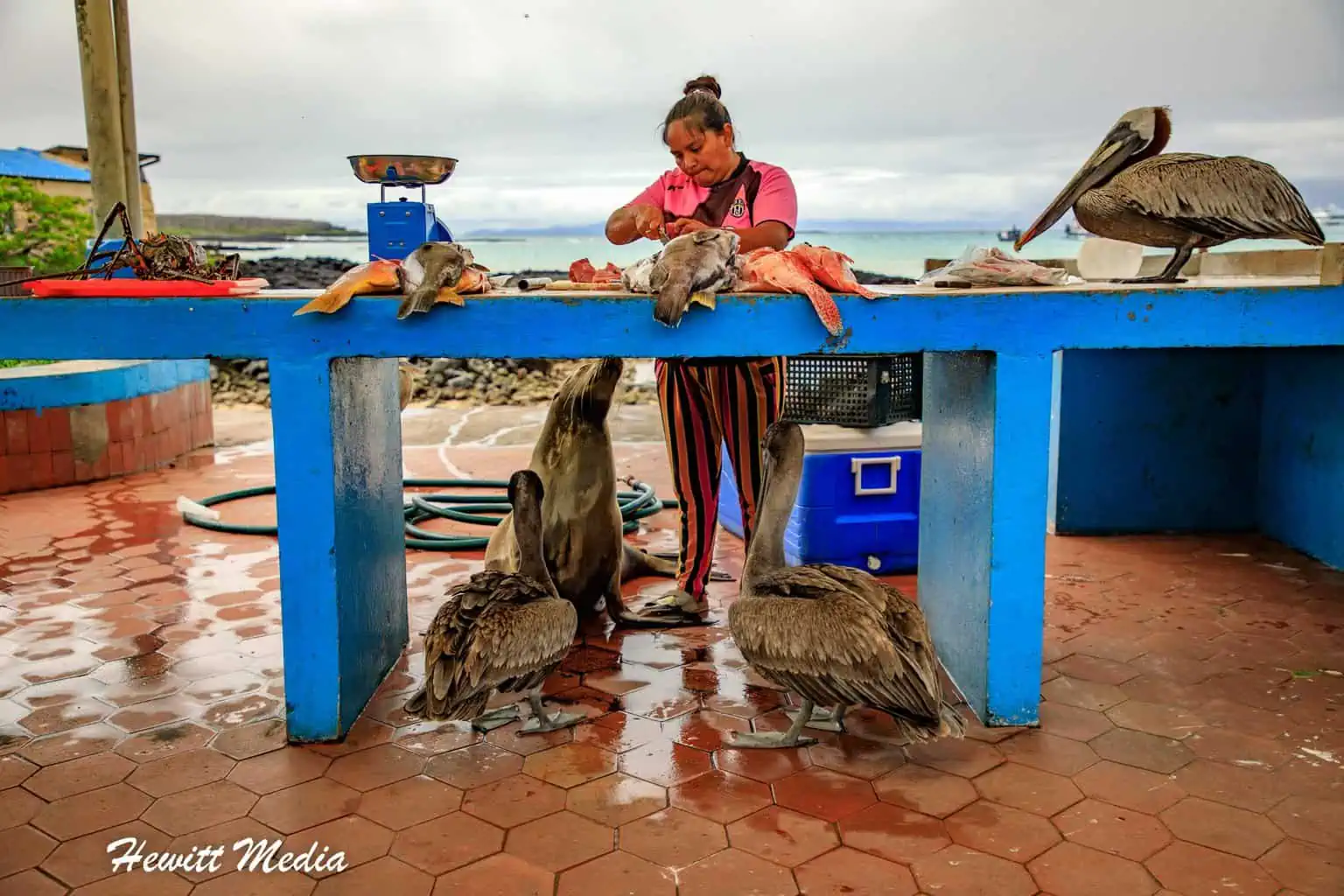
In this Galápagos Islands wildlife guide, I highlight some of the wildlife that the Galápagos is most well known for. With this guide, you will be better prepared to locate, identify, and enjoy the amazing wildlife of the islands.
Galápagos Wildlife Guide Navigation Menu
 |
Wildlife Safety |
 |
Protecting the Galápagos Ecosystem |
 |
Wildlife Events |
 |
Wildlife Found in the Galápagos |
 |
Charles Darwin Research Center |
 |
Galápagos Islands Wildlife Photo Gallery |
Wildlife Safety
The Galápagos Islands are a protected area. That means the animals within the Galápagos Islands preservation areas are as well. When you visit, you are responsible for following the rules that are designed to protect these animals. In addition to not feeding the animals, you must stay at least 6 feet away from the animals whenever possible.

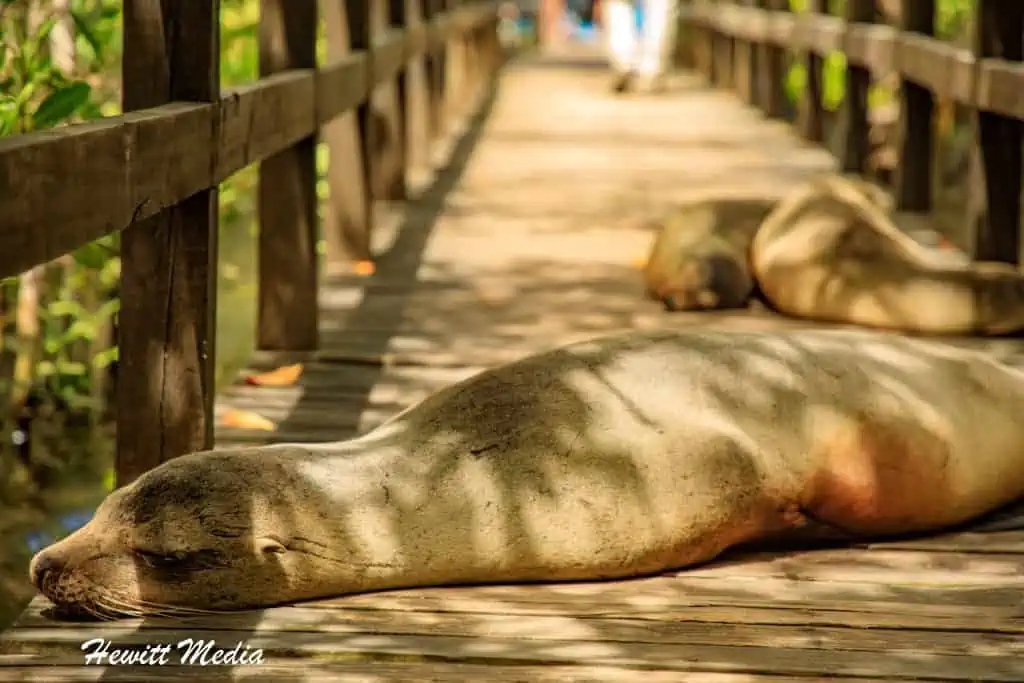
Sometimes this can be difficult to do. There may be a Galápagos Sea Lion or Marine Iguana resting in the middle of a path or dock. In these cases, it can be hard to find a way around them without getting close. When this happens, please listen to the instructions of your naturalist guides. They will help make sure that not only the animals remain safe, but you remain safe as well.
Protecting the Galápagos Ecosystem
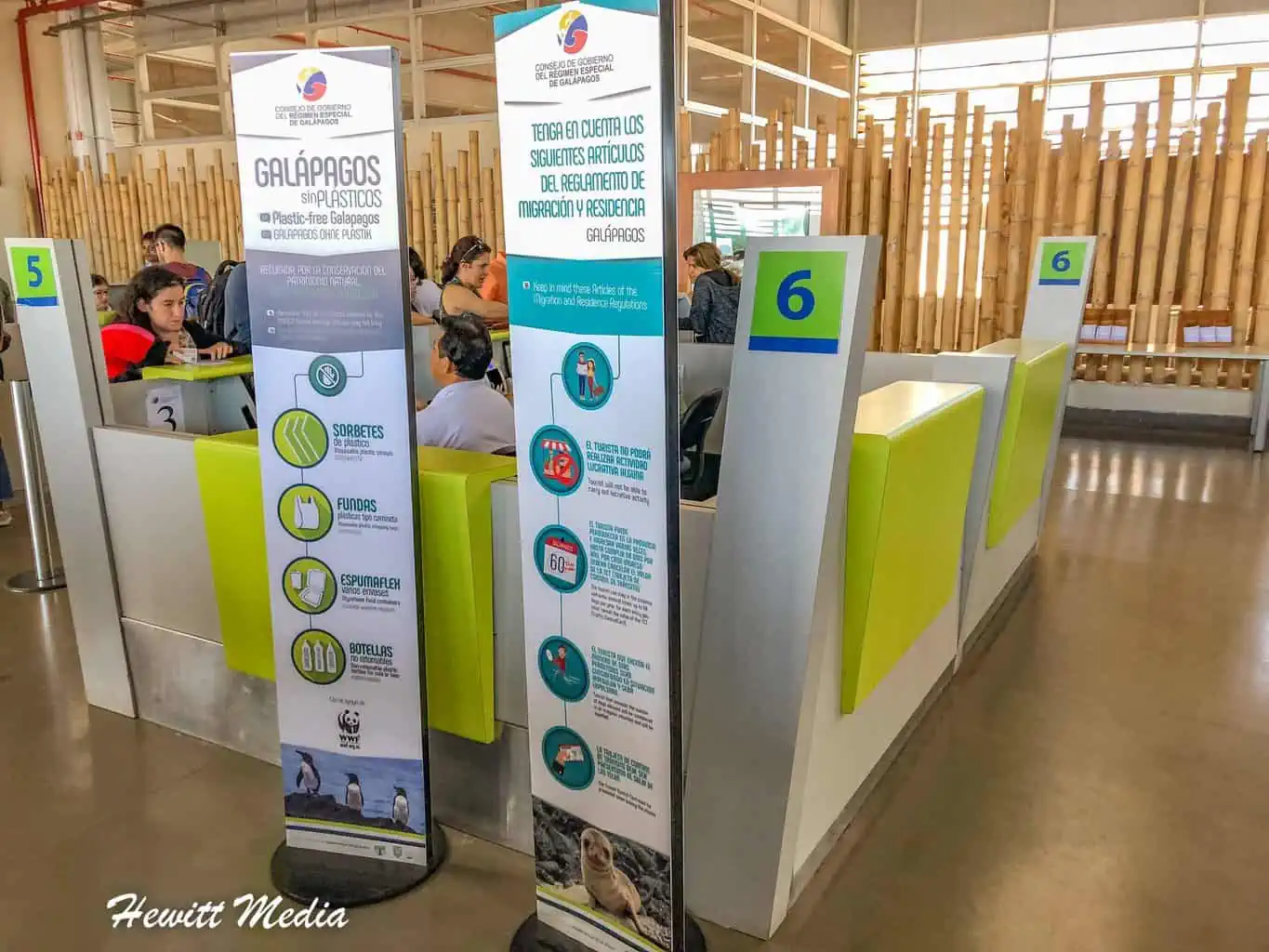
With great beauty comes great responsibility. The Galápagos Islands are an incredibly beautiful and diverse ecosystem, but they are also a very fragile ecosystem. As a visitor, you are responsible for following the rules and guidelines.
These guidelines are designed to help protect the Galápagos for future generations. If you would like to review the rules and guidelines, I have you covered. I included a highlighted list in my Galápagos Islands wildlife guide below. However, I would also recommend you read the full list of rules and regulations before visiting.
Overview of the Rules and Regulations
- You must be accompanied by a naturalist guide while in protected areas.
- Practice trail etiquette by staying on marked trails and obeying trail signs.
- Stay at least 6 feet away from the wildlife at all times.
- Refrain from using flash photography at all times.
- Only camp in authorized areas with the proper permit.
- It is your responsibility to not introduce foods, plants, or animals on the island.
- Do not take any souvenirs from the islands (plants, rocks, coral, animal parts, etc.)
- Practice “leave no trace” at all times.
- Smoking and the use of campfires are prohibited at all times.
- Fishing is only permitted on recreational tour boats.
- Motorized aquatic sports are prohibited.
Wildlife Events
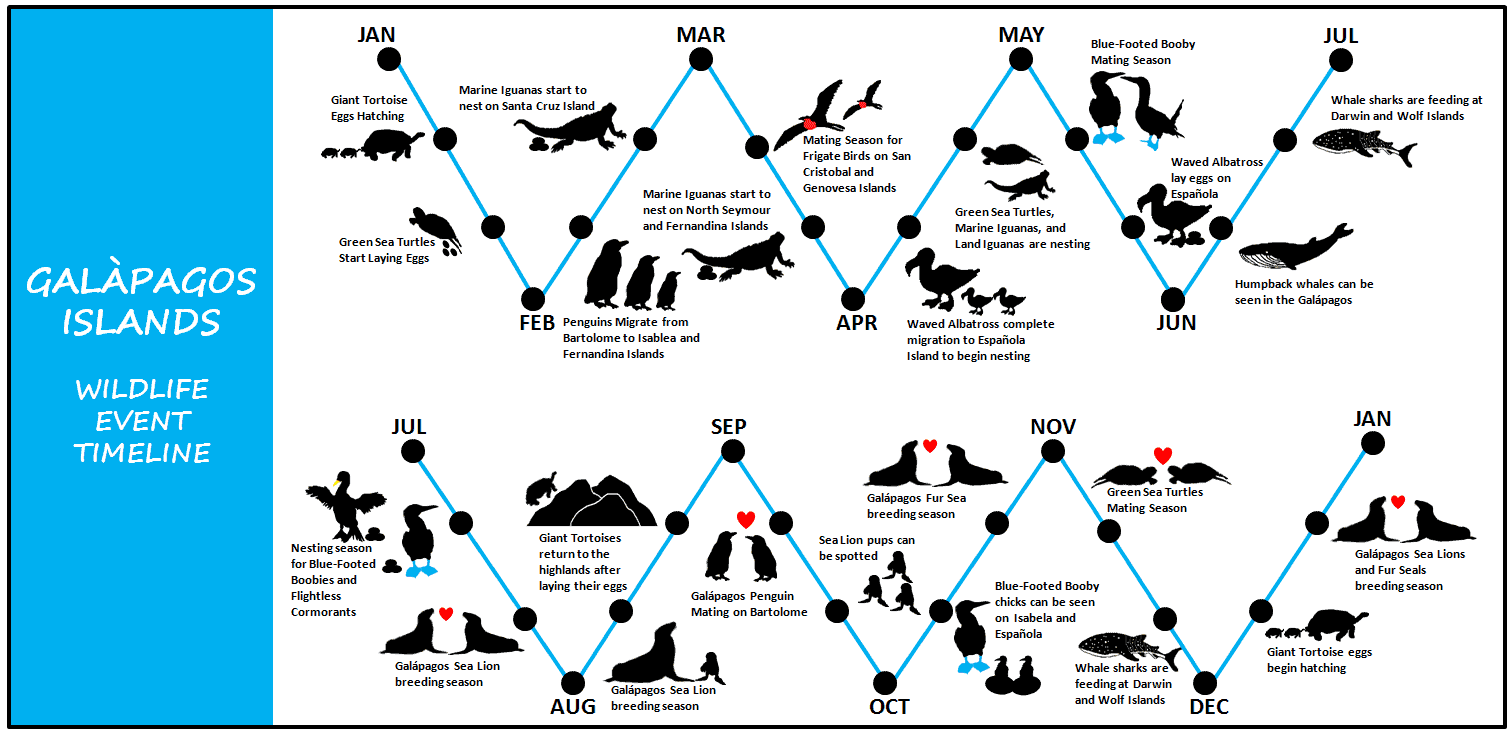
There is a staggering assortment of interesting wildlife events that occur in the Galápagos Islands. This can make it difficult at times to plan a trip. You may be wondering what time of year it would be best for you to visit.
For those who are unsure, I have developed a Wildlife Event Infographic to assist you. You can find that in my Galápagos Islands wildlife guide below. This Infographic highlights many of the important wildlife events that occur on and around the islands.
Wildlife Found in the Galápagos

The Galápagos Islands are a unique and fantastic destination. However, it isn’t just because of the breathtaking vistas. In addition, the islands are also home to an amazing diversity of unique wildlife. For those who are curious as to which animals you might see, you will want to read on. I cover some of the more common animals in my Galápagos Islands wildlife guide below.
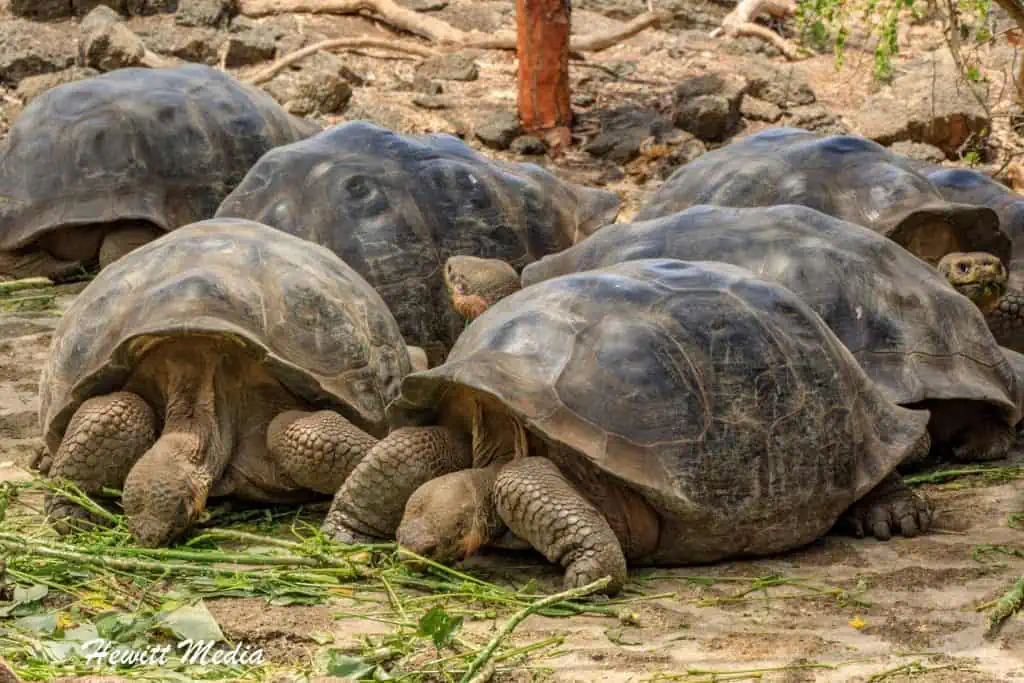
Giant Tortoise
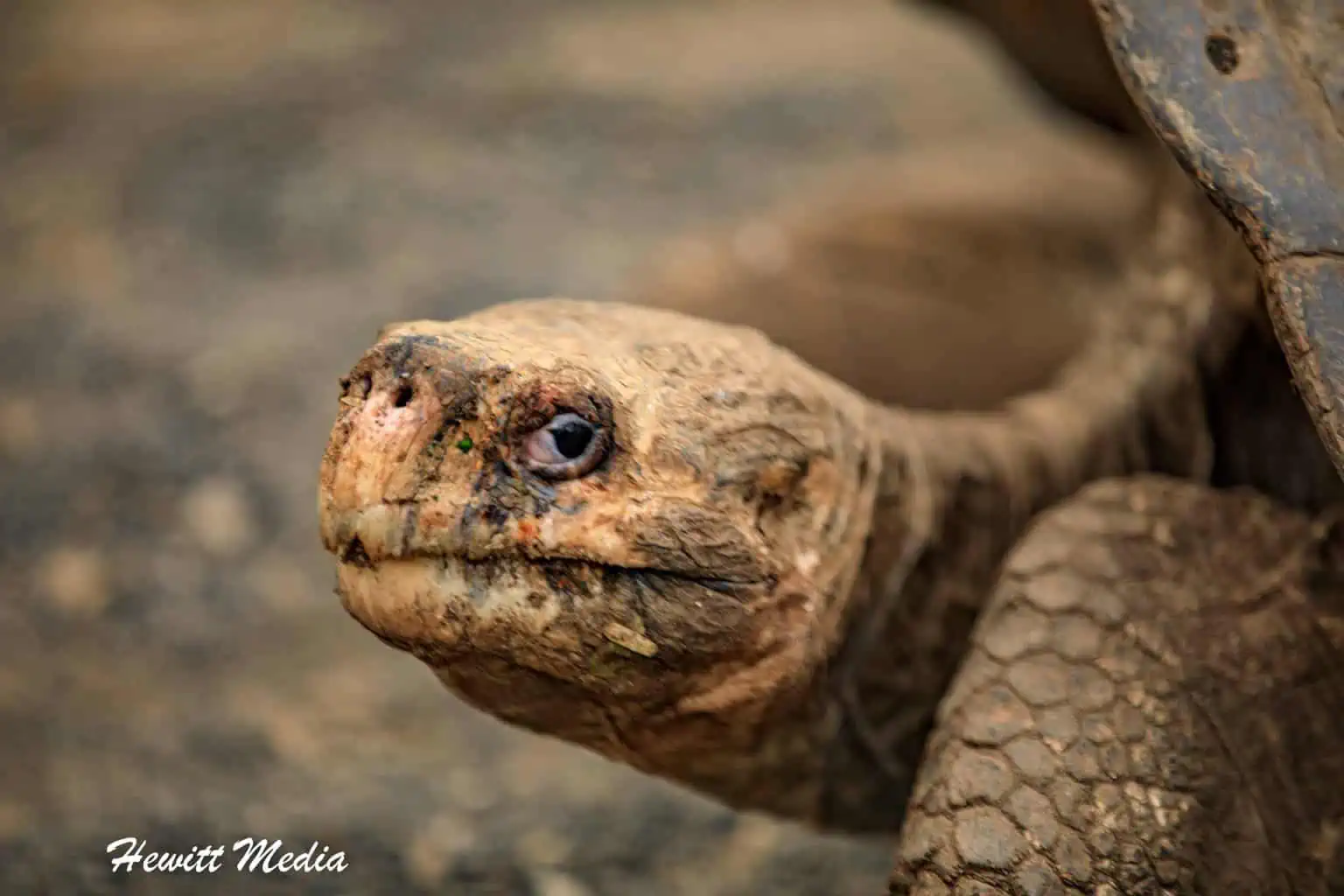
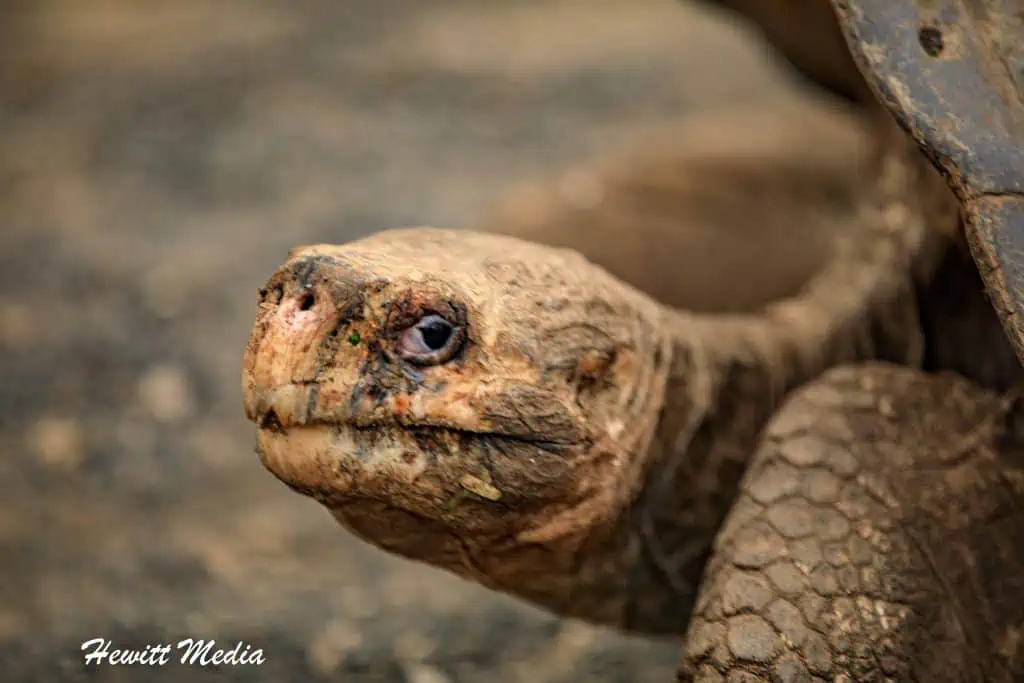
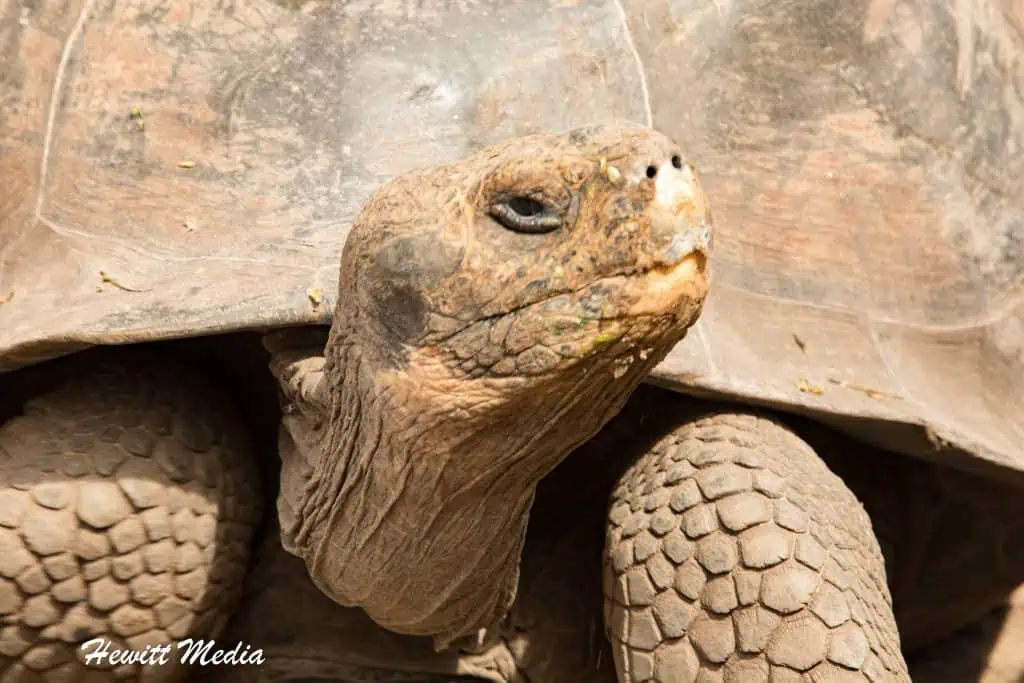
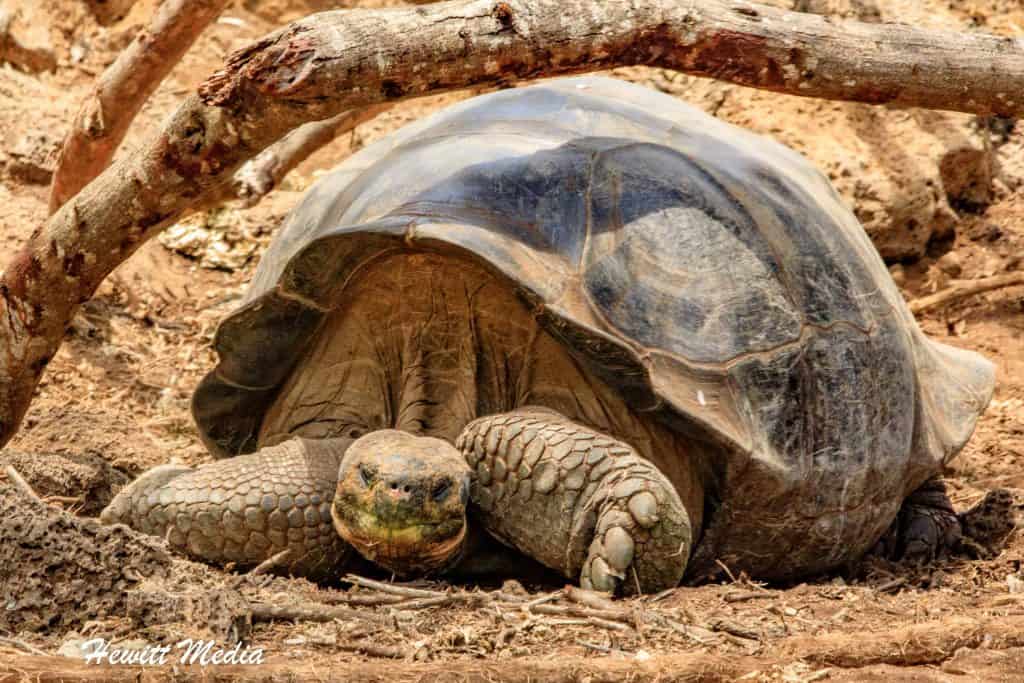
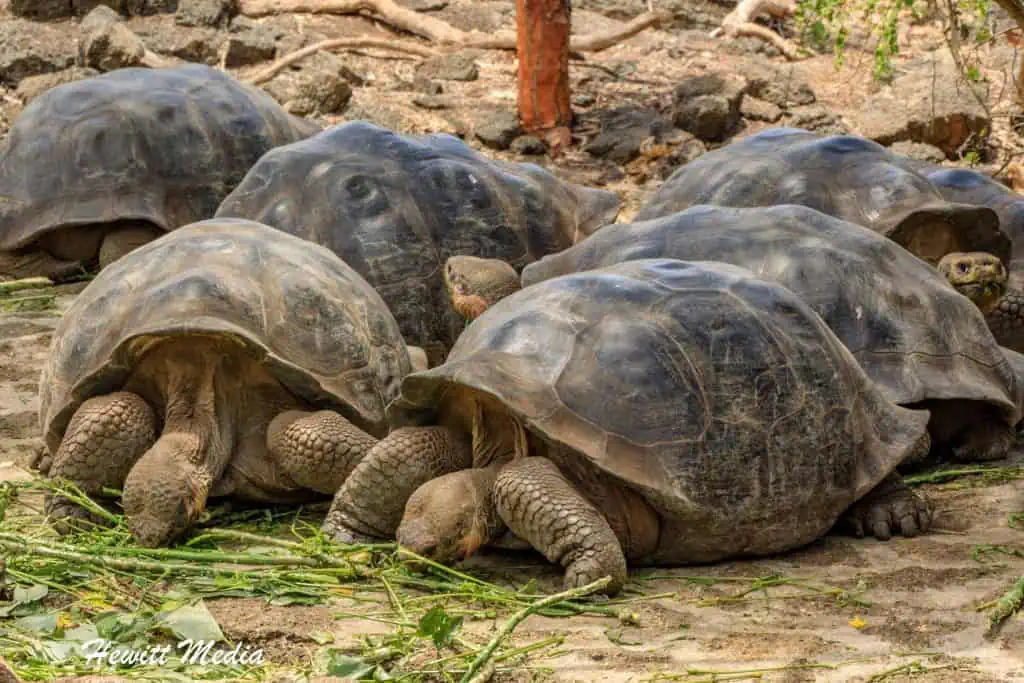
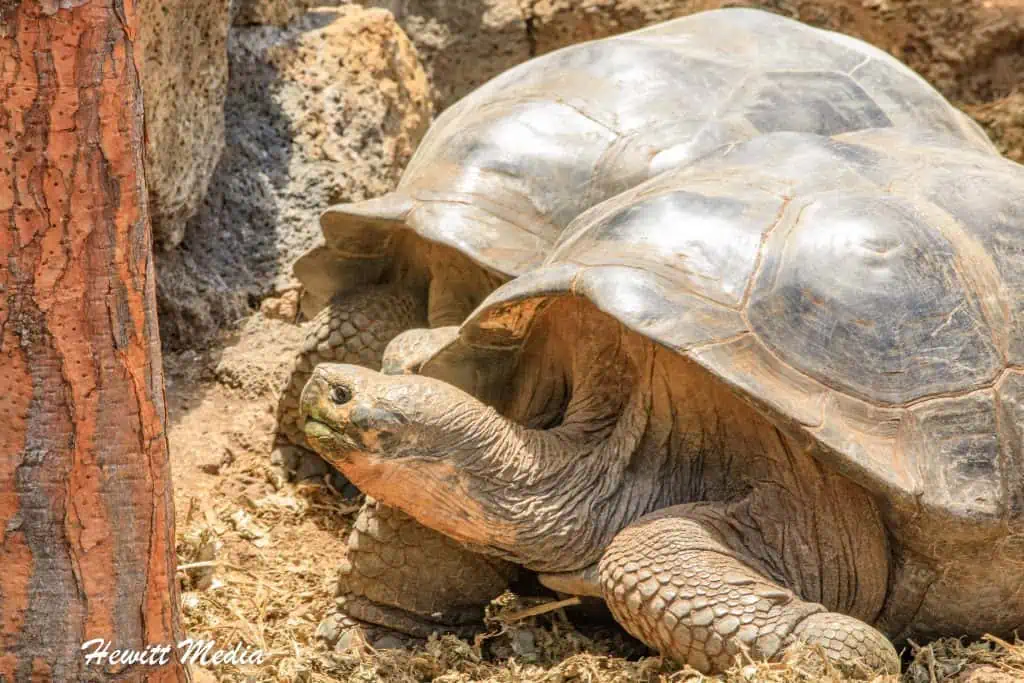
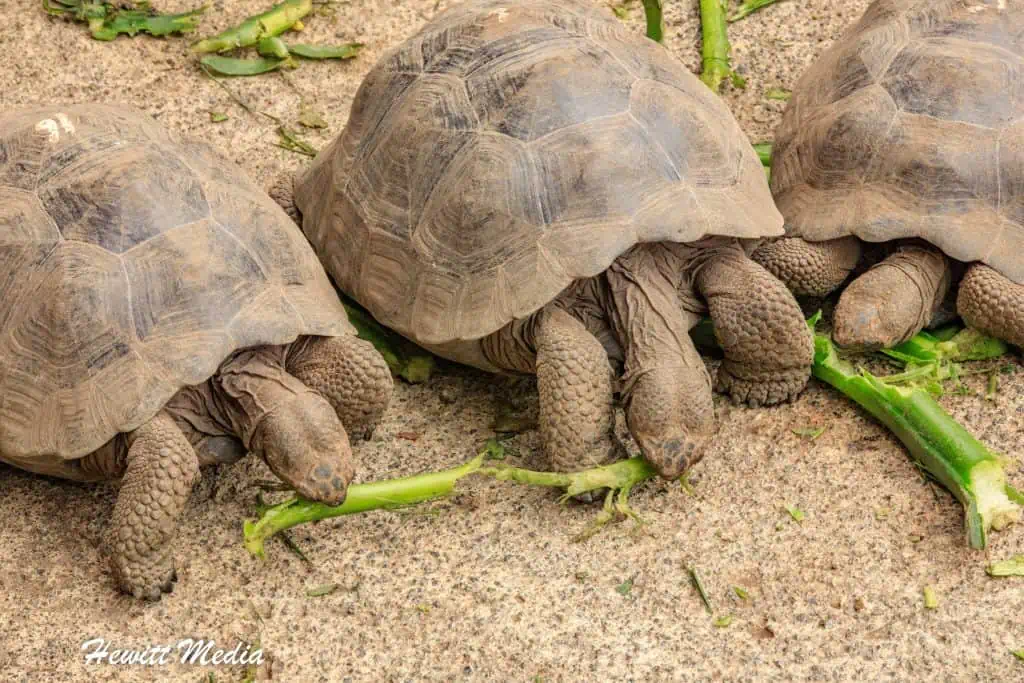
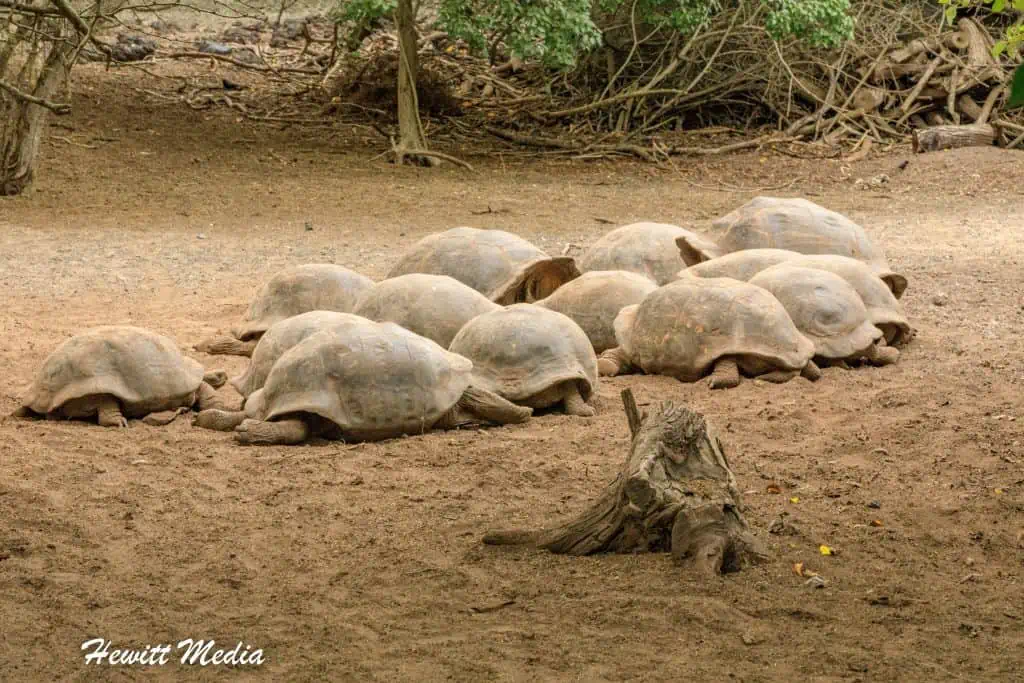
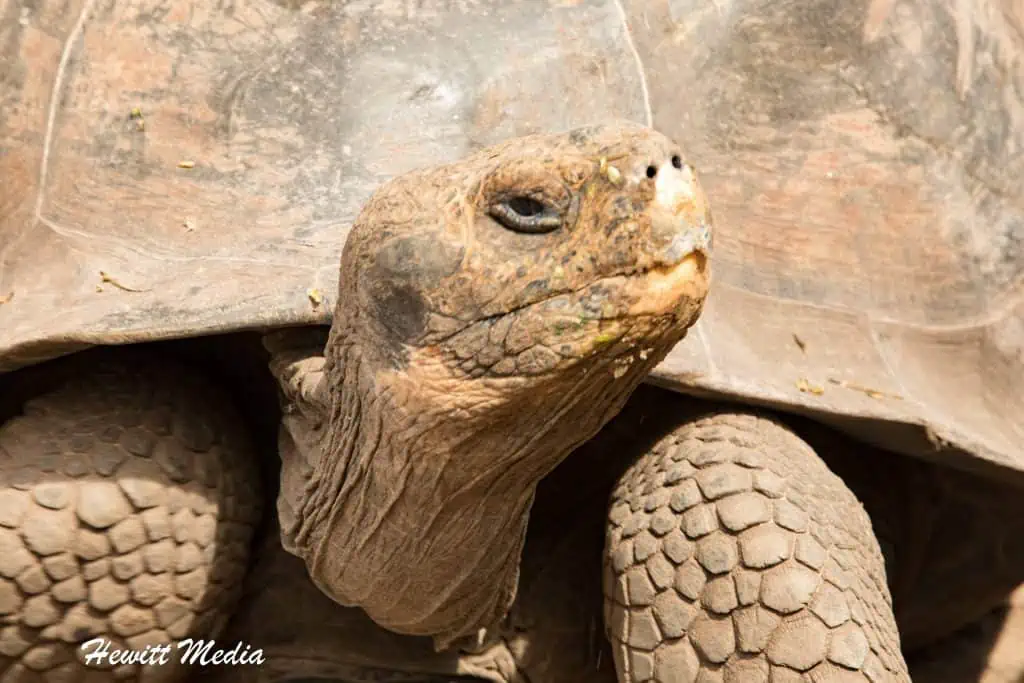
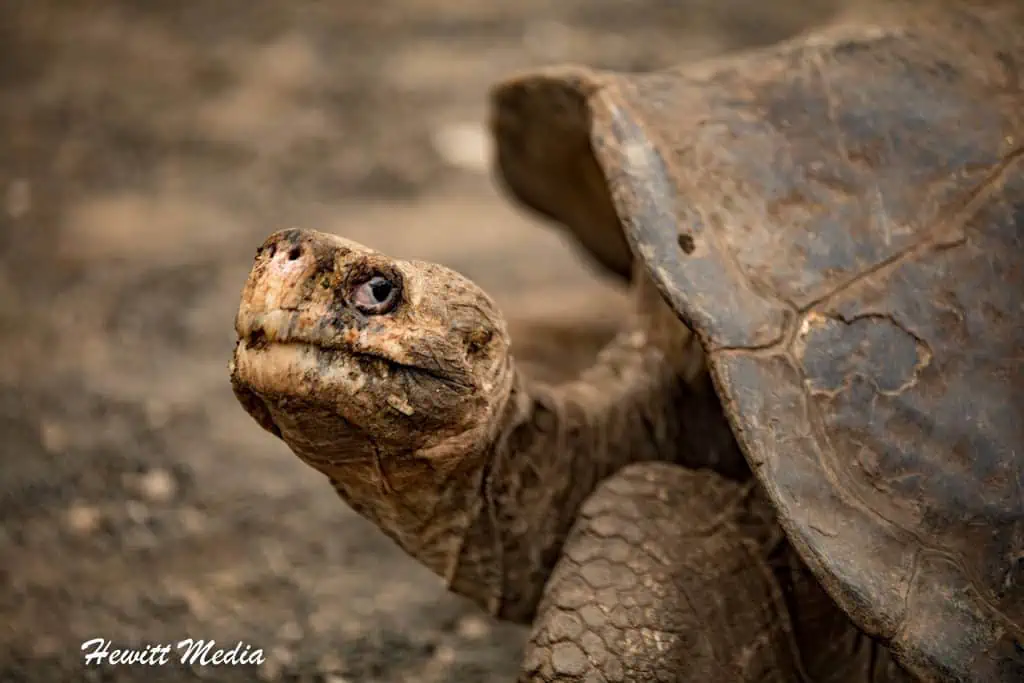
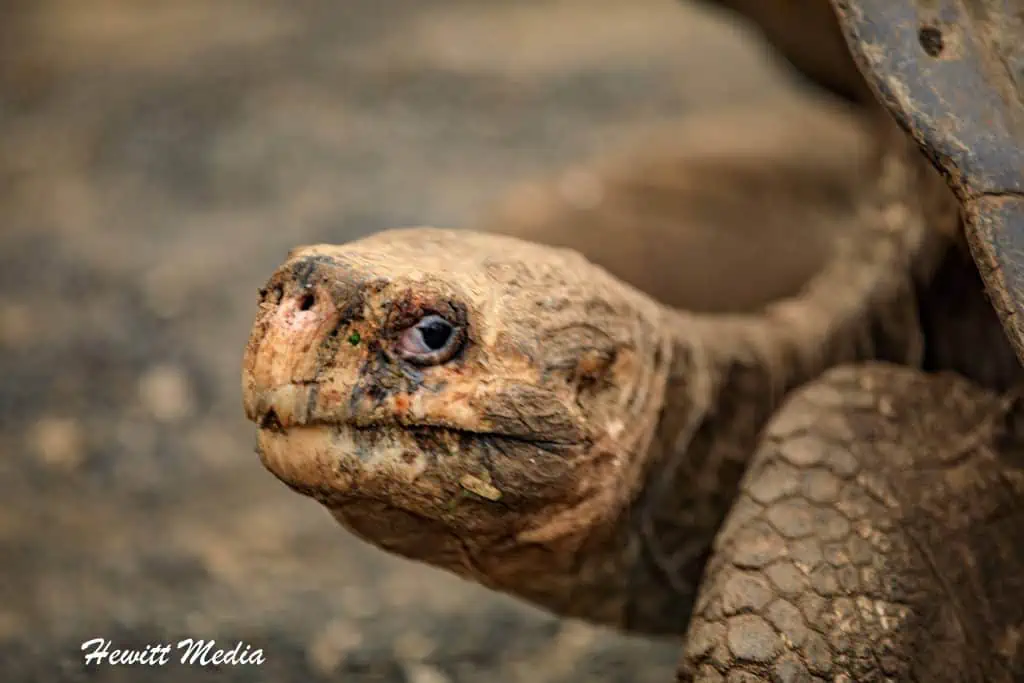
No animal represents the Galápagos more than its giant tortoises—so iconic that the islands take their name from the Spanish word galapago, meaning “saddle,” inspired by their shells. Once found worldwide, giant tortoises now survive in only two places: the Galápagos and the Aldabra Atoll.
They likely arrived on floating vegetation, first colonizing Española and San Cristóbal before spreading into 15 populations on 10 islands. Of the original thirteen species, three are gone, leaving nine today. Conservation is urgent, and breeding centers on Santa Cruz, Isabela, and San Cristóbal work to rebuild populations while strict biosecurity protects native wildlife.
You can see tortoises up close at these centers or in the highlands, where the largest and oldest individuals live. The Charles Darwin Research Center on Santa Cruz is also a must‑visit for anyone wanting to understand the science and conservation behind these extraordinary creatures.

Galápagos Penguin
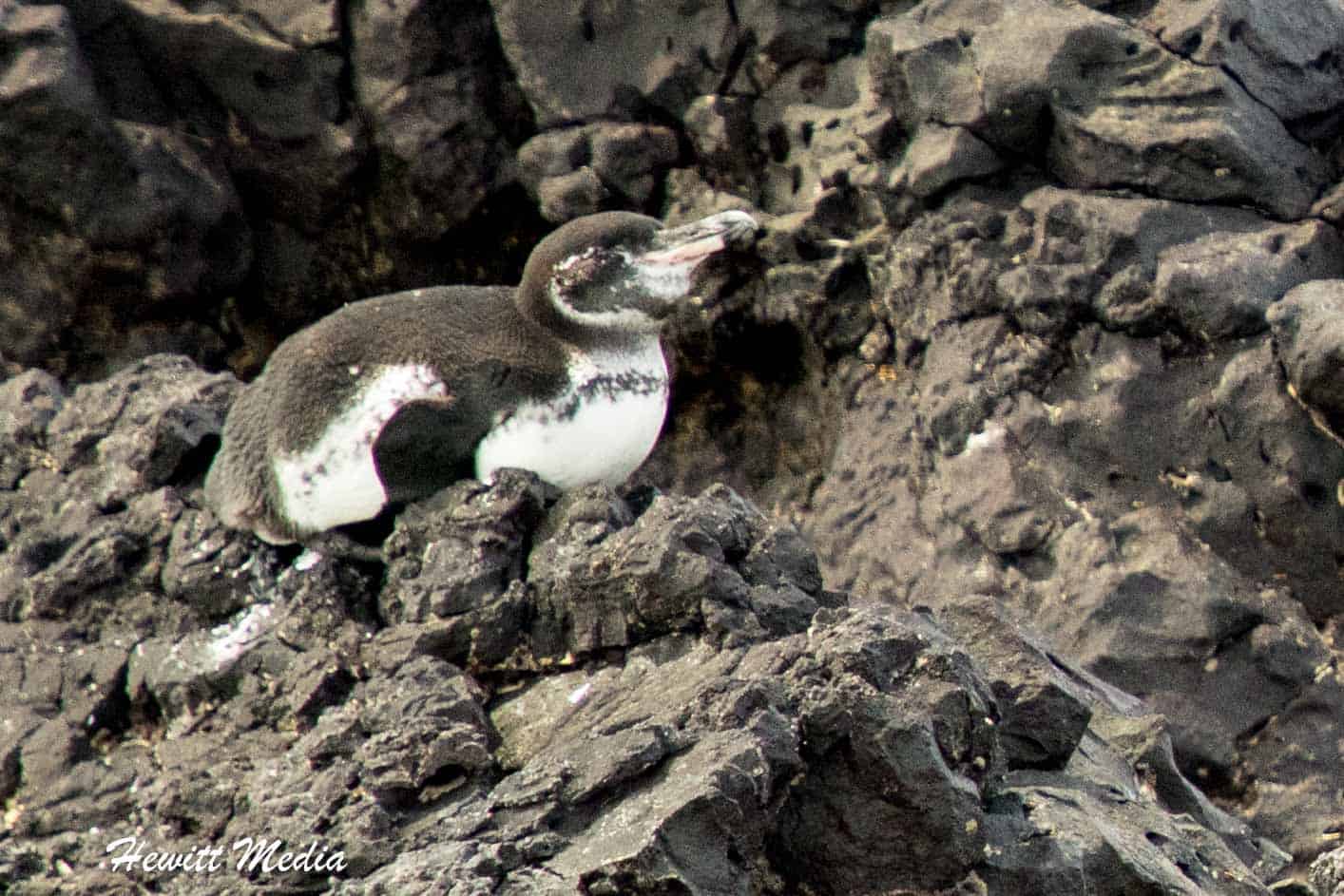
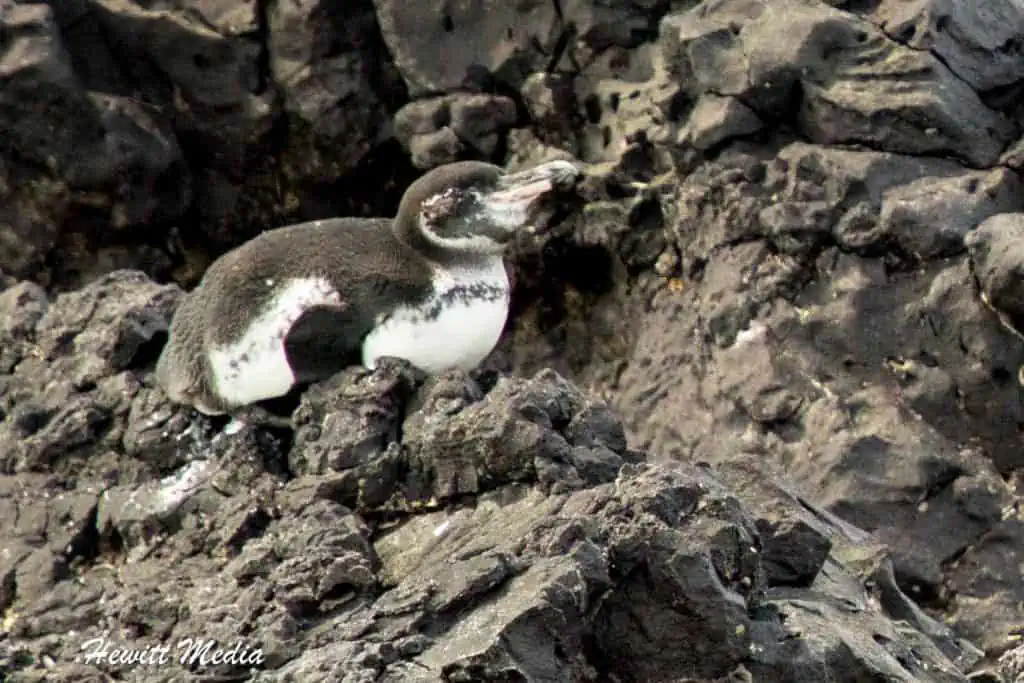
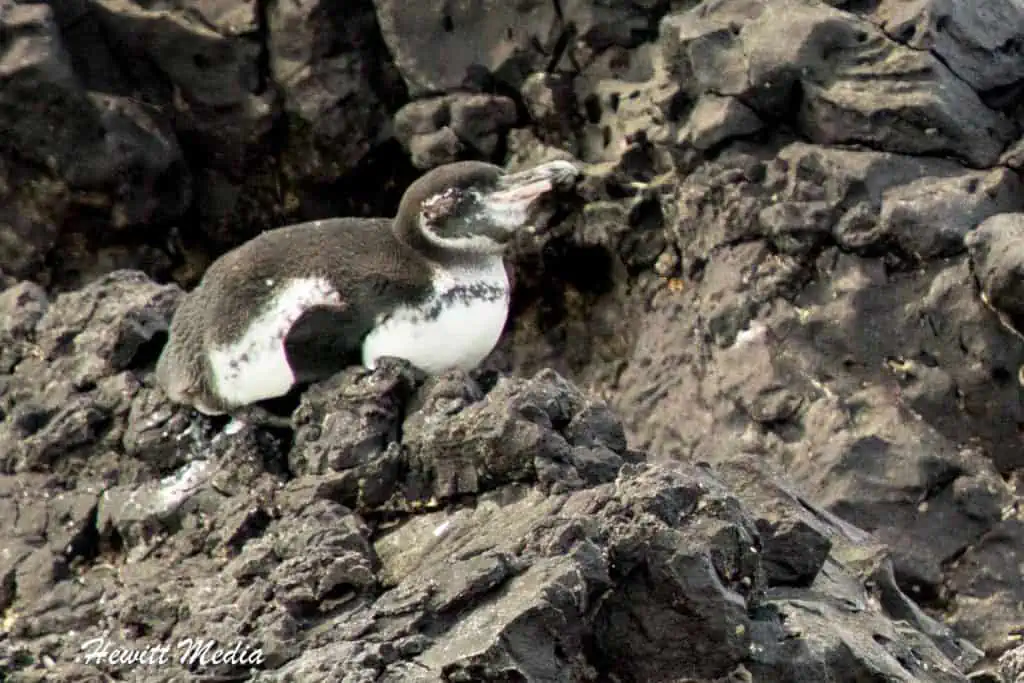
My favorite Galápagos animal is one you’d never expect here: the tiny, quick Galápagos penguin—the only penguin species living north of the Equator. They may wobble on land, but underwater they move with incredible speed and elegance.
Most penguins cluster around Fernandina and western Isabela, with smaller pockets scattered across nearby islands. The chilly Humboldt Current keeps their environment cool enough for survival, so warm days often send them straight into the water.
For travelers hoping to swim alongside them, several snorkeling trips offer close encounters. You’ll find my recommended routes in the snorkeling guide.

The best snorkeling site, without a doubt, is the Tagus Cove snorkeling site, just off Isabela Island. It sits between Isabela and Fernandina Islands, which is a hot spot for penguin activity.

Marine Iguanas
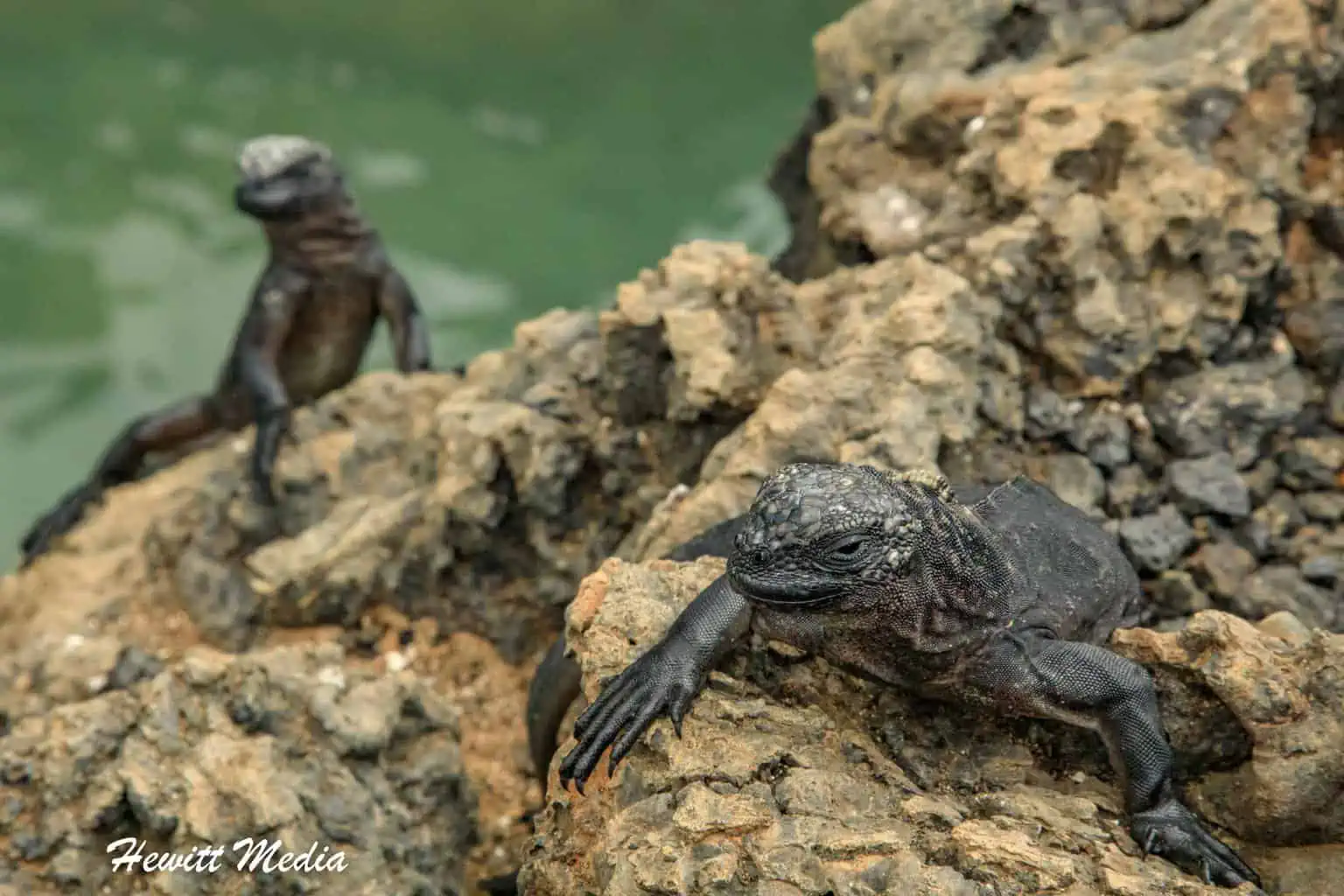
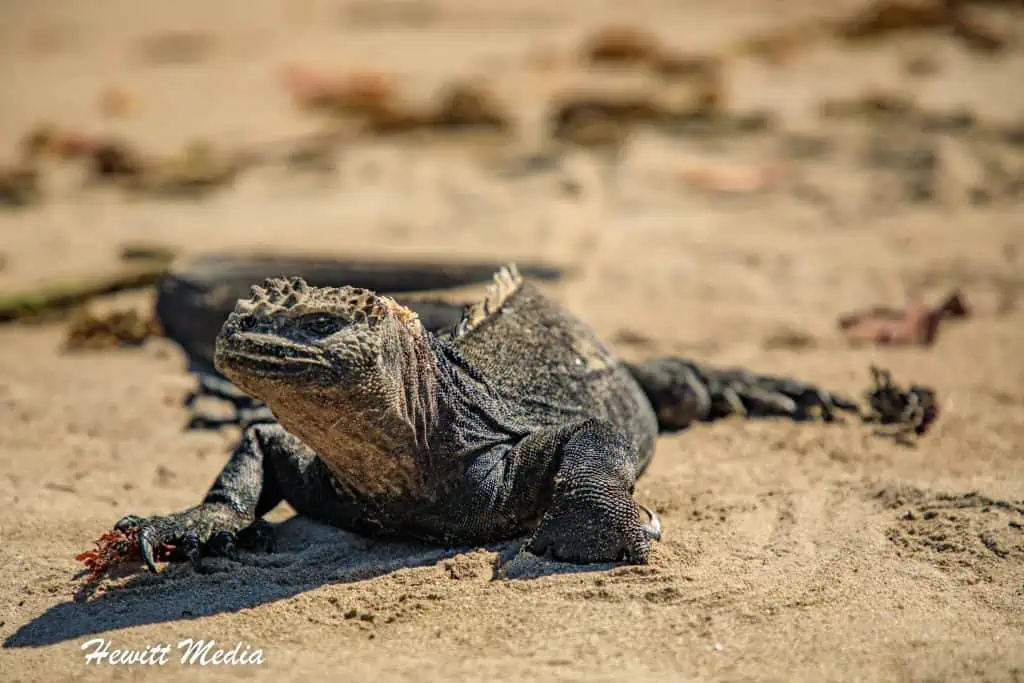
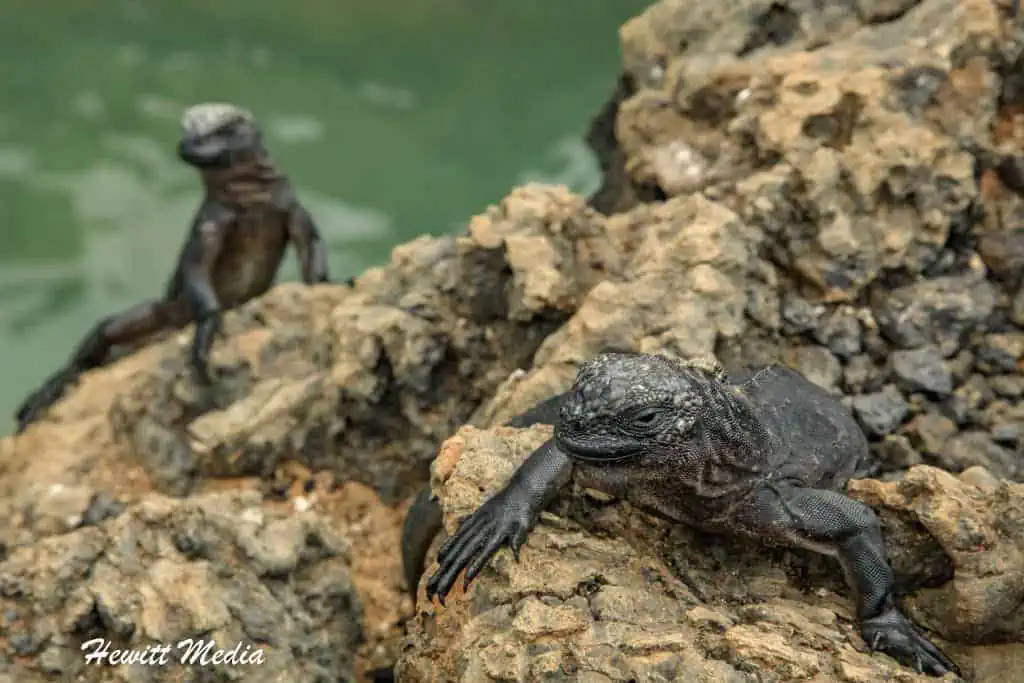
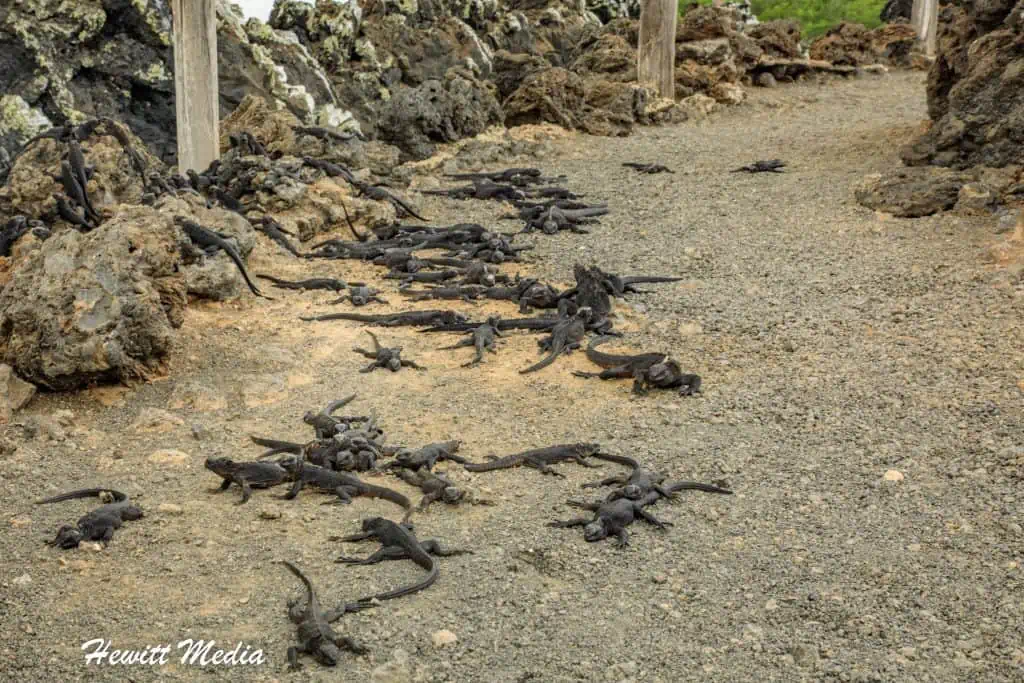
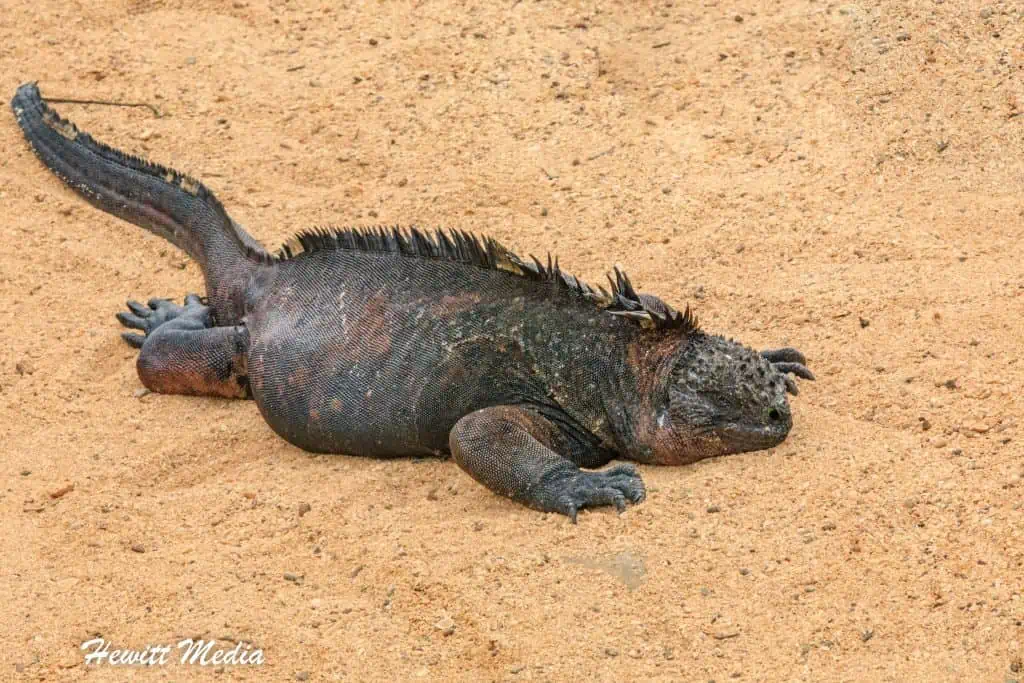
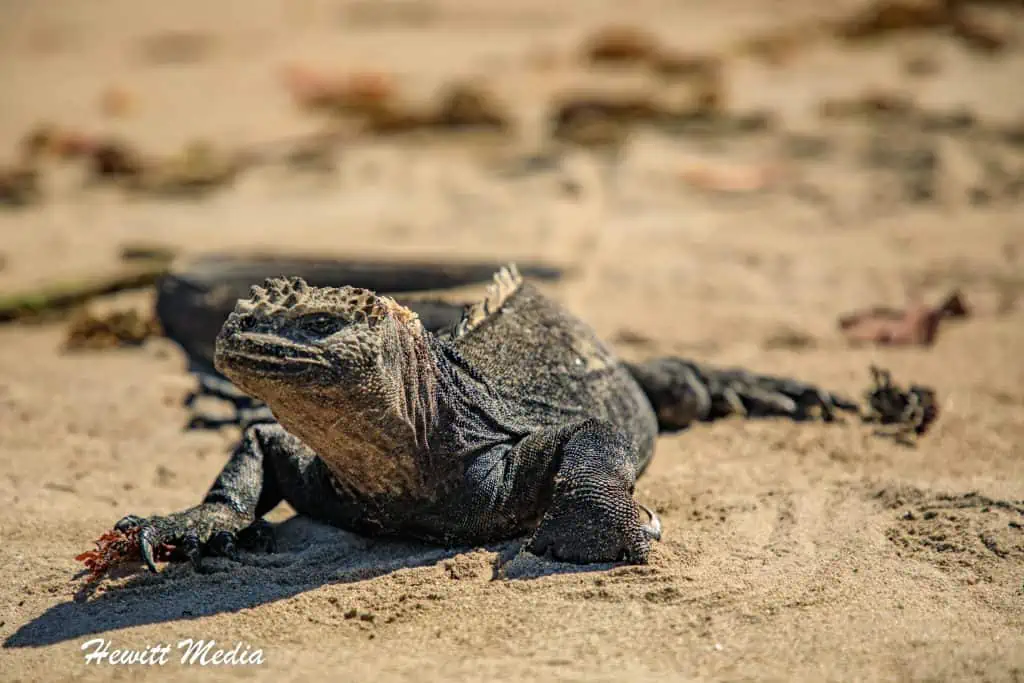
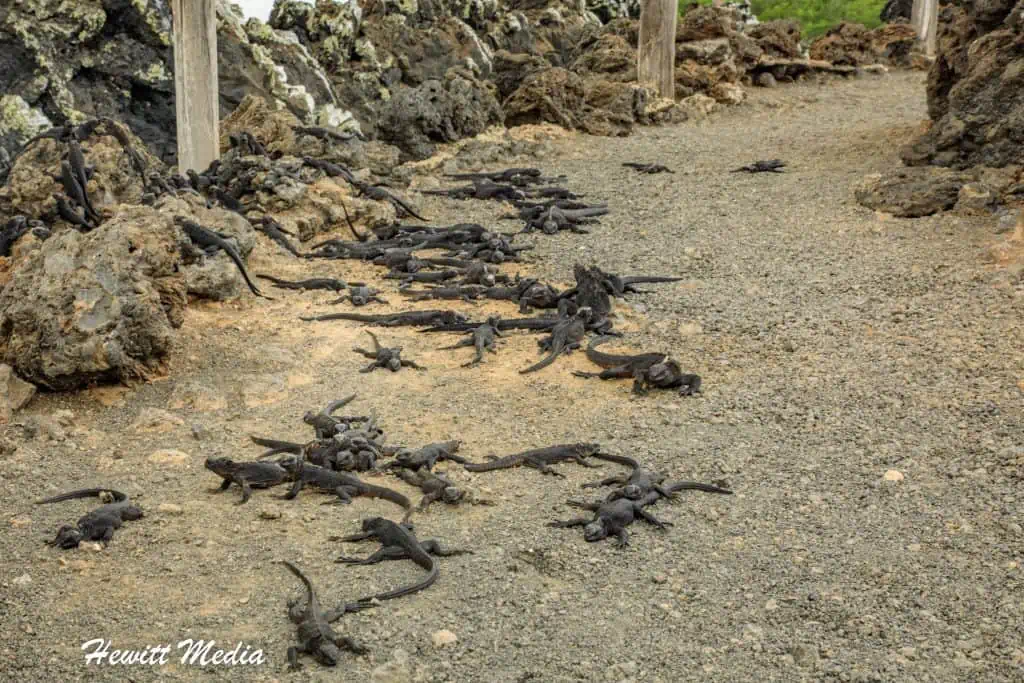
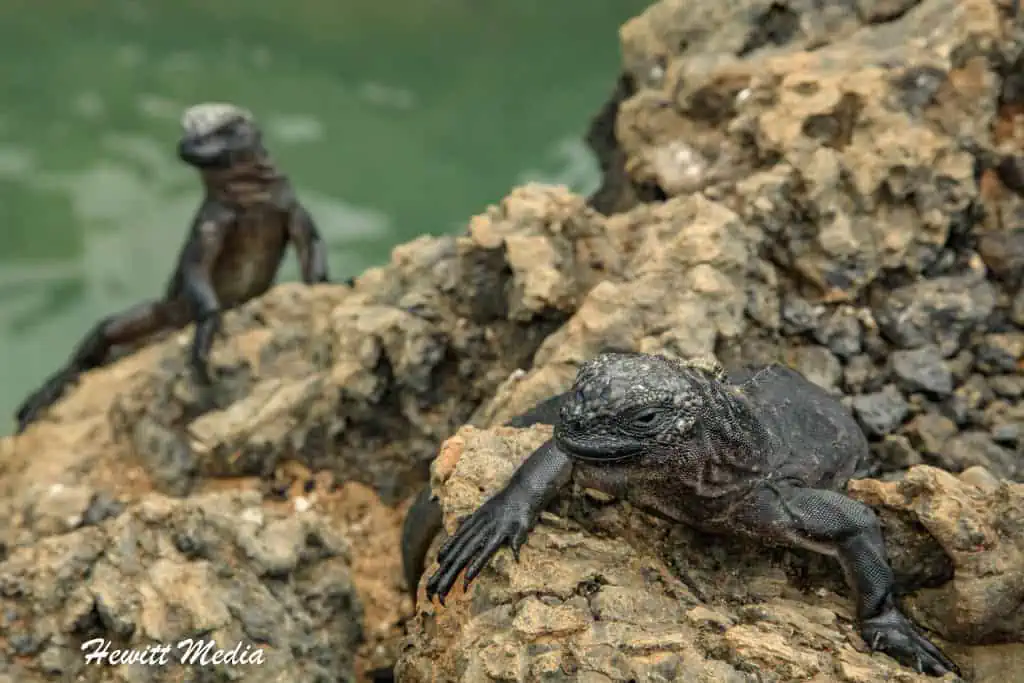
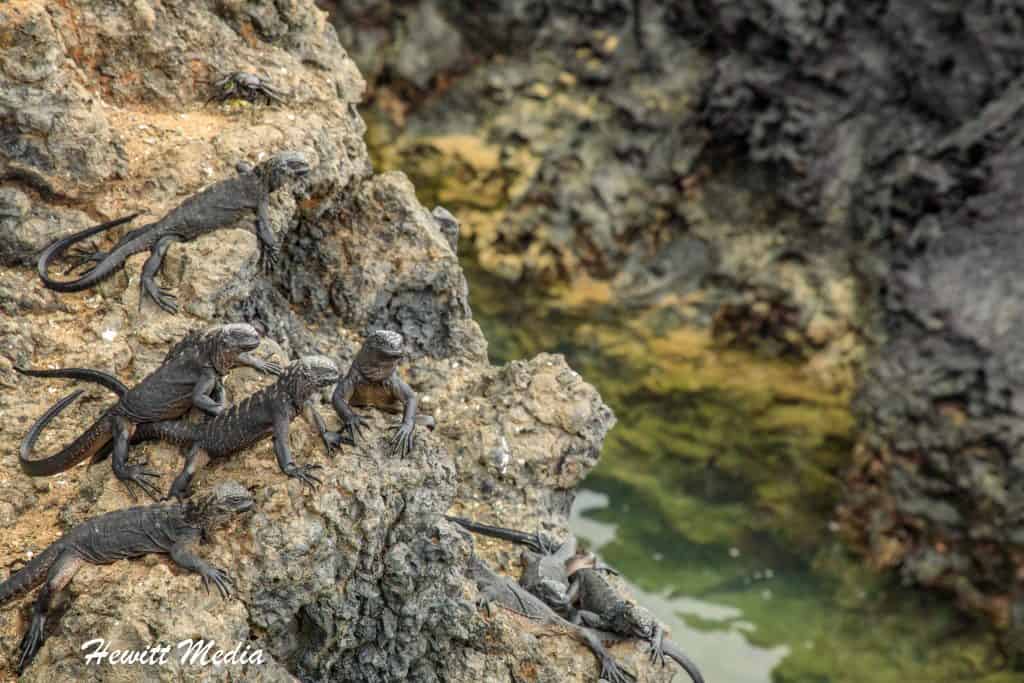
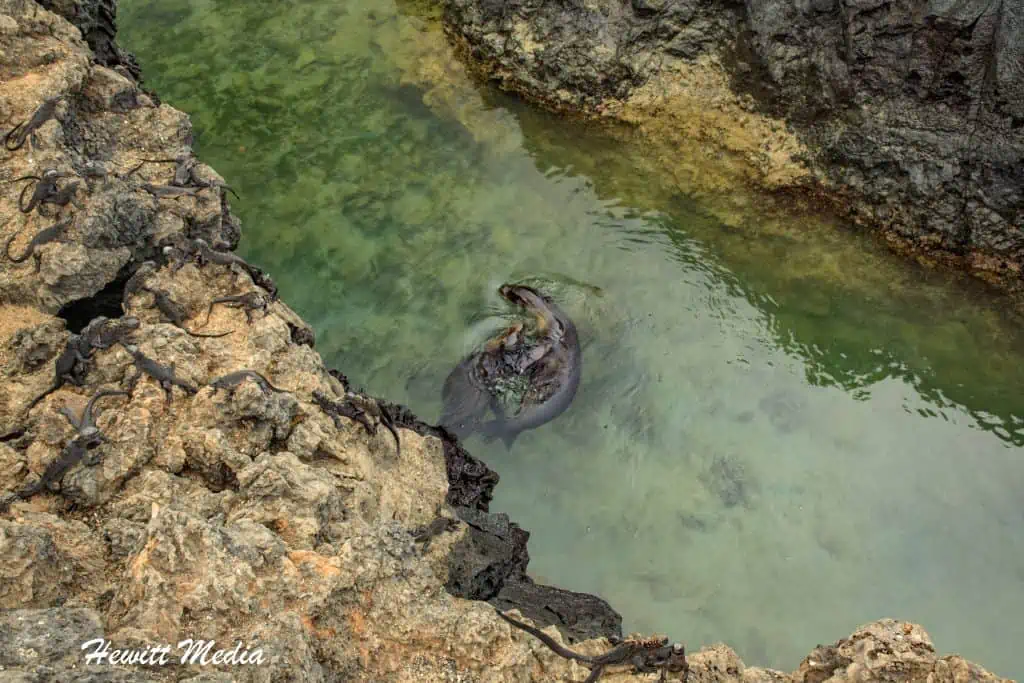
The marine iguana may not be cute—Darwin famously called them “disgusting, clumsy lizards”—but they’re among the most fascinating animals in the Galápagos. They’re the only iguanas that dive underwater, grazing on algae before returning to the rocks to warm their bodies.
Juveniles stay close to lava tunnels to escape predators, especially the Galápagos hawk. If you visit Las Tintoreras, you’ll see entire clusters of young iguanas tucked into the volcanic landscape. I cover these snorkeling spots in my snorkeling guide.
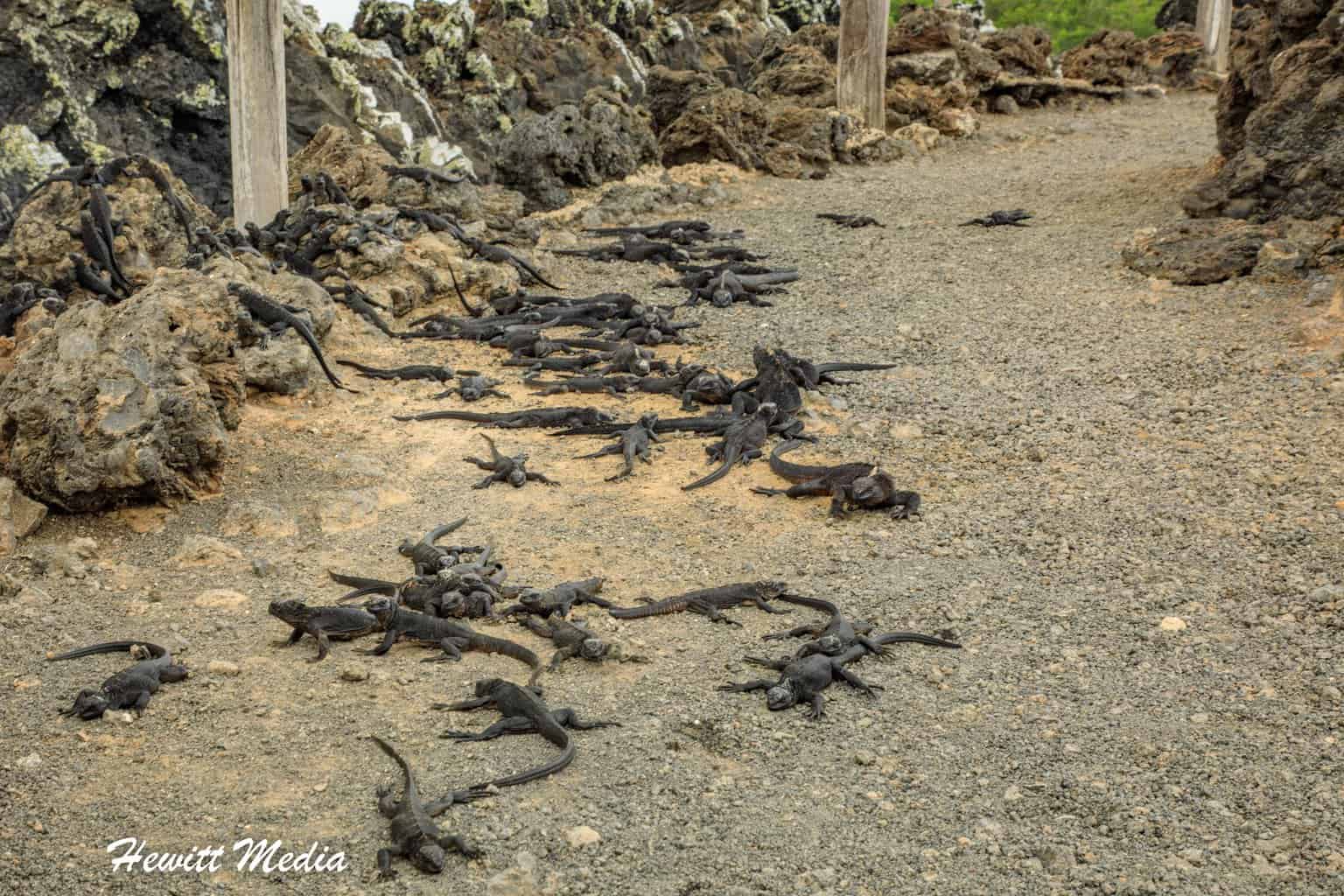
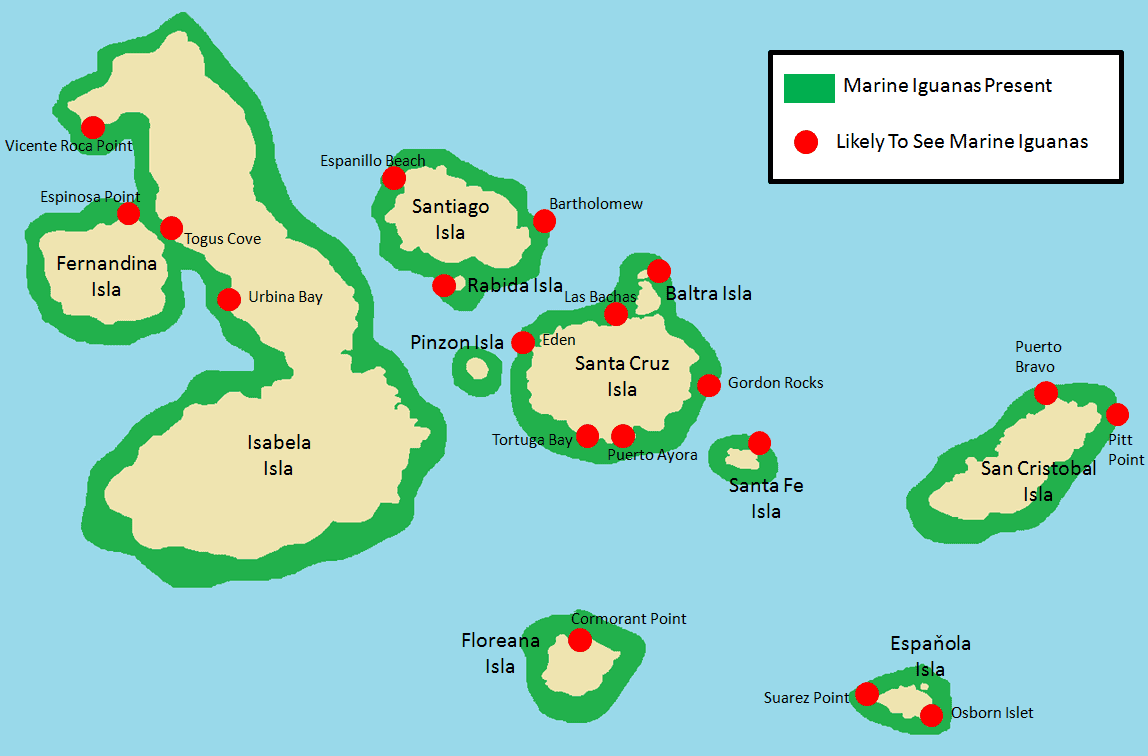
Once marine iguanas grow large enough to defend themselves, they leave the lava‑tunnel areas and spread across the islands. To see them swimming and feeding, head to the snorkeling sites at Punta Espinosa and Tagus Cove off Isabela Island. I mark both locations in my Galápagos wildlife guide.
Land Iguanas

Three land iguana species live in the Galápagos, with the yellow Conolophus subcristatus being the most familiar and widespread. Santa Fe is home to the Conolophus pallidus, while the rare pink‑and‑black Conolophus marthae—unknown until the late 20th century—survives only on the Wolf volcano in northern Isabela.
These herbivores feed on shrubs and fallen cactus pads, spending hot hours tucked in the shade and nights in burrows. Look beneath cactuses and low vegetation for your best chance to see them. Their key habitats appear in my Galápagos wildlife guide.

Galápagos Sea Lions
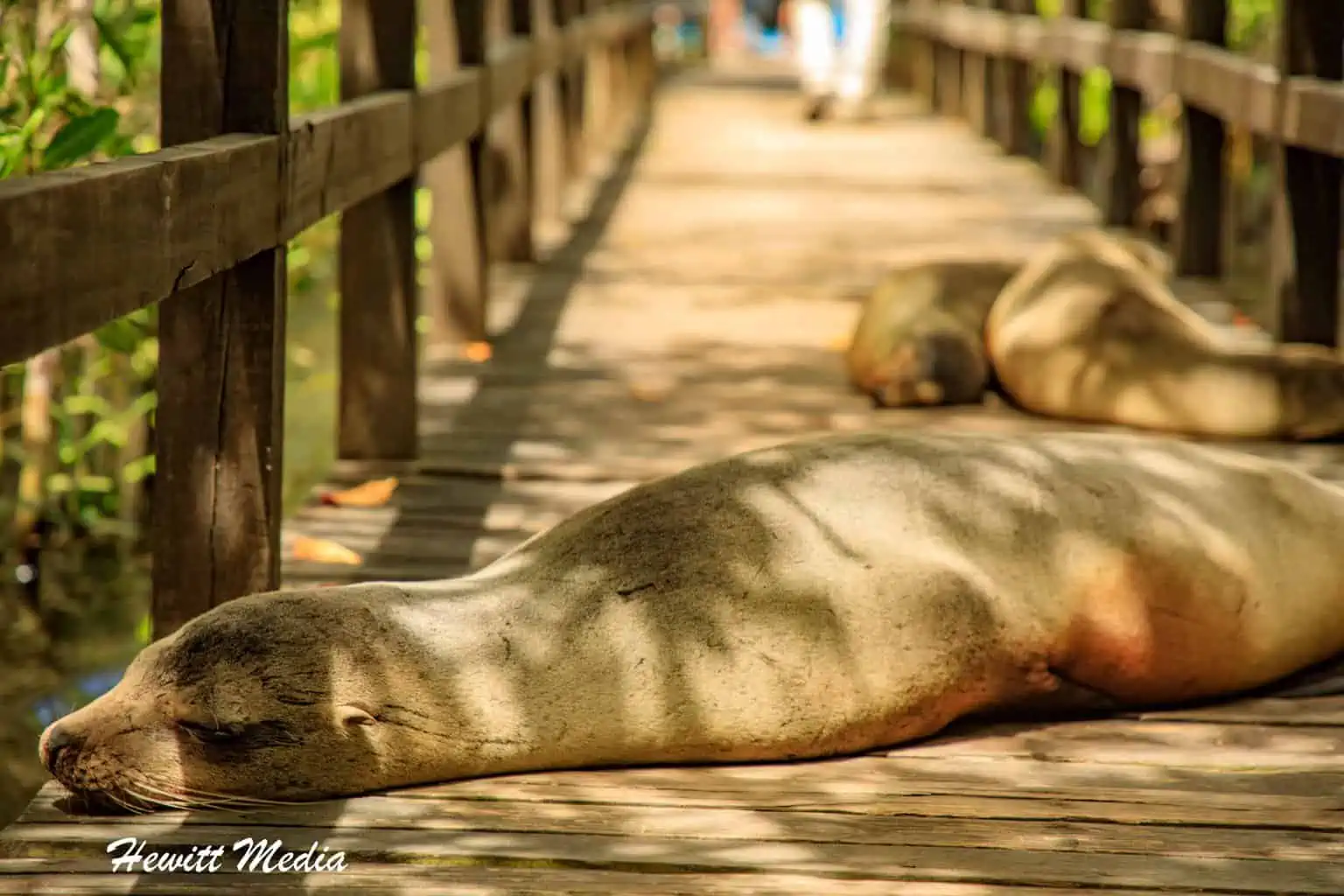
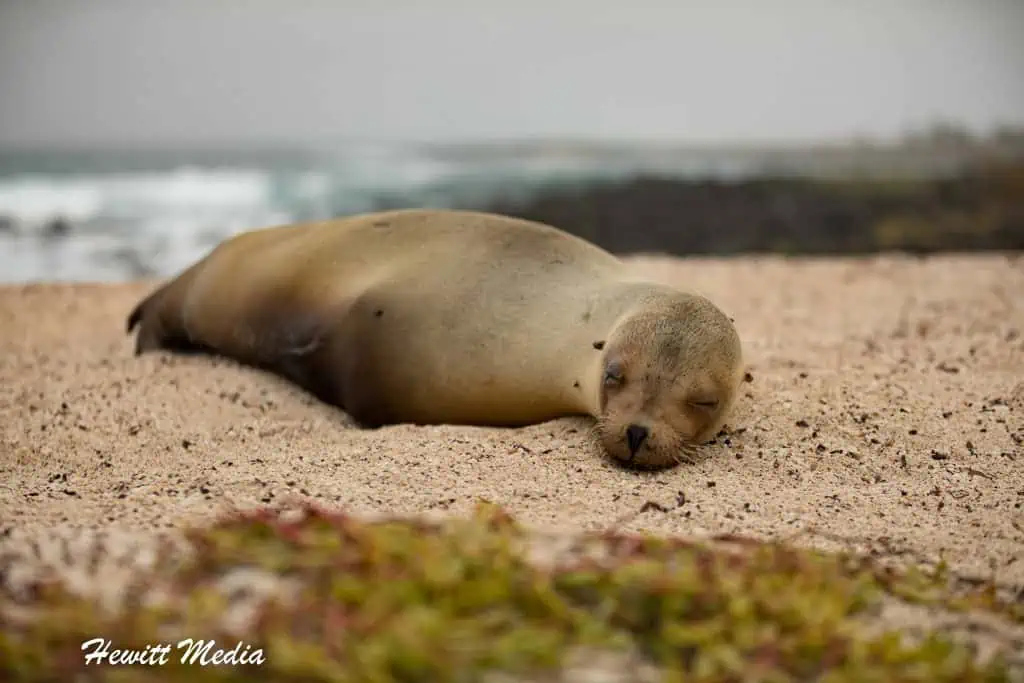
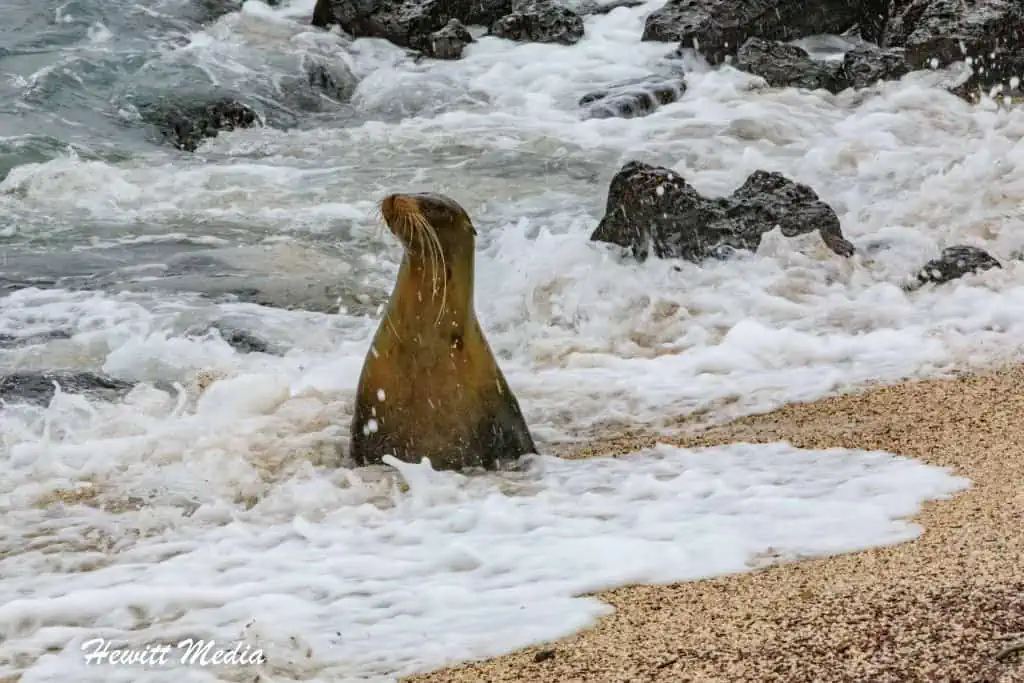
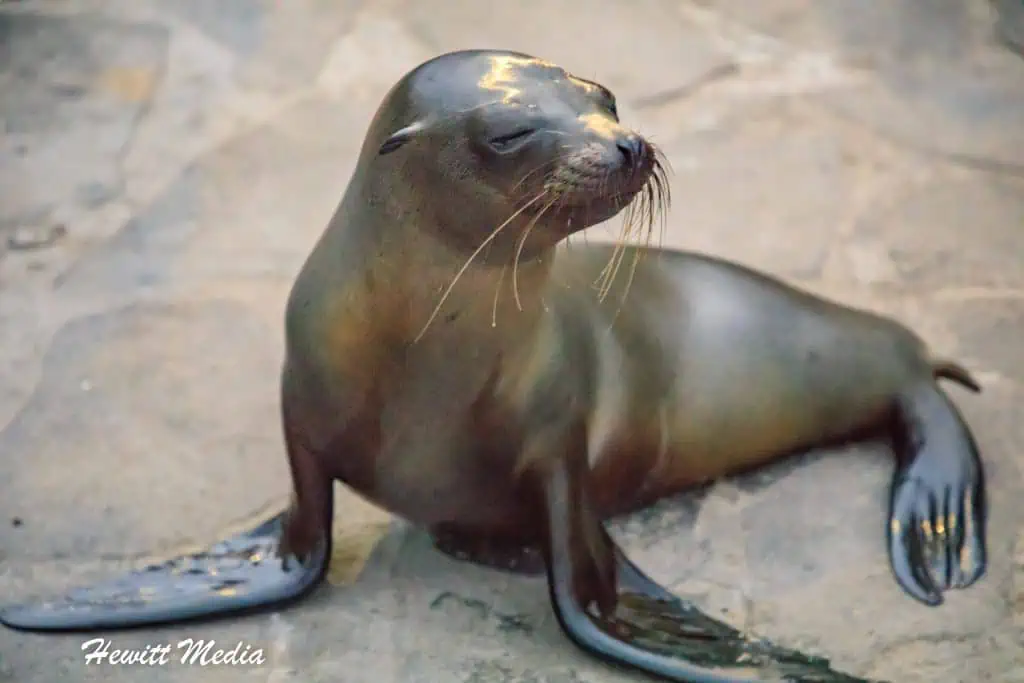
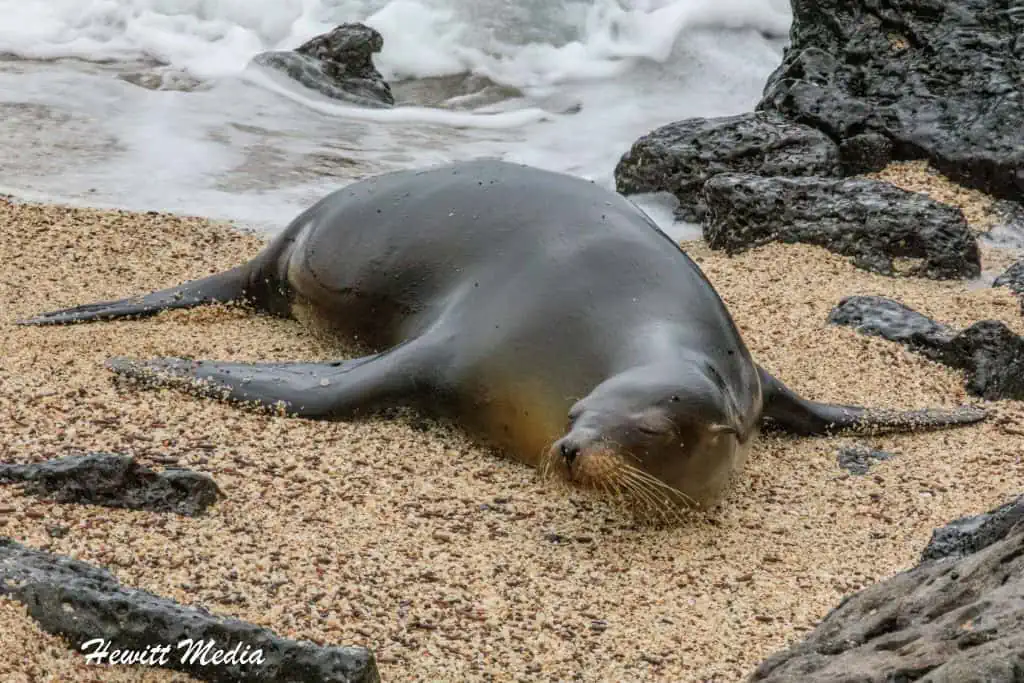
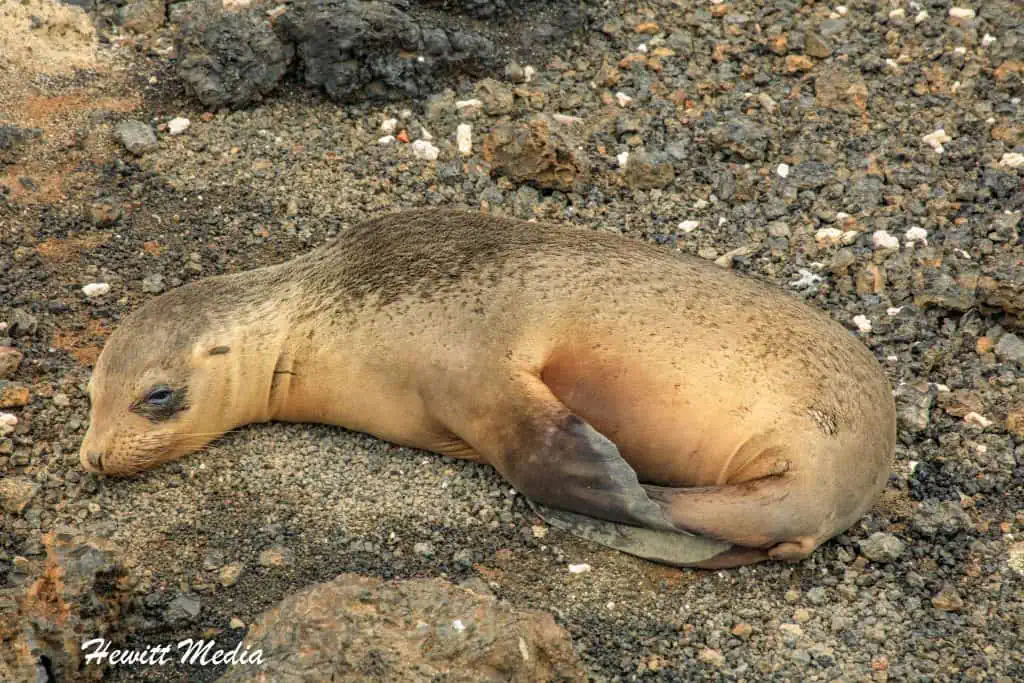
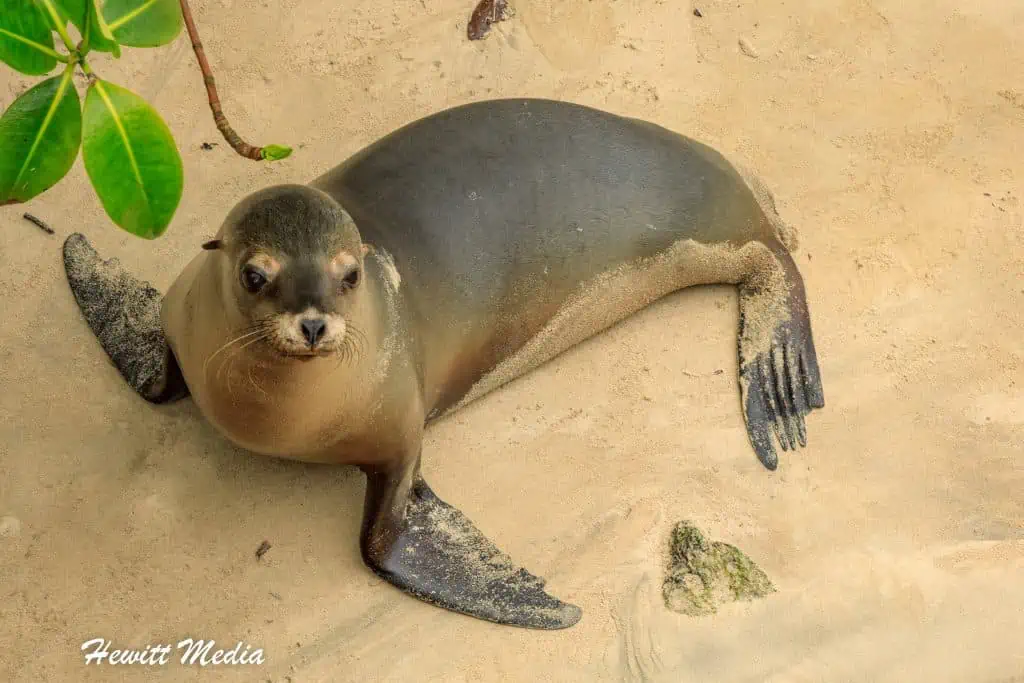
Sea lions are everywhere in the Galápagos, often stretched across beaches, rocks, and even harbor benches. Their breeding season runs June–December, making March–May ideal for seeing newborn pups.
You’ll find large groups around Puerto Ayora and Puerto Villamil, where they bask in the sun and take over docks. For swimming with them, Isla Lobos off San Cristóbal is unbeatable. More snorkeling spots appear in my snorkeling guide.
NOTE: Don’t confuse the Galápagos Sea Lion with the Galápagos Fur Seal. The fur seals live around the islands as well but are seldom seen. Although they travel amongst all the islands, they are mostly seen in just a few spots. This includes James Bay on Santiago Island and in Darwin Bay on Genovesa Island.

Galápagos Hawk
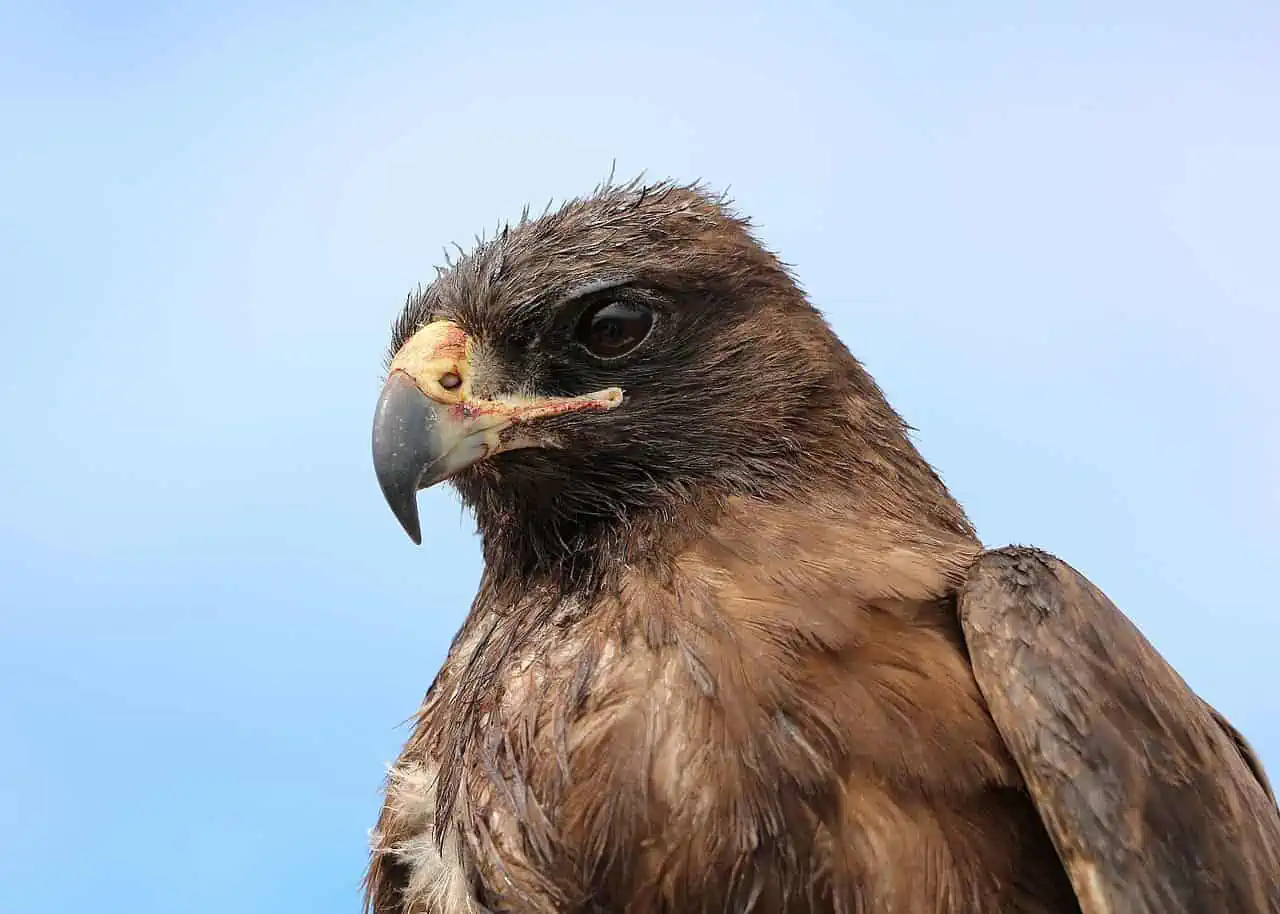
The Galápagos hawk is an endemic apex predator and one of the rarest raptors alive—only around 150 breeding pairs remain. Though related to white‑tailed and red‑backed hawks, this species exists solely in the Galápagos.
Their diet ranges from centipedes and locusts to small mammals, reptiles, and turtle hatchlings. You’re most likely to spot them on Isabela or Fernandina, as they’ve vanished from several other islands.

Whales, Dolphins, and Sharks
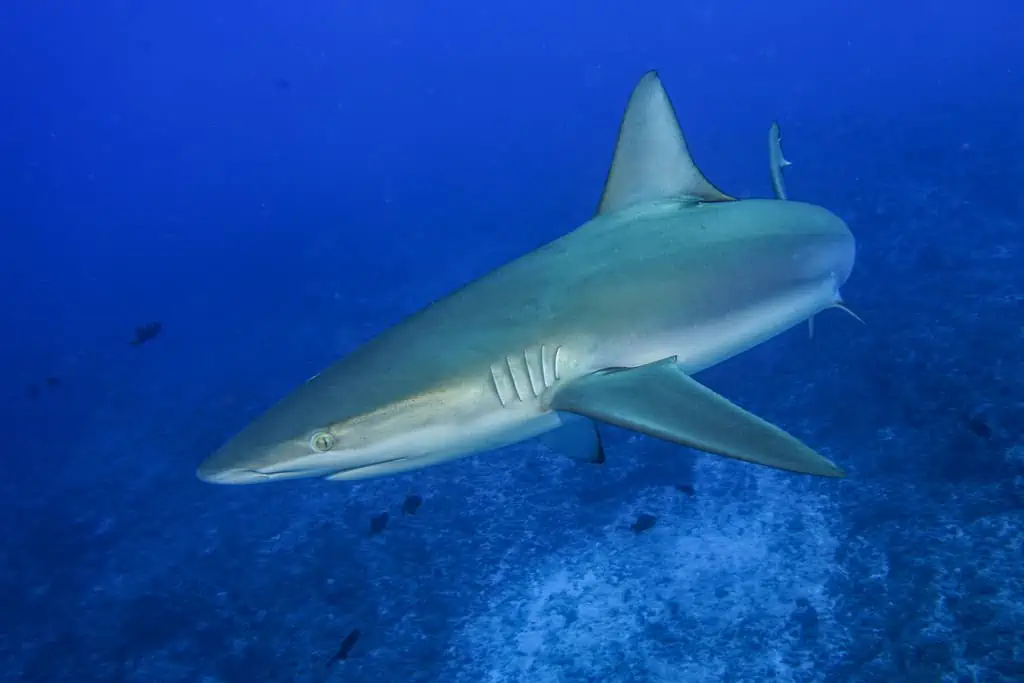
The Humboldt Current delivers nutrient‑packed water to the Galápagos, filling the surrounding seas with krill, plankton, and small fish. That food chain supports an extraordinary variety of marine life, from sharks to whales to rays.
In total, about 33 shark species, 24 whale species, and 19 ray species can be spotted here throughout the year. If you’re curious which ones you’re most likely to see, I’ve included a helpful list in my Galápagos wildlife guide.
Baleen Whales
Galápagos whales are classified as baleen or toothed, with baleen whales being the giants. They feed by filtering krill and small fish through keratin baleen plates.
Common baleen species here include blue, Bryde’s, humpback, minke, and sei whales.
Blue Whale |
June through September |
 |
|
| These gentle giants can reach lengths of up to 85 to 100 feet and weigh as much as 200 tons, which makes them the largest animals on the planet and the heaviest animals to ever live. They migrate through the Galápagos Islands every summer and are easily recognizable by their huge tails (that can be up to 25 feet in width), bluish-grey color, and small dorsal fins. | |
Bryde’s Whale |
Year-Round |
 |
|
| Bryde’s whales are the most commonly seen in the Galápagos Islands. These goliaths can easily be identified by their blue-grey backs, pointed dorsal fins, and narrow water spouts that reach an impressive 10-15 feet high. | |
Humpback Whale |
June through September |
 |
|
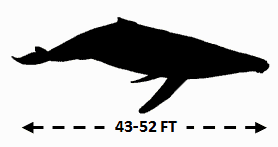
| Arguably the most fun of the whales you will find in the Galápagos Islands to watch, the Humpback whale is also one of the easiest to recognize. Their dark bluish-black bodies are often covered in barnacles, and they frequently poke their heads above water to look around. If you are lucky, you will get to see one of these 45-ton creatures breach their whole bodies above the surface, which is spectacular to watch. | |
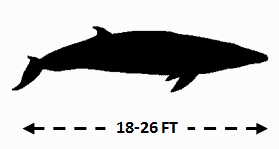
Minke Whale |
Year-Round |
 |
|
| The smallest of the baleen whales found in the Galápagos Islands, the Minke whale typically doesn’t weigh more than eight to ten tons. These whales can be recognized by their pointed head and snout, as well as the white patches on their flippers. They can be difficult to spot because their fin and fluke are only visible when they breach. | |
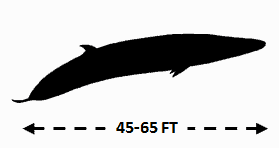
Sei Whale |
Year-Round |
 |
|
| The Sei whale is long and slender, with a dark grey body and tall, pointed dorsal fin. These features make it easy to distinguish from other whales you will find in the Galápagos Islands. Unlike many of the other whales I have highlighted, it feeds close to the surface and does not arch its back or show its flukes when it comes up for air. This can make it difficult to spot, even though they are usually found close to the surface. |
Toothed Whales
The other type of whale found in the Galápagos Islands is the Toothed whales. Unlike the Baleen whales, these whales have teeth and use them to hunt their food. Their food typically includes fish, squid, small porpoises, marine mammals like sea lions, and even other whales. The Toothed whales typically found in the Galápagos Islands include orcas, short-finned pilot whales, and sperm whales.
Orca (Killer Whale) | Year-Round |
 | |
| Orcas, which are also commonly called Killer Whales, are the largest members of the oceanic dolphin family. These large predators feed on fish, sharks, rays, sea mammals, and even other whales. Resident Orcas are known to stay in one area for most of their lives, whereas transient Orcas are known to travel from one area to another. The Galápagos Islands have both resident and transient Orcas that can be spotted among the islands. The resident Orcas are typically fish eaters and tend to be more playful and curious about boats, whereas the transient Orcas are marine mammal eaters and are not as likely to approach boats. | |
Short-Finned Pilot Whale | Year-Round |
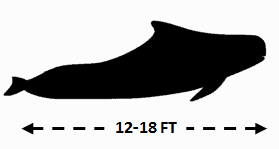 | |
| Part of the dolphin family, the Short-finned pilot whales are typically dark grey or black with a grey or white cape. These whales can also be distinguished by their sharply pointed flukes with a distinct notch in the middle. The whales feed on fish, squid, and octopus, which they need to dive deep to hunt. They are known to float motionless at the surface of the water and then raise their tail flukes high out of the water just before diving. As residents of the Galápagos Islands, they can be seen year-round around the islands. | |
Sperm Whale | Year-Round |
 | |
| The Sperm Whale is the largest of the toothed whales and the largest toothed animal on the planet. They can be regularly seen around the Galápagos Islands. They are named after the milky-white, waxy substance that can be found around its head. The whales feed primarily on squid, which they must dive deep to hunt. They can easily be identified by their large square heads, but because they are such deep divers, they are rarely seen up close. |
Dolphins
Bottlenose Dolphin | Year-Round |
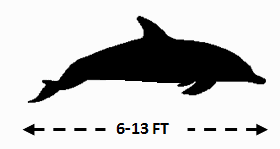 | |
| The Bottlenose dolphin is the most commonly seen dolphin or whale in the Galápagos Islands. They will often travel in large pods and can be often seen playing in the bow waves of ships and yachts in the area. They can easily be identified by their dark grey or black back-side with a pale under-belly, as well as their short beak and curved dorsal fin. | |
Common Dolphin | Year-Round |
 | |
| The Common Dolphin looks very much like its close relative the Bottlenose Dolphin, but they are smaller, have a longer beak, straighter dorsal fin, and a dark stripe that runs from their dorsal fin to their chin. They are commonly spotted in the Galápagos Islands but are not as common as the Bottlenose Dolphin. | |
Striped Dolphin | Year-Round |
 | |
| These stunningly beautiful creatures are seen far less likely than the Bottlenose or Common Dolphins because they rarely play in the bow waves of boats, but lucky visitors to the Galápagos can easily identify them by their curved dorsal fins and beautiful stripped color pattern on their bodies. |
Sharks
Whale Shark | June thru December |
 | |
| These gentle and beautiful creatures are one of the main draws for scuba divers who travel to the Galápagos Islands. These sharks, which are the largest sharks and thus the largest fish on the planet, congregate around Darwin and Wolf Islands in the far North of the Galápagos to feed on a large amount of Plankton in the area. They can often be seen feeding near the surface of the water, but the real draw is getting into the water and scuba diving with these beautiful creatures. | |
Galápagos Shark | Year-Round |
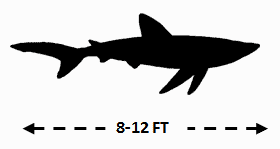 | |
| Despite its name, this migratory shark isn’t just found in the Galápagos Islands but can be found all over the world. They primarily feed off of fish, but in the Galápagos Islands, they also feed on Galápagos Sea Lions and Galápagos Fur Seals. They closely resemble reef sharks so they can be difficult to identify in the water. Although these sharks can be found in many locations around the Galápagos, in my opinion, the best place to see these amazing creatures when diving is near Darwin’s Arch off of Darwin Island in the far North of the Galápagos Islands. | |
Scalloped Hammerhead | June thru November |
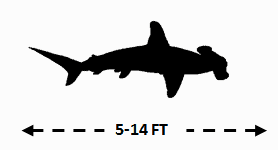 | |
| While Smooth Hammerhead and Great Hammerhead species can also be found around the Galápagos Islands, they are found in far fewer numbers than the Scalloped Hammerheads that travel in mass to the islands each June. These incredible sharks are easily identified by their unique and interesting head. Many scuba divers travel to the Galápagos Islands each year to see the large schools of these sharks feeding off the islands. Sometimes there will be so many sharks swimming in the area that the sunlight will be blacked out if you are swimming below them. In my opinion, the best place in the Galápagos Islands to swim with Hammerhead sharks is near Gordon Rocks off of Santa Cruz Island. This submerged volcano attracts very large schools of Hammerhead sharks on a regular basis. | |
White-Tipped Reef Shark | Year-Round |
 | |
| The White-Tipped Reef Shark is a common shark species that you will find around the Galápagos Islands. They are easily distinguished by the white tips on their fins. These small sharks primarily feed off of small fish, octopus, spiny lobsters, and small crabs. They can often be spotted in resting in shallow channels with warm water, which is why the Galápagos Islands is such a great location to see these sharks. The Galápagos has many small, shallow channels and ledges in the volcanic rock that are perfect resting spots for White-Tipped Reef Sharks. In my opinion, the best location to snorkel with them is at Tintoreras off of Isabela Island. | |
Grey and Black-Tipped Reef Shark | Year-Round |
 | |
| Grey and Black-Tipped Reef Sharks are another common shark species that are found in the reefs around the Galápagos Islands. These sharks primarily feed on a wide range of fish, including sardines, herring, mullet, jacks, and Spanish mackerel. Like the White-Tipped Reef Sharks, they prefer warm, shallow waters as opposed to the deep, open waters of the ocean. This means that is quite common to see these sharks in locations such as Tintoreras and Los Tuneles off of Isabela Island, Devil’s Crown off of Floreana Island, and Kicker Rock off of San Cristobal Island. |
Galápagos Green Sea Turtles
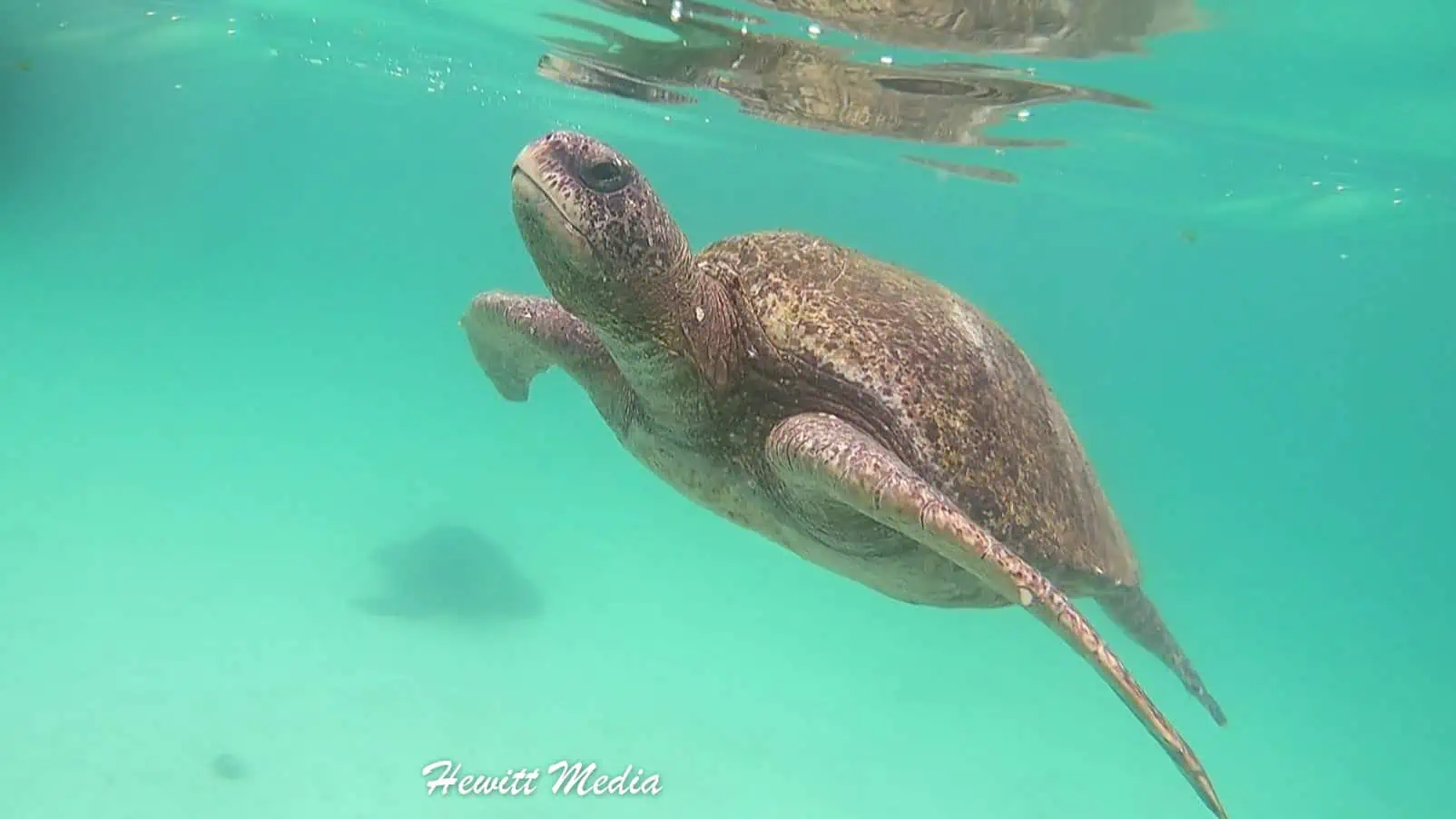
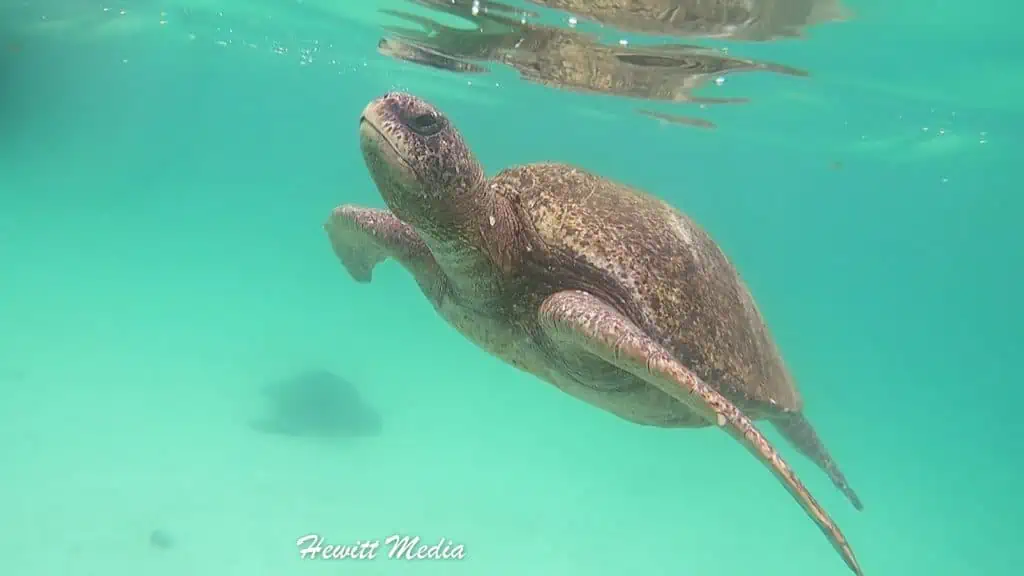
Green sea turtles are one of the Galápagos’ most beloved snorkeling encounters, commonly seen in the shallow waters around the islands. Nesting season runs December–March, when females come ashore at night.
For the best underwater views, head to Tintoreras, Tagus Cove, Punta Espinosa, or Kicker Rock.
Galápagos Finches (Darwin’s Finches)
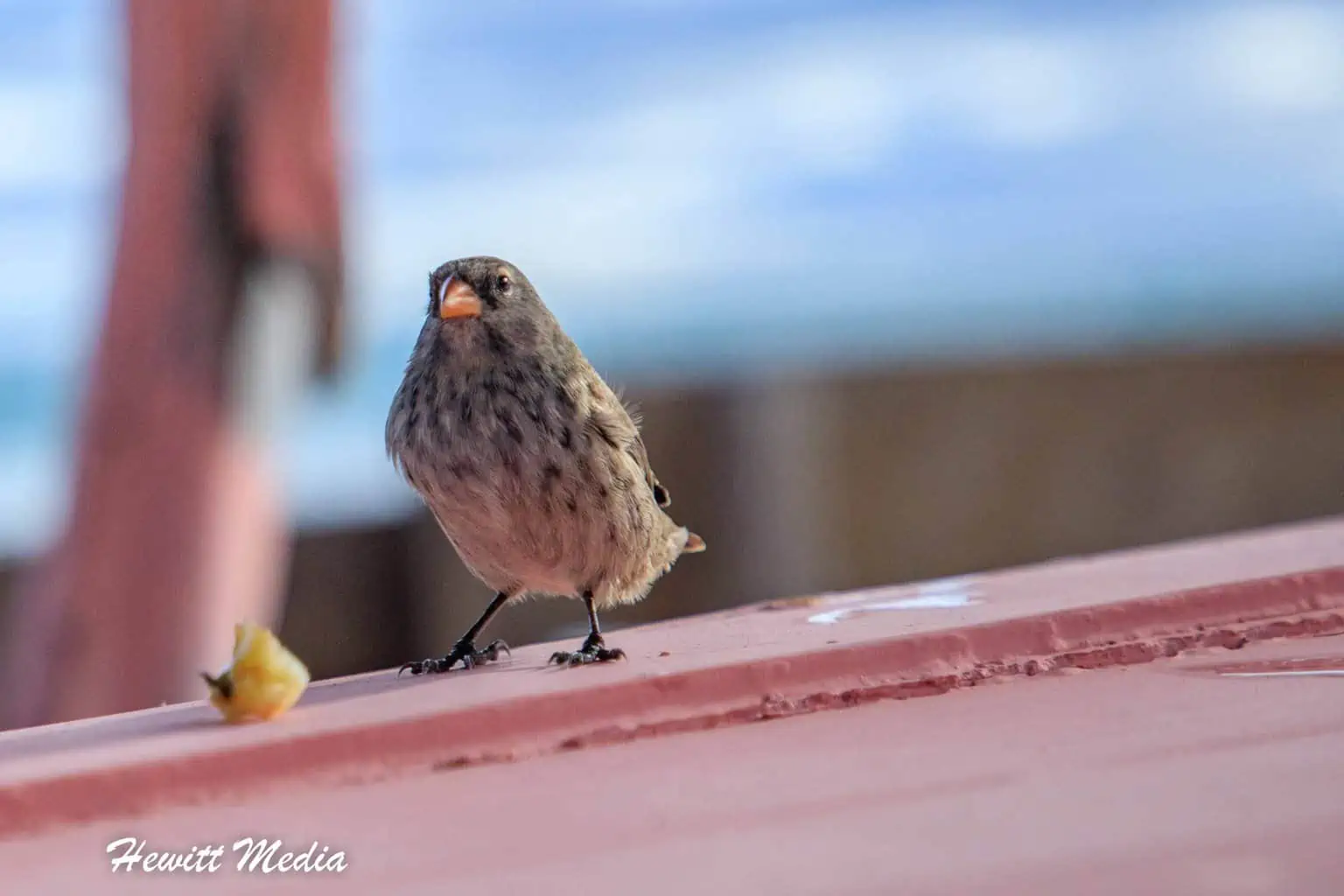
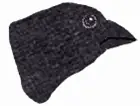
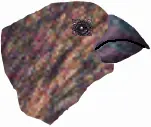
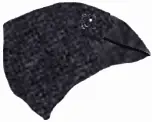
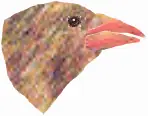
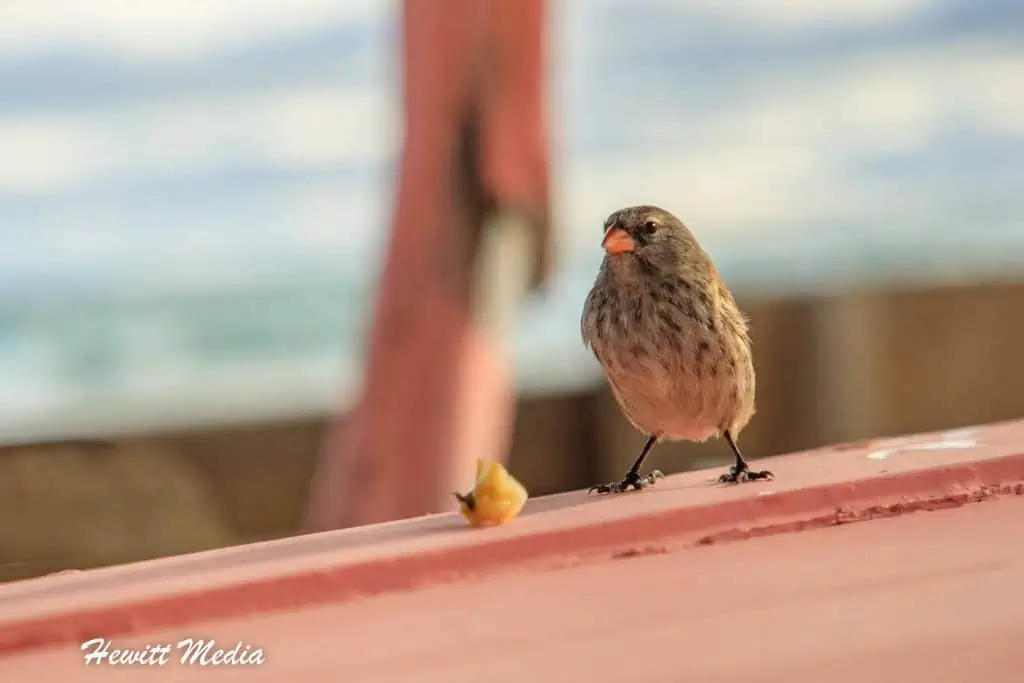
No other animals in the Galápagos Islands have had as significant a role in the history of the islands as the Darwin Finches. These small birds, which are actually roughly 15 different species of birds, were used by Charles Darwin to prove his theory of evolution during his Second Voyage of the Beagle. To better understand the evolution of these birds, please check out the illustration I have provided in my Galápagos Islands wildlife guide below.

If you take a look at the chart above, you can see how the different finches that are found in the Galápagos Islands have evolved to fit different niches on the islands. Some of the finches have evolved to live on the ground, while some have evolved to live in the trees.
Some of the finches almost exclusively eat fruit, while some of the finches eat insects, cactus, or seeds. I have included a description of some of the more common finches that you will find in the Galápagos Islands in my Galápagos Islands wildlife guide below.
 |  | |
 |  | |
 |  | |
 |  | |
 |  |
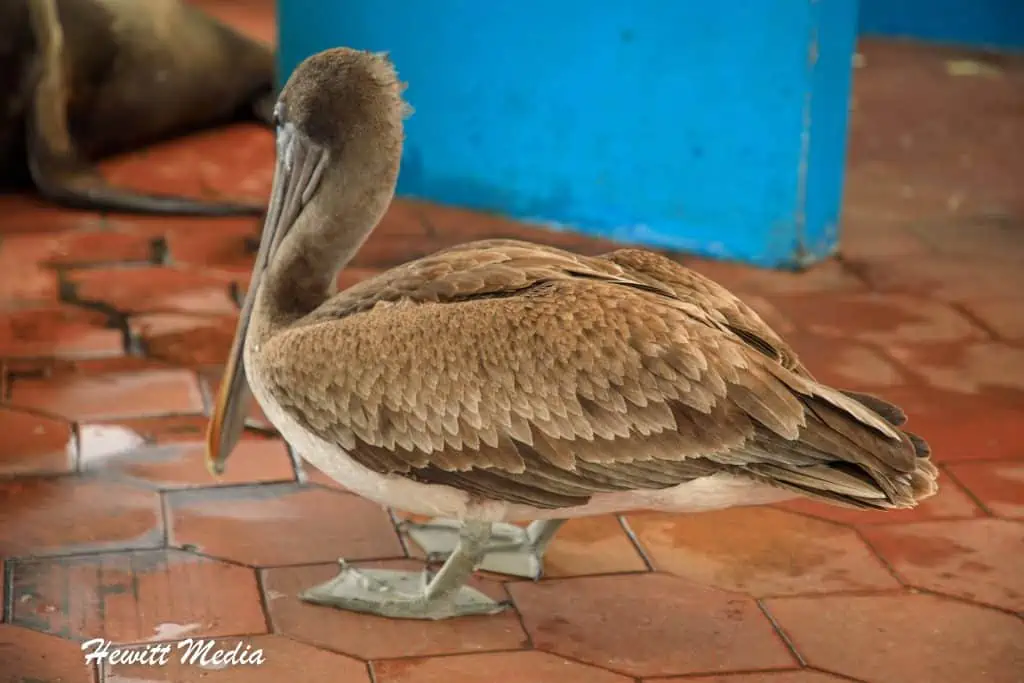
Galápagos Brown Pelican
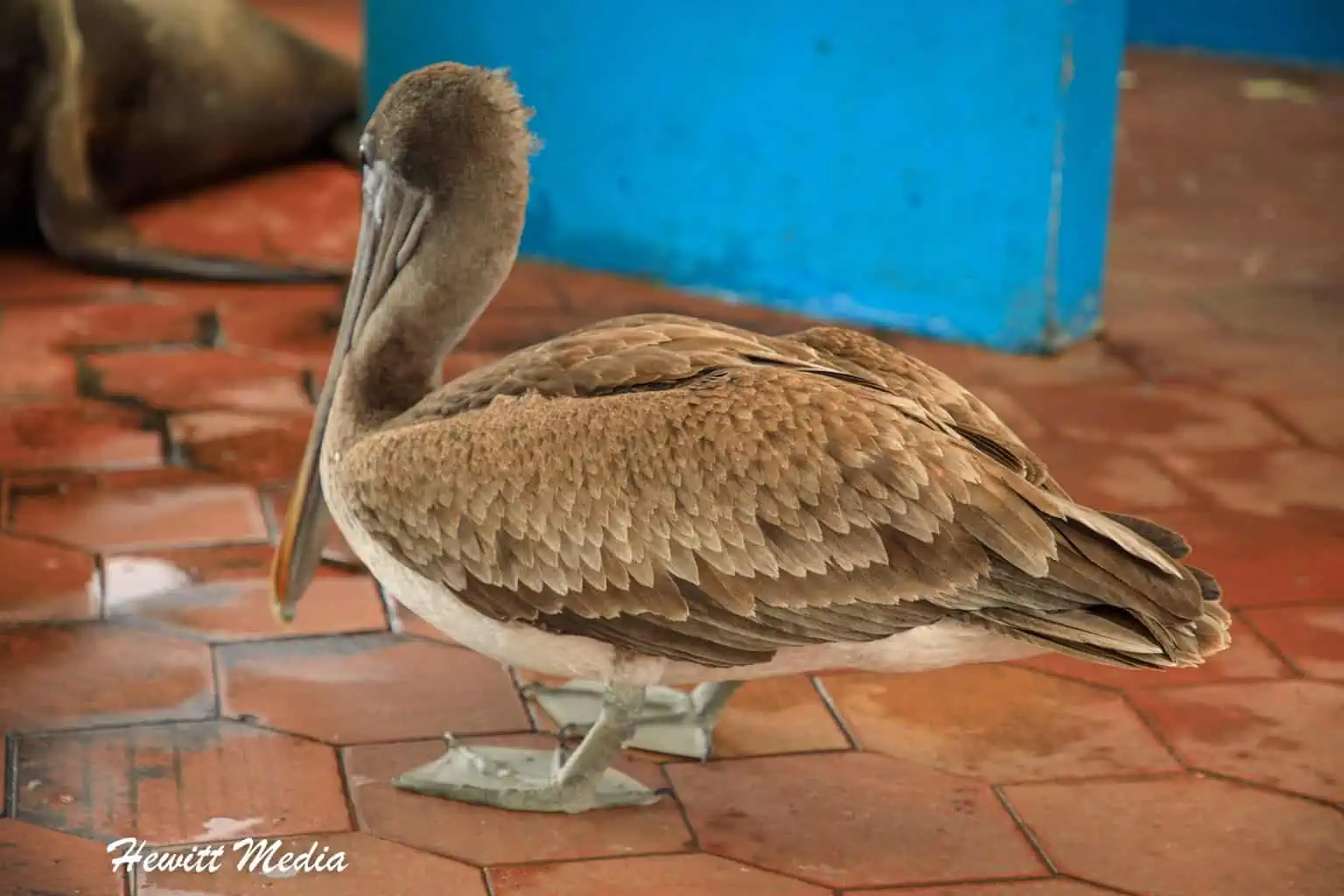
The Galápagos Brown Pelican is unique to the islands and easy to spot along beaches and harbors. They skim the surface to find fish, then plunge straight into the water to grab their prey.
They’re also regulars at human fishing spots, especially the Santa Cruz fish market, where they linger for leftovers.
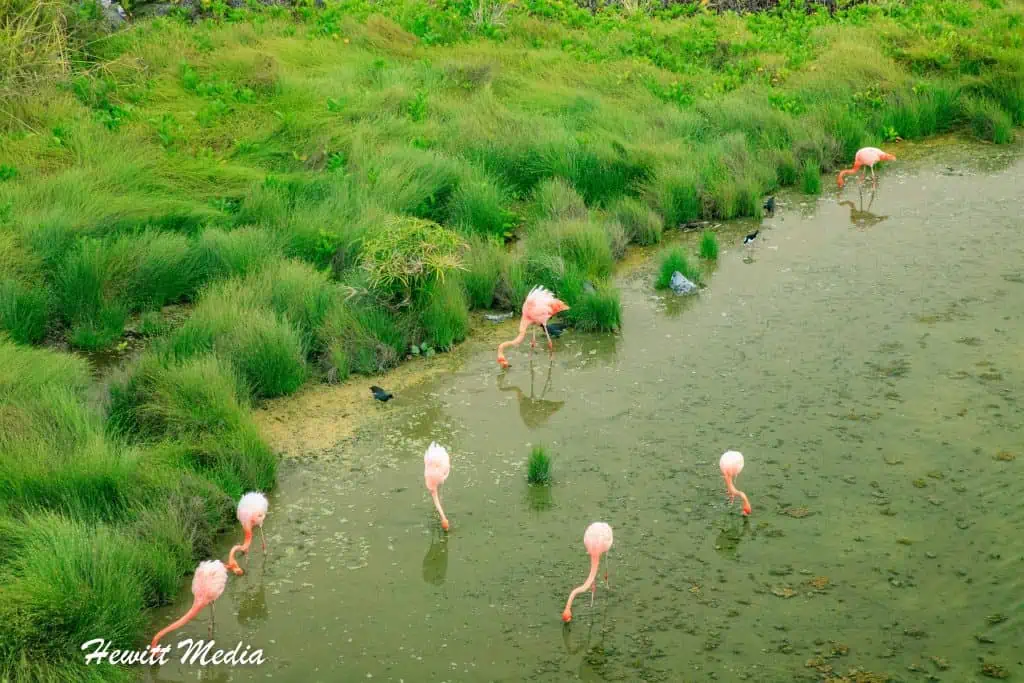
American Flamingo
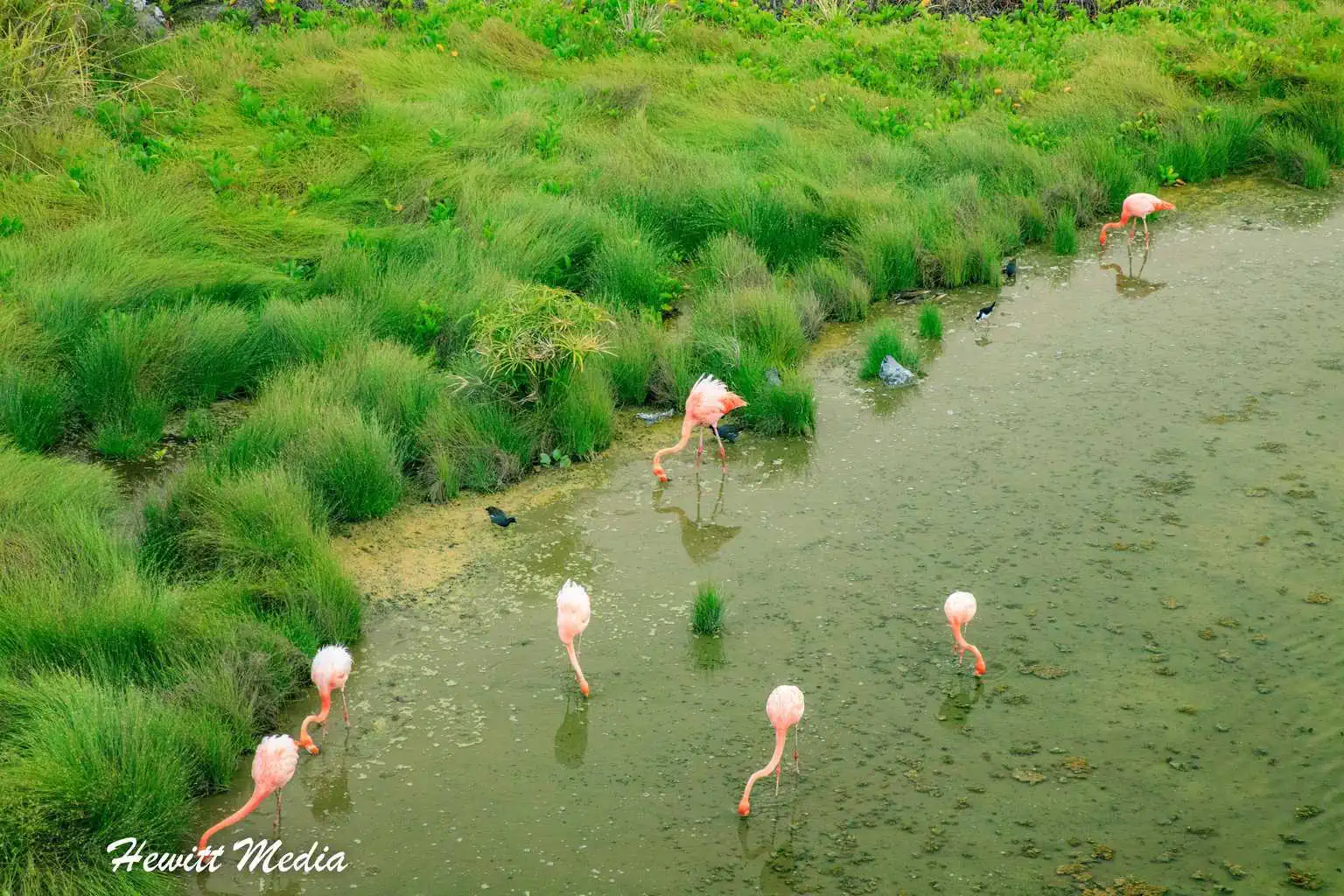
The American Flamingo didn’t originate in the Galápagos—most likely it flew in from Central America and remained. Because it relies on brackish water to feed on brine shrimp, its range here is limited.
Look for them on Isabela, Floreana, Santa Cruz, and sometimes San Cristóbal.
Blue-footed Booby
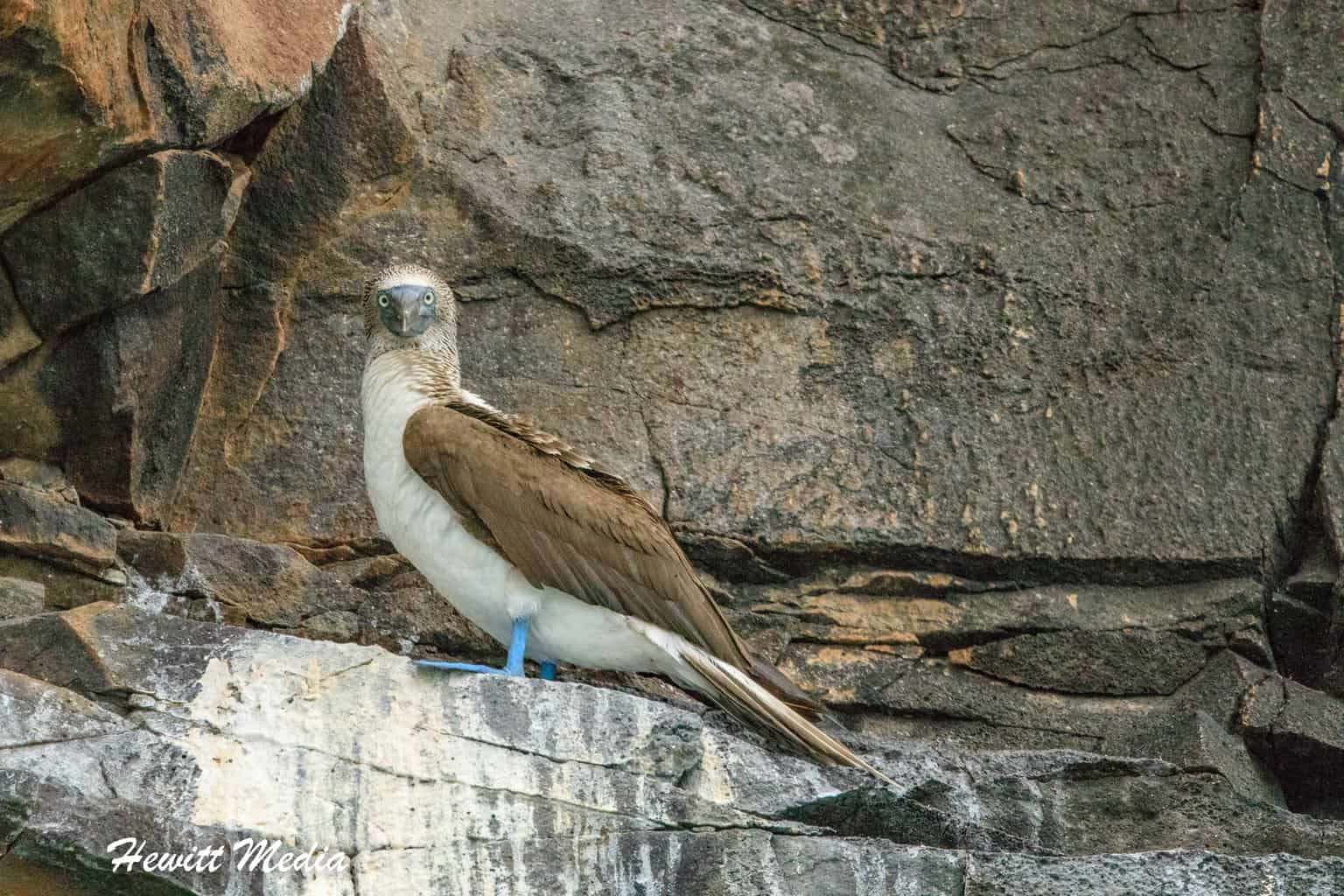
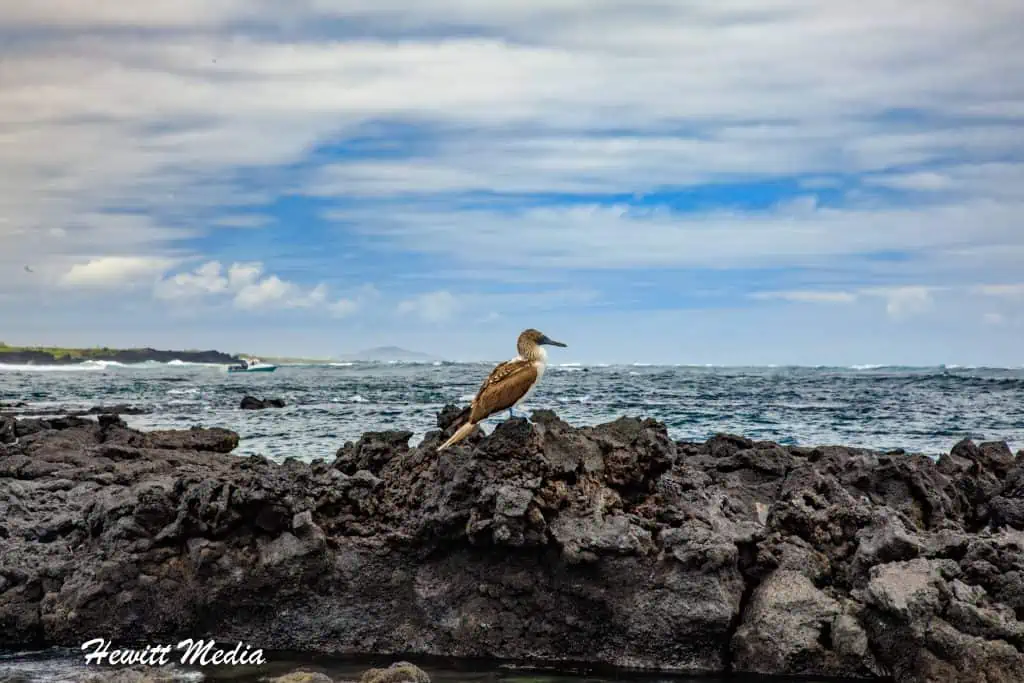
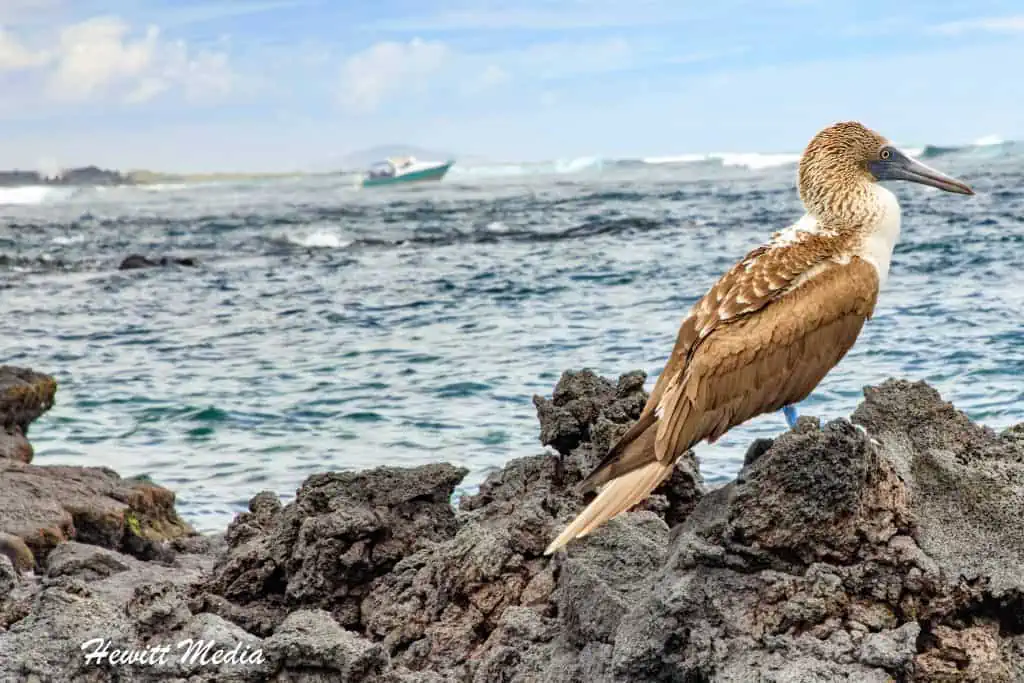
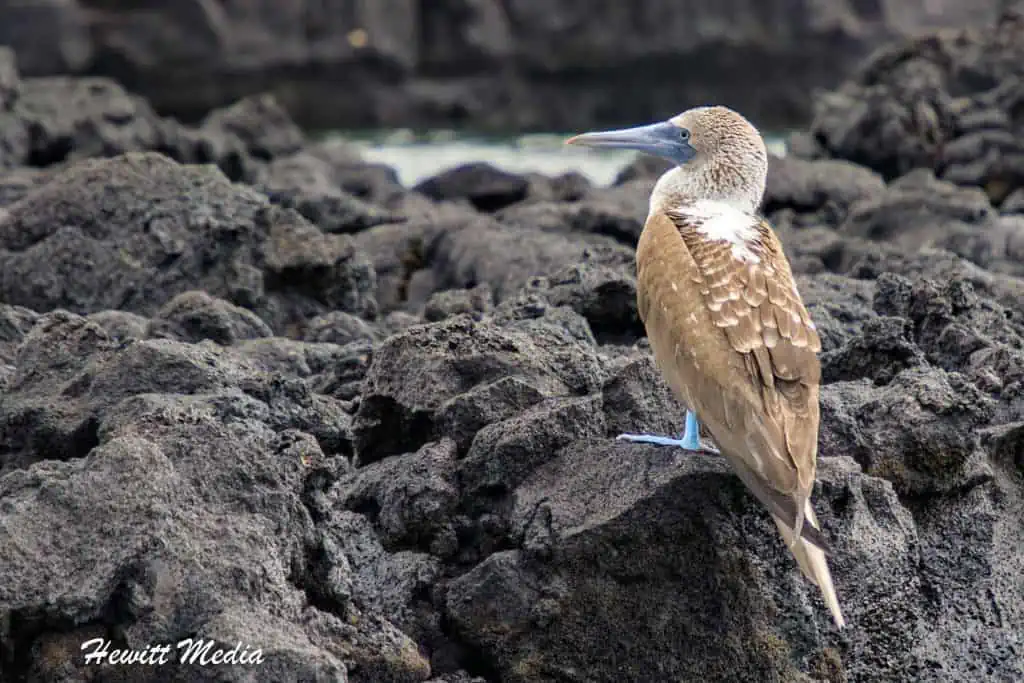
Named from the Spanish bobo for their awkward gait, Blue-footed Boobies transform into elegant hunters once airborne, plunging at high speed to grab fish. They’re common across the islands, particularly on the eastern shores.
North Seymour Island offers the most reliable booby action, especially during nesting season from June to August when they return to land more often.
Red-footed Booby
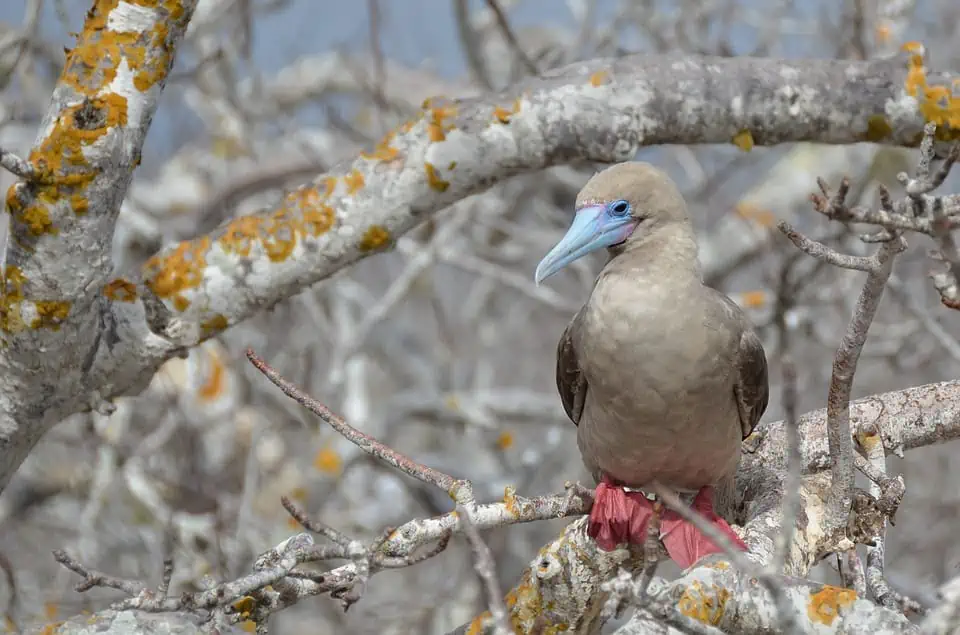
Red-footed Boobies may wobble on land, but in the air they’re elegant hunters. They live throughout the islands, though Genovesa hosts the biggest colony.
Their mating ritual is a highlight—males tilt their heads back to show off vivid blue throats in a dramatic “sky‑pointing” display.
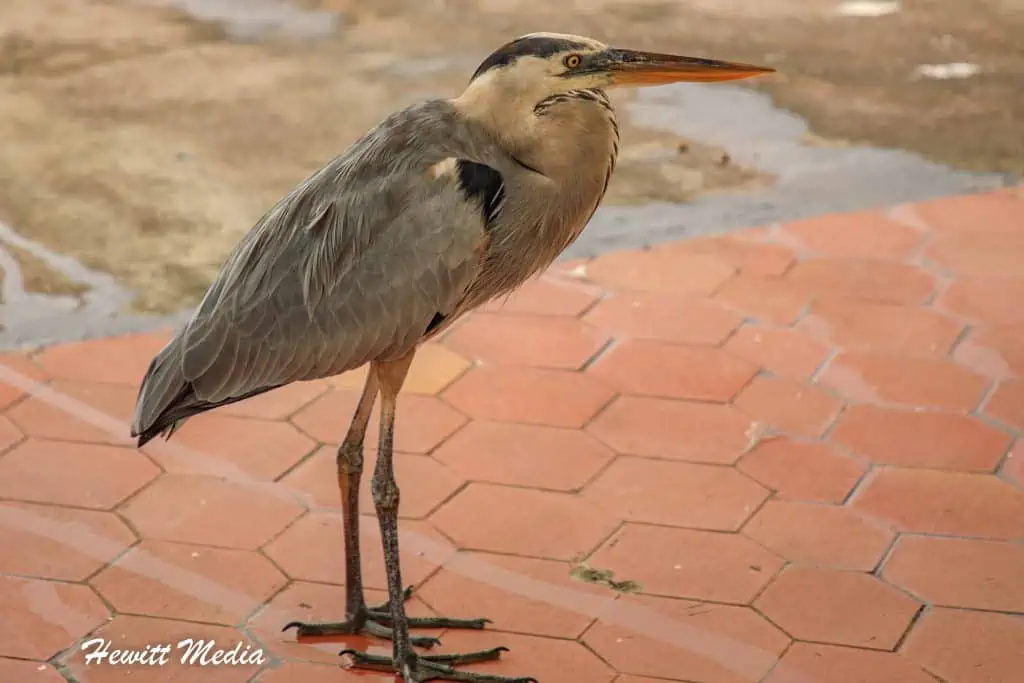
Great Blue Heron
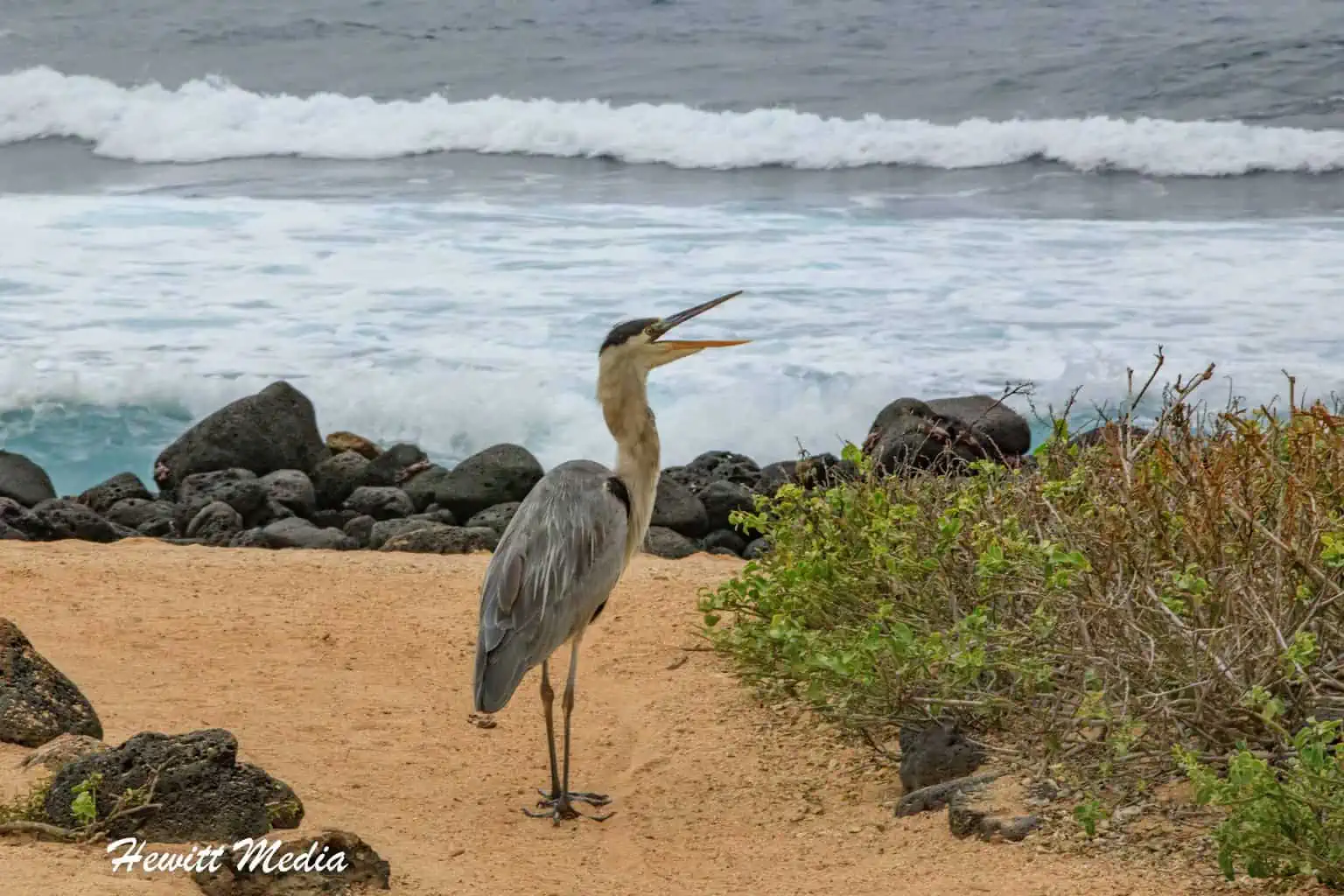
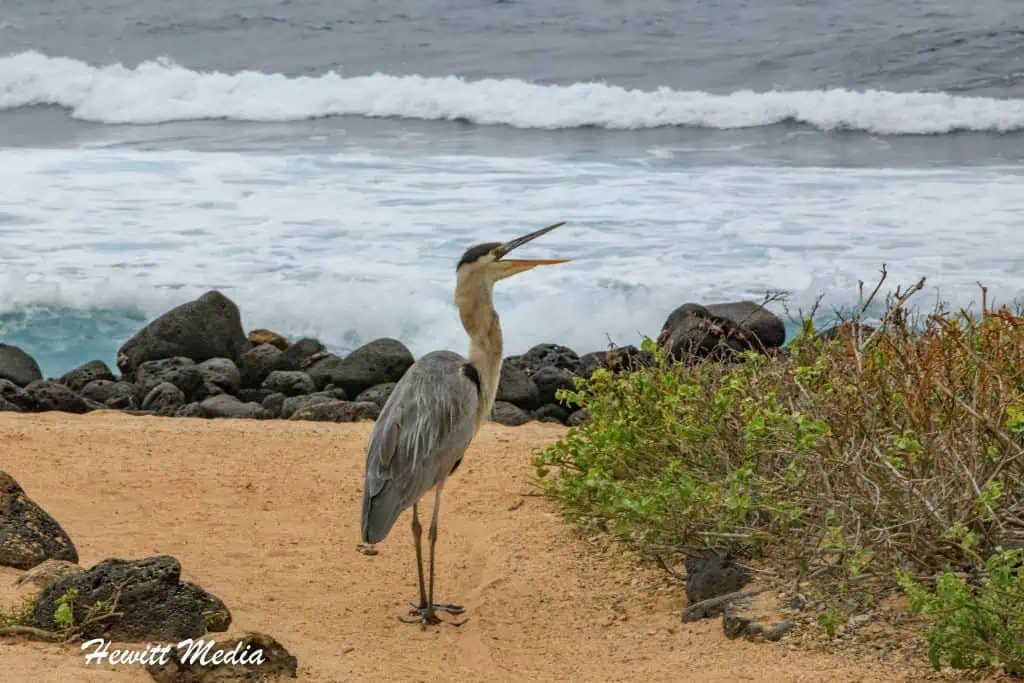
Among the Galápagos’ 21 waterbird species, the Great Blue Heron stands out for its size and elegance. It hunts in shallow coastal waters, feeding mostly on fish but also on crabs, rodents, insects, and small reptiles. Dawn and dusk are its prime feeding hours.
Its long neck, long legs, and sharp bill make it easy to identify—though it’s often mistaken for smaller white egrets. Look for them in coastal bays on San Cristóbal, Santiago, and Santa Cruz.
Waved Albatross
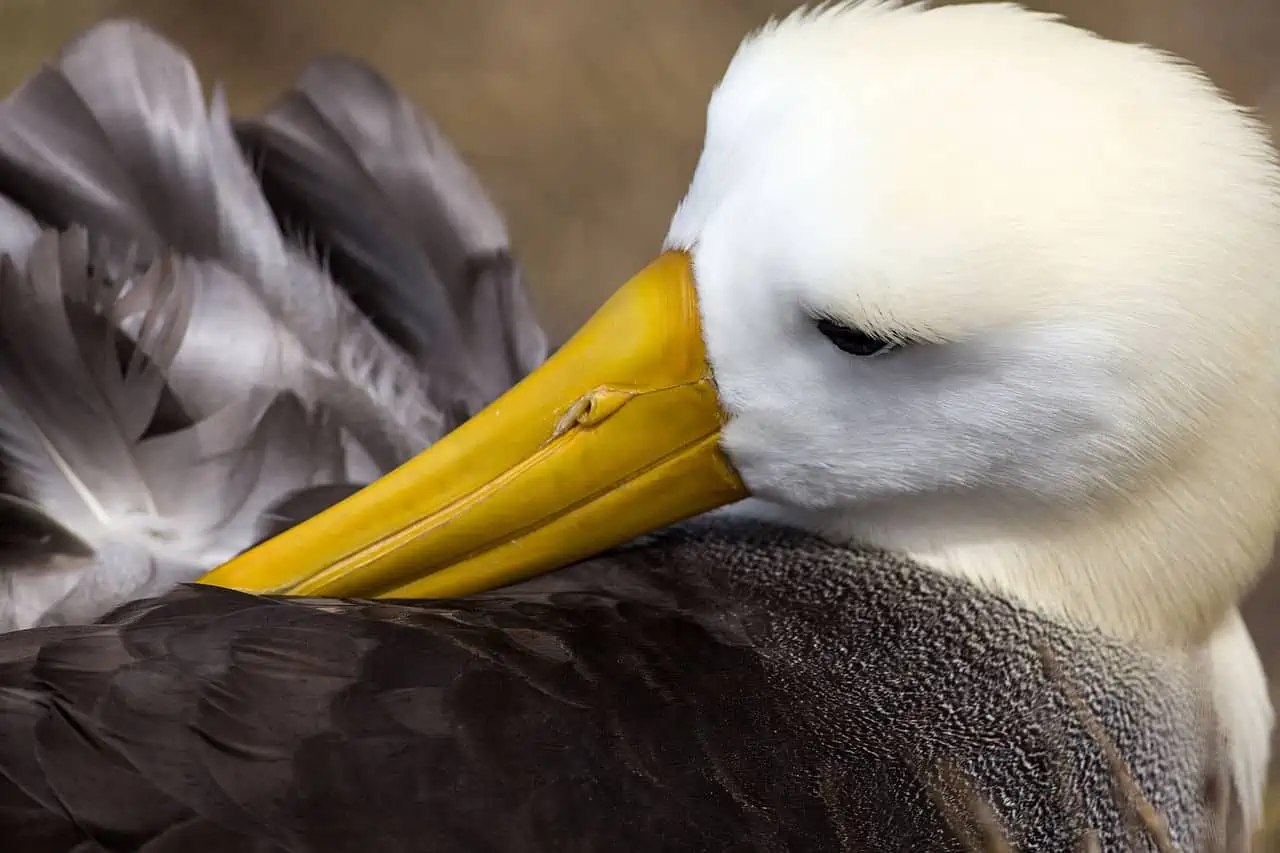
The Waved Albatross is one of the Galápagos’ most extraordinary birds, found nesting only on Española Island. They return each April, and by June you might witness eggs hatching and young albatross testing their wings along the cliffs.
These expert fish hunters boast wingspans up to 8 feet, making them the largest birds in the archipelago. Their adult plumage features wave‑like markings, chestnut bodies, and white heads. When not breeding, they roam the eastern Galápagos and waters stretching toward South America, disappearing from land entirely between January and March.
Sally Lightfoot Crabs
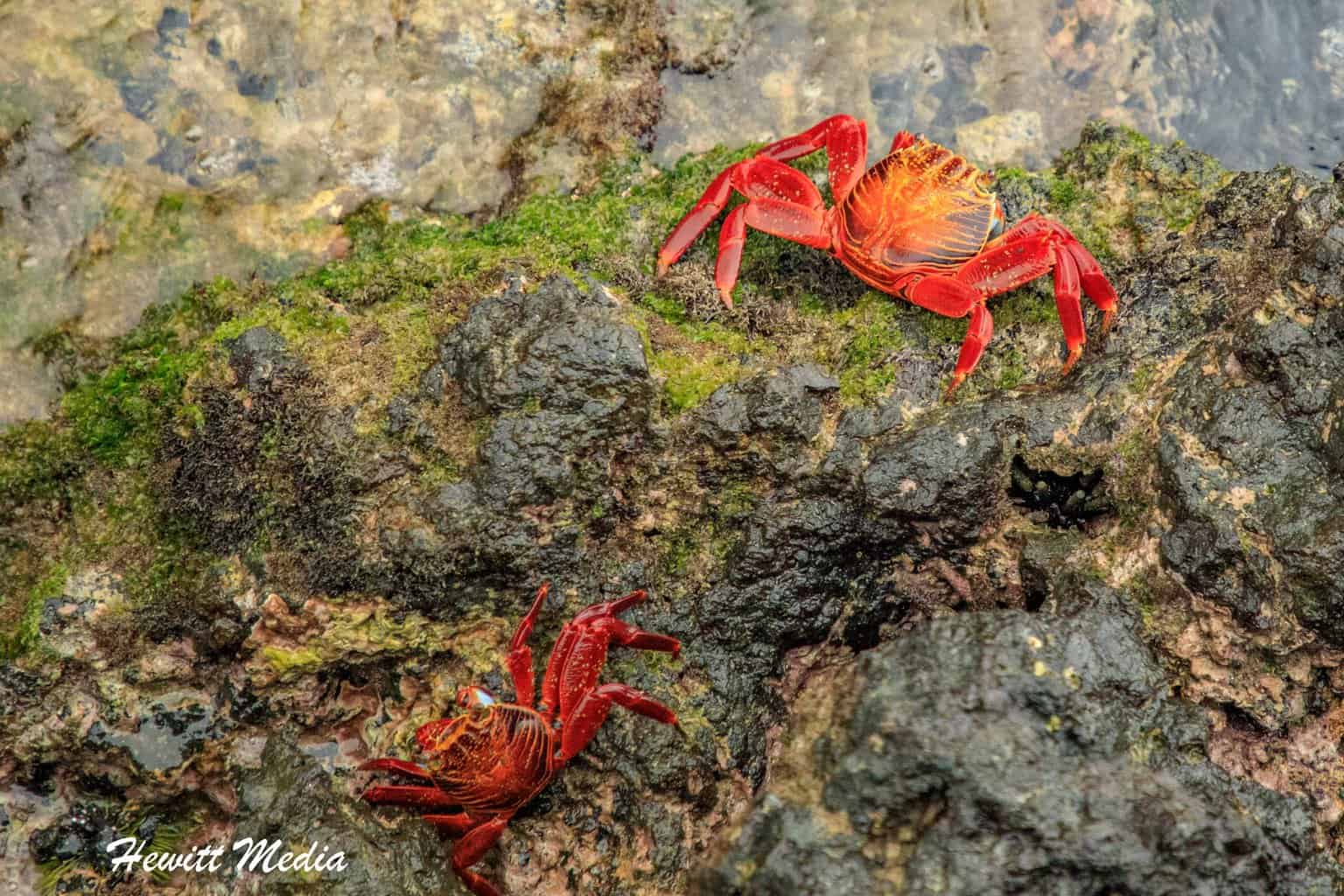
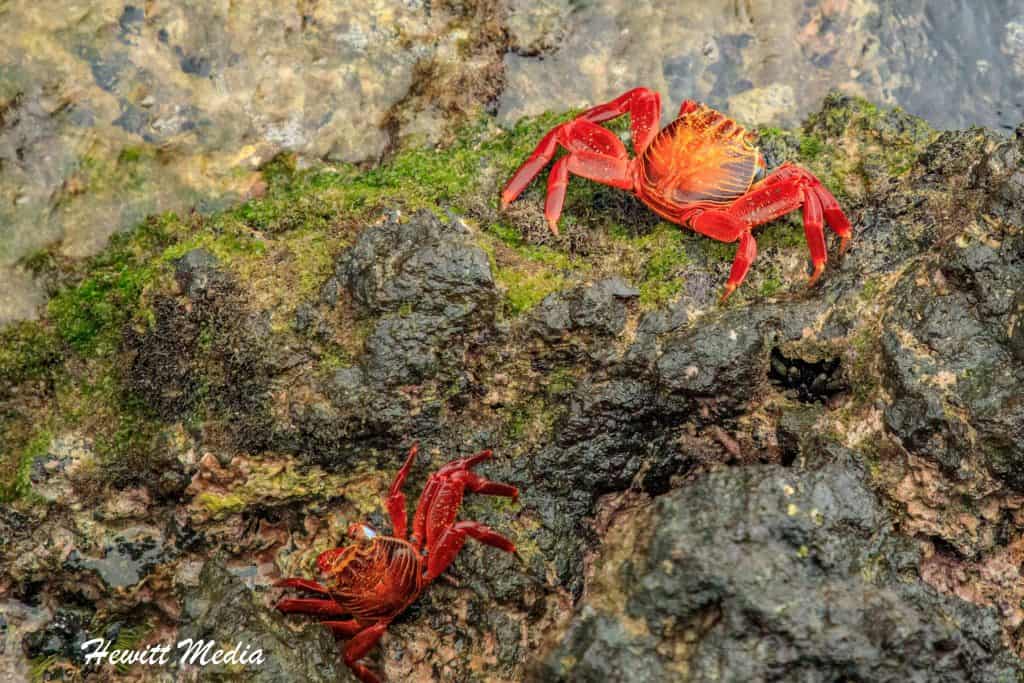
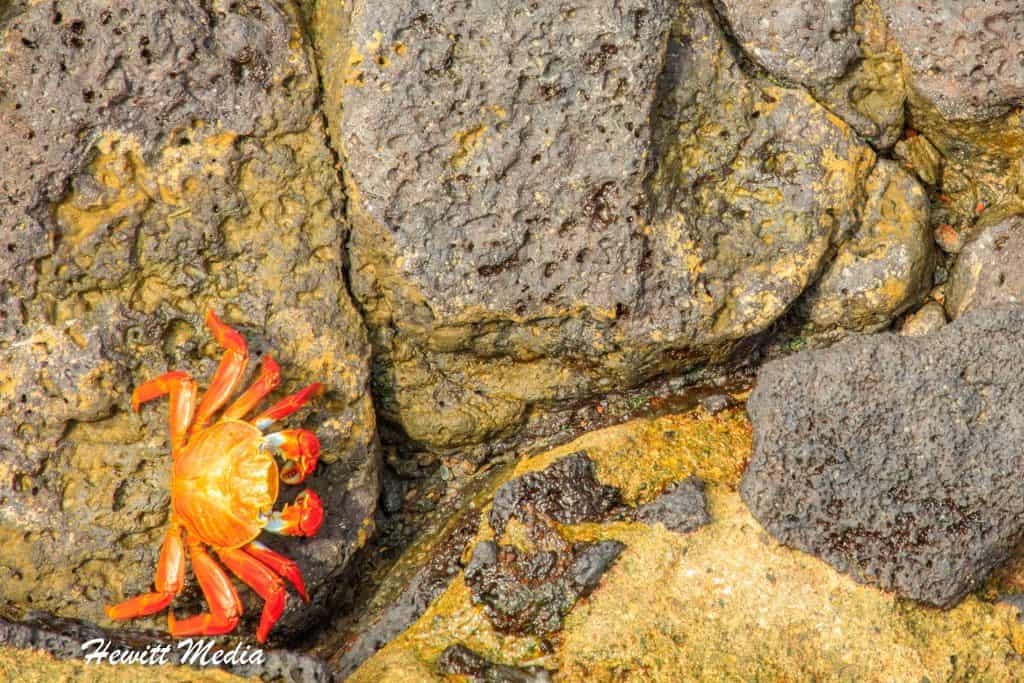
Walk any rocky Galápagos shoreline, and you’ll see flashes of bright red or blue—Sally Lightfoot crabs. They’re born black to hide on volcanic rock, then shed their shells as they mature, revealing the bold colors seen in photos. They’re common across the islands and along Central and South American coasts. Details are in my Galápagos wildlife guide.
Flightless Cormorant
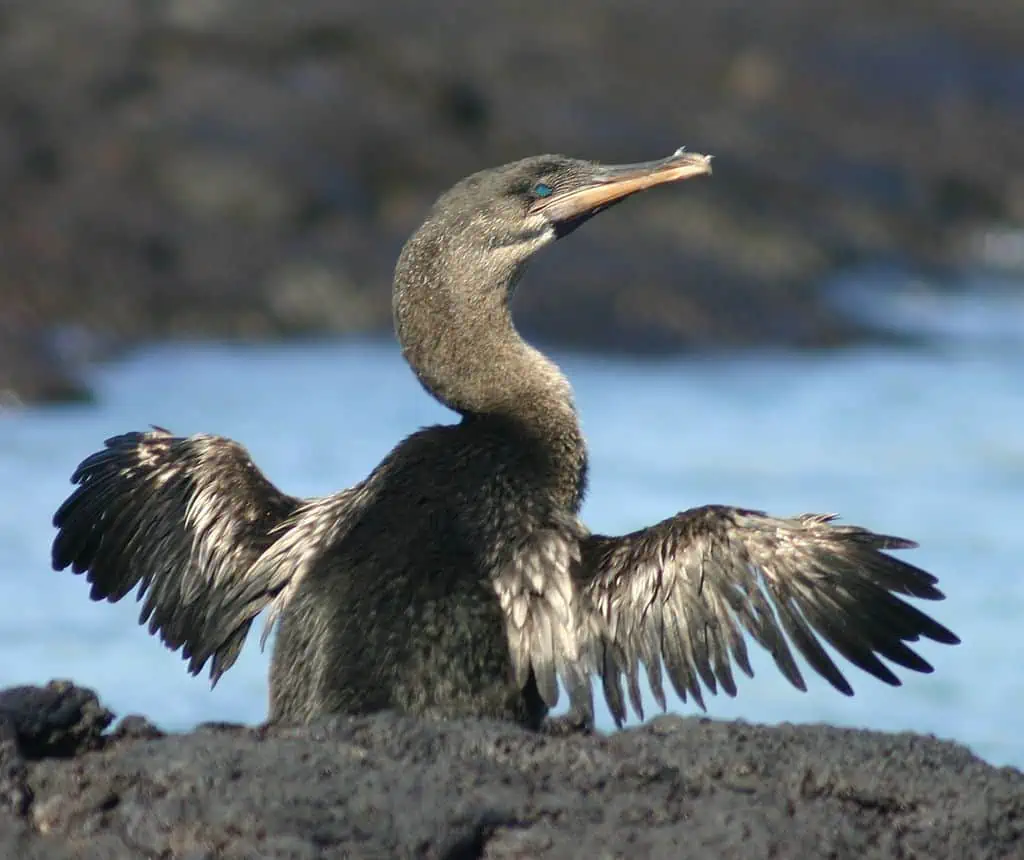
The Flightless Cormorant is unique to the Galápagos and restricted to Fernandina and Isabela because it lost the ability to fly. Instead, it evolved into a powerful swimmer, using strong legs and webbed feet to dive for octopus and small fish.
Its stunted wings, dark upper plumage, pale belly, and turquoise eyes make it easy to recognize. Snorkelers occasionally see them underwater, twisting and diving in pursuit of prey.
Magnificent Frigatebird
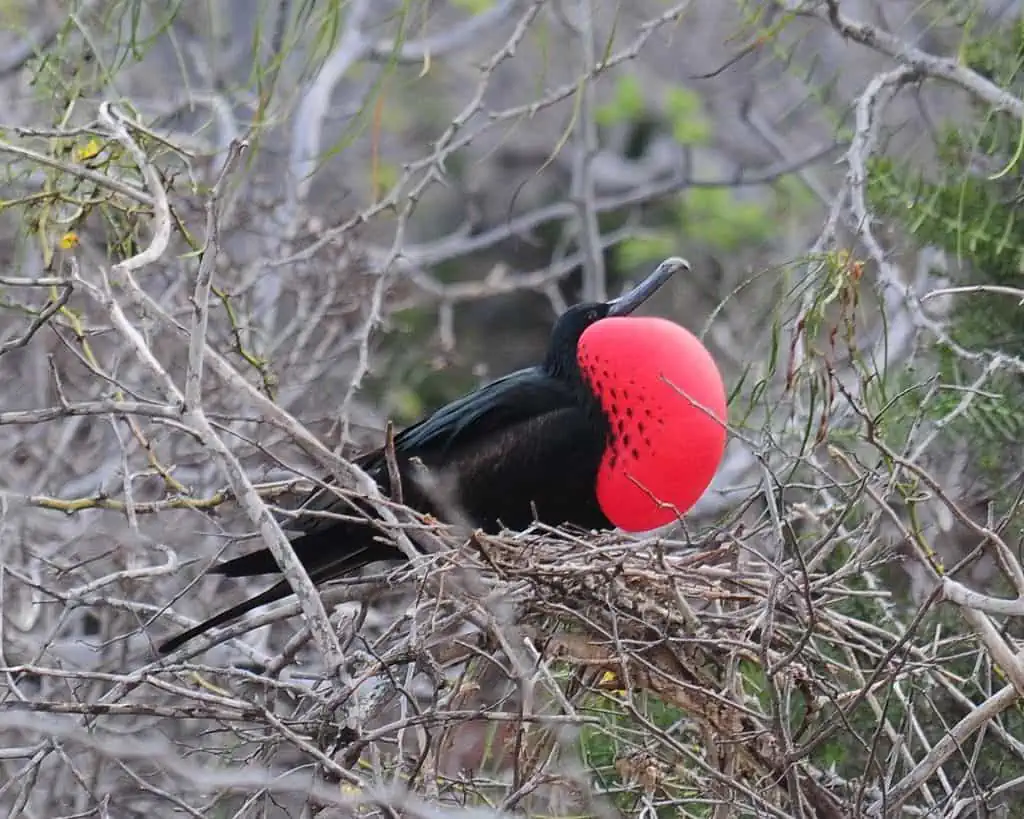
The Magnificent Frigatebird is iconic in the Galápagos. Its enormous wings let it glide for days, earning Darwin’s nickname “condor of the oceans.” Sailors dubbed it the “pirate bird” for its habit of harassing other seabirds until they drop their food.
Males display a bright red throat pouch during mating season, while females show a white chest and blue eye ring. Look for them across the islands, especially at breeding sites on North Seymour, Floreana, San Cristóbal, and Genovesa.
Charles Darwin Research Center
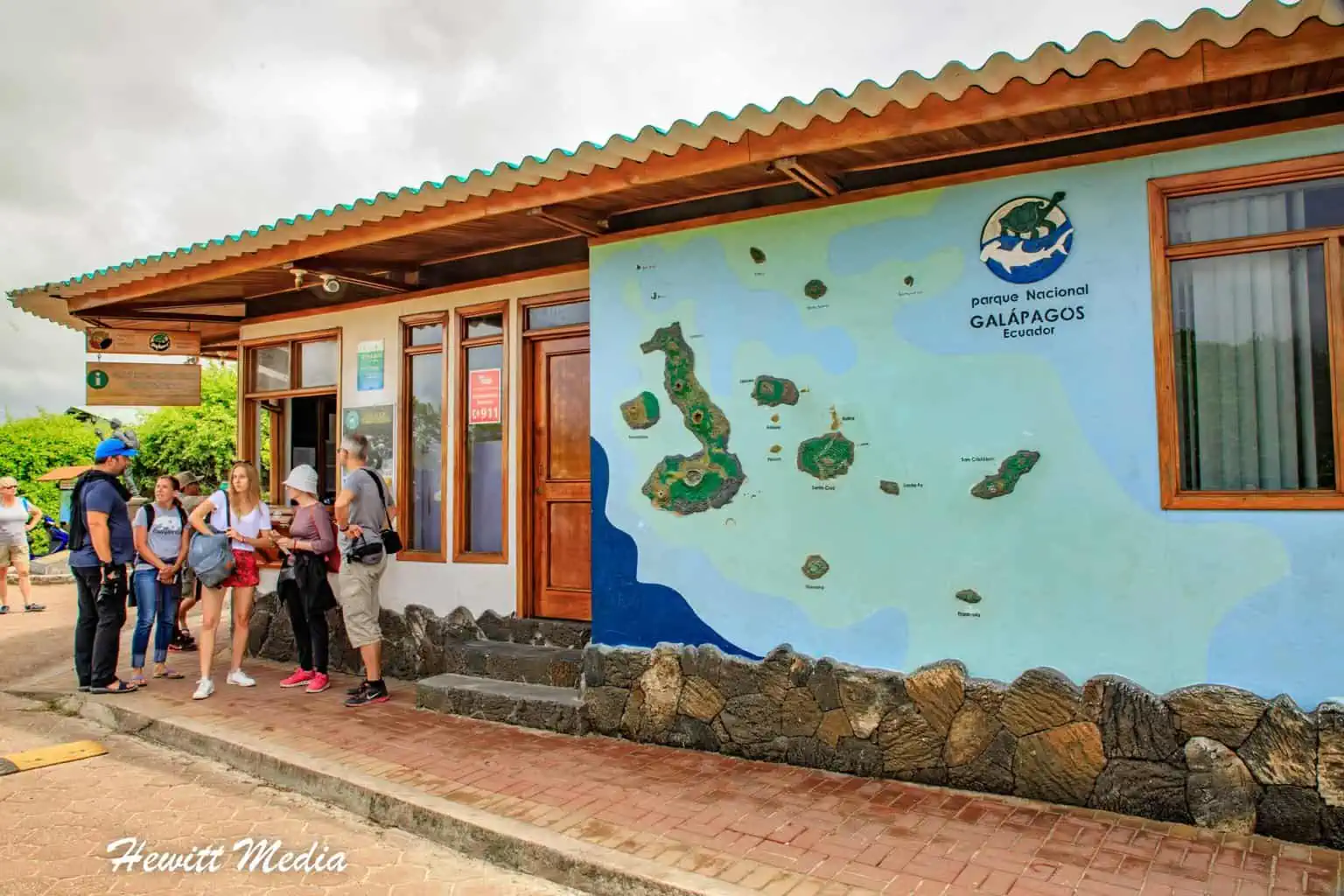
If you are interested in learning more about the wildlife of the Galápagos Islands, I would strongly recommend that you make a stop at the Charles Darwin Research Station.
Located on Santa Cruz Island, within walking distance of Puerto Ayora, the Charles Darwin Research Station is used by scientists to study the Galápagos Islands and advise on how to best preserve this unique and delicate ecosystem.
It is open to visitors, free of charge, and allows you to get a first-hand look at the conservation efforts in the Galápagos. For more information on where the research station is located, please refer to the map I have included in my Galápagos Islands wildlife guide below.

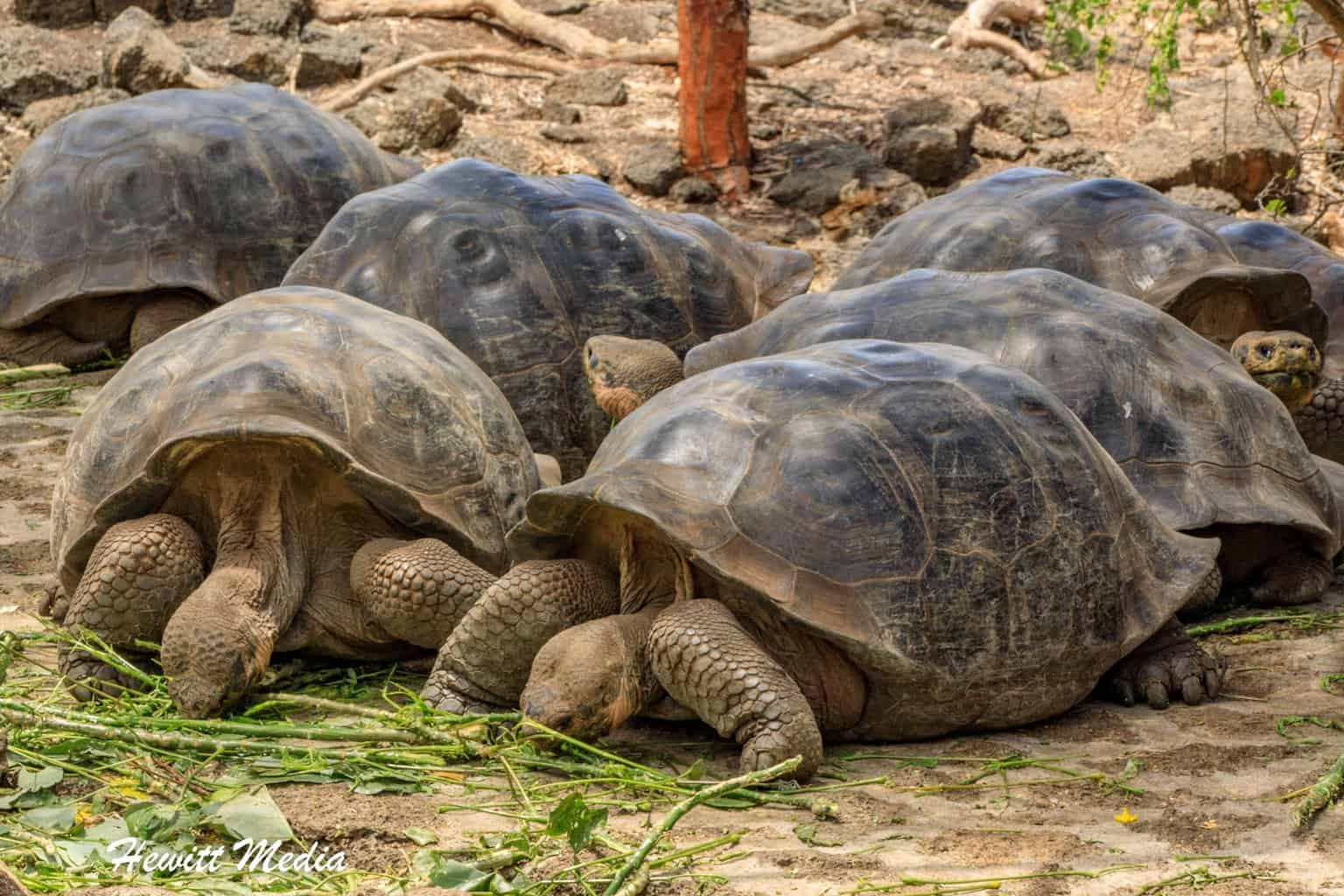
One of the big draws to visiting the Charles Darwin Research Station is to get a first-hand look at their Galápagos Giant Tortoise Breeding Center. Here, you get to see the efforts underway to breed these amazing animals and keep the population of each distinct species of giant tortoise healthy.
They mark each tortoise with a colored dot on its back that represents which island it was taken from so that they know which island to return the tortoise to when it grows to a sufficient age to be released.
The Charles Darwin Research Center also has a very unique exhibition on marine life. At the Van Straelen Interpretation Center, visitors can learn about conservation efforts underway to protect the whales, sharks, and other marine wildlife that call the waters around the Galápagos Islands their home. The Marine World Exhibit includes artifacts and information panels that teach visitors about the fragile marine ecosystem of the Galápagos and inform visitors about how humans and the marine wildlife of the Galápagos can successfully co-exist.
Galápagos Islands Wildlife Photo Gallery
The Galápagos Islands are full of some very unique and amazing wildlife. For photographers, there is a wealth of opportunities to capture this amazing wildlife in photographs when you visit. I have included some of the wildlife images that I was able to capture during my visit to the islands in my Galápagos Islands wildlife guide below.
If you’re interested in exploring more of my travel photography, I’d love for you to join me on Instagram! Creating this blog to share my free guides, itineraries, and travel photography tips takes a lot of effort, and a follow on Instagram would truly mean the world to me. Your support makes it all worthwhile!
FOLLOW ME!


Don’t Forget to Subscribe to My Adventures!

Let Me Help You Save On Your Next Adventure!
‘Start Exploring Today’ Merchandise Available Now!
 |
 |
 |
 |
 |
 |
 |



















My grandparents recently visited the Galapagos and loved it. Thank you for all the information!
No problem! It is an amazing place!
WOW! Such fabulous diversity of wildlife. You must have been in heaven! Thanks for your fabulous photos. Mel
Thanks Mel!! It was amazing!
This is such a wonderful collection of photos, maps, and information. I’m hoping to visit the Galapagos one day. I taught a lot about Darwin’s study using finches and how their bill size and shape was related to what they ate and how different ones survived on different islands based on the food source. Fascinating!
Thank you so much!! I hope you get to make that trip one day. It is such an amazing place!
Heading to the Galapagos on Wednesday and I’ll definitely be using this guide! So useful, thank you 🙂
Awesome!!! Have a blast on your trip!! 👍