Getting around Ho Chi Minh City can feel overwhelming at first. The traffic is nonstop, motorbikes move like schools of fish, and crossing the street takes a bit of nerve. But once you settle in, Saigon’s rhythm starts to make sense. This is a city where movement is constant but rarely rushed, where locals zip between neighborhoods with ease, and where there’s always more than one way to get where you’re going.
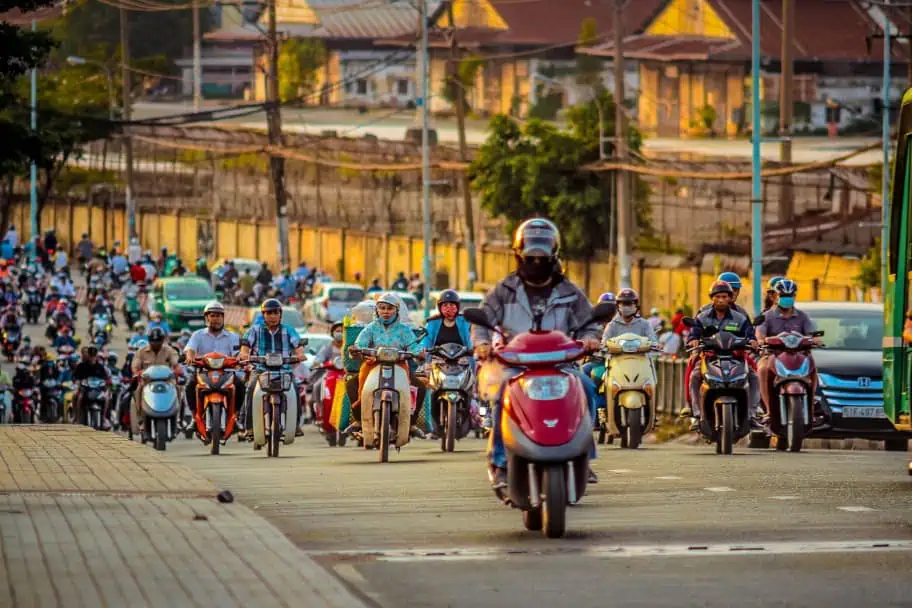
This guide is written to help you navigate that rhythm. Whether you’re here for a few days or a few weeks, you’ll find clear advice on transport options that work for different budgets, comfort levels, and travel styles. From reliable ride-hailing apps to surprisingly scenic boat rides, we’ve broken it all down with honest pros and cons, up-to-date tips, and a few tricks only locals tend to know.
| READ MORE: |
 |
| Amazing Motorbike Journeys in Southeast Asia |
Getting around Ho Chi Minh City by Road
1. Ride-hailing apps (Grab, Gojek, Be)
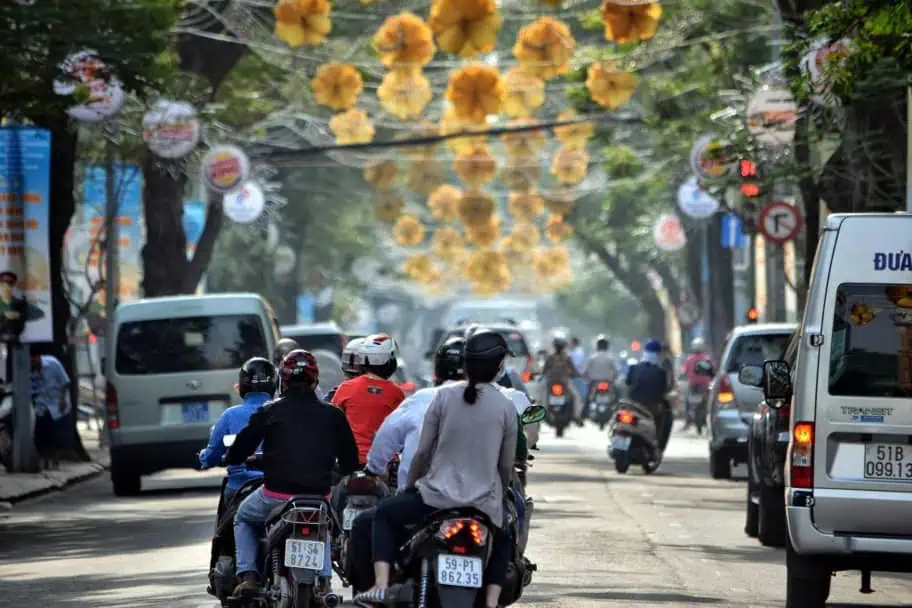
If there’s one transport tip worth knowing before you land in Ho Chi Minh City, it’s this: download a ride-hailing app. Locals rely on them daily, and as a visitor, you’ll quickly see why. Whether you’re heading to a food stall tucked inside an alley or coming home late from rooftop cocktails, apps like Grab, Gojek, and Vietnam’s own Be make getting around simple and stress-free.
You can choose between motorbikes or cars, track your ride in real time, and avoid any miscommunication thanks to in-app maps and chat features. Prices are shown upfront, so no haggling is needed. Payments can be made in cash or digitally.
Most Saigonese prefer motorbike rides for short trips. They’re cheaper, faster through traffic, and feel like a proper local experience. Cars are better if you’re carrying luggage, traveling with others, or want air conditioning on a hot afternoon. Rainy day? Go with a car. Heading across town for noodles at midnight? Book a motorbike. Ride-hailing is also your best bet after sunset. Whether you’re going out in Thao Dien, checking out a night market, or heading to a rooftop bar, the convenience and safety of booking through an app is hard to beat. For more ideas on where to go after dark, check out this list of 20 Things to Do in Ho Chi Minh City at Night.
Expected Fares:
- Motorbike (2 to 4 km): 15,000 to 30,000 VND (0.60 to 1.20 USD).
- Car (2 to 4 km): 35,000 to 60,000 VND (1.40 to 2.50 USD).
- Airport to District 1 (car): 100,000 to 150,000 VND (4.00 to 6.00 USD).
Local tips and etiquette:
- During rush hour, motorbikes are often faster than cars. Most locals use GrabBike to avoid traffic jams.
- If your pickup point is in a narrow alley, drop your pin on the nearest main road. Drivers prefer to stop where they can turn around easily.
- Prices may increase during rain, especially in the late afternoon. Locals often wait a few minutes or switch to another app like Be, which sometimes offers better rates.
- Always wear the provided helmet when using a motorbike taxi. Hold onto the back handle and avoid using your phone while riding to prevent snatch theft.
- If your driver calls and you don’t speak Vietnamese, just wait where you are. Most will still arrive. If not, cancel politely and rebook.
- Tipping is not expected, but rounding up by a few thousand VND or saying “Cảm ơn” (thank you) is a kind gesture.
2. Traditional taxis in Ho Chi Minh City

Even with the rise of ride-hailing apps, traditional taxis remain a reliable and straightforward way to get around Ho Chi Minh City. They’re especially convenient when your phone battery is low, you’re short on mobile data, or you just prefer to flag down a car without opening an app.
You’ll see taxis waiting outside Tan Son Nhat Airport, big hotels, tourist sites, and shopping malls. The most reputable companies are Mai Linh (green cars) and Vinasun (white cars with red and green stripes). These brands are well-known, widely trusted by locals and travelers alike, and always use meters.
Estimated fares:
- Flag drop: 12,000 to 15,000 VND for the first 0.5 km (0.50 to 0.60 USD).
- Per kilometer: 14,000 to 17,000 VND (0.55 to 0.70 USD).
- Airport to District 1: 150,000 to 200,000 VND (6.00 to 8.00 USD) depending on traffic.
Traditional taxis are ideal for those arriving at the airport and wanting to get to the city center quickly without fussing with apps. Simply head to the official taxi stand at the airport, where attendants will help you into the next available car. If you’re traveling during peak hours or in the rain, taxis also save you the wait times and price surges that sometimes come with apps.
If you’re exploring around downtown and your hotel is nearby, taxis can be a quick, comfortable option, especially at night when traffic is light. Most cars are air-conditioned, and the ride offers a calm break from the city’s heat and noise.
Tips for using taxis in Saigon:
- Stick to Mai Linh and Vinasun. These are the safest bets. Their cars are clearly branded, their meters are reliable, and they rarely overcharge.
- Avoid unofficial taxis. If a car has no meter or offers a flat rate upfront, politely decline and look for a trusted brand.
- Have your destination ready. Many drivers don’t speak English, so showing an address in Vietnamese or a pinned location on Google Maps helps avoid confusion.
- Watch the meter. If the driver doesn’t start it, you can ask politely with “Bật đồng hồ, làm ơn” (please turn on the meter).
- Keep small changes. Drivers often claim they don’t have change for big notes, so prepare 20,000 and 50,000 VND bills.
- Tipping is not expected, but rounding up the fare is appreciated.
Locals still use taxis, especially older residents or business travelers who prefer comfort and familiarity. In areas with patchy internet, like parts of District 5 or outer districts, or when your phone dies unexpectedly, a taxi can feel like a lifesaver.
In recent years, Vietnam’s first electric taxi company, Xanh SM, has also entered the market. These bright blue vehicles run on clean energy, are metered, and offer a quieter, more eco-friendly ride. You’ll mostly spot them around central districts and the airport, and they’re a great option if you prefer sustainable travel.
Whether you’re heading to a meeting in District 3, riding back from Ben Thanh Market with shopping bags in tow, or simply want a cool, comfortable ride across town, traditional taxis still have their place in Saigon’s fast-changing transport scene.
3. Motorbike rentals in Ho Chi Minh City

Renting a motorbike gives you the kind of freedom that most travelers only dream of. You’re no longer tied to someone else’s schedule or route. With your own two wheels, you can slip into hidden alleys, ride along riverside roads, or head out to a quiet cafe in a neighborhood most tourists miss. It’s one of the most flexible and immersive ways to experience Ho Chi Minh City.
Motorbikes are especially useful if you plan to explore beyond the usual District 1 landmarks. Curious about the café scene in Thao Dien, or want to check out Chinatown in District 5? Having a motorbike lets you hop between districts with ease. If you’re not sure where to begin, this guide to Ho Chi Minh City’s districts gives a solid overview of what each area offers and what kind of vibe to expect.
Estimated costs:
- Daily rental: 120,000 to 200,000 VND ($5 to $8).
- Monthly rental: 1,500,000 to 3,000,000 VND ($60 to $120).
- Deposit: Often a cash deposit or a passport copy is required.
Motorbike rental shops are common in tourist-friendly areas like Pham Ngu Lao, Bui Vien, and Thao Dien. Some hotels and hostels can help you rent through a trusted partner. Before you ride off, check the brakes, lights, tires, and horn, and take a few photos of the bike’s condition. Reputable shops won’t mind.
Safety and local tips:
- A Vietnamese license or an International Driving Permit with the correct motorbike category is legally required. Riding without one may void your travel insurance.
- Helmets are required. Some rental shops offer flimsy ones, so consider buying a better quality helmet for around 150,000 VND ($6).
- Avoid riding during heavy traffic hours (7–9 AM and 5–7 PM) if you’re not used to the city’s rhythm.
- Parking is easy. Guarded lots are common outside shops and cafés and usually cost around 5,000 VND ($0.20).
- If stopped by police, stay calm and polite. Having your license and a passport copy on hand makes things smoother.
Riding your own motorbike in Saigon isn’t just about convenience. It lets you follow your curiosity, change your plans on a whim, and discover places far from the main tourist routes. If you’re confident on two wheels, this can turn an ordinary day into something unforgettable.
Cycling around Ho Chi Minh City

Cycling isn’t the first thing that comes to mind in Ho Chi Minh City, but it’s quietly gaining ground. Early mornings reveal a different rhythm here. The streets are calm, the air is cooler, and you’ll often spot locals pedaling through quiet lanes in Thao Dien, Sala, or along the canal paths near District 3. It’s not just exercise. It’s part of the city’s slower pulse that only reveals itself when you’re moving with it, not rushing past.
If you’re comfortable riding in mixed traffic and don’t mind navigating around scooters and food carts, cycling can be a surprisingly rewarding way to explore. It gives you the freedom to stop wherever something catches your eye, whether it’s a sidewalk bánh mì stall or a small temple tucked between buildings.
Saigon still lacks proper bike lanes, but certain areas have made room for cyclists. District 7’s Crescent Lake area, parts of Thủ Thiêm, and the riverside paths along Nguyễn Văn Hưởng offer some of the most relaxed rides in town.
Estimated fares:
- Public bike-sharing (TNGO): 5,000 VND per 30 minutes (around $0.20).
- Basic rental bike: 50,000 to 100,000 VND per day ($2 to $4).
- Guided cycling tour: 600,000 to 1,000,000 VND ($24 to $40), often includes helmets, water, and local snacks.
Make the most of your ride:
Start early, ideally before 9 AM, or wait until after 4 PM when traffic thins and the sun softens. If you’re staying near District 1, try the public bike-sharing system by downloading the TNGO app, which lets you unlock bikes at stations around key landmarks. Keep in mind that it currently requires a local payment method. For more flexibility, local shops and hotels offer rentals by the day.
Helmets aren’t included with bike-share rentals, so it’s best to bring your own or buy one locally for around 150,000 VND ($6). Always test the brakes and tires before heading out.
Tips for safe cycling:
- Stick to the far right and ride predictably.
- Use hand signals clearly and avoid sudden turns.
- Wear visible clothing if cycling after sunset.
- Avoid phone use while riding and always lock your bike securely.
If you’re curious but cautious, joining one of the many cycling tours in Ho Chi Minh City is a great way to explore safely and meaningfully. Tours with Jackfruit Adventure take you through real neighborhoods, introduce you to family-run food stalls, and share local stories you might miss on your own. It’s one of the best ways to experience the city beyond the usual highlights, especially for those who want to connect more deeply with everyday life in Saigon.
Public transports in Ho Chi Minh City
Public buses in Ho Chi Minh City

Taking the public bus in Ho Chi Minh City might not be the fastest way to get around, but it’s one of the most affordable and surprisingly insightful. You’ll pass through neighborhoods most tourists never see, ride alongside students and grandmothers with market bags, and get a feel for how locals actually move through their day. It’s not always smooth or straightforward, but it offers something that apps and private cars can’t match: a glimpse of the city’s daily rhythm.
With over 100 routes, the system covers nearly every district, from the airport to outer neighborhoods. Most buses are clean and air-conditioned, with digital signage and priority seating for the elderly or those with disabilities. You don’t need to speak Vietnamese to ride, but having the right tools will make it much easier.
Estimated fares:
- Standard city routes: 7,000 to 10,000 VND (0.30 to 0.40 USD).
- Airport or long-distance routes: 15,000 to 40,000 VND (0.60 to 1.60 USD).
Where to start:
Two routes are especially helpful for travelers.
- Bus 152 goes from Tan Son Nhat Airport to District 1. It’s only 7,000 VND and allows luggage at no extra charge.
- Bus 1 connects Bến Thành Market to Chợ Lớn (Chinatown), winding through local markets and temples you would miss in a taxi.
Tips for riding like a local:
- Download the BusMap app. It’s in English, works offline, and shows live bus locations and transfers.
- Have a small change ready. Most conductors only accept cash. Digital wallets like MoMo and ZaloPay are being tested but not widely accepted yet.
- Board through the front, exit through the back, and hold onto your paper ticket until the end of the ride.
- Offer your seat to elderly passengers or those with visible needs.
- Keep bags zipped and close to you during crowded hours.
Local insight:
Some Saigon residents actually prefer buses to motorbikes, especially when it rains or they’re carrying heavy bags. Buses also offer a sense of calm compared to the city’s usual traffic. For travelers who don’t mind taking it slow, the bus offers time to look out the window, take in the city, and witness everyday life as it unfolds.
Buses typically run from 5:00 AM until around 8:00 PM. While they may not be ideal for late-night returns or fast commutes, they remain a valuable, low-cost part of the city’s transport mix.
Ho Chi Minh City Metro

After years of construction, Ho Chi Minh City’s first metro line is now up and running. Metro Line 1 officially opened, connecting Ben Thanh Market in District 1 to Suoi Tien Theme Park in Thu Duc City. With 14 stations covering nearly 20 kilometers, this elevated route offers a clean, modern, and traffic-free way to travel through the northeast corridor of the city.
What sets the metro apart from other transport options is how calm and easy it feels. You don’t have to deal with traffic, negotiate fares, or explain directions. The elevated tracks also give you a new perspective of Saigon as rooftops, river views, and life below all roll past your window.
Estimated fares:
- Single ride: 6,000 to 20,000 VND (0.25 to 0.80 USD), depending on distance.
- 1-day pass: 40,000 VND (1.60 USD).
- 3-day pass: 90,000 VND (3.60 USD).
- Monthly pass: 300,000 VND (12.00 USD).
Trains arrive every 5 to 10 minutes from early morning to late evening. Most stations are equipped with elevators, bilingual signs, and automated ticket machines that accept both cash and cards. You can also use the HCMC Metro app to buy tickets and scan QR codes at the gates.
Where it’s most useful:
- Thao Dien Station puts you in the heart of Saigon’s expat-friendly café and boutique scene.
- Ba Son Station offers quick access to Nguyen Hue walking street, the Opera House, and District 1’s historical landmarks.
- Suoi Tien Station makes for an easy day trip to one of the city’s quirkiest attractions, complete with statues, water rides, and surreal temples.
If you’re staying in District 1 or 2, the metro can save you time and offer a more relaxing way to explore the city without the heat or stress of traffic.
Tips for a smooth ride:
- Avoid rush hour if you can. Trains get crowded between 7:00 to 9:00 AM and 5:00 to 7:00 PM.
- Scan your QR code or ticket at both the entry and exit gates.
- Keep your bag in front of you in crowded carriages.
- It’s fine to take photos, but be considerate of space and avoid photographing people directly.
- For real convenience, download the HCMC Metro app ahead of time.
Local insight:
While Line 1 doesn’t yet connect to the airport or southern districts like District 7, it’s already making a big difference for daily commuters and students. Younger locals have embraced it for its speed and comfort, and it’s increasingly seen as a symbol of the city’s future. Even if your itinerary doesn’t require it, hopping on the metro just for the view is a laid-back way to experience modern Saigon in motion.
Getting around Ho Chi Minh City by River
Saigon waterbus

The Saigon Waterbus offers a relaxed and scenic way to see the city from the water. Running along the Saigon River, the route connects Bach Dang Wharf in District 1 to Linh Dong in Thu Duc City. Along the way, it stops at neighborhoods like Thao Dien, Binh An, and Thanh Da. While it’s not the fastest mode of transport, it’s one of the most peaceful, making it a favorite for both locals and curious travelers looking for a slower experience.
The Saigon Waterbus offers a relaxed and scenic way to see the city from the water. Running along the Saigon River, the route connects Bach Dang Wharf in District 1 to Linh Dong in Thu Duc City. Along the way, it stops at neighborhoods like Thao Dien, Binh An, and Thanh Da. While it’s not the fastest mode of transport, it’s one of the most peaceful, making it a favorite for both locals and curious travelers looking for a slower experience.
Estimated fares:
- One-way ticket: 15,000 VND ($0.60).
- Round trip: 30,000 VND ($1.20).
Boats run roughly every 30 to 60 minutes, depending on the time of day, and the full route takes about 45 to 60 minutes each way. You can check the latest schedule via the Saigon Waterbus app or at each pier
What makes it worth trying:
If you’re not in a rush, this ride gives you beautiful river views, fresh air, and a calmer perspective of Ho Chi Minh City. The boats are equipped with indoor seating with fans and a few outdoor seats for those who want to take photos or feel the breeze. From the deck, you’ll pass under bridges, cruise by Landmark 81, and spot neighborhoods most visitors never see from the road.
Try it if you’re looking for:
- A quiet break from traffic and noise.
- A budget-friendly alternative to a tourist boat.
- A scenic route to riverside cafés and lesser-visited neighborhoods like Thao Dien or Thanh Da.
How to ride like a local:
- Buy your ticket at the pier kiosk or via the Saigon Waterbus app.
- Arrive 10 to 15 minutes early if you want an outdoor seat with the best views.
- Sit on the right side of the boat when departing from Bach Dang for a clear shot of the skyline.
- Bring a hat or sunscreen for mid-day rides.
- If the boat is full, offer your seat to older passengers or families with kids.
Local insights:
The Waterbus is especially popular on weekends when groups of friends and families use it as a mini river cruise. Locals sometimes ride it just for the views and hop off at places like Binh An or Thao Dien for a riverside coffee. It’s not meant for fast commuting, but if you’re exploring at a slower pace, it can be a pleasant way to see another side of the city. Consider riding one way, then taking a Grab car or bike back to mix convenience with experience.
Walking in Ho Chi Minh City

Walking through Ho Chi Minh City is one of the most immersive ways to experience its energy. On foot, you can slip into hidden alleys, discover street food stalls by accident, and take in the small details that are easy to miss from a car or motorbike. While the city wasn’t designed with pedestrians in mind, walking still makes sense in certain neighborhoods, especially if you take your time and know when to go.
Why walking is worth it:
- It’s free and flexible, perfect for spontaneous detours or photo stops.
- You’ll see everyday life up close, from sidewalk barbers to flower sellers.
- Walking is especially rewarding in Districts 1 and 3, where cultural landmarks, cafés, and colonial buildings sit close together.
- Early mornings or after sunset offer a cooler, more pleasant walking experience.
What to watch out for:
- Sidewalks can be uneven, crowded with motorbikes, or disappear completely.
- Street crossings may feel intimidating at first, with motorbikes weaving around you.
- The heat from 10:00 AM to 4:00 PM can be exhausting, especially during the dry season.
- Air quality may dip during peak traffic, so it’s best to avoid walking long distances during rush hour.
Tips for a better walk:
- Cross the street slowly and steadily, making eye contact with drivers when possible. Motorbikes will usually adjust.
- Wear light, breathable clothing and bring a hat or umbrella for sun protection.
- Stay alert near construction zones or where sidewalks blend into traffic.
- Bring water and take breaks in shaded parks or cafés if walking longer distances.
Local insights:
The most walkable areas are in District 1, places like Nguyen Hue Walking Street, Dong Khoi, the Opera House, and the blocks surrounding Ben Thanh Market. In District 3, Turtle Lake and the tree-lined streets near the War Remnants Museum are also pleasant for a stroll.
Early morning walks reveal a quieter side of Saigon, when vendors are just setting up and locals stretch in the parks. After 5:00 PM, the city cools down and walking becomes more comfortable, especially if you’re heading out to find dinner or visit a night market. You don’t need a specific route. Let yourself wander a little and see what you discover.
Airport transfers to Tan Son Nhat International Airport

Tan Son Nhat International Airport (SGN) is surprisingly close to central Saigon, just 6 to 8 kilometers from District 1. But don’t be fooled by the distance. With traffic and airport crowds, that short trip can take anywhere from 20 minutes to over an hour. Whether you’re arriving or departing, choosing the right transfer method can save you time and stress.
Estimated fares:
- Grab, Gojek, Be (ride-hailing apps): 80,000 to 180,000 VND ($3.20 to $7.20) depending on time of day and type of vehicle.
- Traditional taxi: 150,000 to 250,000 VND ($6 to $10) depending on traffic and company.
- Airport bus #109 or #152: 7,000 to 20,000 VND ($0.30 to $0.80).
- Private car transfer (hotel or travel agent): 300,000 to 500,000 VND ($12 to $20).
Best options for airport transfers
1. Ride-hailing apps (Grab, Gojek, Be)
Apps are the easiest choice for most travelers. You can book a ride through your phone, track the driver, and see the fare upfront. This works especially well if you’re arriving during off-peak hours or staying in areas like District 1, 3, or Thao Dien.
2. Traditional taxis
Available at the taxi stand just outside the terminal, these can be convenient but occasionally more expensive due to waiting time or meter manipulation. Stick with reputable companies like Mai Linh (green taxis) or Vinasun (white with red/green stripes).
3. Airport buses
Budget travelers or those arriving during the day should consider the public airport buses. They’re clean, air-conditioned, and allow luggage.
- Bus #109 (yellow): Runs every 15–20 minutes, connects the airport to Pham Ngu Lao and Ben Thanh Market.
- Bus #152 (green): Cheaper, used more by locals, connects to District 1 with fewer English announcements.
Large bags are allowed, though not ideal during rush hour.
Tips for a smoother airport trip:
- Use the official taxi line to avoid unlicensed drivers or scams. Do not accept rides from drivers who approach you directly at Arrivals.
- For Grab or Gojek pickups, go to the designated ride-hailing area at the outer curb of the Domestic Terminal (international passengers may need to walk over).
- If taking a bus, buy your ticket directly onboard or at a small counter outside Arrivals. No advance booking is needed.
- For early morning departures, consider booking a car through your hotel or arranging a ride the night before.
Local insights:
Most locals avoid traveling to or from the airport during peak times, typically 7:00 to 9:00 AM and 4:30 to 7:30 PM, unless absolutely necessary. If your accommodation is in Thao Dien (District 2), Binh Thanh, or District 7, plan for at least one hour of travel time. Some hotels offer fixed-price airport transfers which, while slightly more expensive, can be a relaxing and reliable option, especially after a long-haul flight.
Final thoughts: Getting around Ho Chi Minh City is part of your story
By the time you leave Saigon, you might not remember every street name or stop. But you’ll remember the woman on the bus who helped you find your stop without a word, the quiet of the waterbus as it slipped past glowing buildings, the thrill of weaving through traffic on a scooter, heart racing and wide-eyed.
Moving through this city is not just about getting from one place to another. It is about seeing what locals see, hearing what they hear, and feeling the rhythm of everyday life. Each ride brings its own small story: the scent of grilled meat from a sidewalk stall, the chatter of students on the metro, the sparkle of the skyline reflected in the river.
In Saigon, even the journey becomes part of the memory. So take the long way, miss a turn, hop off early. Sometimes, that’s where the best parts begin.
About the Author

Rachel Minh-Duyen
Rachel is a local writer and storyteller based in Ho Chi Minh City. She’s part of the team behind Jackfruit Adventure, a small travel project that runs cycling tours and shares quiet stories of the city. Her writing follows everyday life in Vietnam.
Don’t Forget to Subscribe to My Adventures!

Let Me Help You Save On Your Next Adventure!
‘Start Exploring Today’ Merchandise Available Now!
 |
 |
 |
 |
 |
 |
 |




















Leave a Reply