South Africa Travel
LAST UPDATED: 11/6/25 – South Africa Travel Resources
Exploring the vibrant and diverse country of South Africa is a captivating adventure for any traveler. From the bustling streets of Cape Town, with its iconic Table Mountain backdrop, to the vast, untamed wilderness of the Kruger National Park, South Africa travel offers an incredible array of experiences to discover.
South Africa’s culinary scene is equally enthralling, blending diverse cultural influences to create a tantalizing fusion of flavors, from succulent game meats to bold, award-winning wines. Whether you’re marveling at the iconic silhouette of Cape Town’s harbor, tracking the Big Five on an exhilarating safari, or immersing yourself in the vibrant townships, South Africa promises to captivate the senses and leave a lasting impression on every traveler who ventures to this remarkable destination.

Please feel free to use this South Africa travel page as you plan your next adventure. To help you navigate the information I have included on this page, I have provided a quick navigation menu for you to use below. This will make it quick and easy for you to see which top destinations I recommend, which popular parks and destinations in South Africa you should consider visiting, and links to all of the travel guides, itineraries, and packing articles I have written to help you plan your adventure.
I have also included some key information you will need when planning your travel to South Africa. Information such as the languages spoken, the currency used, emergency contact numbers to be aware of, VISA and passport considerations, required vaccinations, and important driving information (if you plan on driving while on your visit).


Top Things to See
Before you start planning your South Africa travel, make sure you check out my gallery of the top things to see in the country below for some inspiration. There is so much to see and do in the country, so you won’t want to miss out on the top sights!

The Blyde River Canyon

Boulders Beach Penguin Colony

The Cape of Good Hope

Richtersveld

Kgalagadi Transfrontier Park

Robberg Nature Reserve

Table Mountain

Kruger National Park

The Storms River Bridge
If you would like additional ideas to add to your South Africa travel itinerary, check out my article, Unforgettable Experiences: The Top 25 Things to Do in South Africa linked below.
Popular Cities

As you plan your South Africa travel, you will want to start familiarizing yourself with the country. This way, you will better understand which cities and other attractions you want to see. To help you with this, I have included maps that outline the key cities in South Africa for you to review below.

Languages Spoken
In South Africa, 11 different languages are recognized by the constitution as official languages. For centuries, the official languages in the country were Dutch, English, and Afrikaans. The native African languages that were spoken by over 80% of the population weren’t officially recognized. However, that changed in 1996 when the new constitution properly recognized these majority languages.
These official languages, as well as the percentage of the population that speaks them, are illustrated in the pie chart below for you to review.
Source: https://southafrica-info.com/
Currency

The official currency in South Africa is the South African Rand or just Rand for short. The symbol for the Rand is R, and the code for the Rand is ZAR. One Rand is divided into 100 cents.
The common denominations for the bank notes for Rand are 10, 20, 50, 100, and 200 rands. There are also coins, which are issued in denominations of 1, 2, 5, 10, 20, and 50 cents, and in denominations of 1, 2, and 5 rands.
Power Adapters Required

One of the most overlooked aspects of international travel is ensuring you have the proper power adapters. You may or may not be aware that both the voltage and the type of outlet available differ widely from one region of the world to the next. If you aren’t prepared, you won’t be able to charge your electronic devices as you travel.
Even worse, you may damage or even destroy your electronic devices if you don’t have the right adapter with a voltage converter. Electricity supplies worldwide can vary from anything between 100V and 240V. It can be extremely dangerous to use an electrical appliance that is rated at a voltage different from the supply.
To ensure that this doesn’t happen to you, I have included some critical information on the electrical system in South Africa for you to review below. This includes what types of international power adapters you should bring with you on your trip.
Electrical Voltage in South Africa
In South Africa, the voltage of the electrical supply is 230V. If you have an appliance that is single-voltage rated, the voltage rating of the device must be 230V for you to use it without a voltage converter. When shopping for a travel power adapter, it is important to confirm that the adapter you choose has a voltage converter included and isn’t just an adapter.
A power adapter will change the type of plug from one type to another so that you can plug into different outlets. However, a simple power adapter will not change the voltage of the supply to the voltage used by the devices you brought from home (120V in the United States). To do that, you will need a travel power adapter with a voltage converter.
Electrical Outlets in South Africa
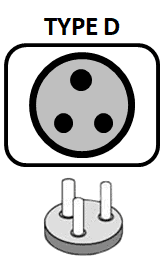
In South Africa, the four types of electrical plugs used are Type C, Type D, Type M, and Type N. The Type C plug has two round pins in it, while the Type D plug is the plug with three round pins in a triangular pattern. Finally, both the M and the N plugs have three round pins to plug into. Please see the illustrations below for a better understanding of what these plugs look like.



Emergency Contact
Should you run into an emergency situation while in South Africa, it will be important to know the emergency numbers. This way, you will know which numbers to dial when you need immediate assistance. To assist you, I have documented the available emergency assistance numbers for South Africa below for you to review.
- Emergencies from Mobile – 112
- Emergencies from Landline – 107
- South African Police Service – 10111
- Medical & Fire – 021 535 1100
- Table Mountain NP Emergencies – 021 480 7700
- Sea and Mountain Rescue – 021 948 9900
- National Sea Rescue Institute – 087 094 9774
- Baboon Monitors – 071 588 6540
- Shark Spotters – 078 174 4244
- Ambulance – 10177
Visa, Passport, and Immunization Info

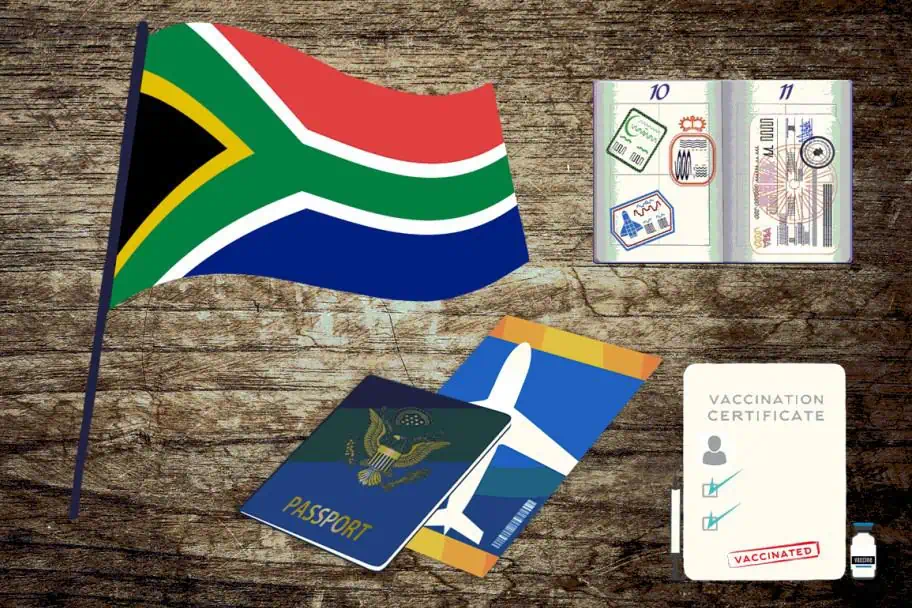
Before booking your South Africa travel, you will want to be sure that you meet all of the necessary passport, VISA, and immunization requirements so that you can ensure you will be allowed into the country. To assist you, I have listed the requirements you will need to consider below for you to review.
Passport Validity
To be allowed into South Africa, your passport needs to be valid 30 days after your arrival. If there will be fewer than 30 days until your passport expires when you are set to arrive in South Africa, then you will need to renew your passport before traveling.
VISA Requirements
In addition to your passport, one of the most important entry requirements that you will need to consider before traveling to South Africa is the tourist VISA requirement. Depending on which country you are from, whether you will need to obtain a tourist VISA and what process you must follow to obtain one may differ. The following sections outline the South African tourist VISA requirements and how to apply.
VISA Exempt Countries
If you are a passport holder from one of the countries listed below, you are VISA-exempt. This means that you won’t need to obtain a tourist VISA before traveling to South Africa if you plan on staying for less time than the VISA exemption period. The good news is that if you are a resident of the United States and Canada or the Schengen Area of the European Union, you will not need to obtain a tourist visa if you plan on staying in South Africa for less than 90 days.
 |
Andorra ** |  |
Greece ** |  |
Panama ** |
 |
Angola *** |  |
Guernsey ** |  |
Paraguay ** |
 |
Anguilla ** |  |
Guyana * |  |
Peru * |
 |
Antigua and Barbuda * |  |
Hong Kong * |  |
Pitcairn Islands ** |
 |
Argentina ** |  |
Hungary * |  |
Poland * |
 |
Australia ** |  |
Iceland ** |  |
Portugal ** |
 |
Austria ** |  |
Ireland ** |  |
Qatar ** |
 |
Bahamas * |  |
Isle of Man ** |  |
South Korea * |
 |
Barbados * |  |
Israel ** |  |
Russia ** |
 |
Belgium ** |  |
Italy ** |  |
Saint Helena ** |
 |
Belize * |  |
Jamaica ** |  |
St Vincent & Gren ** |
 |
Benin * |  |
Japan ** |  |
San Marino ** |
 |
Bermuda ** |  |
Jersey ** |  |
São Tomé ** |
 |
Bolivia * |  |
Jordan * |  |
Saudi Arabia ** |
 |
Botswana ** |  |
Kenya *** |  |
Seychelles *** |
 |
Brazil ** |  |
Eswatini * |  |
Singapore ** |
 |
British Virgin Isl. ** |  |
Lesotho * |  |
South Georgia ** |
 |
Canada ** |  |
Liechtenstein ** |  |
Spain ** |
 |
Cape Verde * |  |
Luxembourg ** |  |
Sweden ** |
 |
Cayman Islands ** |  |
Macau * |  |
Switzerland ** |
 |
Chile ** |  |
Madagascar *** |  |
Tanzania *** |
 |
Costa Rica * |  |
Malawi * |  |
Thailand * |
 |
Cyprus * |  |
Malaysia ** |  |
Trinidad & Tobago ** |
 |
Czechia ** |  |
Maldives * |  |
Tunisia ** |
 |
Denmark ** |  |
Malta ** |  |
Turkey * |
|
Ducie & Oeno Isl. ** |  |
Mauritius * |  |
Turks & Caicos ** |
 |
Ecuador ** |  |
Monaco ** |  |
United Arab Emirates ** |
 |
Falkland Islands ** |  |
Montserrat ** |  |
United Kingdom ** |
 |
Finland ** |  |
Mozambique * |  |
United States of America ** |
 |
France ** |  |
Namibia *** |  |
Uruguay ** |
 |
Gabon * |  |
Netherlands ** |  |
Venezuela ** |
 |
Germany ** |  |
New Zealand ** |  |
Zambia *** |
 |
Ghana *** |  |
Norway ** |  |
Zimbabwe ** |
 |
Gibraltar ** |  |
Albania **** |  |
Algeria * |
| * = VISA-Exempt for 30 Days. |
| ** = VISA-Exempt for 90 Days. |
| *** = VISA-Exempt for 90 Days per anum or per calendar year. |
| **** = VISA-Exempt for 120 Days. |
All Other Travelers
If you don’t hold a passport from one of the VISA-exempt countries listed above, you will need to apply for a South African tourist VISA before traveling. I strongly recommend that you apply for your VISA well before your expected travel date, as you won’t be able to board your flight to South Africa without your VISA.
Immunization Requirements
Important Note: I am not a medical doctor and do not have any medical experience. The information provided in this section is a summary of information that I got from the recommendations of the Centers for Disease Control and Prevention in the United States for travel to South Africa. I am providing you with this information to help bring awareness of the necessary vaccinations to you, but consultation with my guide should not replace a discussion about your travels with your doctor or a travel medical clinic.
There are currently no vaccine requirements to enter South Africa unless you are coming from a country that is considered high risk for Yellow Fever. If you are traveling from a high-risk country, you will need to show proof of a Yellow Fever vaccination before being allowed to enter South Africa.
Important Note: Even if you were only in a high-risk country on a layover for a flight, you may be required to show proof of Yellow Fever vaccination if the layover was 12 hours or longer.
Routine Vaccinations
The following routine vaccinations are recommended for anyone who will be traveling:
- Measles Mumps Rubella (MMR)
- TDAP (Tetanus, Diphtheria & Pertussis)
- Chickenpox
- Shingles
- Pneumonia
- Influenza
- Meningitis
Recommended Travel Vaccinations for South Africa
In addition to the routine vaccinations above, the following are additional vaccinations you may want to consider for South Africa:
- Hepatitis A
- Hepatitis B
- Measles – Cases of measles are on the rise worldwide.
- Rabies – If you plan on spending time in remote areas or on safari.
- Typhoid
- Cholera – Cholera transmission is not uncommon in Africa, though rare in travelers.
- Polio – Poliovirus has been identified in Africa within the last year. There is an adult booster vaccine you can get to be safe.
- Malaria
- Yellow Fever – If you are traveling from high-risk areas.
Customs and Currency Restrictions
In addition to the other entry requirements for South Africa, you also need to make sure you understand and comply with the country’s customs and currency restrictions. For your convenience, I have highlighted these restrictions for your review below. More in-depth information on the customs restrictions can be found on the VisaHQ website for South Africa Travel.
Free Import
The following items are considered free-import items but with limits (as described below).
- 200 cigarettes
- 20 cigars
- 250g of tobacco
- 50ml of perfume
- 2L of wine
- 1L of spirits
- Goods for personal use
Important Note: Travelers may be asked to pay a deposit on expensive items like laptops, DSLRs, or mirrorless cameras. This deposit will be refunded when the item is re-exported when you travel home.
Prohibited Items
Before you are allowed into South Africa, you will also need to clear customs to be sure you aren’t carrying any prohibited items with you. For instance, travelers are strictly prohibited from bringing the following items into South Africa:
- Narcotics and other controlled substances
- Pornography
- Weaponry, explosives, fireworks, etc.
- Poisonous chemical and biological substances and other health-endangering substances
- Cigarettes with a mass of more than 2 kilograms per 1000 units
- Counterfeit goods
- Goods breaking copyright laws
- Prison-made and penitentiary-made goods
Controlled Items
In addition to these prohibited items, the government of South Africa has placed limits on the quantity of other items that can be brought into the country. The following items are considered controlled items in South Africa:
- Local currency of over 10,000 gold coins, coin and stamp collections, and unprocessed gold need to be declared.
- Endangered species of plants or wildlife, whether alive or dead, including any parts of and articles made from them, will need a permit from CITES.
- Plants and products thereof (honey, margarine, and vegetable oils, seeds, etc.).
- Animals and products thereof (dairy products, butter, eggs).
- Medicines for personal use need to be accompanied by a prescription and a note from your doctor.
Currency Restrictions
When visiting South Africa, like all countries, you can’t just bring any amount of currency that you want into the country or leave with any amount of currency when visiting. According to the US State Department website, the government of South Africa has the following currency limits and regulations in place:
- A limit of 25,000 South African Rand (ZAR), an unlimited amount of foreign currency if declared, and no Kruger coins are allowed on entry into South Africa.
- A limit of 25,000 South African Rand (ZAR), an unlimited amount of foreign currency if declared on entry, and up to 15 Kruger coins if purchased with foreign currency.
Key Phrases
When visiting the diverse and captivating country of South Africa, several key phrases and expressions can be incredibly useful to know for your South Africa travel. Understanding these and other quintessential South African phrases can go a long way in helping you navigate the country with ease, engage with locals, and fully immerse yourself in the vibrant culture.
Greetings and Pleasantries
- Molo – The Xhosa word for hello.
- Howzit – Casual greeting among friends.
- Sawubona – A Ndebele greeting that means hello.
- Hamba kahle – Zulu phrase for stay well or be well. It is a polite way to say goodbye.
- Robala ka khutso – Sesotho phrase that means sleep well. It is a common way to say goodbye.
- Siyabonga – The Zulu phrase for thank you.
- Siyavuma – Zulu word for I agree.
- Goeie dag – Afrikaans word for good day. It is a common greeting.
- Tot siens – Afrikaans word for goodbye.
- Lekker slaap – Afrikaans word for sleep well. It is a common way to say goodbye.
- Enkosi – The Xhosa word for thank you.
- Hamba kakuhle – The Xhosa word for go well or goodbye.
- Dumela – A Tswana greeting.
- Ke a leboga – The Tswana way to say thank you.
- Asseblief – Afrikaans for please.
- Dankie – Afrikaans for thank you.
- Ja – Afrikaans word for Yes.
- Nee – Afrikaans word for No.
- Lekker – Afrikaans word for good or nice.
- Hayibo! – Zulu word for unbelievable.
- Goeie môre – Afrikaans for good morning.
- Goeienaand – Afrikaans for good evening.
Food and Drink
- Chow – to eat food
- Padkos – Snacks or travel food.
- Braai – Barbeque.
- Borewors – Sausage
- Biltong – Beef Jerky
- Slap Chips – Potato Chips
- Sarmie – Sandwich
- Fooitjie – Afrikaans for gratuity or tip
- Mag ek die spyskaart sien, asseblief? – Afrikaans for, may I see a menue, please?
- Ek wil graag … bestel – Afrikaans for, I would like to order…
- Kan ek die wynlys sien? – Afrikaans for, can I see the wine list?
- Ek is allergisch vir … – Afrikaans for, I am allergic to….
- Wat beveel jy aan? – Afrikaans for, what do you recommend?
- Kan ek die rekening kry, asseblief? – Afrikaans for, can I have the bill, please?
Shopping
- Ek is op soek na ‘n goeie winkel vir geskenke – Afrikaans for, I am looking for a good shop for gifts.
- Ek wil graag hierdie (item) koop – Afrikaans for, I would like to buy this (item).
- Wat is die prys van hierdie trui – Afrikaans for, what is the price of this sweater?
- Aanvaar julle kredietkaarte? – Afrikaans for, do you accept credit cards?
- Het julle enige spesiale aanbiedinge vandag? – Afrikaans for, do you have any special offers today?
- As dit nie pas nie, kan ek dit teruggee? – Afrikaans for, if it doesn’t fit, can I return it?
- Mag ek hierdie trui aantrek? – Afrikaans for, may I try this sweater on?
- Kan jy asseblief die kwitansie vir my gee? – Afrikaans for, could you please give me the reciept?
Directions and Navigation
- Links – Left in Afrikaans.
- Regs – Right in Afrikaans.
- Reguit – Straight in Afrikaans.
- Draai – Turn in Afrikaans.
- Waar is die… – Where is the… in Afrikaans.
- Hoe kom ek by (plek) uit? – Afrikaans for, how do I get to (place)?
- Is dit ver van hier af? – Afrikaans for, is it far from here?
- Kan jy vir my op die kaart wys? – Afrikaans for, can you show me on the map?
- Kan jy vir my sê hoe om by (plek) uit te kom? – Afrikaans for, can you tell me how to get to the (place)?
- Is daar ‘n restaurant naby? – Afrikaans for: Is there a restaurant nearby?
- Kan jy vir my sê hoe om by die hotel uit te kom? – Afrikaans for, can you tell me how to get to the hotel?
- Waar is die badkamer? – Afrikaans for: Where is the bathroom?
Driving Info

Driving in South Africa can be a unique and thrilling experience for visitors, but it’s important to be aware of a few key considerations before getting behind the wheel. Self-driving is an excellent way to experience the breathtaking natural beauty and rich cultural tapestry of South Africa at your own pace.
By familiarizing yourself with local driving customs, obtaining appropriate insurance, and exercising a healthy dose of caution, visitors can safely and confidently explore this captivating destination by car. Before you depart for your South Africa travel, please review the helpful tips for driving in South Africa that I have included below.
Driving License and Permit Required
To drive in South Africa, you must meet the following requirements:
- Be 18 years of age or older.
- Have a valid driver’s license from your home country (which you must keep with you while in South Africa).
- If your driver’s license is not in English, you will need to obtain an International Driver’s Permit (which you must keep with you while in South Africa).
- If your driver’s license does not include a photo, you must also carry your passport with you while driving.
Renting a Car in South Africa
If you are visiting South Africa as part of a tour, you may not need to worry about renting a car. In those situations, your tour guide will often provide you with transportation to get where you need to go. However, if you plan on visiting South Africa on your own or plan to spend a lot of time in the country, renting a car is a convenient way to get around. If you do rent a car while in South Africa, you will want to keep the following tips in mind:
- You must be 18 years old or older to rent a car in South Africa.
- While walk-in booking is allowed, it is recommended that you rent online ahead of time to ensure you get the vehicle you want.
- If you plan to self-drive in one of South Africa’s famed wildlife parks, it is recommended to rent a Land Cruiser or other 4×4 vehicle.
- To rent a car, you will need your local driver’s license or your IDP, and your passport.
- It is strongly recommended that you purchase additional car insurance from the car rental company you rent from.
General South Africa Driving Tips
If you plan to drive while in South Africa, it is beneficial to know what to expect before you arrive in the country. Knowing the following South Africa driving tips will help ensure that you are comfortable and safe while on the roads.
- In South Africa, they drive on the left side of the road, and the driver’s seat is on the right side of the vehicle.
- The roads in South Africa are mostly in excellent condition, with roads being maintained by the South African National Roads Agency (SANRAL).
- Many of the national roads between the major cities are toll roads. Make sure you have a credit card or cash to pay tolls if driving on these roads.
- All traffic signs are written in English.
- If you hear the word “robot” when getting directions, it is important to understand that “robot” is the South African word for traffic light.
- Gas (petrol) stations are mostly open 24 hours in South Africa. Many are not self-help but instead are manned by attendants who will check your oil and tire pressure for you while refueling your vehicle. Tipping these attendants is appreciated, but not mandatory.
- The three common types of fuel in South Africa are leaded, unleaded, and dual fuel, which can be used in place of leaded or unleaded.
South Africa Driving Rules and Regulations
The last pieces of driving advice I have for you in this South Africa travel guide are some highlights of the rules and regulations for driving in the country. Keeping the following driving rules and regulations in mind can save you from incurring any fines and help ensure you remain safe during your visit.
- When driving, keep to the left and pass to the right.
- Speed limits are in kilometers and are typically the following (based on the type of road):
- National Highways – 120km/h (75mph).
- Secondary or Rural Roads – 100km/h (60mph).
- Residential Areas – 60km/h (35mph).
- There are four-way stops in South Africa. The general rule, as is also the case in the United States, is that the driver who arrives first goes first.
- Traffic signs in South Africa fall into the following four categories:
- Regulatory signs – Stop Signs, Speed Limit, etc…
- Warning signs – Road closure, lane ends, etc…
- Guidance signs – Keep left, detour, etc…
- Temporary Regulatory Signs – Construction, etc…
Safety Tips
Unfortunately, like most countries, South Africa has crime issues in populated areas. If you plan to rent a car and drive while visiting South Africa, you will want to keep the following safety tips in mind.
- Always drive with the doors locked and the windows up, especially at traffic lights. This tip is especially important in big cities.
- Do not stop to pick up hitchhikers.
- Do not leave anything valuable in your car when parked.
- Always try and park in busy, well-lit areas.
- If someone hits or bumps your car, stop and call for assistance, but do not get out of the vehicle without the police present.
Relative Guides, Itineraries, and Articles
To assist you as you start to put together your travel plans for South Africa, I have provided a comprehensive list of all of my travel guides, travel itineraries, and travel inspiration articles for South Africa for you to review below.


Packing and Planning Tips
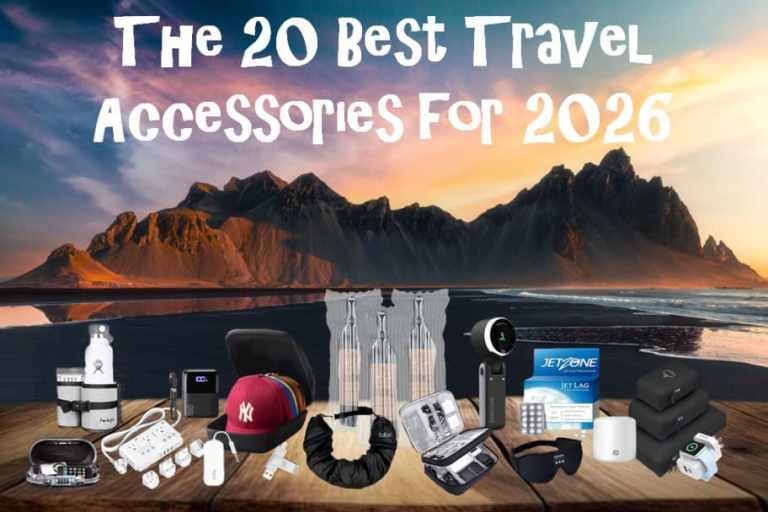
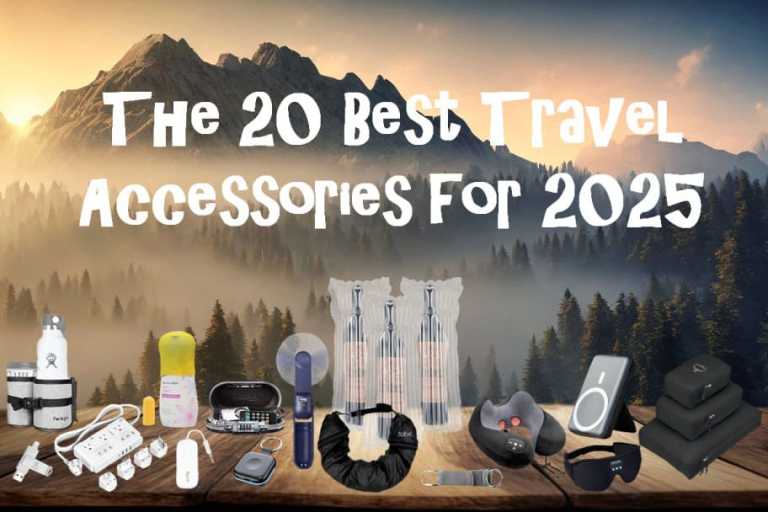
Once you start putting together your South Africa travel plans, you may want to reference some of my handy travel packing and planning guides that I have put together. To make it easy to find and access these guides, I have included them for your reference below.




Popular Tours
When it comes to exploring the vibrant beauty of South Africa, there are a variety of tours that consistently captivate travelers from around the globe. Whether you’re yearning to witness the majestic wildlife on a thrilling safari in Kruger National Park, soak in the stunning landscapes along the Garden Route, or discover the rich history in Cape Town with a visit to Robben Island, there’s something for everyone. Join fellow travelers on these unforgettable journeys and create memories that will last a lifetime in this stunning country!
Don’t Forget to Subscribe to My Adventures!

Let Me Help You Save On Your Next Adventure!
‘Start Exploring Today’ Merchandise Available Now!
 |
 |
 |
 |
 |
 |
 |
You must be logged in to post a comment.