Spain Travel
The more you learn about Spain, the less you will be surprised to know that it is one of the world’s top travel destinations. If you are in the process of planning a trip to see this beautiful country, I couldn’t be more excited for you. As you navigate this Spain travel page, you will discover a wealth of valuable insights, recommendations, and firsthand experiences that will enrich your travel plans.
From the vibrant streets of Barcelona to the historic landmarks of Madrid, my professional travel guides offer comprehensive information to ensure your journey is seamlessly planned and executed. Whether you seek culinary adventures, cultural discoveries, or scenic escapades, my meticulously curated content will inspire your wanderlust and elevate your Spanish travel experience to new heights.

Please feel free to use this page as you plan your next adventure. To help you navigate the information I have included on this page, I have provided a quick navigation menu for you to use below. This will make it quick and easy for you to see which top destinations I recommend, which popular cities in Spain you should consider visiting, and links to all of the travel guides, itineraries, and packing articles I have written to help you plan your adventure.
I have also included some key information you will need when planning your travel to Spain. Information such as the languages spoken, the currency used, emergency contact numbers to be aware of, VISA and passport considerations, required vaccinations, and important driving information (if you plan on driving while on your visit).


Top Things to See
Before you start planning your Spain travel, make sure you check out my gallery of the top things to see in the country below for some inspiration. There is so much to see and do in the country, so you won’t want to miss out on the top sights!

The Sagrada Familia in Barcelona

Cathedral Mosque of Cordoba

Roman Aqueduct of Segovia
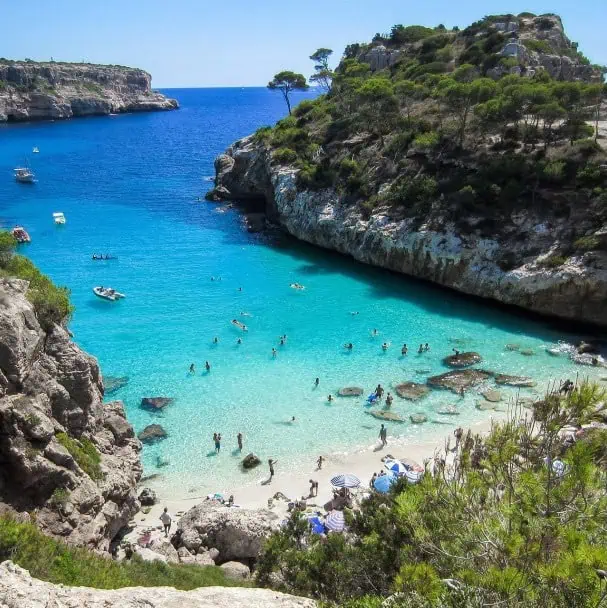
Mallorca

Catedral de Santiago de Compostela

Puente Nuevo in Ronda

Plaza de España in Seville

Alhambra in Granada

Tenerife
If you are looking for some additional ideas, please see my Top 30 Places to See in Spain blog post linked below.

Popular Cities and Places

As you start planning your Spain travel, you will want to familiarize yourself with the country’s largest and most popular cities (which are not always one and the same).
Not only to see if you would like to visit and tour these cities but also because these cities will typically be your ports of entry and transportation hubs as you visit on your trip. To help you with this, I have included a map of some of the key cities within Spain that you will want to become familiar with below.

Languages Spoken
While the official language spoken in Spain is Spanish (specifically Castilian Spanish), other languages are spoken regionally within the country. All citizens of Spain speak Spanish, but Catalan is spoken in Catalonia, Galician in Galicia, and Basque is spoken in the Basque Country and part of Navarre.
Currency

The official currency in Spain is the Euro (€). One Euro is made up of 100 cents. Common denominations for coins are 1, 2, 5, 10, 20, and 50 cents, as well as 1 and 2 euros. The denominations for Euro banknotes include €5, €10, €20, €50, €100, €200 and €500.
However, this first series of Euro bank notes, which started in 2022, is slowly being replaced by the second series of bank notes, known as the Europa series. The denominations for the Europa series bank notes are €5, €10, €20, €50, €100 and €200.
Power Adapters Required

One of the most overlooked aspects of international travel is ensuring you have the proper power adapters. You may or may not be aware that both the voltage and the type of outlet available differ widely from one region of the world to the next. If you aren’t prepared, you won’t be able to charge your electronic devices as you travel.
Even worse, you may damage or even destroy your electronic devices if you don’t have the right adapter with a voltage converter. Electricity supplies worldwide can vary from anything between 100V and 240V. It can be extremely dangerous to use an electrical appliance that is rated at a voltage different from the supply.
To ensure that this doesn’t happen to you, I have included some critical information on the electrical system in Spain for you to review below. This includes what types of international power adapters you should bring with you on your trip.
Electrical Voltage in Spain
In Spain, the voltage of the electrical supply is 230V and 50hz. If you have an appliance that is single voltage rated, the voltage rating of the device must be 230V for you to use it without a voltage converter. When shopping for a travel power adapter, it is important to confirm that the adapter you choose has a voltage converter included and isn’t just an adapter.
A power adapter will change the type of plug from one type to another so that you can plug into different outlets. However, a simple power adapter will not change the voltage of the supply to the voltage used by the devices you brought from home (120V in the United States). To do that, you will need a travel power adapter with a voltage converter.
Electrical Outlets in Spain
In Spain, two primary types of electrical plugs are used, Type C and Type F. The type C plug is the plug that has two round pins. Meanwhile, the type F plug is the plug that has two round pins with two earth clips on each side. Please see the illustrations of the Type C and Type F plugs below for a better understanding of what these plugs look like.


Emergency Contact
There are three different emergency services in Spain: The police (policía), fire department (cuerpo de bomberos), and ambulance services (ambulancía). You can contact the emergency services by dialing the pan-European emergency number (112) from any telephone in Spain. The operator will divert you to the correct emergency service.
- Ambulance: 061
- Fire Department: 080
- National police: 091
- Local police: 092
Visa, Passport, and Immunization Info

Before booking your Spain travel, you will want to be sure that you meet all of the necessary passport, VISA, and immunization requirements so that you can ensure you will be allowed into the country. To assist you, I have listed the requirements you will need to consider below for you to review.

Passport Validity
It is required that all visitors have a passport that is valid for at least 3 months past the end of their stay in Spain. To be safe, it is recommended that your passport be valid for at least 6 months passed the end of your stay in Spain. You may also be required to show proof of accommodation while in Spain and the purchase of a return flight home before being allowed to enter the country.
VISA Requirements
Depending on which country you are from, you may or may not be required to obtain a travel VISA before being allowed to enter Spain. If you hold a passport from a country that is VISA-exempt, you will not need to obtain a VISA. However, if you are not a passport holder from a VISA-exempt country, you will need to apply for a VISA to visit Spain.
VISA Exempt Countries
The following countries are exempt from the VISA requirement for Spain. If you hold a passport from one of these countries, you do not need to obtain a tourist VISA before traveling to Spain.
 |
Albania |  |
Georgia |  |
Panama |
 |
Andorra |  |
Grenada |  |
Paraguay |
 |
Antigua & Barbuda |  |
Guatemala |  |
Peru |
 |
Argentina |  |
Honduras |  |
Solomon Islands |
 |
Macedonia |  |
Israel |  |
Samoa |
 |
Australia |  |
Japan |  |
Saint Kitts & Nevis |
 |
Bahamas |  |
Kiribati |  |
San Marino |
 |
Barbados |  |
Malaysia |  |
St Vincent & Grenadines |
 |
Bosnia and Herzegovina |  |
Marshall Islands |  |
Saint Lucia |
 |
Brazil |  |
Mauritius |  |
Holy See |
 |
Brunei |  |
Mexico |  |
Serbia |
 |
Canada |  |
Micronesia |  |
Seychelles |
 |
Chile |  |
Moldova |  |
Singapore |
 |
Colombia |  |
Monaco |  |
Timor Leste |
 |
South Korea |  |
Montenegro |  |
Tonga |
 |
Costa Rica |  |
Nauru |  |
Trinidad & Tobago |
 |
Dominica |  |
Nicaragua |  |
Tuvalu |
 |
El Salvador |  |
New Zealand |  |
Uruguay |
 |
United Arab Emirates |  |
Palau |  |
Vanuatu |
 |
United States |
Applying for a Spain Tourist VISA
If you do not hold a passport from a VISA-exempt country listed above, you must apply for a VISA before traveling to Spain. Please apply for your VISA at least a few months before you plan to travel to ensure you can obtain it on time.
European Travel Information and Authorisation System (ETIAS)
Important Note: Even if you hold a passport from a VISA-exempt country, starting sometime in mid-2025 you will need to apply for an ETIAS Authorization if you are planning to travel to the Schengen Area of the European Union (which includes Spain) or Cyprus.
Immunization Requirements
Important Note: I am not a medical doctor and don’t have medical experience. The information provided in this section is a summary of information that I got from the Centers for Disease Control and Prevention in the United States for travel to Spain. I am providing you this information to help bring awareness of the necessary vaccinations to you, but consultation with my guide should not replace a discussion about your travels with your doctor or a travel medical clinic.
Currently, there are no vaccine requirements for entry into Spain and there are no current health notices for the country. However, you will want to check the Centers for Disease Control website for Spain before your travel to ensure there aren’t any new notices. To assist you with the rest of your vaccination planning, I have included some general vaccination and travel vaccination recommendations for you to review below.
Routine Vaccinations
The following routine vaccinations are recommended for anyone who will be traveling:
- Chickenpox (Varicella)
- Diphtheria-Tetanus-Pertussis
- Flu (influenza)
- Measles-Mumps-Rubella (MMR)
- Polio
- Shingles
Recommended Travel Vaccinations for Spain
In addition to the routine vaccinations above, the following are additional vaccinations you may want to consider for Spain:
- Hepatitis A & B (if you haven’t had them).
- COVID Vaccination (not required for entry but recommended).
Customs and Currency Restrictions
In addition to the other entry requirements for Spain, you also need to make sure you understand and comply with the country’s customs and currency restrictions. For your convenience, I have highlighted these restrictions for your review below. More in-depth information on the customs restrictions can be found on the VisaHQ website for Spain Travel.
Free Import (Traveling from Within the European Union)
The following items are considered free-import items when traveling within the European Union but with limits (as described below).
- 800 cigarettes, 400 cigarillos (max. 3g each), 200 cigars, or 1kg smoking tobacco.
- 10 liters of spirits over 22%, 20 liters of alcoholic beverages less than 22%, 90 liters of wine (though no more than 60 liters of sparkling wine), or 110 liters of beer.
Free Import (Traveling from Outside the European Union)
The following items are considered free-import items when traveling from outside the European Union but with limits (as described below).
- Medication – for personal use only (should be in a prescription bottle if applicable).
- Non-commercial personal goods of up to 430 euros value if entering by air or by sea.
- Non-commercial personal goods of up to 300 euros value if entering by land.
- Non-commercial personal goods of up to 150 euros value for travelers under 15-years of age.
- 200 cigarettes, 100 cigarillos, 50 cigars, or 250 g of smoking tobacco when entering by air or by sea.
- 40 cigarettes, 20 cigarillos, 10 cigars, or 50 g of smoking tobacco when entering by land.
- 1 liter of alcohol that does not exceed 22% volume of alcohol, or un-denatured ethyl alcohol 80% volume and over.
- 2 liters of alcohol that does not exceed 22% volume of alcohol.
- 4 liters of still wine.
- 16 liters of beer.
Important Note: Travelers must be 17 years old or older to drink alcohol or use tobacco in Spain. Also, the first two types of alcohol can be combined as long the alcohol volume does not exceed 100%.
Prohibited Items
Before you will be allowed into Spain, you will also need to clear customs to be sure you aren’t carrying any prohibited items with you. For instance, travelers are strictly prohibited from bringing the following items into Spain:
- Any meat or milk products.
- Any items made from protected species (for example – ivory, coral, reptile skin, wood from Amazonian forests).
Controlled Items
In addition to these prohibited items, the government of Spain has placed limits on the quantity of other items that can be brought into the country. The following items are considered controlled items in Spain:
- Pets must be identifiable via tattoo or electronic chip and have the proper vaccinations (including rabies vaccination).
- A maximum of 10 kg of meat, milk, and dairy products from Croatia, Færøer Islands, Greenland, and Iceland.
- Powdered milk for babies may be allowed if it doesn’t need to be refrigerated before opening and is brand-packaged with the original seal (quantity must not exceed the weight of 10 kg originating from Croatia, Færøer Islands, Greenland, and Iceland, and of 2 kg if originating in other countries).
- Fish are allowed if disemboweled and they do not exceed 20 kg in weight.
Currency Restrictions
The final aspect of the Spain entrance requirements that you will want to make sure you comply with when traveling to Spain is the amount of currency you plan on bringing to the country. According to the US State Department website, there are currently no currency restrictions for entering or exiting Spain.
Key Phrases to Know
As a part of your Spain travel preparation, you will need to prepare yourself for how they talk in Spain so that you can understand the dialog as you interact with Spanish residents. This includes understanding key phrases so that you can ask for things, respond to others, and get around the country much easier.
Here are some common phrases that you may need to use while visiting Spain:
Greetings and Introductions
- My name is… – Me llamo…
- What is your name? – ¿Cómo te llamas?
- Hello – Hola.
- How are you? – ¿Cómo estás?
- I’m fine, thanks – Estoy bien, ¡gracias!
- Nice to meet you – Mucho gusto.
- Good morning – Buenos días.
- Good afternoon – Buenas tardes.
- Good night – Buenas noches.
- See you later – Hasta luego.
- See you tomorrow – ¡Hasta mañana!
Asking for Directions
- I am lost – Estoy perdido/a.
- To the right – A la derecha.
- To the left – A la izquierda.
- Stop (verb) – Pare.
- Stop (noun) – Parada.
- Where is the bathroom? – ¿Donde esta el baño?
- Can you give me directions to… – ¿Puedes darme direcciones para…?
- Where is the…? – Dónde está (el/la)…?
Everyday Phrases
- Do you speak English? – ¿Habla Inglés?
- I don’t speak Spanish – No hablo Español.
- Can I take your picture? – ¿Le puedo tomar una foto?
- Can you take my picture? – ¿Me puedes tomar una foto?
- Please – Por favor.
- Excuse me – Disculpe.
- Thank you -Gracias.
- You’re welcome – De nada.
- I am …. years old – Yo tengo … años.
- Excuse me – ¡Perdone!
- Can you speak more slowly? – ¿Puede hablar más despacio?
Shopping
- Do you have any…? – ¿Usted tiene alguna…?
- I would like to purchase…. – Me gustaría comprar….
- I would like to order… – Me gustaría pedir….
- How much does this cost? – ¿Cuánto cuesta esto?
- The bill, please – La cuenta, por favor.
Emergency Assistance
- Help me! – ¡Socorro!
- I need a doctor – Necesito un doctor.
- I have altitude sickness – Tengo soroche.
- I need a pharmacy – Necesito una farmacia.
- Where is the tourism police – ¿Dónde está la oficina de la Policía de Turismo?.
- I have an emergency – Tengo una emergencia.
Driving Info

One of the best parts about traveling in Europe, Spain included, is the amazing public transportation. The train system throughout Europe is amazing in its convenience and affordability. So, if you don’t want to drive when visiting Spain, you don’t really have to. However, there is a certain convenience of having your own vehicle and setting your own schedule. If you are interested in driving when you visit Spain, I have provided some tips for you to review below.
License Requirements
You are eligible to drive in Spain if you are 18 years or older and have a valid driver’s license. If you are a citizen of the EU/EFTA, you can use your local driver’s license while driving in Spain. For those who are not EU/EFTA citizens, you will need to obtain an international driver’s permit (IDP) before traveling to Spain. This IDP must be carried with you when driving while in Spain.
IMPORTANT NOTE: Even with this IDP, you will need to have your regular license with you as well.
Driving Tips
Before you depart for your trip, you will want to familiarize yourself with the following tips for driving in Spain.
- In Spain, they drive on the right side of the road and the driver’s seat is on the left side of the vehicle (the same as in the United States).
- The road numbers indicate the type of road in Spain.
- Highways (autopistas) are marked with and A or E.
- Toll roads (autopistas de peaje) are marked with AP.
- Two-lane highways (autovías) are marked with an E.
- National roads (carreteras nacionales) are marked with N or CN.
- Country Roads (carreteras comarcales) are marked with a C.
- In Spain, there are three types of fuel. This includes Sin Plomo 95 (regular unleaded), Sin Plomo 98 (premium unleaded), and Gasóleo (diesel).
- The car engine, lights, and radio must be turned OFF while refueling.
- You must have the following documentation and safety equipment in the car at all times.
- Proof of insurance.
- Car title or proof of car rental.
- A reflective vest.
- Two warning triangles.
- A spare tire and tools to replace a tire.
- A set of headlight bulbs and tools to replace a bulb.
Traffic Laws
The final and arguably the most important things that you will need to know before driving in Spain are the driving laws and regulations. For your convenience, I have included some of the most important regulations for you to review below.
- U-turns are forbidden in Spain.
- Like in the United States, never cross a solid center line to pass another vehicle in Spain.
- All passengers must wear seatbelts and children must be over 12 years of age to sit in the front seat. Children under 53 inches tall (1.35 meters) must be in a car seat.
- It is illegal to use your car horn in Spain unless it is an emergency.
- Driving fines in Spain can be up to €100-600. If you are not a Spanish resident, you will likely be asked to pay the fine on the spot.
- The following are general guidelines for speed limits on roadways in Spain:
- 20km/h on streets shared by cars and pedestrians.
- 30km/h in residential areas.
- 50km/h on roads with two lanes in each direction.
- 90km/h on roadways outside of towns.
- 120km/h on motorways.
- You are considered to be driving under the influence if you have a blood\alcohol level of 0.5g per liter of blood or higher.
- You are not allowed to be on your phone while driving in Spain unless it is hands-free.
- You may encounter the following driving signs while driving in Spain:
- Warning Signs – Warn of potential danger. Red border and a black image on a white background.
- Information Signs – Convey information. Usually rectangular and either white on a blue background or black on a white background.
- Prohibition Signs – Conveys what drivers are not allowed to do. Typically circular with a red border, black text, and white background.
- Mandatory Signs – Instructions that drivers must follow. Usually a blue circle with white text.
- Parking is sometimes free during siesta hours (2pm – 4pm) in Spain.
- Certain zones in cities are marked as residential zones, in which only residents are allowed to park.
- Parking fines are typically around €40.
Relative Travel Guides and Articles
To assist you as you start to put together your travel plans for Spain, I have provided a comprehensive list of all of my travel guides, travel itineraries, and travel inspiration articles for Spain for you to review below.









Packing and Planning Tips
Once you start putting together your Spain travel plans, you may want to reference some of my handy travel packing and planning guides that I have put together. To make it easy to find and access these guides, I have included them for your reference below.






Don’t Forget to Subscribe to My Adventures!

Let Me Help You Save On Your Next Adventure!
‘Start Exploring Today’ Merchandise Available Now!
 |
 |
 |
 |
 |
 |
 |

Leave a Reply