Switzerland Travel
Switzerland travel has a way of surprising even the most seasoned explorers, blending dramatic alpine scenery with serene lakeside towns and impeccably preserved historic districts. From panoramic mountain trains winding through snow‑dusted peaks to charming villages where time seems to slow down, the country offers a rare mix of adventure and tranquility. Whether you’re drawn to glacier viewpoints, cobblestone old towns, or peaceful walks along turquoise lakes, Switzerland delivers a travel experience that feels both effortless and unforgettable.

Please use this Switzerland travel page as you plan your next adventure. To help you navigate the information on this page, I have included a quick navigation menu for you to use below. This will make it fast and easy for you to see which top destinations I recommend, which popular parks and destinations in Italy you should consider visiting, and links to all of the travel guides, itineraries, and packing articles I have written to help you plan your adventure.
I have also included some key information you will need when planning your travel to Switzerland. Information such as the languages spoken, the currency used, emergency contact numbers to be aware of, VISA and passport considerations, required vaccinations, and important driving information (if you plan on driving while on your visit).


Top Things to See
Before you start planning your trip to Switzerland, check out my gallery of the top things to see in the country below for some inspiration. There is so much to see and do in the country, so you won’t want to miss out on the top sights!

Château de Chillon
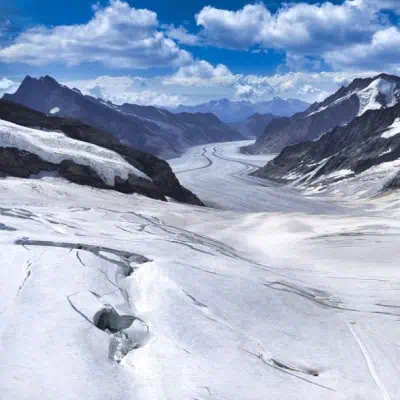
Jungfraujoch

Kapellbrücke

Lake Oeschinen

Lauterbrunnen
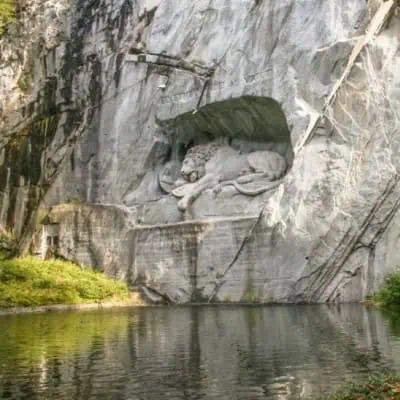
Löwendenkmal

Ruinaulta

Schilthorn

The Verzasca Valley
Popular Cities

As you start planning your Switzerland travel, you will want to familiarize yourself with the country’s largest and most popular cities (which are not always one and the same).
This is not only to see if you would like to visit and tour these cities, but also because they will typically be your ports of entry and transportation hubs as you visit them on your trip. To help you with this, I have included a map of some of the key cities within Switzerland that you will want to become familiar with below.

If you are looking for some additional destinations to see in your Switzerland travel, make sure you check out my article on the Top 20 Switzerland Tourist Spots and Attractions to Visit, linked below.

Languages Spoken
Switzerland is officially multilingual, recognizing German, French, Italian, and Romansh as national languages. German is by far the most widely spoken, especially in the central and eastern regions, while French dominates the west, Italian is concentrated in the south, and Romansh survives as a small but culturally significant language in parts of Graubünden.
Switzerland’s linguistic landscape is also shaped by immigration, with a noticeable share of residents reporting a non‑national language as their main language. According to the Swiss Federal Statistical Office and related sources, the distribution of languages spoken in Switzerland is as follows.
- German – 62% German is the most widely spoken language in Switzerland, used across 19 of the country’s 26 cantons. Most residents speak Swiss German dialects in daily life, while Swiss Standard German is used in writing.
- French – 22.7% French is spoken primarily in western Switzerland (Suisse Romande), including Geneva, Vaud, Neuchâtel, and Jura.
- Italian – 8.2% Italian is the dominant language in Ticino and parts of southern Graubünden.
- Romansh – 0.5% Romansh, a Romance language with several regional varieties, is spoken by a small minority in Graubünden. It holds national language status and limited official use.
- Other / Non‑national languages – 5–12% depending on category. A growing share of residents report a non‑national language as their main language, including English, Portuguese, Albanian, Serbo‑Croatian, and Spanish. English alone accounts for about 5.4% of the population as a main language.
Currency

The official currency of Switzerland is the Swiss franc (CHF), often represented by the symbols Fr. or SFr. One franc is divided into 100 rappen in German‑speaking regions or centimes in French‑speaking areas. Unlike many European countries, Switzerland is not part of the Eurozone, so the Swiss franc remains the primary currency used for everyday transactions, travel expenses, and banking throughout the country. The Swiss National Bank issues all banknotes, while coins are produced by Swissmint.
Common coin denominations include 5, 10, 20, and 50 rappen, as well as 1, 2, and 5 franc coins. These coins are widely used, especially for small purchases, vending machines, and public transportation kiosks. Swiss coins are known for their durability and distinctive designs, many of which feature national symbols and historical figures.
Swiss banknotes come in denominations of 10, 20, 50, 100, 200, and 1,000 francs. The current series—introduced between 2016 and 2019—features vibrant colors and modern security features, replacing the previous 1995 series. Each note highlights a different theme related to Switzerland’s identity, such as time, light, wind, water, and language. While the 1,000‑franc note is unusually high compared to most countries’ largest denominations, it remains commonly used in Switzerland due to the nation’s strong cash culture and high cost of living.
Power Adapters Required

One of the most overlooked aspects of international travel is ensuring you have the proper power adapters. You may or may not be aware that both the voltage and the type of outlet available differ widely from one region of the world to the next. If you aren’t prepared, you won’t be able to charge your electronic devices as you travel.
Even worse, you may damage or even destroy your electronic devices if you don’t have the right adapter with a voltage converter. Electricity supplies worldwide can vary from anything between 100V to 240V. It can be extremely dangerous to use an electrical appliance that is rated at a voltage different from the supply.
To ensure that this doesn’t happen to you, I have included some critical information on the electrical system in Switzerland for you to review below. This includes what types of international power adapters you should bring with you on your trip
Electrical Voltage in Switzerland
In Switzerland, the voltage of the electrical supply is 230V. If you have an appliance that is single-voltage rated, the voltage rating of the device must be 230V for you to use it without a voltage converter. When shopping for a travel power adapter, it is important to confirm that the adapter you choose has a voltage converter included and isn’t just an adapter.
A power adapter will change the type of plug from one type to another so that you can plug into different outlets. However, a simple power adapter will not change the voltage of the supply to the voltage used by the devices you brought from home (120V in the United States). To do that, you will need a travel power adapter with a voltage converter.
Electrical Outlets in Switzerland
In Switzerland, the two types of electrical plugs used are Type C and Type J. The Type C plug is the plug that has two round pins, while the Type J plug is the plug that has three round pins. Please see the illustrations of the Type C and Type J plugs below for a better understanding of what these plugs look like.


Emergency Contact
Switzerland has a well‑organized emergency response system, and travelers can reach help quickly through a set of dedicated numbers. The primary number to remember is 112, the pan‑European emergency line, which connects you to an operator who can dispatch the appropriate service anywhere in the country. Switzerland also maintains individual hotlines for specific emergencies, including medical assistance, fire services, and police response.
- Ambulance / Medical Emergency: 144
- Fire Department: 118
- Police: 117
- Pan‑European Emergency Number: 112
- Roadside Assistance (TCS): 140
Visa, Passport, and Immunization Info

Before booking your Switzerland travel, you will want to be sure that you meet all of the necessary passport, VISA, and immunization requirements so that you can ensure you will be allowed into the country. To assist you, I have listed the requirements you will need to consider below for you to review.
Passport Validity
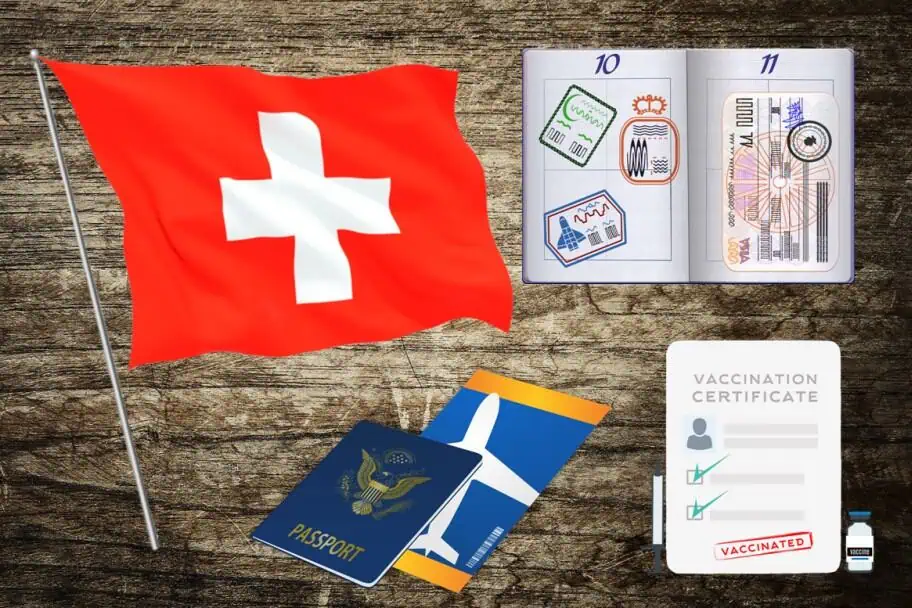
It is required that all visitors have a passport that is valid for at least 3 months past the end of their stay in Switzerland. To be safe, it is recommended that your passport be valid for at least 6 months past the end of your stay in Switzerland. You may also be required to show proof of accommodation while in Switzerland, and the purchase of a return flight home before being allowed to enter the country.
VISA Requirements
Depending on which country you are from, you may or may not be required to obtain a travel VISA before being allowed to enter Switzerland. If you hold a passport from a VISA-exempt country, you will not need to obtain a VISA. However, if you are not a passport holder from a VISA-exempt country, you must apply for a VISA to visit Switzerland.
VISA-Exempt Countries
The following countries are exempt from the VISA requirement for Switzerland. If you hold a passport from one of these countries, you do not need to obtain a tourist VISA before traveling to Switzerland if you plan to stay for less than 90 days.
 |
Albania |  |
Iceland |  |
Portugal |
 |
Andorra |  |
Ireland |  |
Romania |
 |
Antigua & Barbuda |  |
Israel |  |
Saint Lucia |
 |
Argentina |  |
Italy |  |
Samoa |
 |
Australia |  |
Japan |  |
San Marino |
 |
Austria |  |
Kiribati |  |
Serbia |
 |
Bahamas |  |
Latvia |  |
Seychelles |
 |
Barbados |  |
Liechtenstein |  |
Singapore |
 |
Belgium |  |
Lithuania |  |
Slovakia |
 |
Bosnia & Herzegovina |  |
Luxembourg |  |
Slovenia |
 |
Brazil |  |
Macau |  |
Solomon Islands |
 |
Brunei |  |
Malaysia |  |
South Korea |
 |
Bulgaria |  |
Malta |  |
Spain |
 |
Canada |  |
Marshall Islands |  |
St Vincent & Grenadines |
 |
Chile |  |
Mauritius |  |
St. Kitts & Nevis |
 |
Colombia |  |
Mexico |  |
Sweden |
 |
Costa Rica |  |
Micronesia |  |
Taiwan |
 |
Croatia |  |
Moldova |  |
The Vatican |
 |
Cyprus |  |
Monaco |  |
Timor-Leste |
 |
Czechia |  |
Montenegro |  |
Tonga |
 |
Denmark |  |
Netherlands |  |
Trinidad & Tobago |
 |
Dominica |  |
New Zealand |  |
Tuvalu |
 |
Estonia |  |
Nicaragua |  |
U.A.E. |
 |
Finland |  |
North Macedonia |  |
U.K. |
 |
France |  |
Norway |  |
U.S.A. |
 |
Germany |  |
Palau |  |
Ukraine |
 |
Greece |  |
Panama |  |
Uruguay |
 |
Grenada |  |
Paraguay |  |
Vanuatu |
 |
Hong Kong |  |
Peru |  |
Venezuela |
 |
Hungary |  |
Poland |
Immunization Requirements
Important Note: I am not a medical doctor and don’t have medical experience. The information provided in this section is a summary of information that I got from the Centers for Disease Control and Prevention in the United States for travel to Switzerland. I am providing you with this information to help bring awareness of the necessary vaccinations to you, but consultation with my guide should not replace a discussion about your travels with your doctor or a travel medical clinic.
Currently, there are no vaccine requirements for entry into Switzerland, and there are no current health notices for the country. However, you will want to check the Centers for Disease Control website for Switzerland before your travel to ensure there aren’t any new notices. To assist you with the rest of your vaccination planning, I have included some general vaccination and travel vaccination recommendations for you to review below.
Routine Vaccinations
The following routine vaccinations are recommended for anyone who will be traveling:
- Chickenpox (Varicella)
- Diphtheria-Tetanus-Pertussis
- Flu (influenza)
- Measles-Mumps-Rubella (MMR)
- Polio
- Shingles
Recommended Travel Vaccinations for Switzerland
In addition to the routine vaccinations above, the following are additional vaccinations you may want to consider for Switzerland:
- Hepatitis A & B (if you haven’t had them).
- Influenza Vaccination (not required for entry but recommended).
Customs and Currency Restrictions
In addition to the other entry requirements for Switzerland, you also need to make sure you understand and comply with the country’s customs and currency restrictions. For your convenience, I have highlighted these restrictions for your review below. More in-depth information on the customs restrictions can be found on the VisaHQ website for Switzerland Travel.
Free Import (Traveling from Within the European Union)
The following items are considered free-import items when entering Switzerland from another country inside the European Union, but with limits (as described below).
- 800 cigarettes, 400 cigarillos (max. 3g each), 200 cigars, or 1kg smoking tobacco.
- 10 litres of spirits over 22%, 20 litres of alcoholic beverages less than 22%, 90 litres of wine (though no more than 60 litres of sparkling wine), or 110 litres of beer.
Free Import (Traveling from Outside the European Union)
If you are traveling to Switzerland from a country outside the European Union, the following items are considered free-import items when within the limits defined below.
- 200 cigarettes, 100 cigarillos, 50 cigars, or 250 g of smoking tobacco when arriving by air or sea.
- 40 cigarettes, 20 cigarillos, 10 cigars, or 50 grams of smoking tobacco when arriving by land.
- 1 litre of alcohol that does not exceed 22% volume of alcohol, or un-denatured ethyl alcohol 80% volume and over, 2 litres of alcohol that does not exceeds 22% volume of alcohol, 4 litres of still wine, or 16 litres of beer.
- Medication (for personal use only).
- Personal items of a non-commercial nature worth up to 430 euros when travelling by air or sea.
- Personal items of a non-commercial nature worth up to 300 euros when travelling by land.
- Personal items of a non-commercial nature worth up to 150 euros for travellers under 15 years of age.
IMPORTANT NOTES: Travelers must be at least 17 years of age or older to bring either tobacco or alcohol products into Switzerland. Also, passengers can combine the first two types of alcohol as long as the alcohol volume does not exceed 100%.
Prohibited Items
Before you are allowed into Switzerland, you will also need to clear customs to be sure you aren’t carrying any prohibited items with you. For instance, travelers are strictly prohibited from bringing the following items into Switzerland:
- Meat, milk, and any items thereof from non-EU countries.
- Protected species and products thereof as listed by the CITES (for example, ivory, tortoise shell, coral, reptile skin, wood from Amazonian forests).
Controlled Items
In addition to these prohibited items, the government of Switzerland has placed limits on other items that can be brought into the country. If you plan to travel with any of the following items when visiting Switzerland, you will want to plan accordingly so that you do not violate the Switzerland entrance requirements:
- Pets need to be identifiable (tattoo or an electronic identification system) and vaccinated against rabies, and have a health certificate.
- Maximum of 10 kg of meat, milk, and dairy products coming from Croatia, the Færøer Islands, Greenland, and Iceland.
- Powdered milk for babies, food for children, and special medical food (including pet food) may be allowed if they do not need to be refrigerated prior oto pening, and it is brand packaged food and the packaging has an original seal (unless in use at the time).
- Fish only if it is disembowelled and does not exceed the weight of 20 kg.
Currency Restrictions
The final aspect of the Switzerland entrance requirements that you will want to ensure you comply with is the amount of currency you plan on bringing to the country. While Switzerland doesn’t have hard limits on how much currency you can bring into and take out of the country, anyone with over 10,000 Swiss Francs may be questioned.
Key Phrases
As part of your Switzerland travel preparation, you will need to prepare yourself for how they talk in Switzerland so that you can understand the dialogue as you interact with Italian residents. This includes understanding key phrases so that you can ask for things, respond to others, and get around the country much more easily.
Here are some common phrases that you may need to use while visiting Switzerland:
Greetings and Salutations
- Grüezi – Hello (used in most of German‑speaking Switzerland)
- Hoi – Hi (informal)
- Guten Morgen – Good morning
- Guten Tag – Good afternoon / Hello
- Guten Abend – Good evening
- Auf Wiedersehen – Goodbye
- Tschüss – Bye (informal)
- Prost! – Cheers!
- Ich heisse… – My name is…
- Wie heissen Sie? – What is your name? (formal)
- Freut mich – Pleased to meet you
Common Courtesies
- Danke – Thank you
- Danke vielmal – Thank you very much
- Bitte – You’re welcome / Please
- Entschuldigung – Excuse me / Sorry
- Es tut mir leid – I’m sorry
- Ich verstehe – I understand
- Ich verstehe nicht – I don’t understand
- Sprechen Sie Englisch? – Do you speak English?
- Können Sie mir helfen? – Can you help me?
Getting Around
- Entschuldigung, wie komme ich zu…? – Excuse me, how do I get to…?
- Wo ist…? – Where is…?
- Eingang – Entrance
- Ausgang – Exit
- Links – Left
- Rechts – Right
- Geradeaus – Straight ahead
- Wo ist die Toilette? – Where is the bathroom?
- Wo ist der Bahnhof? – Where is the train station?
- Wo ist die Bushaltestelle? – Where is the bus stop?
- Einfach – One‑way
- Retour / Hin und zurück – Return / Round‑trip
Ordering Food
- Die Speisekarte, bitte – The menu, please
- Die Rechnung, bitte – The check, please
- Kann ich mit Karte bezahlen? – Can I pay by card?
- Was empfehlen Sie? – What do you recommend?
- Ich bin allergisch gegen… – I’m allergic to…
- Gluten / Milchprodukte / Fisch – Gluten / Dairy / Fish
- Rotwein / Weisswein – Red wine / White wine
- Ein Glas / Eine Flasche – A glass / A bottle
- Dessert – Dessert
- En Guete! – Enjoy your meal! (Swiss German)
- Heiss / Kalt – Hot / Cold
Shopping
- Ich möchte das anprobieren – I would like to try this on
- Wie viel kostet das? – How much is this?
- Können Sie mir einen besseren Preis machen? – Can you offer a better price?
- Haben Sie das in Grösse…? – Do you have this in size…?
- Ich nehme es – I’ll take it
- Es ist zu teuer – It’s too expensive
- Können Sie es nach… schicken? – Can you ship it to…?
Driving Info
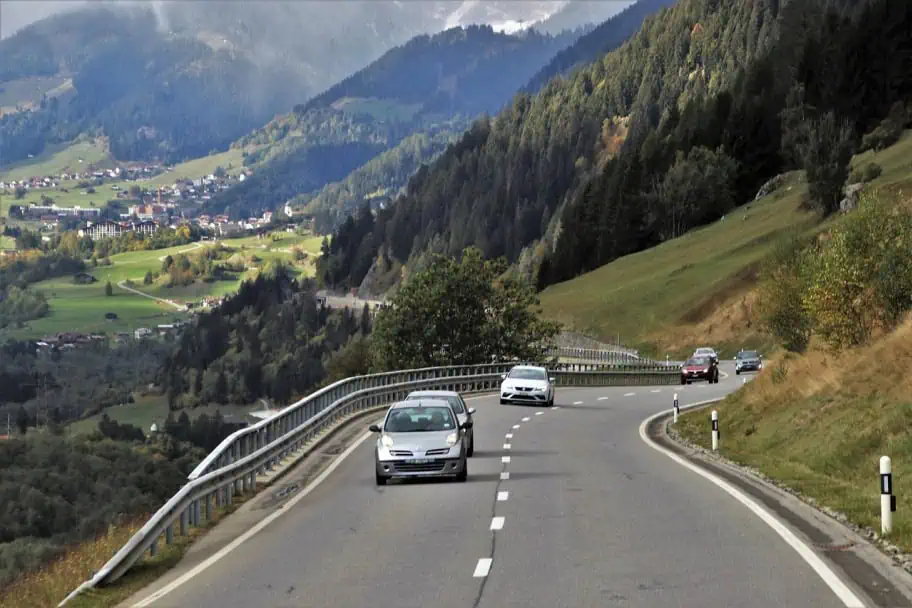
One of the best parts about traveling in Europe, Switzerland included, is the amazing public transportation. The train system throughout Europe is amazing in its convenience and affordability. So, if you don’t want to drive when visiting Switzerland, you don’t really have to. However, there is a certain convenience of having your own vehicle and setting your own schedule. If you are interested in driving when you visit Switzerland, I have provided some tips for you to review below.
License Requirements
You are eligible to drive in Switzerland if you are 18 years or older and hold a valid driver’s license. Travelers from EU/EFTA countries may use their local driver’s license without any additional documentation. Visitors from non‑EU/EFTA countries, including the United States, Canada, Australia, and many others, may legally drive in Switzerland for short stays using their home country license. However, Switzerland strongly recommends carrying an International Driving Permit (IDP) alongside your regular license, as many rental agencies require it, and it helps avoid issues during roadside checks.
IMPORTANT NOTE: Even with an IDP, you must carry your original driver’s license at all times while driving in Switzerland.
Driving Tips
Before you begin your road trip through Switzerland, it’s helpful to understand a few key rules and expectations.
- Switzerland drives on the right side of the road, and the driver’s seat is on the left side of the vehicle.
- Seatbelts are mandatory for the driver and all passengers.
- Child seats are required for children under 12 years old or shorter than 150 cm.
- You must keep a warning triangle in the vehicle; it must be placed behind the car in case of breakdowns.
- A reflective safety vest is strongly recommended and required in many neighboring countries—Swiss rental cars often include one.
- Switzerland’s roads are exceptionally well-maintained, but mountain driving can be steep, narrow, and winding.
- Winter tires are highly recommended in snowy months; some mountain passes require snow chains.
- Major cities like Zurich, Geneva, and Basel have heavy traffic, limited parking, and many paid parking zones.
- Switzerland does not use Italy’s ZTL system, but some historic centers restrict vehicle access.
- To use Swiss highways, your car must display a vignette (toll sticker). Rental cars usually include it; if not, you must purchase one at the border or a gas station.
- Traffic Sign Colors in Switzerland:
- Blue – Motorways / Expressways
- Green – Major routes / National roads
- White – Local roads
- Brown – Tourist attractions and scenic routes
Traffic Laws
Switzerland enforces traffic laws strictly, and fines are high—sometimes extremely high—so it’s important to know the basics before you drive.
- You may only overtake on the left, and only when the lane divider is a broken white line.
- Right turns on red are not allowed.
- Headlights must be on at all times, even during daylight.
- Speed cameras are common, and signs such as “Radarkontrolle” or “Geschwindigkeitskontrolle” indicate electronic speed monitoring.
- Speed limits in Switzerland are typically:
- Motorways (Autobahn): 120 km/h
- Main roads outside towns: 80 km/h
- Urban areas: 50 km/h
- Residential zones: 30 km/h
- In tunnels and mountain passes, speed limits may be lower and strictly enforced.
- Using a mobile phone while driving is prohibited unless you have a hands‑free system.
- Driving under the influence is taken very seriously; the legal limit is 0.05% BAC, and penalties are severe.
Relative Guides, Itineraries, and Articles
To assist you as you start to put together your travel plans for Switzerland, I have provided a comprehensive list of all of my travel guides, travel itineraries, and travel inspiration articles for Switzerland for you to review below.


Packing and Planning Tips
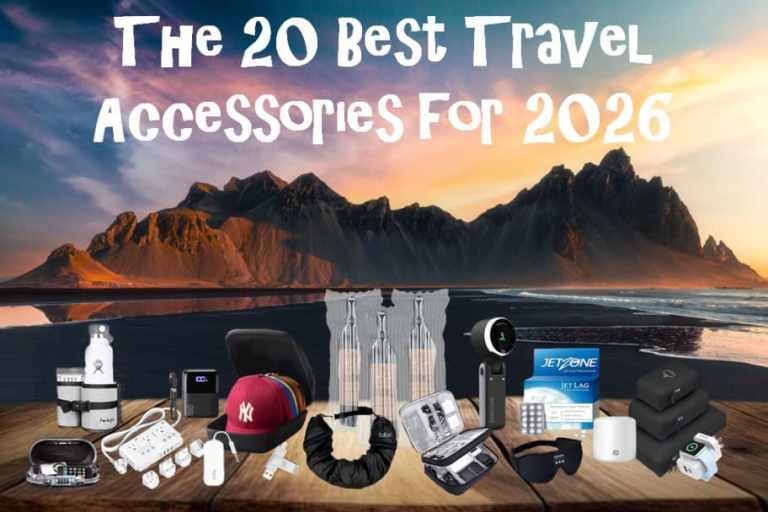
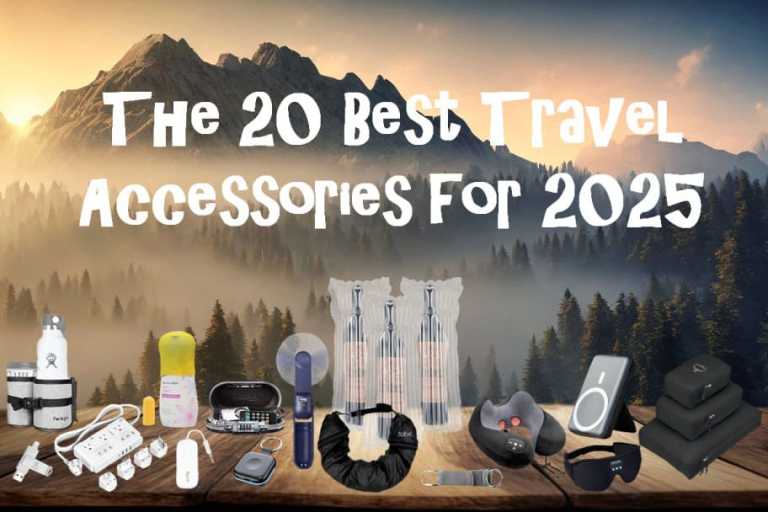
Once you start putting together your Switzerland travel plans, you may want to reference some of my handy travel packing and planning guides that I have put together. To make it easy to find and access these guides, I have included them for your reference below.



Popular Tours
Switzerland, with its soaring Alps, crystal‑clear lakes, and postcard‑perfect villages, offers an incredible lineup of tours that travelers absolutely love. Whether you’re gliding across Lake Lucerne, riding the iconic Glacier Express through snow‑dusted peaks, or exploring the charming old towns of Zurich and Geneva, every experience feels like stepping into a storybook.
From outdoor adventures to cultural deep dives, Switzerland’s tours showcase the very best of this stunning country. Don’t miss the chance to join the journeys everyone is talking about—book your Swiss adventure and discover why these tours are unforgettable.
Don’t Forget to Subscribe to My Adventures!

Let Me Help You Save On Your Next Adventure!
‘Start Exploring Today’ Merchandise Available Now!
 |
 |
 |
 |
 |
 |
 |
You must be logged in to post a comment.