LAST UPDATED: 2/16/26 – Comprehensive Arches National Park Guide
This Arches National Park guide post contains my Viator affiliate links. I may receive a commission when you book a tour from this article, though at no additional cost to you. I hand-pick and recommend only the tours I have thoroughly researched and feel comfortable recommending.
IMPORTANT NOTE: Because of the overcrowding and long lines to enter the park, the US National Park Service has implemented a timed entry system for Arches National Park. You can no longer just show up and enter the park. You must register for an entry time before visiting the park. Please be sure to plan well ahead!
Rising red rock fins, sweeping desert vistas, and more than 2,000 natural stone arches make this landscape feel almost otherworldly—and that’s exactly why travelers return again and again. This Arches National Park Guide is designed to help you understand the park’s unique geology, its most iconic formations, and the best ways to explore them without feeling rushed or overwhelmed. Whether you’re planning a quick stop or a full day of adventure, this guide sets the stage for a memorable visit.

From the moment you drive through the entrance, the scenery shifts dramatically. Towering sandstone walls frame the road, balanced rocks perch impossibly on narrow pedestals, and short trails lead to viewpoints that reward even the most casual wanderer. Arches is compact compared to other national parks, but its density of landmarks—Delicate Arch, Landscape Arch, the Windows—means every turn offers something worth pausing for.
This Arches National Park Guide brings together practical tips, scenic highlights, and insider insights to help you make the most of your time. You’ll find suggestions for sunrise and sunset spots, strategies for avoiding crowds, and ideas for pairing your visit with nearby Moab adventures. It’s the perfect starting point for planning a trip that balances iconic sights with quieter corners of the park.
Arches National Park Guide Navigation Menu


How to Get to Arches National Park
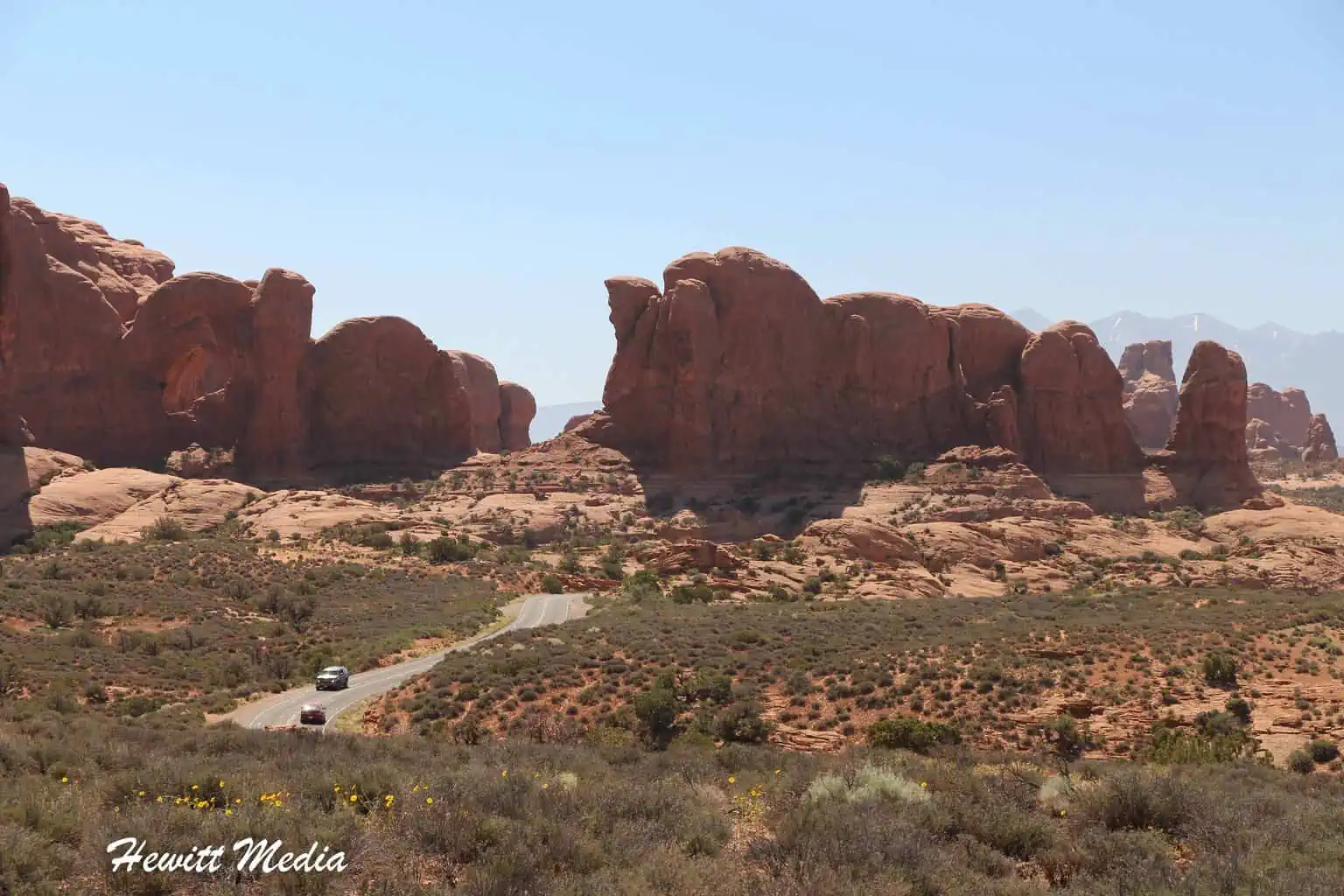
Arches National Park is located in the eastern part of southern Utah. If you are planning on flying to visit Arches National Park, your best bet is to either fly into Las Vegas, Nevada, or Salt Lake City, Utah, and then drive to the park. Arches National Park is located near the city of Moab, Utah, which is a great place to use as your base as you explore the area.
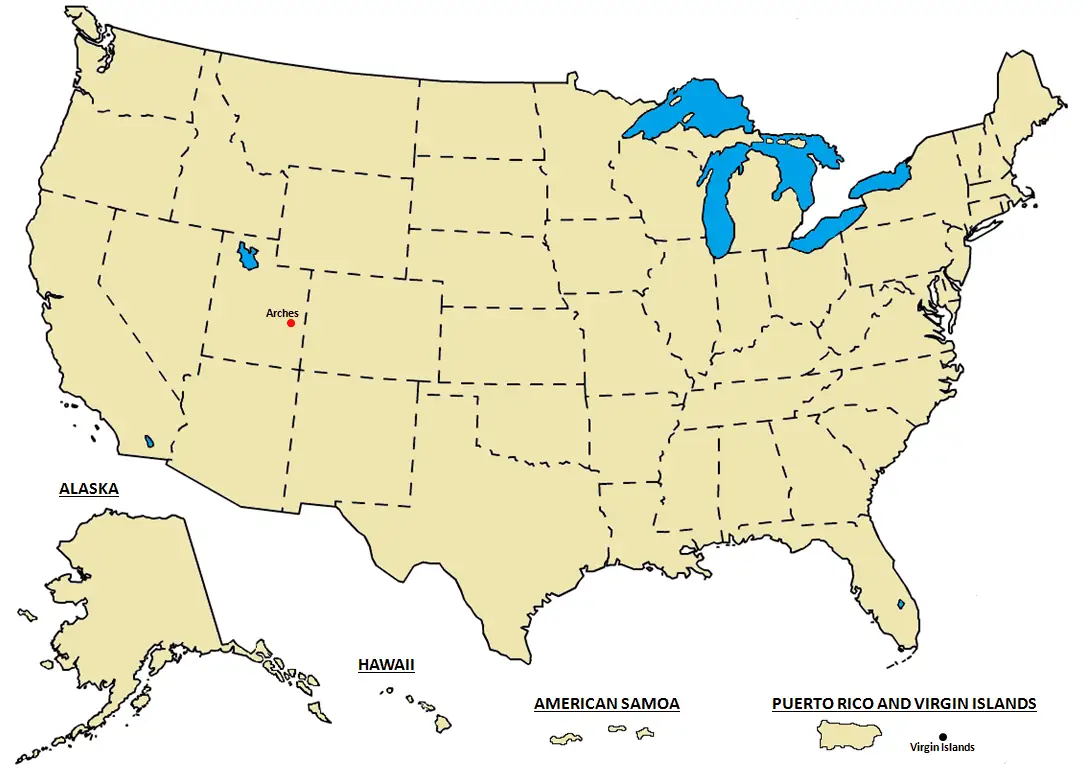
If you are starting to plan your trip and would like to know the travel time between some of the larger cities in the area and the park, I would suggest reviewing the map I have included in my Arches National Park guide below.
Driving Distance and Time to Arches National Park
| City | Distance | Drive Time | Notes |
|---|---|---|---|
| Moab, UT | 11 miles | 0hrs 20min | Closest airport to Arches; small regional airport. |
| Canyonlands National Park | 26 miles | 0hrs 40min | Massive desert park known for canyons, mesas, and the Colorado/Green River confluence. |
| Dead Horse Point State Park | 32 miles | 0hrs 45min | Famous for dramatic canyon overlooks near Canyonlands. |
| Natural Bridges National Monument | 100 miles | 2hrs | Features three large natural stone bridges. |
| Hovenweep National Monument | 120 miles | 2hrs 15min | Preserves ancestral Puebloan structures. |
| Glen Canyon National Recreation Area | 135 miles | 2hrs 30min | Encompasses Lake Powell and dramatic desert landscapes. |
| Capitol Reef National Park | 140 miles | 2hrs 30min | Known for the Waterpocket Fold and scenic drives. |
| Mesa Verde National Park | 150 miles | 2hrs 45min | Known for cliff dwellings and archaeological sites. |
| Monument Valley Navajo Tribal Park | 150 miles | 2hrs 45min | Iconic sandstone buttes on Navajo Nation land. |
| Salt Lake City, UT | 230 miles | 4hrs | Nearest international airport to Arches; major hub with extensive routes. |
| Bryce Canyon National Park | 250 miles | 4hrs 15min | Famous for hoodoos and amphitheaters. |
| Zion National Park | 300 miles | 4hrs 45min | Towering sandstone cliffs and narrow canyons. |
| Denver, CO | 370 miles | 5hrs 45min | Large international hub; one of three major airports commonly used for Arches trips. |
| Albuquerque, NM | 380 miles | 6hrs | Major international‑classified airport; next‑closest large city airport by geography. |
| Las Vegas, NV | 450 miles | 6hrs 45min | Major international airport with many direct flights; one of three international options for Arches. |
| Phoenix, AZ | 460 miles | 7hrs | Large international airport; next‑closest major international hub by geography. |
Best Time to Visit Arches National Park

The best time for you to visit Arches National Park is ultimately going to depend on what you want to do when you are there. Spring (April through May) and Fall (September through October) are the most temperate times of the year in Southern Utah. You’ll get T-shirt weather, avoid the extreme heat and occasional floods in summer, and the possibility of snow in the winter.
However, Spring and Fall are also busy seasons for the park, so if you are visiting to do photography, camping, or mountain biking, be prepared to deal with crowds.
If you do decide to visit in the Summer, make sure you always carry more water than you think you will need. It can get very hot in the summer, and it is very easy to underestimate the amount of water you will need on a hike.
If you decide to visit in the winter, make sure you bring adequate clothing. Arches National Park sits on an elevated plateau, and it can get quite cold in the winter. I would suggest bringing layers because the weather can often be unpredictable.
Average Temperature (°F)
Because of its location, Arches National Park can get quite hot during the summer months and rather chilly during the winter months. Before planning your trip to see Arches National Park, take into account the monthly temperature averages listed below.
As you can see by the chart, I have included in my Arches National Park guide below, the summer months of June through August can be very hot, with temperatures reaching over 100 degrees Fahrenheit. If you don’t like hot temperatures, you should avoid visiting during these months.
During the winter months of November through February, the temperatures can be quite chilly, especially at night. This can put a damper on your vacation if you don’t like cooler temperatures.
Average Precipitation (Inches)
Nothing can ruin an adventure vacation quicker than bad weather. Before you start planning your trip to Arches National Park, you should understand which months see the highest average rainfall and which see the lowest. This will help you reduce the chances of rain putting a damper on your vacation.
The area doesn’t get a whole lot of rain annually, but there are a few months that do get a fair amount of rain. This is especially true for October, which sees over an inch of rain on average every year. For more information on the amount of rainfall to expect in the area throughout the year, please refer to the chart that I have included in my Arches National Park guide below.
Average Number of Visitors by Month
Another variable that may play a factor in when you decide to visit Arches National Park is the crowds. Depending on the month of the year that you visit and what you want to see in the park, there may be significant crowds at the park. This is especially true for the infamous Delicate Arch hike.
The chart below will give you a sense of which months of the year see the most visitors to Arches National Park. I pulled this data for the 2017 season, and the chart represents the number of thousands of visitors the park saw each month.
Other Things to See in the Area
There are a ton of things to see and do in the area surrounding Arches National Park. If you are starting to plan your trip to Southern Utah and would like some suggestions on what else to see during your stay, I have included a list of other destinations that I would strongly recommend in my Arches National Park guide below.
Canyonlands National Park
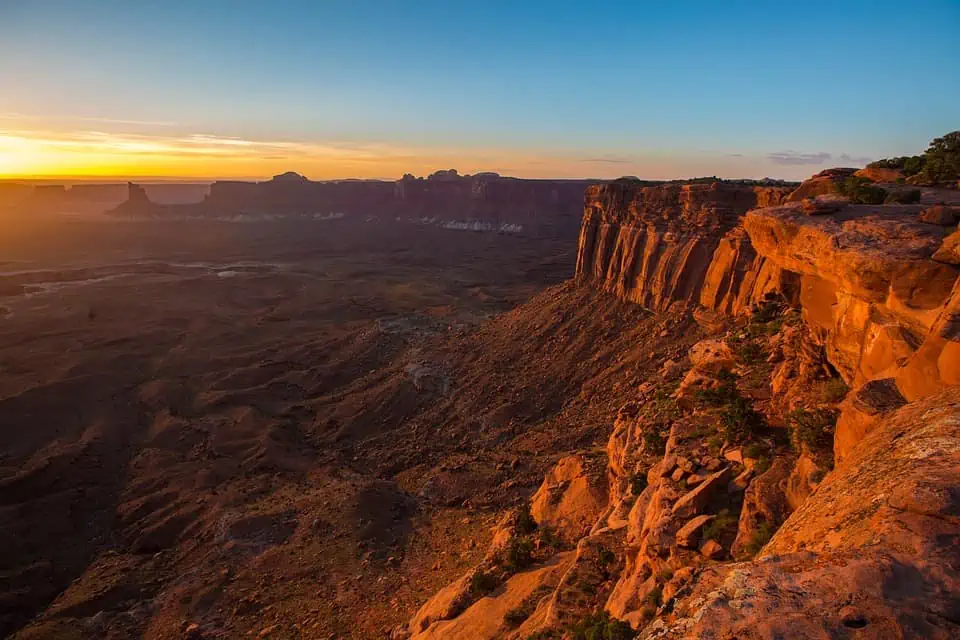
Canyonlands is a vast desert wilderness shaped by the Colorado and Green Rivers. Its overlooks stretch across layered cliffs, deep canyons, and towering mesas, creating some of the most dramatic views in the Southwest. Each district feels different, but all share the same sense of scale and solitude.
| READ MORE: | |
 |
|
| Canyonlands National Park Visitor Guide |
The Corona Arch
The Corona Arch is a striking sandstone span reached by a short, adventurous trail outside Moab. The route crosses slickrock and uses cables and ladders to guide you toward the arch’s sweeping curve. It’s a quieter alternative to the formations inside Arches National Park.
| READ MORE: |
 |
| The Ultimate Corona Arch Trail Hiking Guide |
Dead Horse Point State Park
Dead Horse Point offers one of Utah’s most iconic viewpoints, with the Colorado River winding through red canyons far below. Easy rim trails and wide overlooks make it perfect for sunrise or sunset. The scenery rivals nearby Canyonlands but is easier to explore quickly.
| READ MORE: |
 |
| Dead Horse Point State Park |
Goblin Valley State Park
Goblin Valley is filled with thousands of mushroom‑shaped hoodoos scattered across an open basin. Visitors can wander freely among the formations, discovering hidden pockets and playful shapes. It’s a fun, surreal landscape that feels unlike anywhere else in Utah.
| READ MORE: |
 |
| Ultimate Goblin Valley State Park Guide |
Where to Stay Near Arches National Park

If you reserve a spot far enough in advance, you can get a camp spot at the Devil’s Garden Campground inside Arches National Park. However, even if you don’t get a spot to camp inside the park, there are plenty of campgrounds and hotels in the area to choose from.
Campgrounds Near Arches
If you are looking for a campground or accommodations in the Moab area for your trip, I have included a map of nearby campgrounds for you to review below.
Hotels
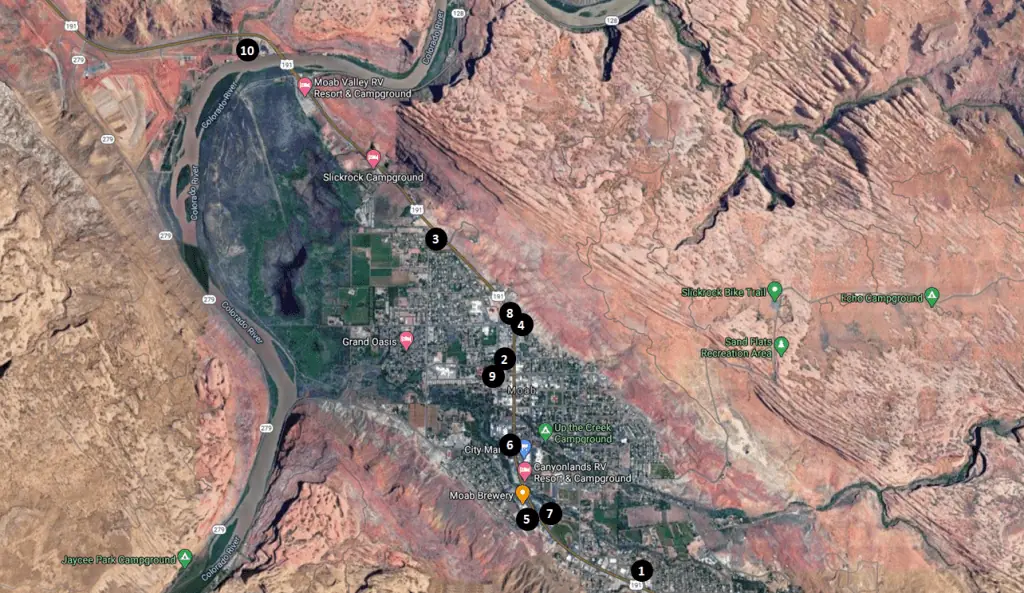
If camping is not your speed, you need not worry, as there are a variety of good hotels for you to choose from in the area as well. In fact, the city of Moab, Utah, has a wealth of reasonably priced hotel options for you to choose from. If you are in the process of planning your trip, then you are in luck. I have included a map and list of recommended hotels at different price points for you to review in my Arches National Park guide below.


Top Things to See and Do in Arches National Park

There is a lot to do in Arches National Park and the surrounding area. One of my favorite things to do in any park, but especially in Arches, is hiking. There are plenty of great hiking trails to take advantage of in the park. Again, just make sure you have enough water when you set out. I cannot emphasize this enough.
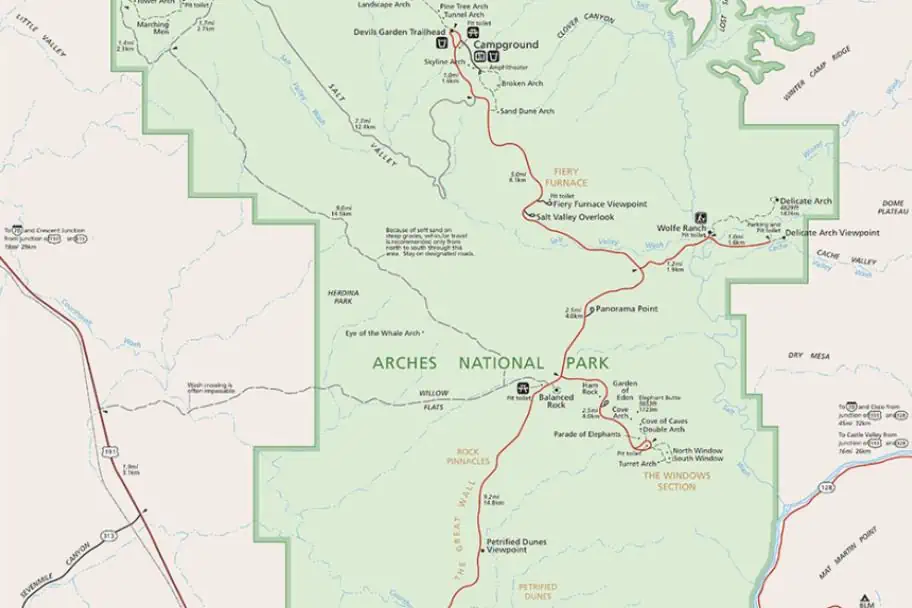
I have also included some great resources below where you can find more information about the parks.
- Arches National Park Map
- Arches National Park – Plan Your Visit
- Arches National Park – Visitor Guide
Arches National Park Mountain Biking
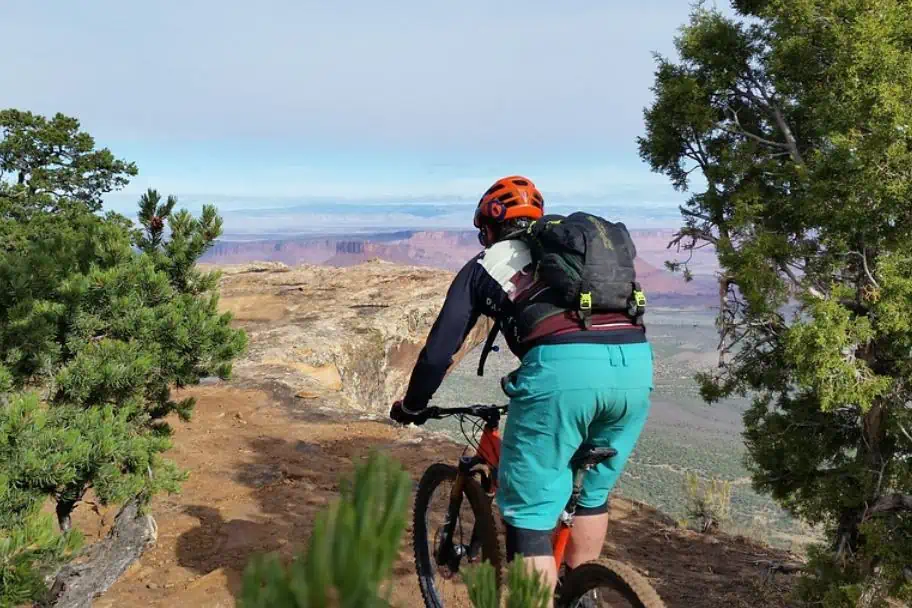
The Moab, Utah area is a huge mountain biking region, so biking enthusiasts flock to Moab every year to test their skills in the region. Keep in mind that bikes are not permitted on the trails inside the park, but you can take your bike on the roads inside the park, and there are plenty of trails available to explore in the surrounding area.
Delicate Arch
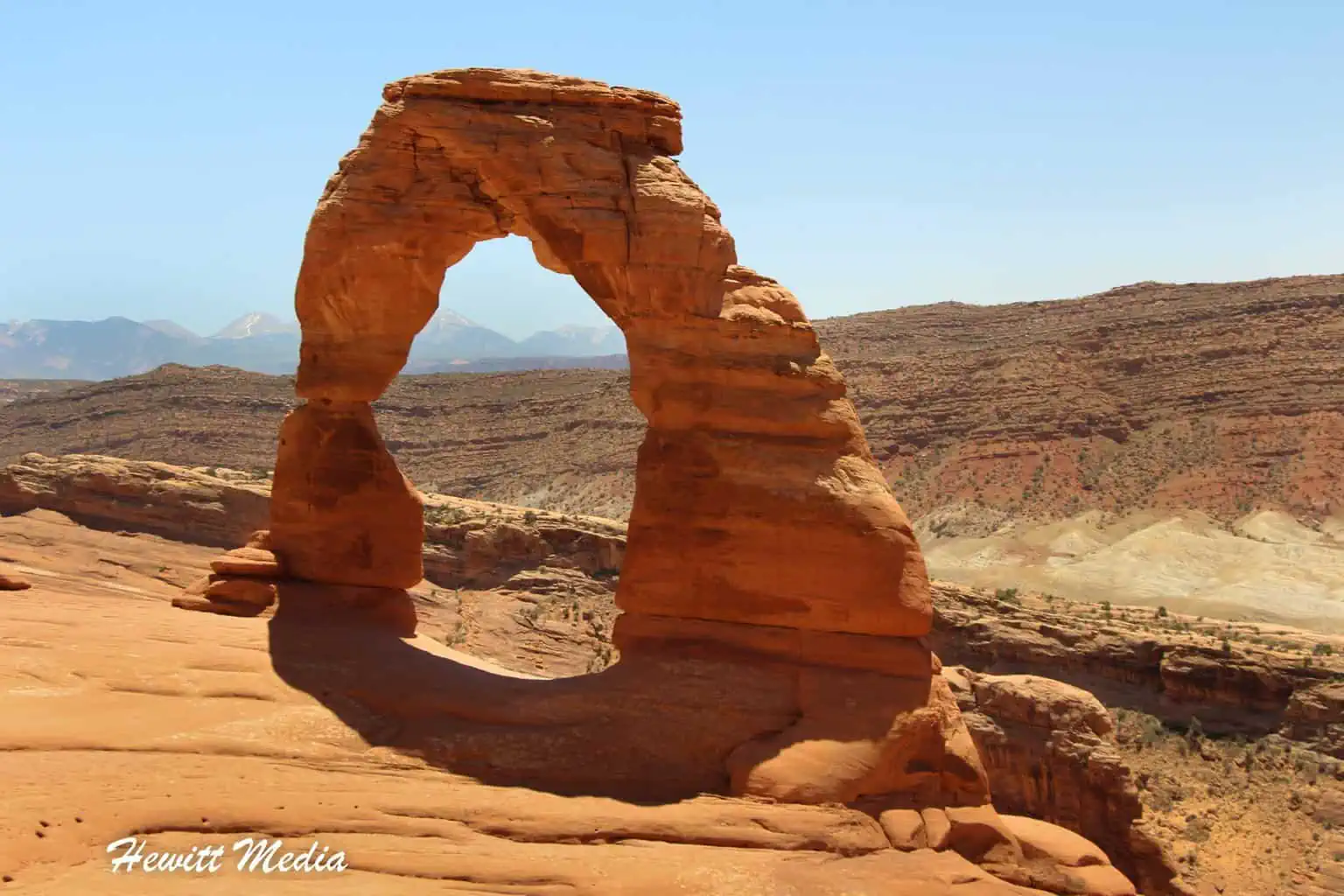
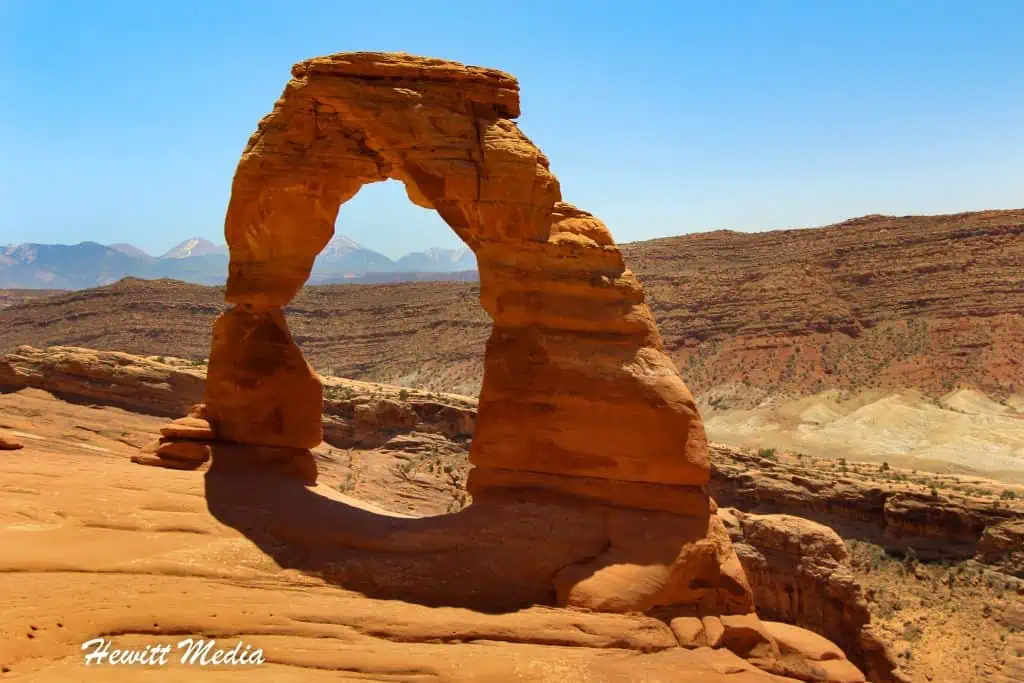
The most iconic image of Arches, and one of the most iconic images of the American West and our National Parks in general, Delicate Arch is an absolute must-see for visitors to Arches National Park.
If you aren’t into hiking, the Lower Delicate Arch Viewpoint is just a short hike (100 yards) off the park road and can give you some nice perspectives of the arch.
However, if you want to get up close to the arch to get a close shot (such as the picture above), you will need to hike roughly 3 miles up to the arch. The trail has 480 feet of elevation (see picture below), and it is recommended that you bring 2 liters of water per person.


The Fiery Furnace

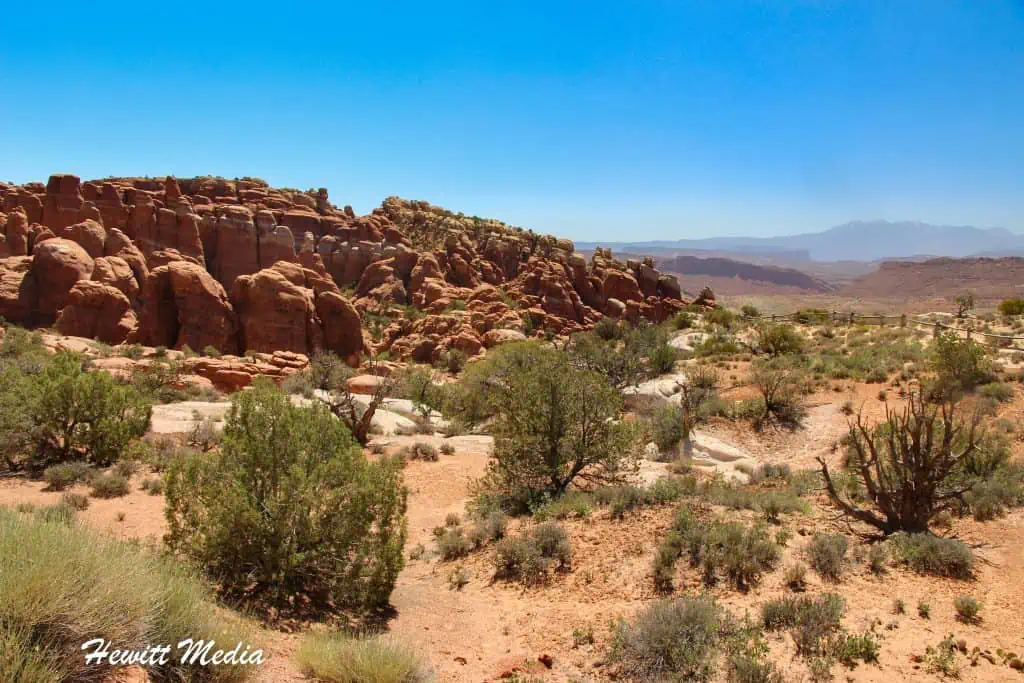
The Fiery Furnace is another absolute must-see for all visitors to Arches National Park. It consists of an amazing collection of narrow sandstone canyons, natural arches, and other rock formations. While the view from the Fiery Furnace Viewpoint (see below) is amazing in its own right, I would definitely recommend getting close-ups by doing some hiking.
Keep in mind that there are no trails into the Fiery Furnace. It is a labyrinth of canyons that can only be accessed by either taking a ranger-guided hike or obtaining a day-use permit from the visitor center. It requires doing a bit of planning, but it is well worth it.
If you are an inexperienced hiker, I would absolutely recommend the ranger-led hikes. I have done quite a bit of hiking in my life, and I found the ranger-guided hike to be both informative and fun.
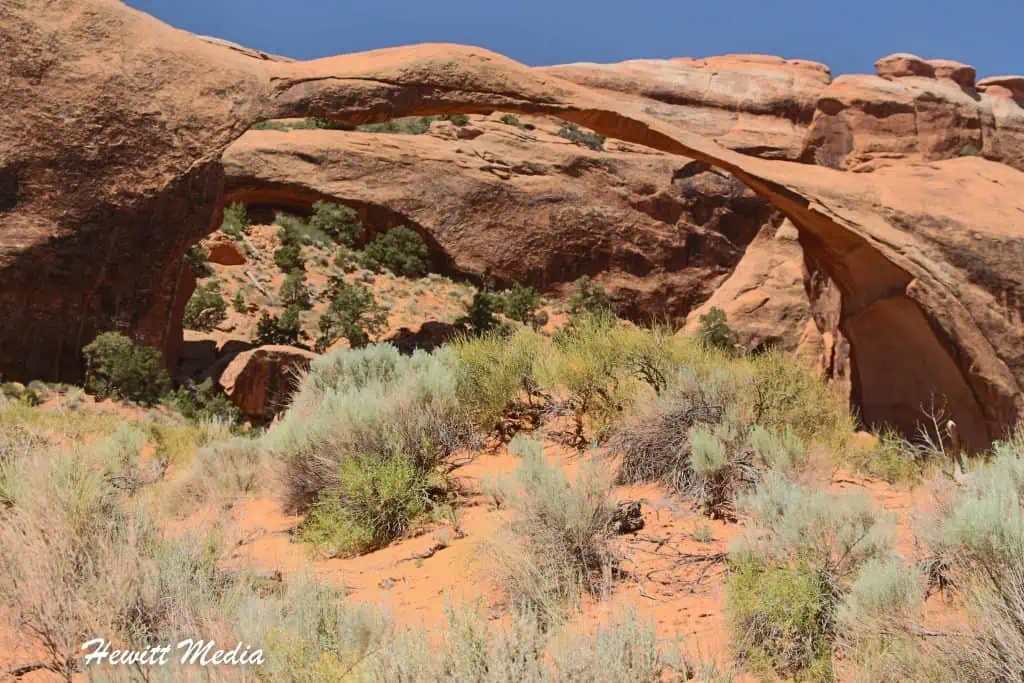
Landscape Arch
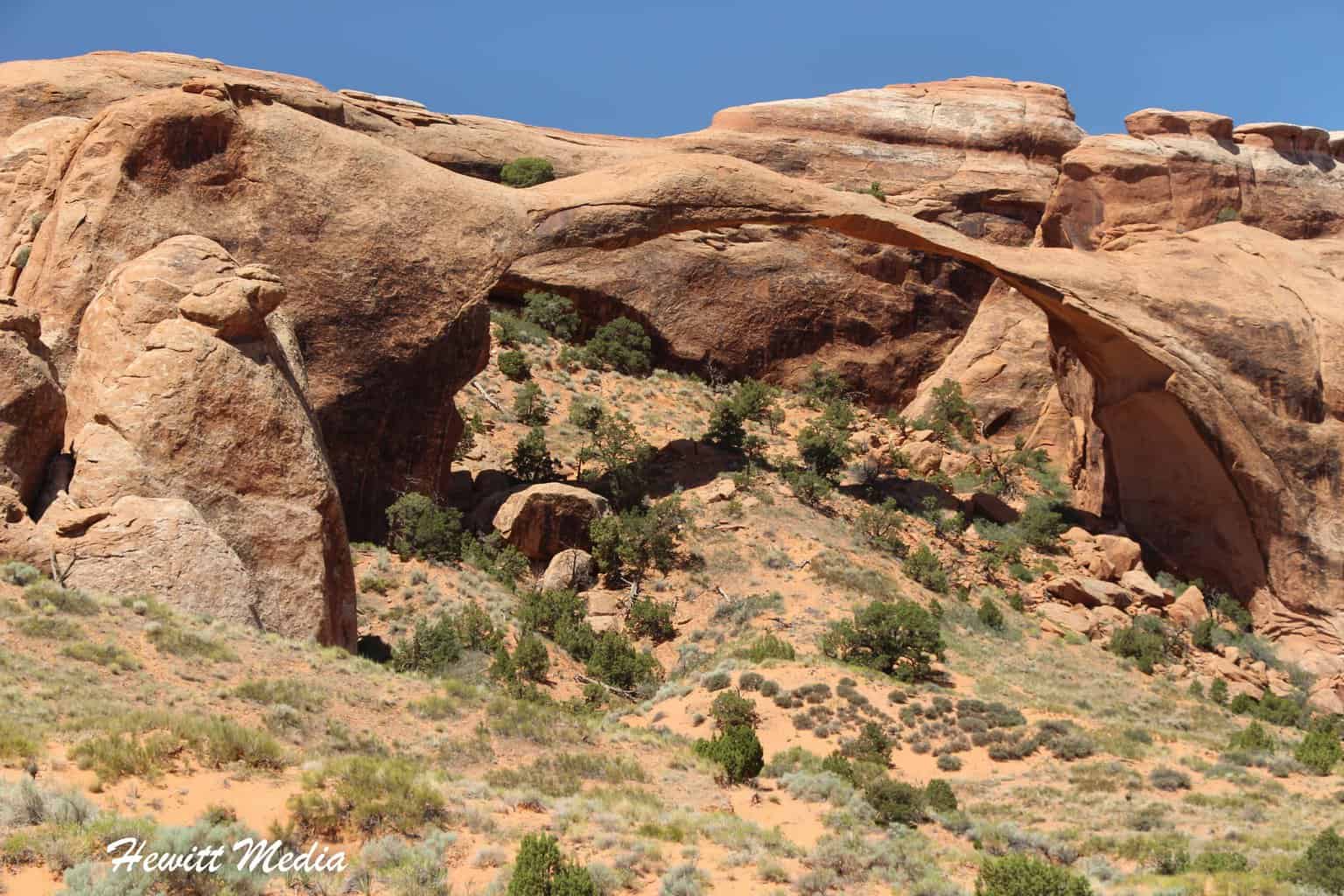
This is one of my favorite features inside Arches National Park. It may not get the fame that Delicate Arch gets, but it is an equally impressive rock formation in my opinion. If you haven’t visited Arches National Park and gotten a chance to see this arch, I wouldn’t put it off too long. The arch is delicate, and there is no telling how long this arch will last.
There are a few great viewpoints from which to view this arch. The Lower Landscape Arch Viewpoint has a great view of the arch and is only a short hike (100 yards) from the park road, but to get a really good look at this arch, I would strongly recommend making the 3-mile hike to the Upper Landscape Arch Viewpoint. Though again, make sure you bring plenty of water. It is recommended that each person carry at least 2 liters of water on this hike.
Windows Section

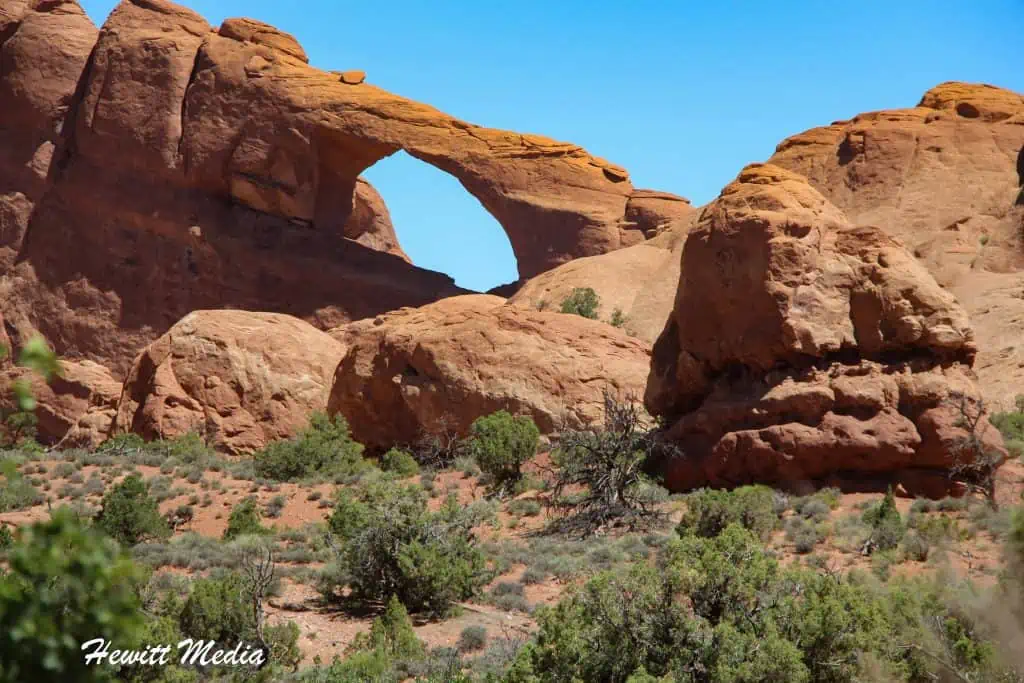
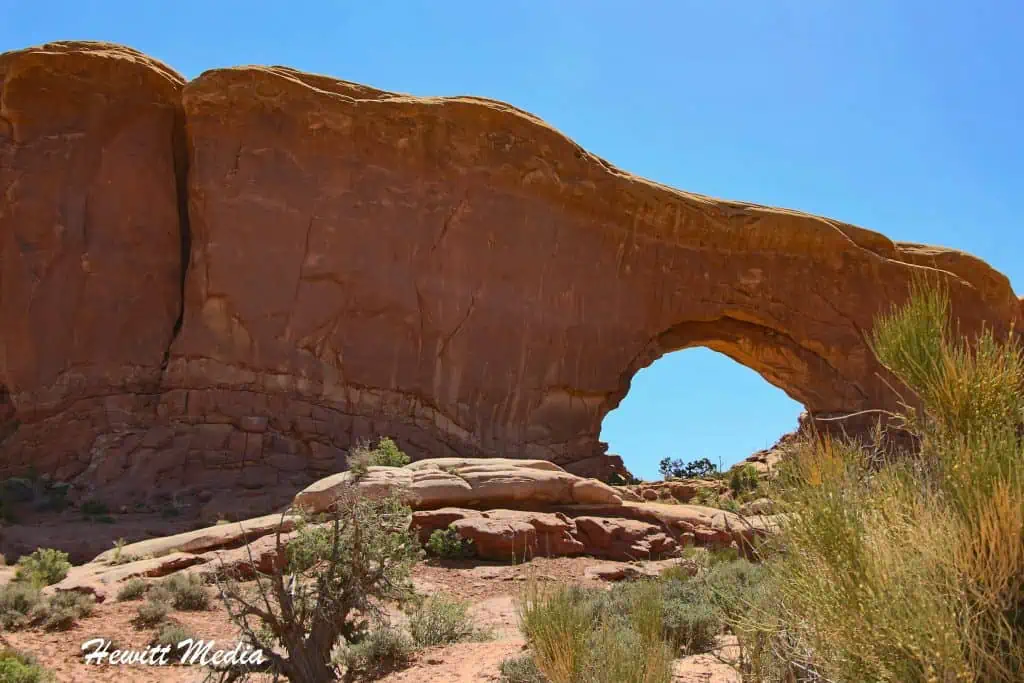
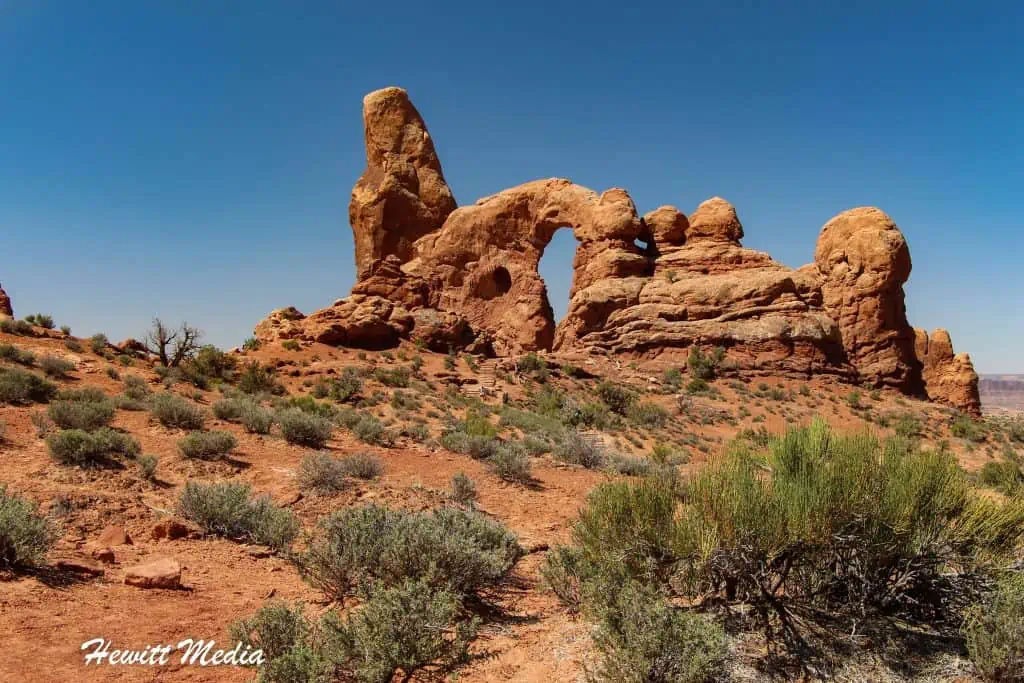
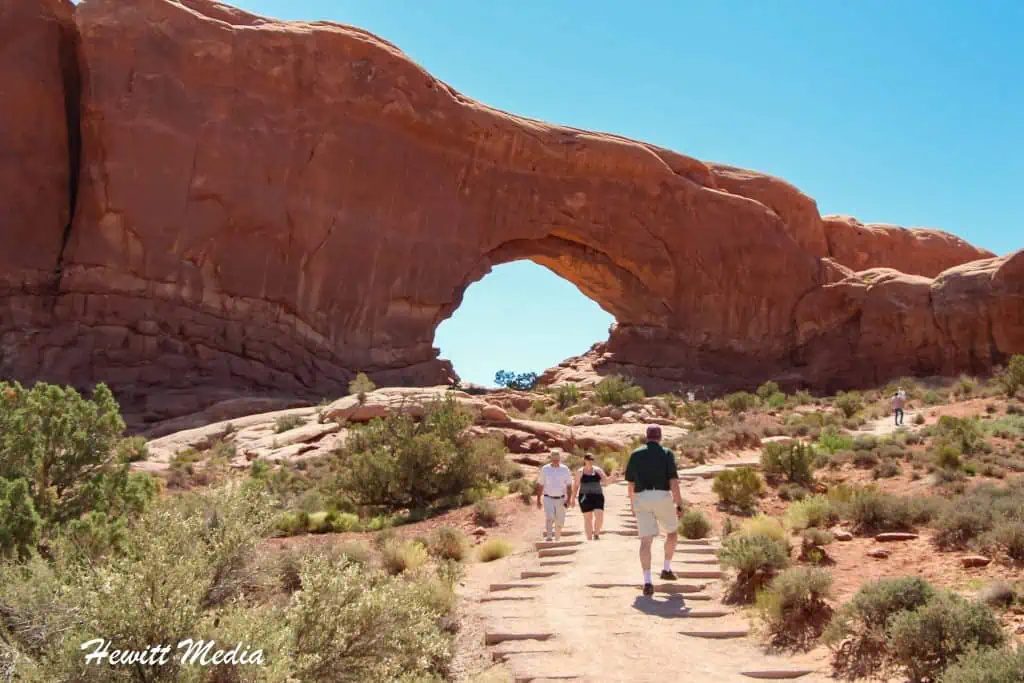
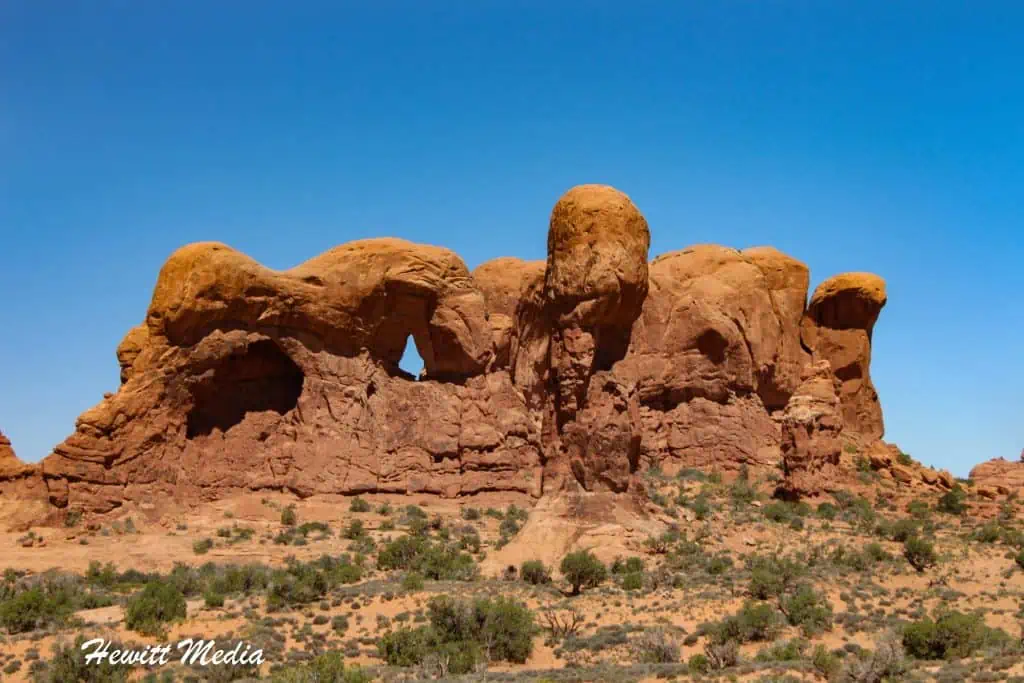
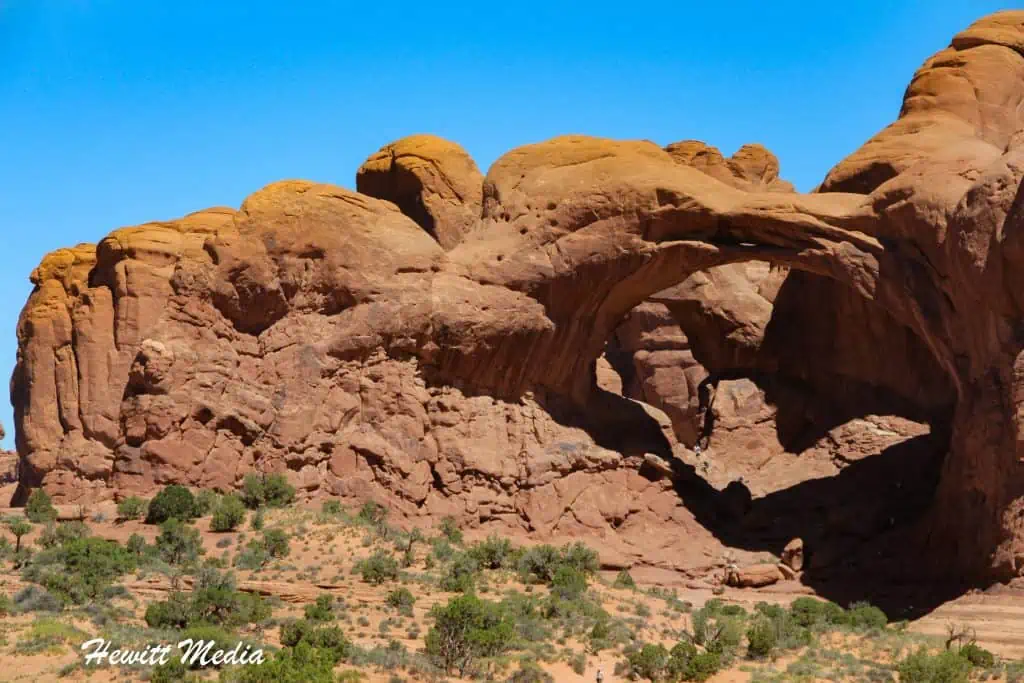
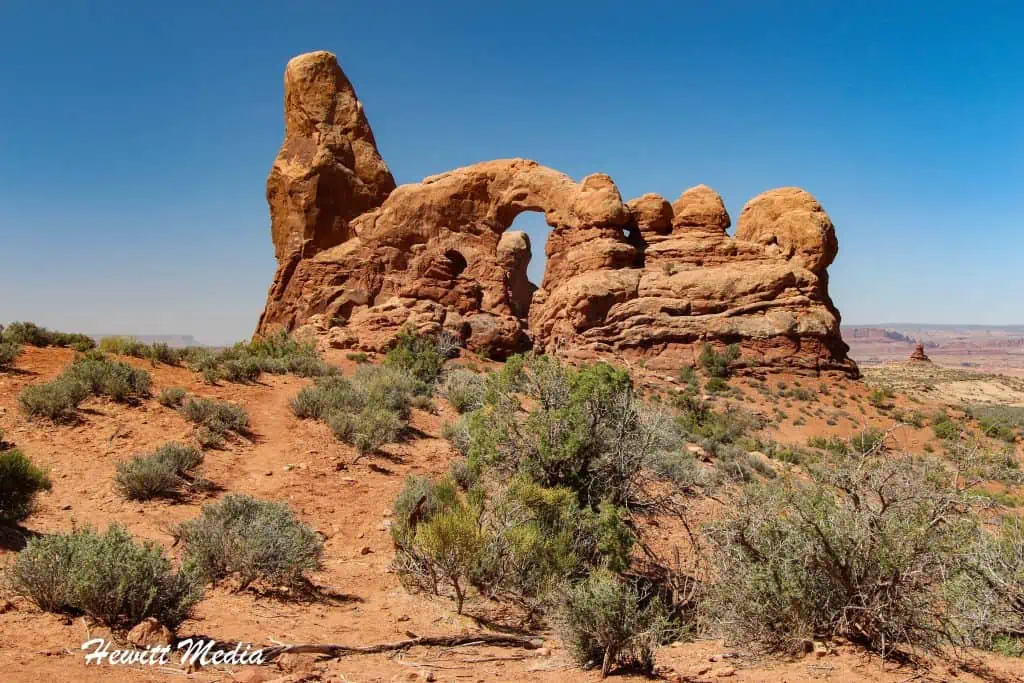
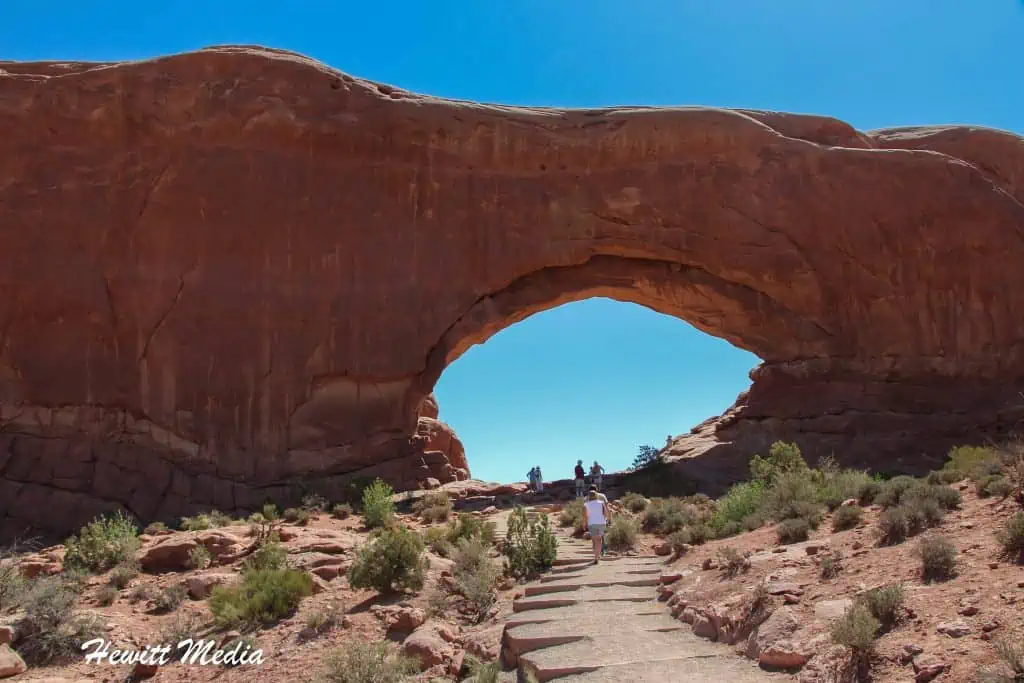
The Windows section of Arches National Park is considered by many to be the heart of the park because of the number of natural arches concentrated in the area and the beauty of the scenery. The arches in this section include Turret Arch, North Window (pictured below), South Window, Double Arch (also pictured below), Cove Arch, and Ribbon Arch.
If you are up for some hiking, I would suggest the Windows (1-mile) and Double Arch (half-mile) Trails. These are fairly easy hikes, and the views are pretty incredible.

Tunnel Arch

Accessible by using the Devil’s Garden trail, the Tunnel Arch is one of the most visited features in Arches National Park. The Devil’s Garden trail is a relatively easy hike with very little elevation change, so it is one of the more popular hikes in the park. It is a 7.2-mile loop, but the hike can be tailored to fit your needs and ability. Along the trail, you will pass 7 natural arches; there is a lot of payoff for little effort with this hike.
- Tunnel Arch 0.4miles
- Pine Tree Arch 0.5 miles
- Landscape Arch 1.6 miles
- Partition Arch 2 miles
- Navajo Arch 2 miles
- Double O Arch 2.3 miles
- Dark Angel 2.5 miles
- Private Arch
Park Avenue

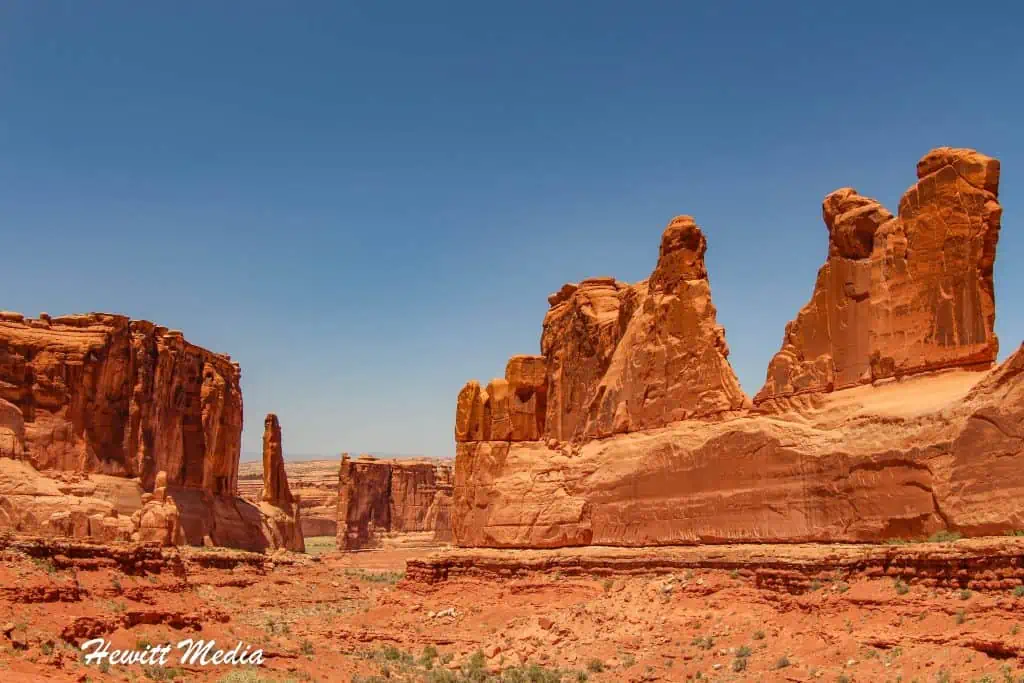
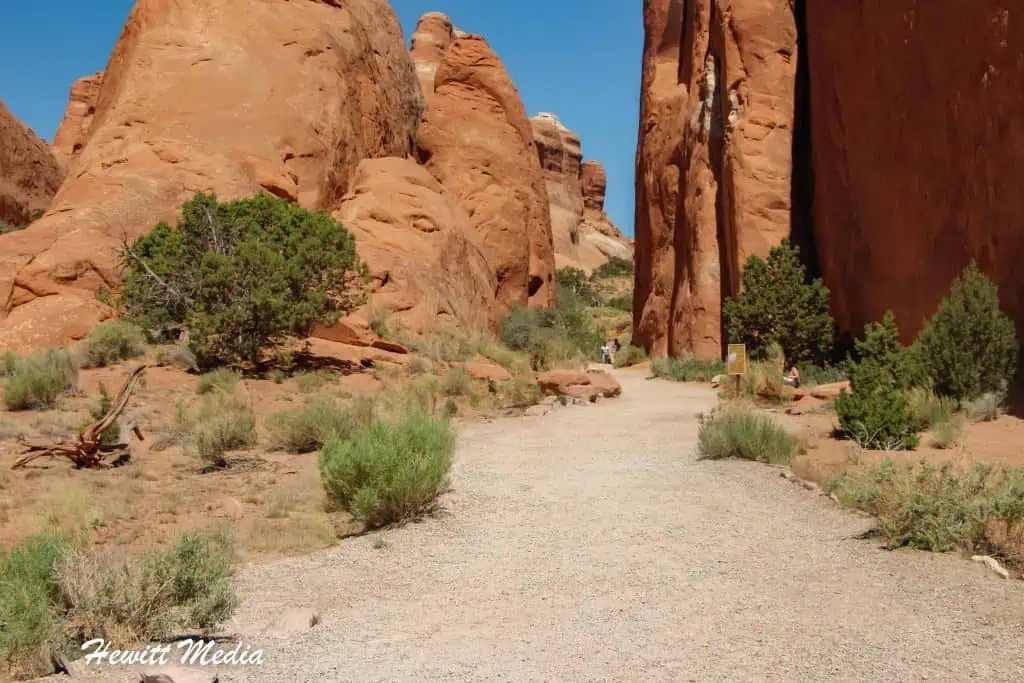
Park Avenue is one of the first features you will see when entering the park, and it is pretty hard to miss. Named after New York City’s famous street, the rock spires look a lot like skyscrapers. The contrast between the red rock spires and the blue sky is breathtaking. If you want to get closer, the Park Avenue trail is a moderate 2-mile hike that will take you into the canyon towards the Courthouse Towers.
Balanced Rock
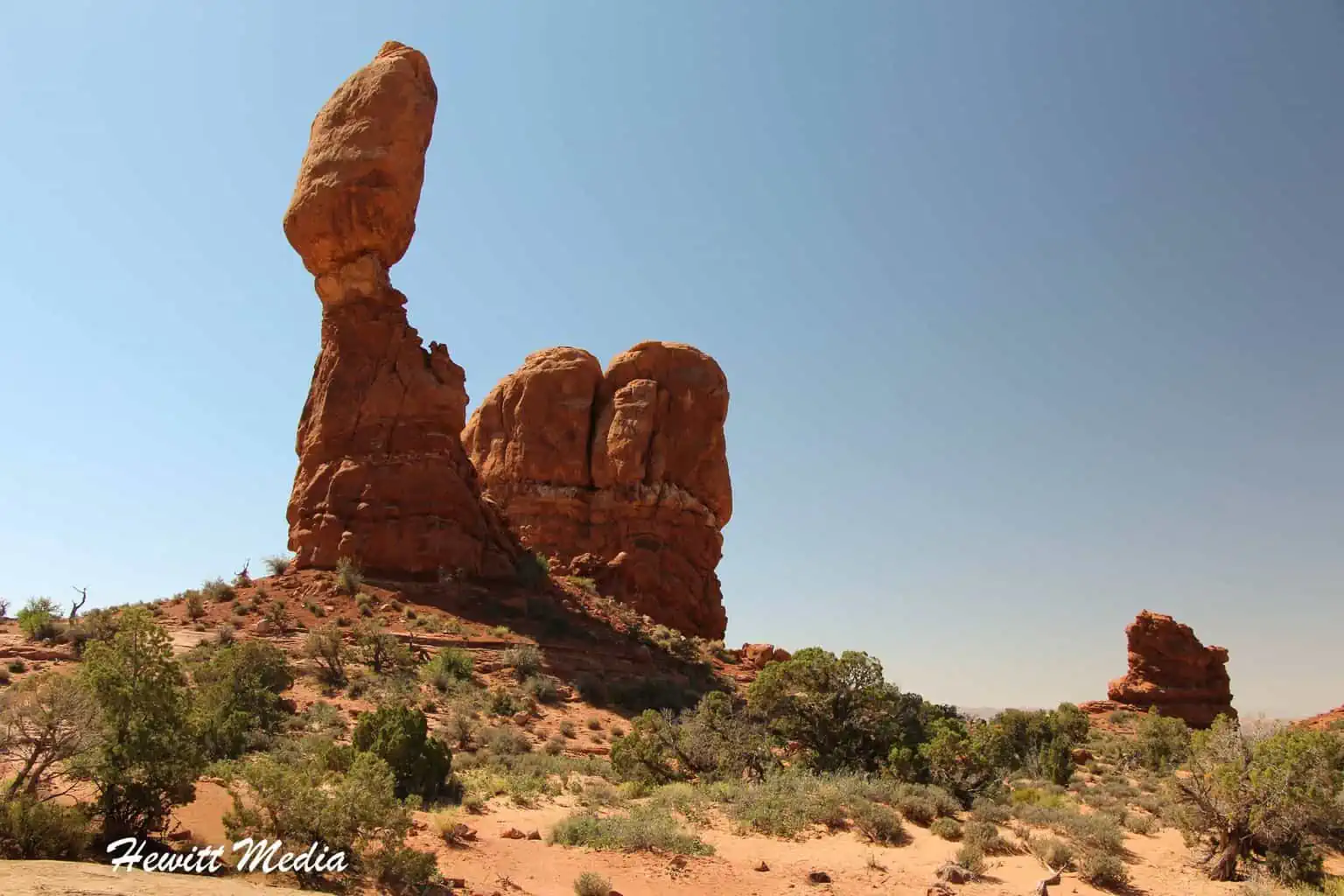
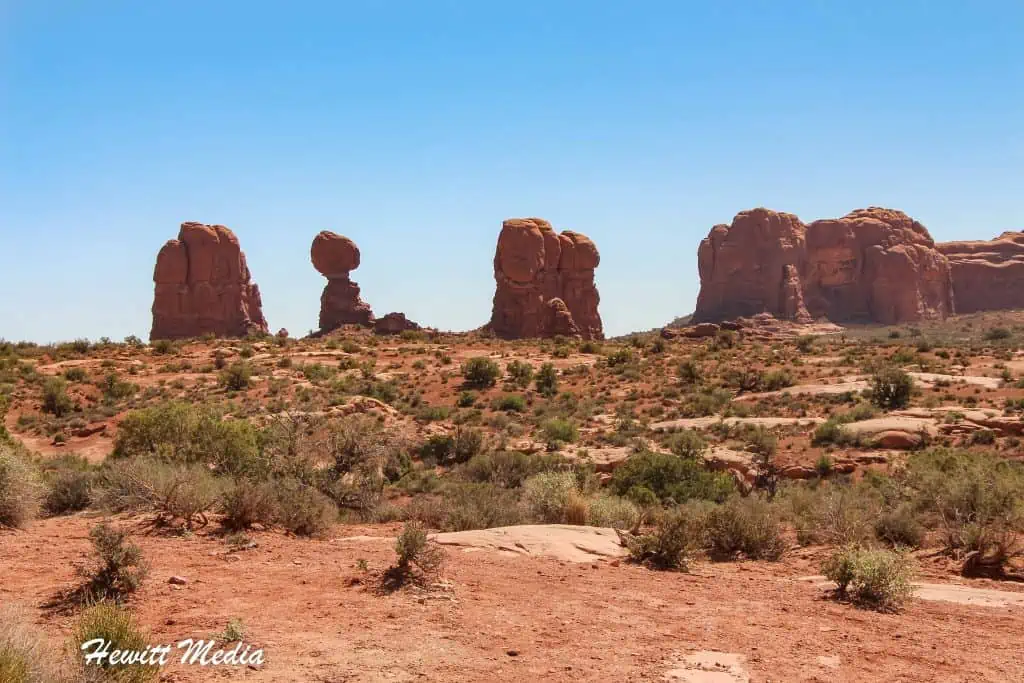
One of the most popular features within Arches National Park, Balanced Rock appears to be defying gravity as it balances upon a pedestal of mudstone. Accessible via the Balanced Rock trail, which is a 0.3-mile paved loop, it is one of the easier features to reach and one of the only features that is clearly visible from the park road.
Hot Air Balloon Ride
If you have the time, I highly recommend exploring Arches National Park and the surrounding area by balloon. The view from above is absolutely breathtaking. I used a company called Canyonlands Ballooning, and they were fantastic. Balloon rides take off early in the morning and last about an hour. Pricing is $279\person in the low season and $299\person in the high season (mid-May to mid-September).
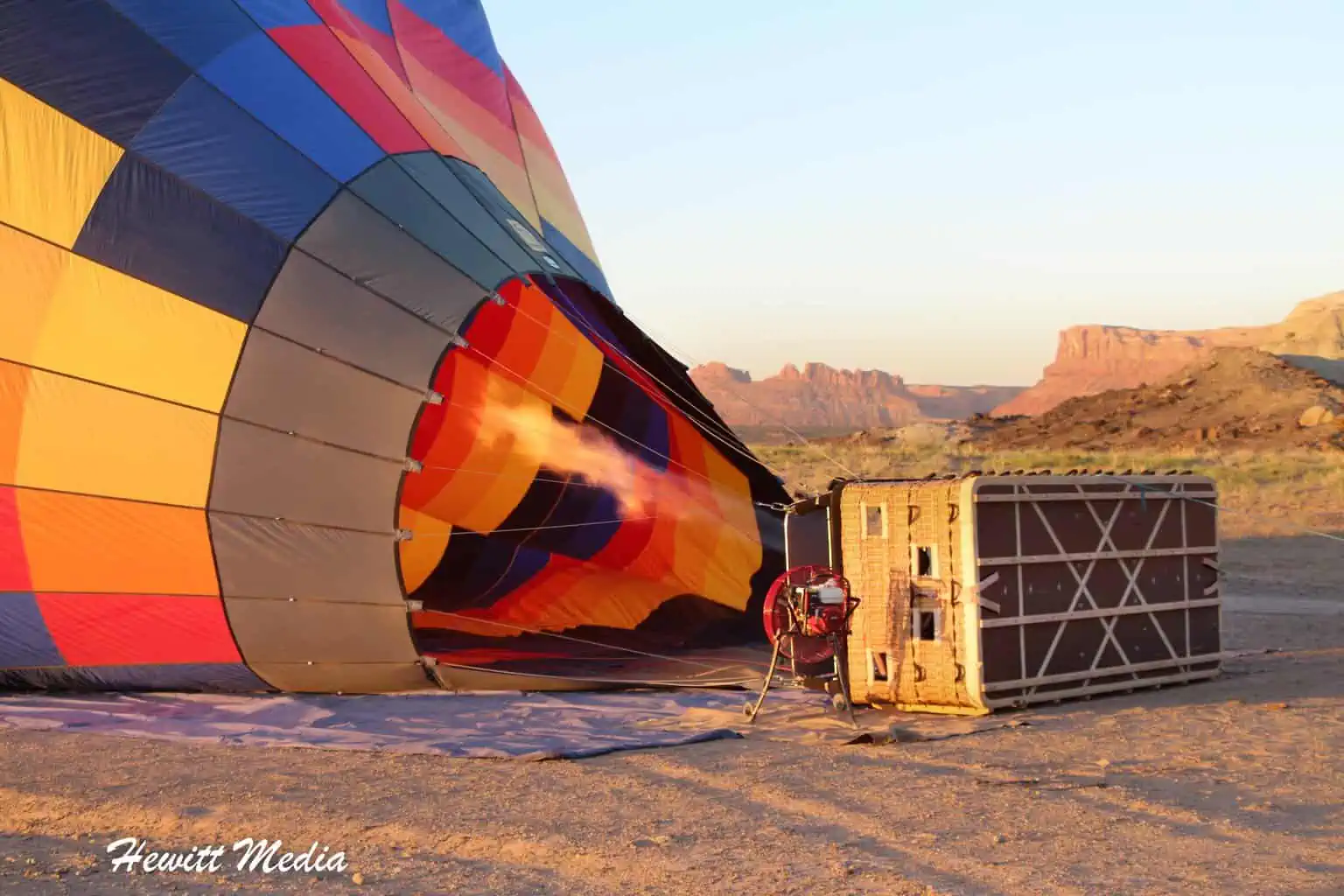
The balloon ride takes you over Arches National Park, giving you a really cool perspective of the landscape. I was able to get this really cool picture of Delicate Arch from above (see below) from the hot air balloon. It was a ride of a lifetime, and I absolutely recommend it if you have the time.

Tours and Excursions Near Arches National Park

In addition to the things to see and do in Arches, there are also fun things to do outside the park. The nearby city of Moab, Utah, is widely considered to be the outdoor adventure capital of the American Southwest. In and around Moab, you will find a wide array of fun tours and excursions to enjoy. To assist you in your planning, I have included links to some top tours and excursions for you to review below.
Arches National Park Photo Gallery
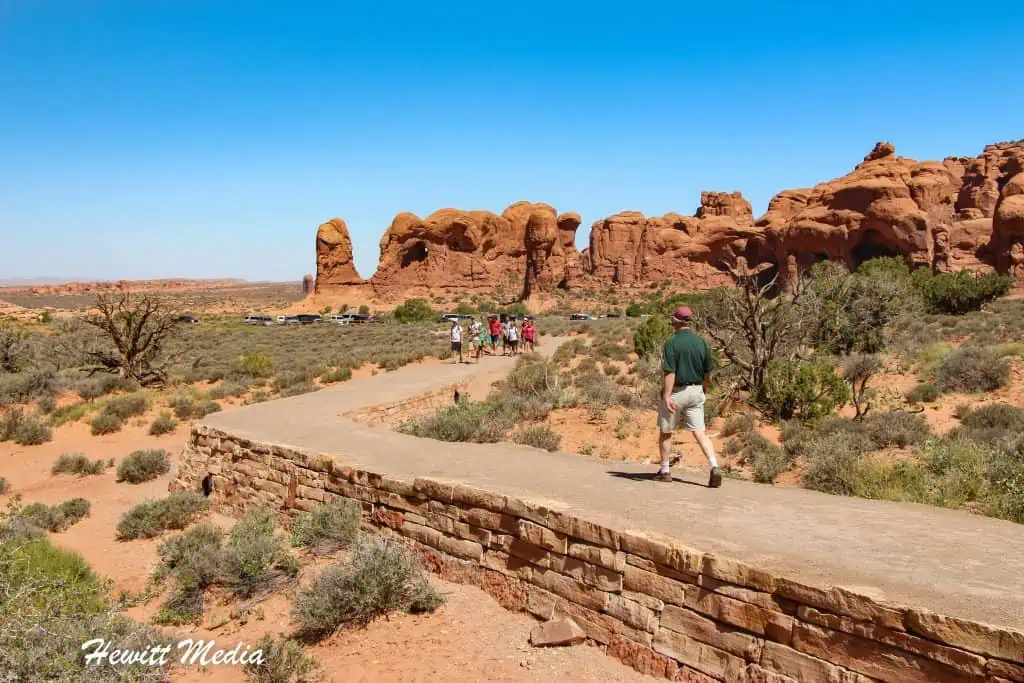
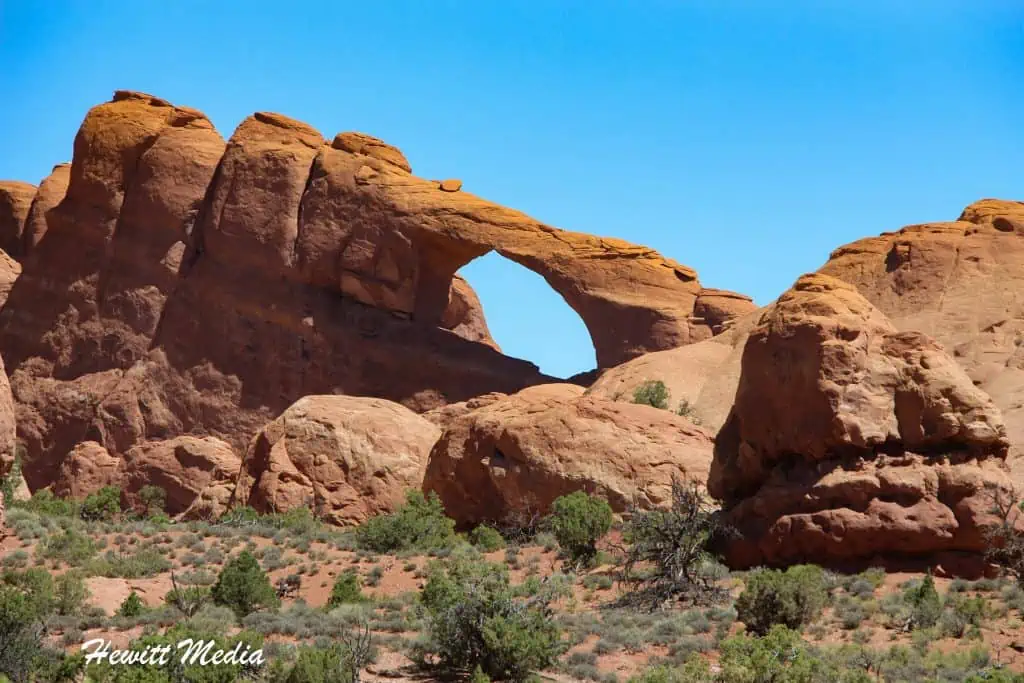
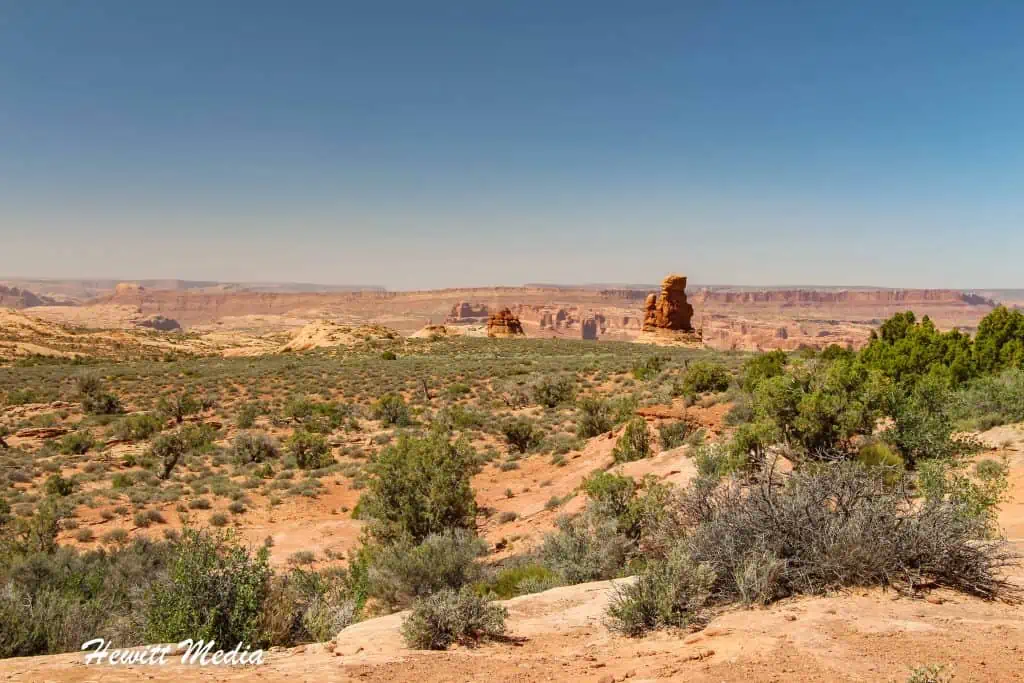
Arches National Park is one of the United States’ most popular and most beautiful national parklands. When you visit, it is really hard to not get a bunch of amazing photographs. If you are interested, I have included a gallery of some of my favorite pictures from Arches National Park below.
If you’re interested in exploring more of my travel photography, I’d love for you to join me on Instagram! Creating this blog to share my free guides, itineraries, and travel photography tips takes a lot of effort, and a follow on Instagram would truly mean the world to me. Your support makes it all worthwhile!
FOLLOW ME!










Don’t Forget to Subscribe to My Adventures!

Let Me Help You Save On Your Next Adventure!


















Great article! Thanks for sharing 😊😊
Thank you!
Nice photos
Thank you!
Your photos are amazing. One day I will go back and see these wonderful sites. Back in 99 I was there in Utah but it was in February/March and it was a bit cold. Actually I experienced my first blizzard.
Thank you! I think your photos are amazing. I absolutely love southern Utah. It is such a beautiful place.
Unbelievable spot! I will get there one day. I will.
It is absolutely beautiful!
Very good!
What photography, no words to say anything
Thank you so much for the kind words!! 😊