LAST UPDATED – 7/19/2024 – Spain Entrance Requirements
If you are traveling to Spain from outside of the country, you should be aware of the passport, VISA, and immunization requirements before planning your travel. If you do not meet the requirements, you will be denied entry into Spain. This is not something that I would wait until the last minute to take care of as you might not have enough time to sort out any issues at the last minute should you run into them.

To assist you in making sure you meet the necessary Spain entrance requirements, I have outlined all of the requirements you need to be concerned about in this article. Furthermore, I have also created the handy checklist I linked below for you to use as a point of reference and to track all of the requirements as you meet them.
View Spain Passport, VISA, Customs, and Immunizations Checklist
Spain Passport Requirements

One of the most important of the Spain entrance requirements is the passport requirements for entering the country. If you don’t have a valid passport, you won’t be allowed to enter. Before booking your travel to Spain, you will need to review the requirements below to ensure your passport will be accepted.
| Passport Validity | Blank Passport Pages |
|---|---|
| Must be valid for at least beyond the date you will be entering Spain. | One Page Required for Entry Stamp. |
You will need to make sure that your passport is not only valid but that it will be valid at least 3 months after your trip (6 months is recommended). So if your passport is set to expire a month after you get back, you won’t be let into the country. That is something that frequently trips travelers up, so make sure you check the expiration date of your passport closely.
Spain VISA Requirements
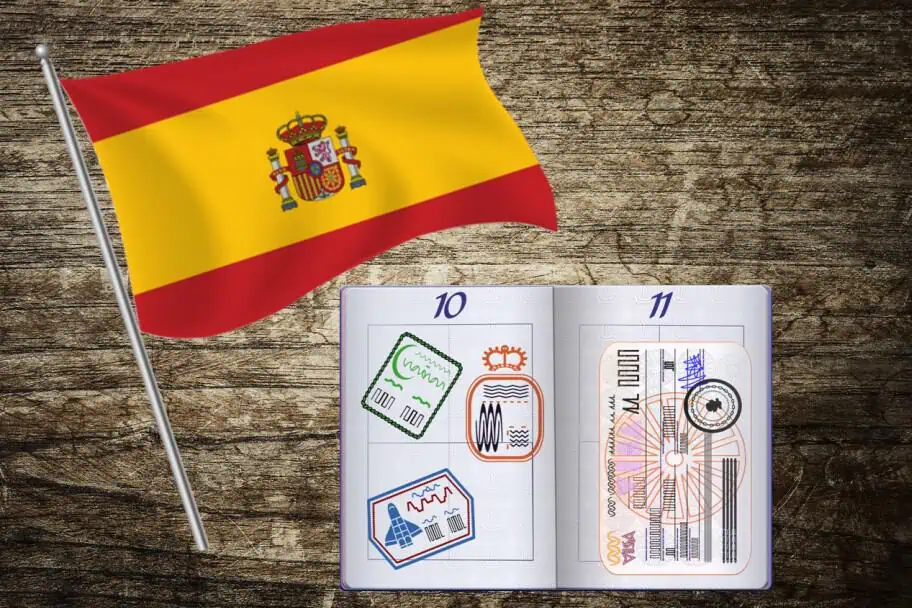
Depending on which country you are from, you may or may not be required to obtain a travel VISA before being allowed to enter Spain. If you hold a passport from a country that is VISA-exempt, you will not need to obtain a VISA. However, if you are not a passport holder from a VISA-exempt country, you will need to apply for a VISA to visit Spain.
| VISA-Exempt Passport Holders | All Other Travelers |
|---|---|
| No VISA Required. | Must apply for a Tourist VISA before traveling to Spain. |
VISA-Exempt Countries
The following countries are exempt from the VISA requirement for Spain. If you hold a passport from one of these countries, you do not need to obtain a tourist VISA before traveling to Spain.
 |
Albania |  |
Georgia |  |
Panama |
 |
Andorra |  |
Grenada |  |
Paraguay |
 |
Antigua & Barbuda |  |
Guatemala |  |
Peru |
 |
Argentina |  |
Honduras |  |
Solomon Islands |
 |
Macedonia |  |
Israel |  |
Samoa |
 |
Australia |  |
Japan |  |
Saint Kitts & Nevis |
 |
Bahamas |  |
Kiribati |  |
San Marino |
 |
Barbados |  |
Malaysia |  |
St Vincent & Grenadines |
 |
Bosnia and Herzegovina |  |
Marshall Islands |  |
Saint Lucia |
 |
Brazil |  |
Mauritius |  |
Holy See |
 |
Brunei |  |
Mexico |  |
Serbia |
 |
Canada |  |
Micronesia |  |
Seychelles |
 |
Chile |  |
Moldova |  |
Singapore |
 |
Colombia |  |
Monaco |  |
Timor Leste |
 |
South Korea |  |
Montenegro |  |
Tonga |
 |
Costa Rica |  |
Nauru |  |
Trinidad & Tobago |
 |
Dominica |  |
Nicaragua |  |
Tuvalu |
 |
El Salvador |  |
New Zealand |  |
Uruguay |
 |
United Arab Emirates |  |
Palau |  |
Vanuatu |
 |
United States |
European Travel Information and Authorisation System (ETIAS)
Important Note:
Even if you hold a passport from a VISA-exempt country, starting sometime in mid-2025 you will need to apply for an ETIAS Authorization if you are planning to travel to the Schengen Area of the European Union (which includes Spain) or Cyprus.
Spain Immunization Recommendations

Important Note: I am not a medical doctor and don’t have medical experience. The information provided in this section is a summary of information that I got from the Centers for Disease Control and Prevention in the United States for travel to Spain. I am providing you this information to help bring awareness of the necessary vaccinations to you, but consultation with my guide should not replace a discussion about your travels with your doctor or a travel medical clinic.
| Vaccination Requirements |
|---|
| No immunizations are required for entry, but there are recommendations. |
While there are no immunization requirements to enter Spain and no specialized immunizations that are recommended for protection while visiting (such as the Yellow Fever, Rabies, or Japanese encephalitis vaccinations), it is strongly recommended that you are up-to-date on the standard immunizations. For some guidance on what is recommended before traveling to Spain, please refer to the tables below.
Recommended Vaccinations
| Vaccine | How Disease Spreads | Details |
|---|---|---|
| Hepatitis A | Food & Water | Recommended for most travelers |
| Hepatitis B | Blood & Body Fluids | Accelerated schedule available |
| COVID-19 | Contact with infected individuals. | All eligible travelers should be up to date with their COVID-19 vaccines. |
Routine Vaccinations
| Disease Name | How Disease Spreads | Advice |
|---|---|---|
| Measles Mumps Rubella (MMR) | Various Vectors | Given to anyone unvaccinated and/or born after 1957. One time adult booster recommended |
| TDAP (Tetanus, Diphtheria & Pertussis) | Thru open wounds & airborne transmission | Only one adult booster of pertussis required |
| Chickenpox | Direct contact with infected individuals & airborne transmission | Given to those unvaccinated that did not have chickenpox |
| Shingles | Direct contact with infected individuals | Vaccine can still be given if you have had shingles. |
| Pneumonia | Airborne transmission | Two vaccines given separately. All 65+ or immunocompromised should receive both |
| Influenza | airborne transmission | Vaccine components change annually |
| Meningitis | Direct contact with infected individuals & airborne transmission | Given to anyone unvaccinated or at an increased risk, especially students |
| Polio | Thru contaminated food and water | Considered a routine vaccination for most travel itineraries. Single adult booster recommended |
Non-Vaccine Preventable Diseases
In addition to the recommended vaccinations, there are other health precautions to take when visiting Spain to avoid getting sick. While these health precautions aren’t on the list of the Spain entrance requirements, they are important measures that you can take to make sure you don’t get ill while traveling.
AVOID CONTAMINATED WATER
When traveling, one of the easiest ways to get sick is to come into contact with contaminated water. Some illnesses are found in Spain that can be spread by either drinking or swimming in contaminated water. Before you depart for your trip, you will want to be aware of the illness listed below. To avoid getting sick, make sure you avoid swimming in stagnant pools or coming into contact with animal waste.
| Disease Name | How Disease Spreads | Advice |
|---|---|---|
| Leptospirosis | Touching fluids of infected animal or drinking or swimming in contaminated water. | Avoid contaminated water and soil. |
AVOID BUG BITES
Another easy way to get sick while traveling is to be bitten by bugs that carry illnesses. The most common insect that spreads diseases to humans is the mosquito, but ticks and flies can also spread serious illnesses through their bites. To avoid insect bites while visiting Spain, I recommend wearing insect repellent when in wooded areas.
| Disease Name | How Disease Spreads | Advice |
|---|---|---|
| Leishmaniasis | Sand fly bite. | Avoid Bug Bites |
BE AWARE OF AIRBORNE AND DROPLET ILLNESSES
Out of all the ways that illnesses can be spread, airborne diseases are the hardest to protect yourself against. After all, you don’t have to physically touch or be touched by an infected person or animal and there isn’t a repellant that you can spray on to avoid catching these illnesses.
This is why it is always important to be observant of those with whom you interact while traveling and make sure you don’t expose yourself to potentially harmful airborne illnesses. According to the CDC, the particular airborne illnesses that you should be aware of while traveling to Spain are as follows:
| Disease Name | How Disease Spreads | Advice |
|---|---|---|
| Hantavirus | Coming into contact with bodily fluids or droppings of infected rodents, being biten by an infected rodent, or less commonly from coming into contact with someone else who is infected. | Avoid rodents and people who look sick. |
| Tuberculosis (TB) | Breathing in the air from an infected individual (via cough, speaking, etc..) | Avoid people who look sick. |
| Parvovirus B19 | Virus droplets from a cough or sneeze, direct contact from touching someone infected, or touching an infected surface. | Wash your hands with soap and water, avoid touching your face, avoid sick people, and minimize your time in crowds of people. |
Spain Customs Restrictions

Requirement: Firearms, narcotics, certain plant products, and non-native animal products are controlled. There are also limits on the amount of tobacco and alcohol that can be brought into the country.
Before you start packing for your trip to Spain, you must be aware of the customs restrictions that are in place. Making a mistake and trying to bring a prohibited or restricted item into the country can lead to a lot of needed hassle or refusal of entry. I have included some of the most important considerations from the VisaHQ website for Spain Travel for you to review below.
Free Import (Traveling from Within the European Union)
The following items are considered free-import items when traveling within the European Union but with limits (as described below).
- 800 cigarettes, 400 cigarillos (max. 3g each), 200 cigars, or 1kg smoking tobacco.
- 10 liters of spirits over 22%, 20 liters of alcoholic beverages less than 22%, 90 liters of wine (though no more than 60 liters of sparkling wine), or 110 liters of beer.
Free Import (Traveling from Outside the European Union)
The following items are considered free-import items when traveling from outside the European Union but with limits (as described below).
- Medication – for personal use only (should be in a prescription bottle if applicable).
- Non-commercial personal goods of up to 430 euros value if entering by air or by sea.
- Non-commercial personal goods of up to 300 euros value if entering by land.
- Non-commercial personal goods of up to 150 euros value for travelers under 15-years of age.
- 200 cigarettes, 100 cigarillos, 50 cigars, or 250 g of smoking tobacco when entering by air or by sea.
- 40 cigarettes, 20 cigarillos, 10 cigars, or 50 g of smoking tobacco when entering by land.
- 1 liter of alcohol that does not exceed 22% volume of alcohol, or un-denatured ethyl alcohol 80% volume and over.
- 2 liters of alcohol that does not exceed 22% volume of alcohol.
- 4 liters of still wine.
- 16 liters of beer.
Important Note: Travelers must be 17 years old or older to drink alcohol or use tobacco in Spain. Also, the first two types of alcohol can be combined as long the alcohol volume does not exceed 100%.
Prohibited Items
Before you will be allowed into Spain, you will also need to clear customs to be sure you aren’t carrying any prohibited items with you. For instance, travelers are strictly prohibited from bringing the following items into Spain:
- Any meat or milk products.
- Any items made from protected species (for example – ivory, coral, reptile skin, wood from Amazonian forests).
Controlled Items
In addition to these prohibited items, the government of Spain has placed limits on the quantity of other items that can be brought into the country. The following items are considered controlled items in Spain:
- Pets must be identifiable via tattoo or electronic chip and have the proper vaccinations (including rabies vaccination).
- A maximum of 10 kg of meat, milk, and dairy products from Croatia, Færøer Islands, Greenland, and Iceland.
- Powdered milk for babies may be allowed if it doesn’t need to be refrigerated before opening and is brand-packaged with the original seal (quantity must not exceed the weight of 10 kg originating from Croatia, Færøer Islands, Greenland, and Iceland, and of 2 kg if originating in other countries).
- Fish are allowed if disemboweled and they do not exceed 20 kg in weight.
Spain Currency Requirements

| Currency Restrictions |
|---|
| There are currently no restrictions on currency when entering or exiting Spain. |
According to the US State Department website, there are currently no restrictions for travelers when either entering or exiting Spain.
Don’t Forget to Subscribe to My Adventures!

Let Me Help You Save On Your Next Adventure!
‘Start Exploring Today’ Merchandise Available Now!
 |
 |
 |
 |
 |
 |
 |



















Ugh. I wish I could use this information. I’ll be cancelling all my Spain bookings in the coming weeks. I wonder if Europe will relax or eliminate the Schengen ETIAS Visa in light of the virus and with the hopes of making travel to Europe as easy as possible.
I totally feel your pain. We cancelled our trip to Greece and Portugal. That would be nice if they pushed back or eliminated the VISA requirement. Though from what I’ve read, it is going to be a lot like Australia’s electronic VISA, which is a breeze to obtain.