LAST UPDATED – 3/29/26 – Landscape Photography Tips
As a travel photographer, there is a lot of subject matter that you are going to want to photograph during your travels. This includes the wonderful people that you meet and their cultures, interesting cityscapes and buildings that you come across, beautiful wild animals that you see on safari or out exploring, and of course, the beautiful landscapes that you get to enjoy.
Out of all of these subjects that travel photographers get to photograph, my favorite by far is photographing breathtaking landscapes. There is something so moving and awe-inspiring about photographing a landscape that is so beautiful that it hardly looks real. If you don’t know that feeling, then I would suggest you start seeking out those landscapes and start exploring them.
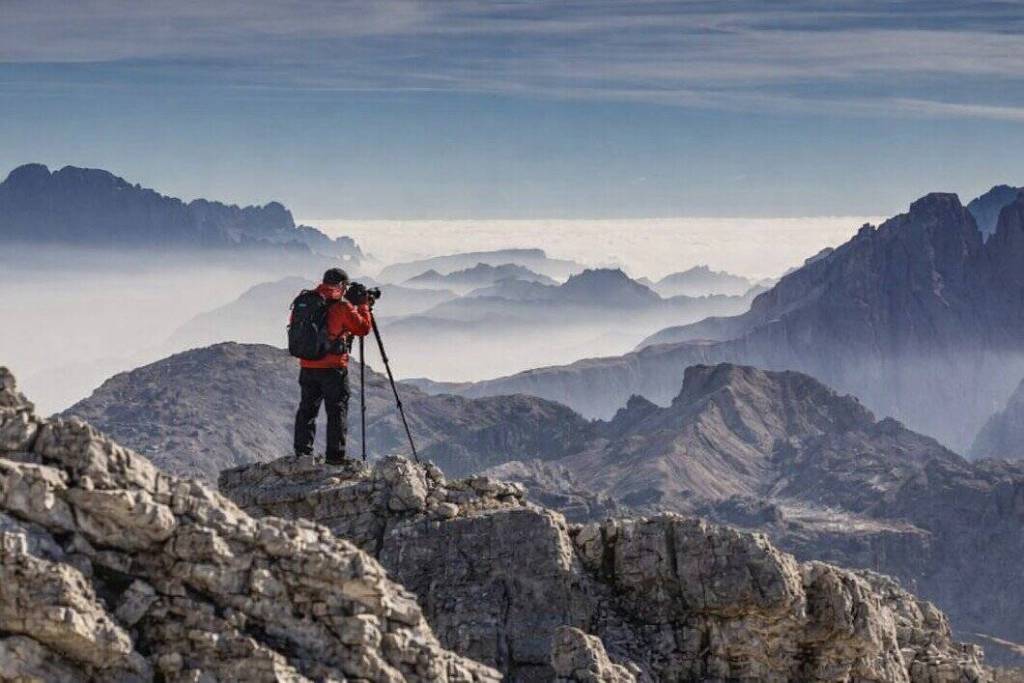
As beautiful as the landscapes on this planet can be, and as easy as you might think it would be to photograph those beautiful places, there is much more to the process of landscape photography than just picking up a camera and shooting. If you want to capture really high-quality landscape photographs when you travel, you are going to want to practice and refine your craft.
To help get you moving in the right direction, I have put together landscape photography tips to help you take your photographs to the next level. In addition to providing you with some links to some basic photography resources I have created, I also included ten great tips below that will instantly help you elevate your landscape photography.
Follow Me On Instagram
If you would like to see some of these landscape photography tips in action, make sure you check out my collection of travel photographs on my Instagram page. It is a lot of work to put together these guides to share with you, so your support in the form of a follow would be greatly appreciated!
FOLLOW ME!
Basic Travel Photography Tips
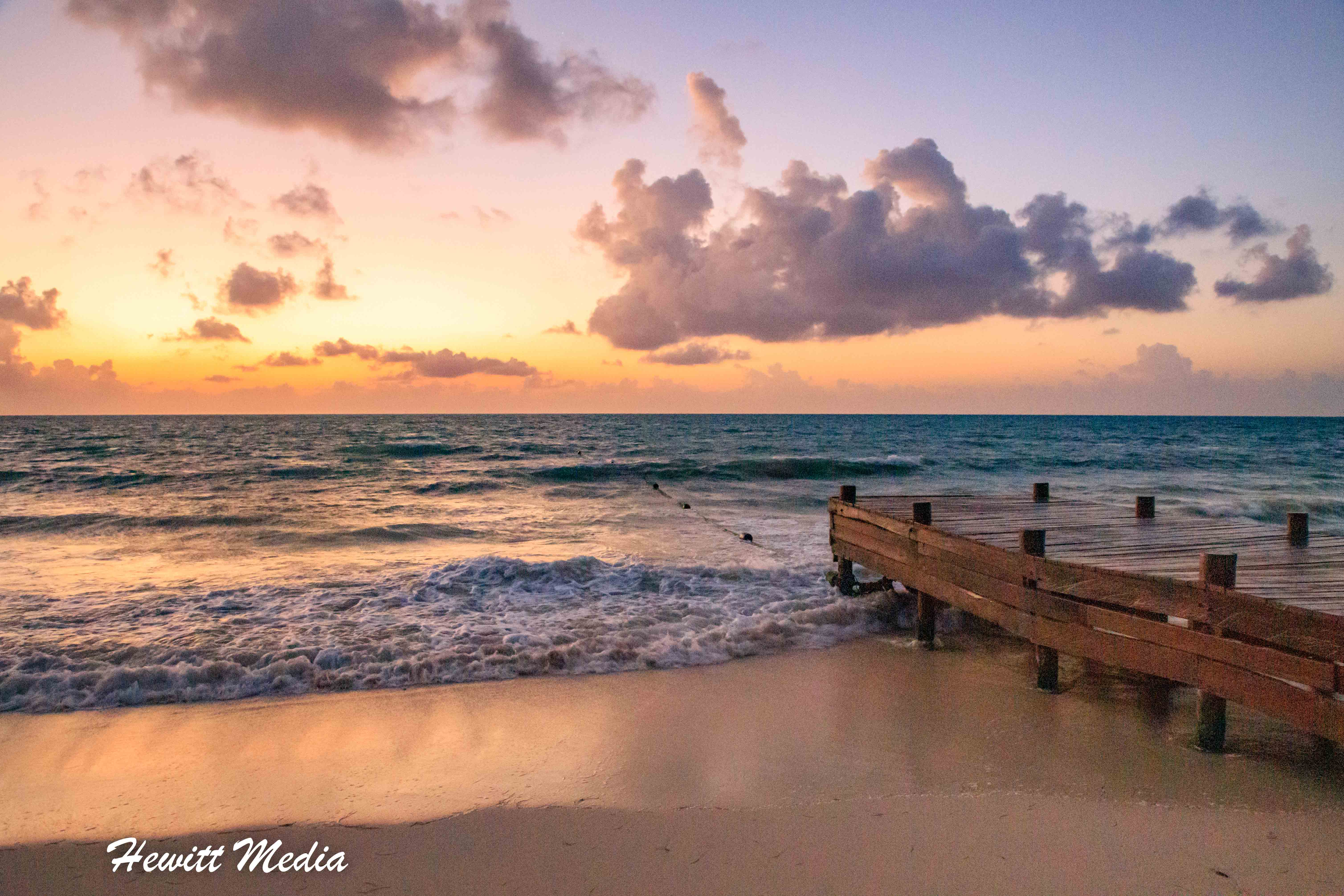
Before I get into my landscape photography tips, I think it is important that you have a solid travel photography foundation. Some of the most basic tips that I can give you for photography in general are going to have a really big impact on how your landscape photographs come out. As a travel photographer, you are also going to want to understand what gear to use, how to use it, and what mistakes you will need to avoid.
To assist in providing you with this photography foundation, I have linked to a number of my useful photography guides below. Before continuing on with this article, I would make sure you have a solid grasp of the material covered in these guides.


How to Capture Sunsets Like a Pro
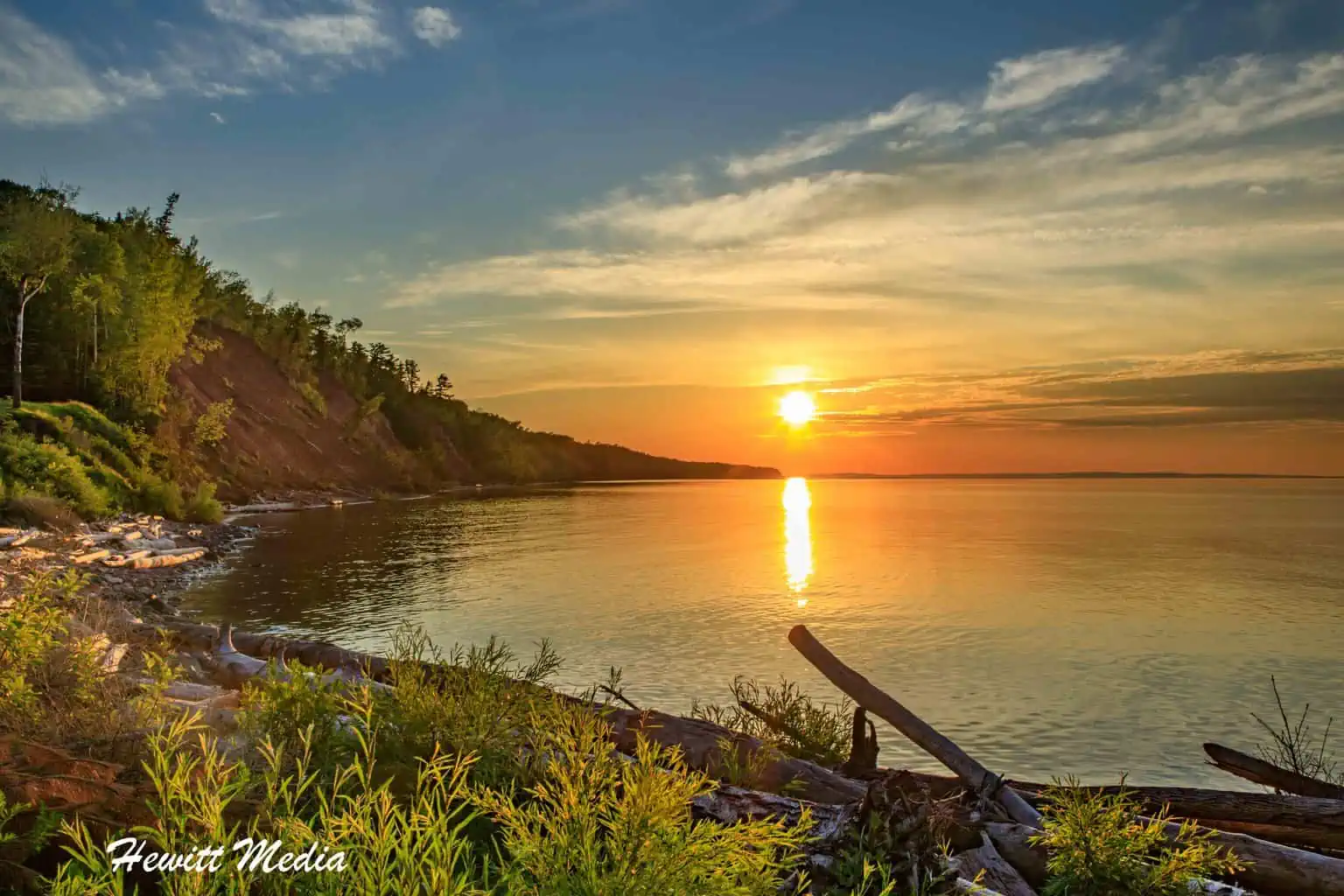
If you’ve ever witnessed a perfect sunset, snapped a few photos, and later wondered why they looked nothing like what you saw, you’re not alone. Sunrises and sunsets seem like they should be easy to photograph, but shooting directly into the sun can confuse your camera’s light meter. It often reads the scene as brighter than it really is, leading to disappointing results.
A simple technique helps you compensate. Start by aiming your camera slightly above the sun so the sun isn’t visible in the viewfinder. Press the shutter button halfway to lock focus and exposure—don’t take the shot yet.
While keeping the shutter half‑pressed, recompose your frame to include the sun. This way, your camera keeps the correct exposure from the darker area above the sun instead of overcorrecting for the bright light. Just remember to maintain that half‑press until you’re ready to capture the final image.
How to Cut Reflections in Water
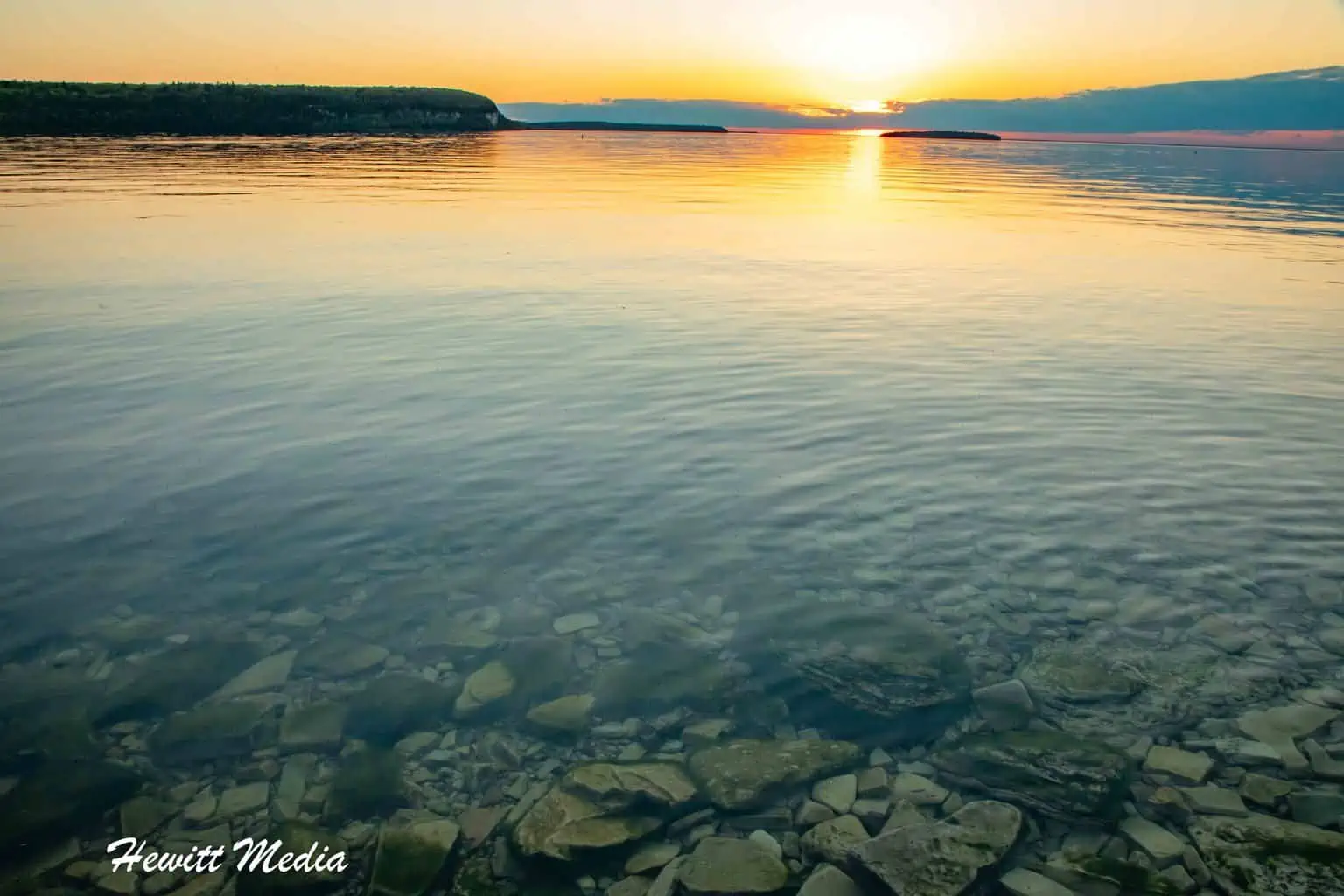
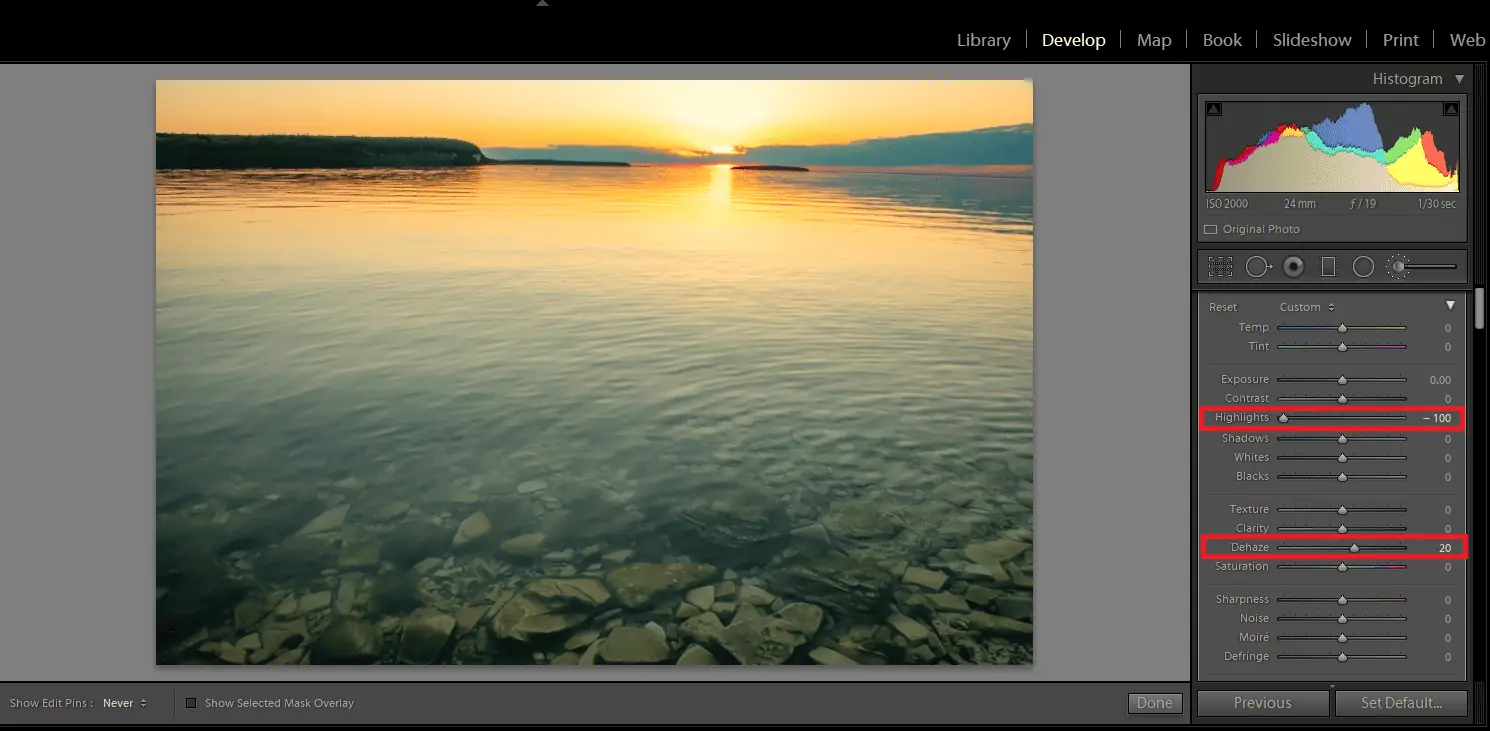
If you’ve ever tried photographing rocks beneath the surface of a lake or stream on a sunny day—like the shot I took in Door County—you know how tough it is to avoid harsh reflections. Water glare can overwhelm the scene unless you know how to control it. A polarizing filter is the best solution: it cuts reflections, deepens sky colors, and helps reveal what’s beneath the surface.
If you didn’t have a polarizer with you, you can still reduce glare in post‑processing. Start by lowering the highlights in an app like Adobe Lightroom; this helps recover detail in the brightest areas. Then use the Dehaze tool to cut through remaining reflections and bring out the rocks below the water more clearly.
The Best Way to Shoot Streams
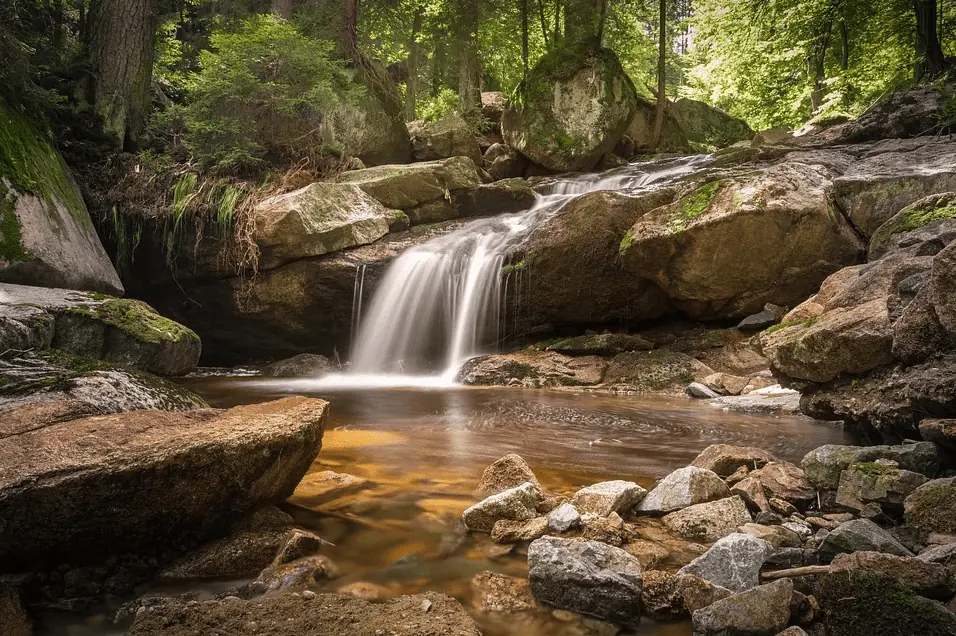
If you’ve ever woken up on a trip, seen nothing but gray skies, and assumed it would be a terrible day for landscape photography, you’re only partly right. Overcast light can flatten many scenes, but it also creates ideal conditions for certain types of shots.
Streams and waterfalls, in particular, benefit from cloudy weather. The soft, diffused light gives moving water a moody, atmospheric look, and light rain can enhance the scene even more by darkening rocks, moss, and the surrounding ground. What looks like “bad weather” often produces some of the most striking images.
These conditions are also perfect for long‑exposure photography. A long exposure keeps stationary elements—rocks, trees, the riverbank—sharp while turning moving water into a smooth, blurred flow. The image above clearly shows this effect. On bright, sunny days, you’d usually need a neutral density filter to avoid blown‑out highlights when using slow shutter speeds. But on an overcast day, the naturally dimmer light makes long exposures far easier to capture without extra gear.
The Key to Getting Wonderful Rainbow Shots
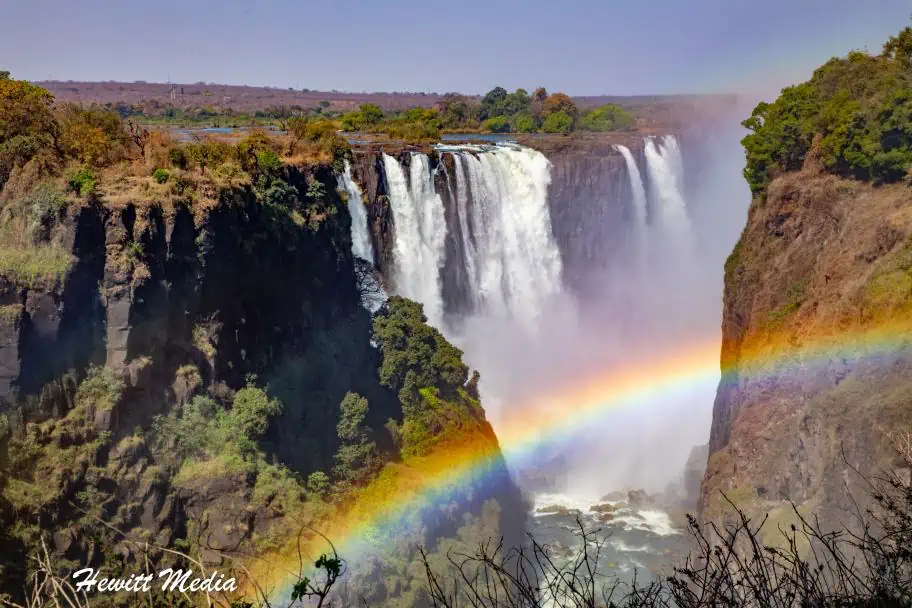
If you’ve ever photographed a beautiful rainbow while traveling only to find it barely visible in your picture, there’s a simple fix. A polarizing filter can make a huge difference. Polarizers don’t just deepen blue skies and cut reflections—they also enhance the contrast and saturation of rainbows, making their colors stand out more clearly in your photos.
This happens because a rainbow is made of polarized light. When you rotate a polarizing filter, you can increase the visibility of the rainbow and reduce glare or haze that often washes it out. It’s one of the reasons I buy a polarizer for every lens I own and keep one on by default when shooting landscapes. I only remove it when I’m working in situations where a polarizer isn’t helpful, such as low‑light or indoor scenes.
Where to Focus on Landscape Shots
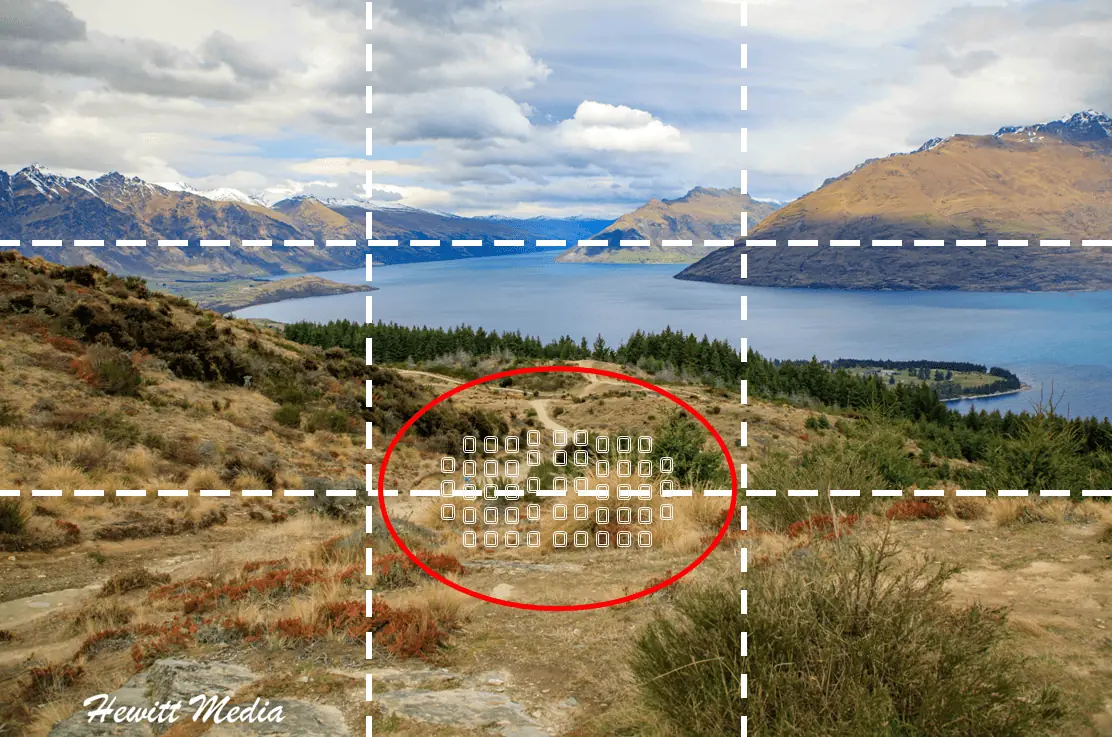
Of all the landscape photography tips I can share, getting focus right is one of the most important. Most cameras default to focusing in the center of the frame, but that isn’t ideal for landscapes because it doesn’t maximize depth of field—the zone in front of and behind your focus point that appears sharp. A shallow depth of field works well in portraits, where you want the subject crisp and the background blurred. But in landscape photography, you usually want the entire scene sharp from front to back.
A better method is to focus about one‑third of the way into the scene. If you divide the frame into thirds horizontally and vertically—like in the example image above—you’d place your focus point along the lower third near the center. This helps distribute sharpness evenly across the landscape.
You should also use a smaller aperture (a higher f‑number) to increase depth of field. A smaller aperture expands the range of distances that stay in focus. The graphic below illustrates how narrowing the aperture increases the amount of the scene that appears sharp.

Find Great Light, Then Decide What to Shoot
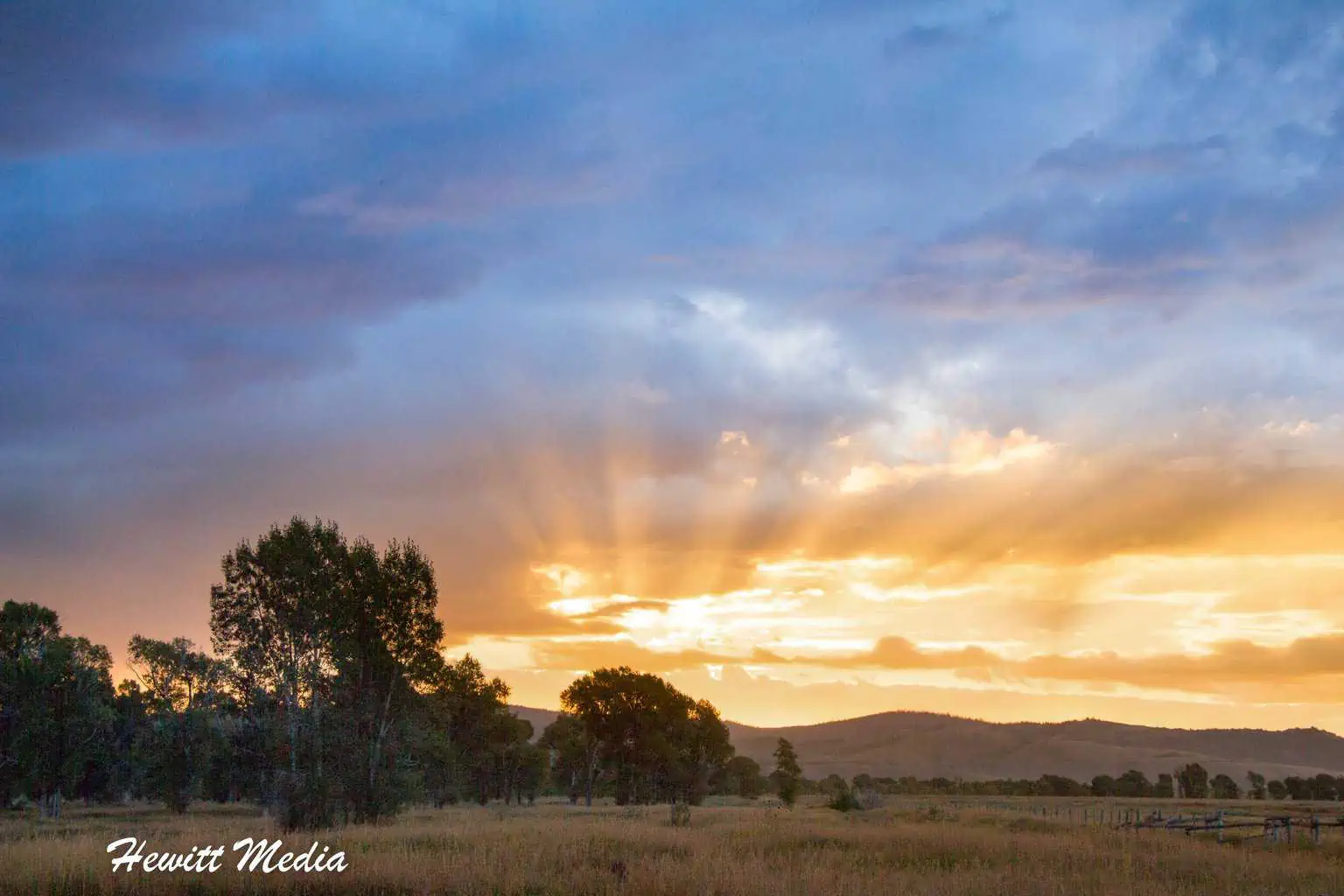
Like all photography, the quality of your images depends heavily on the light you have when you take them. That’s why so many of my landscape photography tips focus on finding and using great light. Good light can elevate an ordinary scene, while bad light can flatten even the most beautiful landscape.
Take the sunrise photo from Grand Teton National Park above. The scene itself—a simple field outside the park—is nothing remarkable. But the incredible sunrise transforms it into something far more striking.
This is why one of the best habits you can develop is to seek out great light first, then decide what to photograph. A vivid sunrise or sunset, or soft, warm light that adds depth and glow, can make almost any nearby subject more compelling than a stunning landscape shot in harsh or dull lighting. If you’d like to learn how to predict when those amazing sunrises and sunsets will happen, check out my Predicting Amazing Sunrises and Sunsets guide linked below.
| READ MORE: | |
 |
|
| Predicting Amazing Sunrises and Sunsets |
How to Best Shoot on Overcast Days
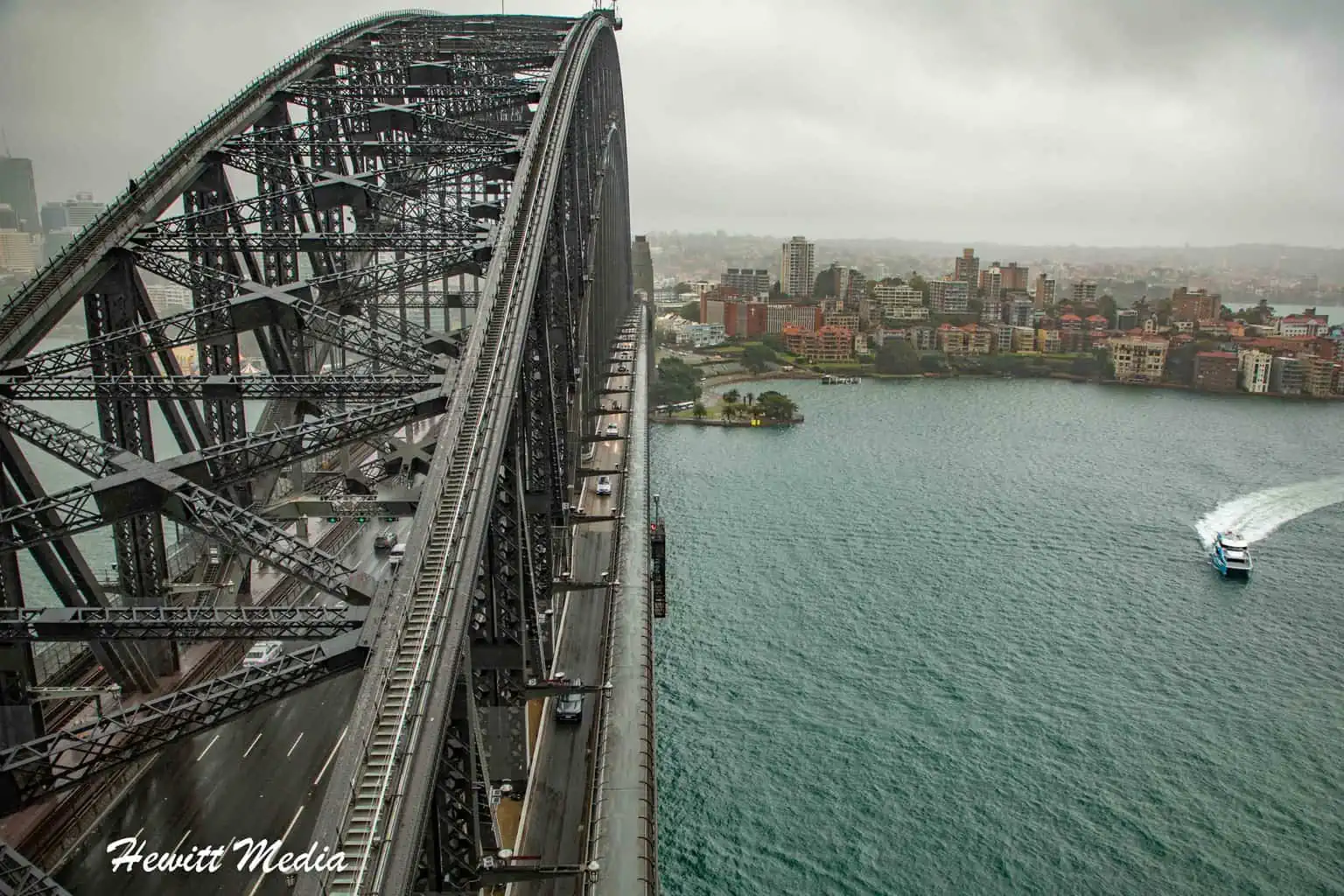
I can’t tell you how many times I’ve been traveling on an overcast day and heard someone say they’re putting their camera away because the light “isn’t worth it.” Gray skies can indeed make landscapes harder to photograph—the sky often looks flat and dull, and the light lacks contrast. But with the right approach, you can still capture great images even in these conditions.
One of the most useful landscape photography tips for overcast days is to shift the viewer’s attention away from the sky. Since the sky isn’t adding anything interesting, your job is to compose the shot so the eye is drawn to something else. When we visited Sydney, Australia, we had several days of bad weather. Instead of skipping the iconic Harbour Bridge, I looked for an angle that made the bridge the dominant element in the frame.
As you can see in the photo above, composing from a lower angle allowed the bridge to fill the scene, making the overcast sky almost irrelevant. By emphasizing strong subjects, leading lines, or foreground elements, you can create compelling images even when the weather isn’t cooperating.
The Keys to Taking Pictures in Fog
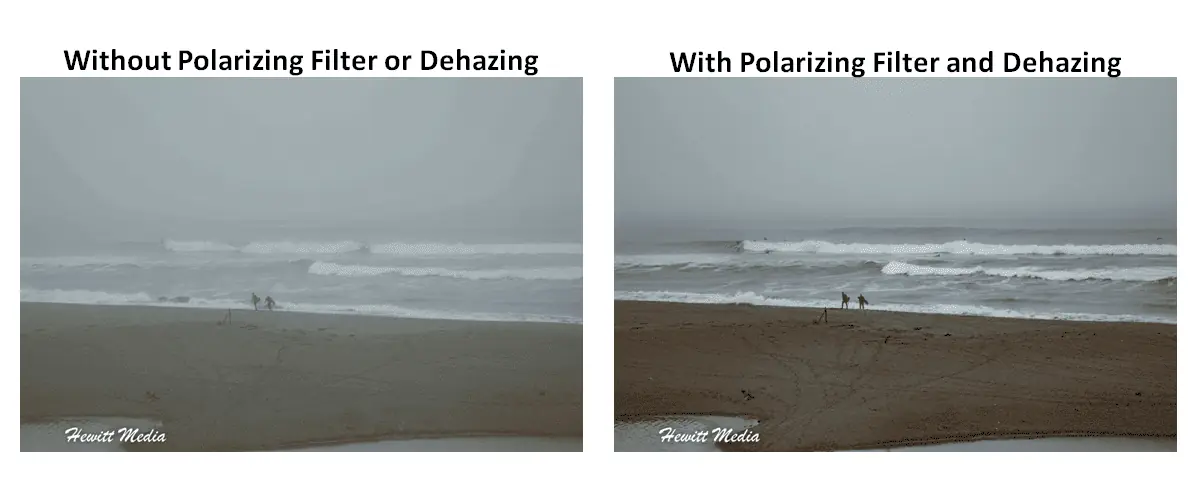
As a travel photographer, shooting in heavy fog can be one of the toughest conditions. Fog reduces contrast, softens details, and limits the light you have to work with. One of the most effective landscape photography tips for these situations is to use a polarizing filter. While a polarizer won’t “cut through” fog the way it cuts glare, it can reduce scattered light and improve contrast, helping subjects appear clearer.
You can see this in the Sonoma, California, example above. In the image without a polarizer, the surfers, waves, and people on the beach look washed out. In the version taken with a polarizer, the details are noticeably stronger, and the scene has more definition.

If you forget a polarizing filter while traveling, you can still recover some clarity in post‑processing. Tools like the Dehaze slider in Adobe Lightroom can increase contrast and reduce the hazy look. In the example above, applying Dehaze with a brush brought back detail in the foggy areas that would otherwise remain muted.
The Full-Frame Advantage
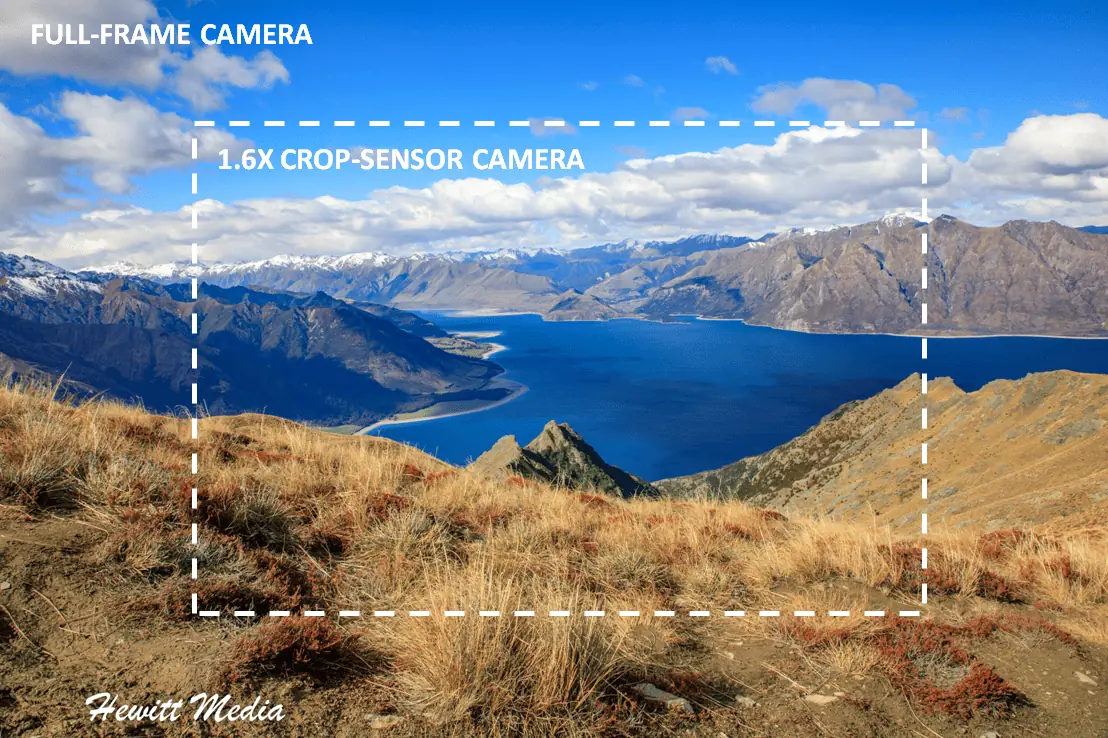
If you are an outdoor adventurer like me, then you probably spend quite a bit of time traveling through beautiful landscapes like I do. If you are going to photograph beautiful landscapes, one of the best ways that you can set yourself up to capture the most breathtaking pictures possible is to invest in a full-frame camera.
Not only will a full-frame camera allow you to shoot more of the landscape you see (as illustrated above), but full-frame cameras also allow more light into their sensors than cameras with crop sensors, and thus are typically better in low-light photography. This means that the photographs that you take at sunrise and sunset will have much more detail in the shadows than you would get with a camera with a crop sensor.
How to Make Your Flower Shots Really POP
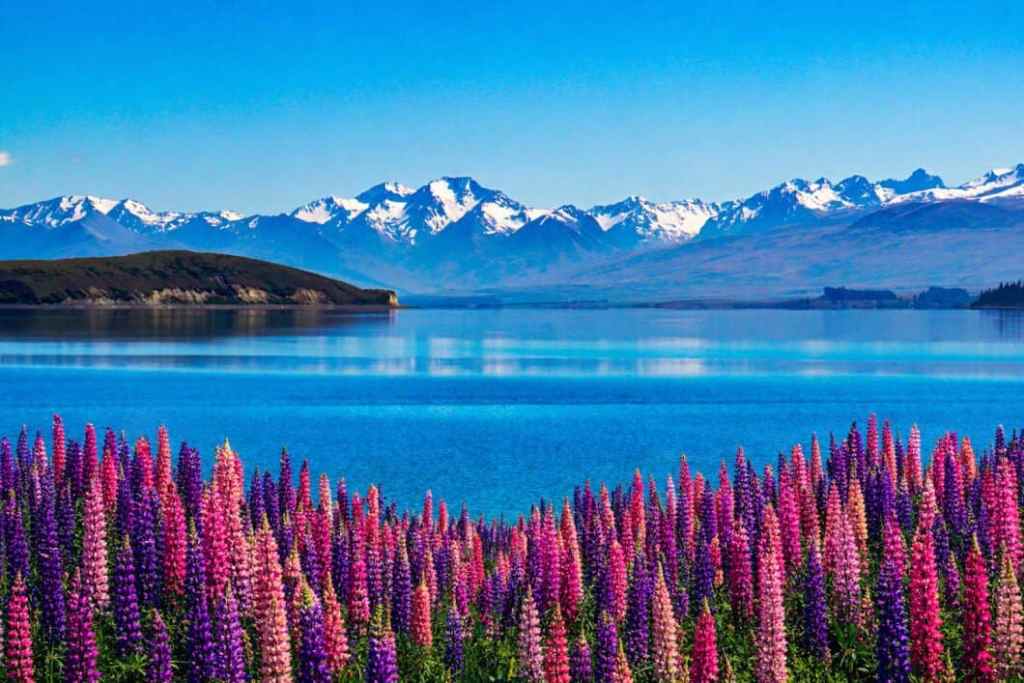
Have you ever come across really beautiful flowers when traveling, and then wondered how to best incorporate those flowers into your landscape shots? If so, I have a tip that you will love to learn. One of the best ways that I have learned to incorporate flowers into my landscape shots is to use them as an interesting foreground in my compositions. This way, they give the viewer something to look at in the foreground that contrasts with the beautiful landscape that you are photographing.
As you can see in the photograph above, the vibrant purple and pink lupins create a stunning foreground that draws the eye and adds depth to the composition. Their rich colors and tall forms provide a beautiful contrast to the serene lake and snow-capped mountains in the background, enhancing the overall impact of the scene. This is one of my favorite landscape photography tips—using bold, colorful flowers to anchor your composition and elevate the visual storytelling.
Don’t Forget to Subscribe to My Adventures!

Let Me Help You Save On Your Next Adventure!
‘Start Exploring Today’ Merchandise Available Now!
 |
 |
 |
 |
 |
 |
 |

















You are so talented Josh. Your photographs are stunning! P.S. We’ve tentatively settled on some 14ers. Might try to do the 4-pack of Lincoln/Democrat/Cameron/Bross on one day, then take a rest day, then do Quandry. Might be a little ambitious as we’ve always just done one 14er per trip, but what the hell, right?
Thank you so much!!! You just made my week 😀
As for your 14er plan, that sounds AMAZING!!!! I contemplated staying in Colorado longer and doing more, but Southern Utah is pulling at me (as it always does). I can’t wait to hear about your climbs!!!
We’re headed there, too! Mainly Escalante area and Dead Horse Point. A bit of UT + a bit of CO + a bit of hiking + a bit of cycling = good times. By the way, have you seen Colorado’s latest travel/tourism slogan: “Wait to CO.” They don’t want us. 🙁
Awesome!! Sounds amazing!! Have not seen Colorado’s latest tourism slogan. That’s disappointing 😢
Wonderful and useful tips! Thank you for sharing, Josh.
Thank you so much for the kind words! 😃
Such great tips – thanks for sharing!
Thanks Matthew!!! 😀
Great detailed guide, thank you! I’ve missed out on capturing so many gorgeous sunsets as the brightness has been thrown off, can’t wait to give your tips a go.
Thank you so much!! I am so glad you found the guide helpful 😄