LAST UPDATED: 6/12/26 – Dominican Republic Entrance Requirements
Traveling to the Dominican Republic requires careful attention to its entrance requirements, as the Caribbean nation has specific guidelines in place for international visitors. By thoroughly familiarizing themselves with these Dominican Republic entrance requirements, travelers can help ensure a smooth and stress-free arrival experience as they explore the Dominican Republic’s stunning beaches, vibrant culture, and rich history.
To assist you in making sure you meet the necessary Dominican Republic entrance requirements, I have provided an outline of all the requirements in this article for your careful review. Furthermore, I also created a handy checklist that I linked to below that you can use to track the requirements as you meet them.
Download the Dominican Republic Entrance Requirements Checklist
Dominican Republic Passport Requirements

To enter the Dominican Republic, your passport must normally be valid for at least six months beyond your arrival date. However, under an exceptional measure currently in effect, travelers from the United States, United Kingdom, Canada, the European Union, Brazil, Chile, Argentina, Colombia, and Ecuador may enter exclusively for tourism as long as their passport is valid for the entire duration of their stay and at the time of departure. This waiver of the six‑month rule is valid from December 1, 2025 through December 31, 2026.
Travelers should also be aware of other important considerations:
- Passport condition — Damaged or heavily worn passports may be rejected by immigration authorities.
- Blank pages — While the Dominican Republic does not specify a minimum number of blank pages, airlines or transit countries may require them for visa or entry stamps.
- Airline rules — Some carriers enforce stricter validity requirements than the Dominican Republic itself, sometimes insisting on six months of validity regardless of destination.
- E‑Ticket requirement — All travelers must complete the official electronic entry/exit form (E‑Ticket) before arrival; it generates a QR code required at border control.
Before traveling, double‑check your passport’s expiration date and inspect its condition. If it is close to expiring or shows signs of damage, renewing your passport early is the safest option to avoid airline denial or entry issues.
| Passport Validity | Blank Passport Pages |
|---|---|
| Your passport must be valid for the duration of your stay. | One Page Required for Entry Stamp. |
Dominican Republic VISA Requirements
In addition to your passport, one of the most important Dominican Republic entry requirements you must consider is the tourist VISA requirement. Depending on which country you are from, you may or may not need to apply for a tourist VISA to visit the Dominican Republic. The following sections outline the Dominican Republic tourist VISA requirements and how to apply.
| VISA-Exempt Passport Holders | All Other Travelers |
|---|---|
| No VISA Required. Pay entry fee to receive Tourist Card. | Must apply for a Tourist VISA before traveling. |
VISA-Exempt Countries
If you are a passport holder from one of the countries listed below, then you are VISA-exempt. This means that you won’t need to obtain a tourist visa before traveling to the Dominican Republic if you plan on staying for less than the VISA exemption period.
Essentially, any person who can legally travel or reside in the United States, Canada, and the European Union (including Great Britain) does not need a visa to visit the Dominican Republic for tourist purposes and can enter the Dominican Republic with a Tourist Card and a valid passport. A Tourist Card is a card you are issued for an entry fee when entering the Dominican Republic.
Unless specified otherwise below, the amount of time you can spend in the Dominican Republic VISA-free is 30 days.
 |
Albania |  |
Iceland |  |
Poland |
 |
Andorra |  |
Ireland |  |
Portugal |
 |
Antigua and Barbuda |  |
Israel |  |
Qatar |
 |
Argentina |  |
Italy |  |
Romania |
 |
Australia |  |
Jamaica |  |
Russia |
 |
Bahamas |  |
Japan |  |
Saint Kitts and Nevis |
 |
Bahrain |  |
Kazakhstan |  |
Saint Lucia |
 |
Barbados |  |
Kiribati |  |
St Vincent Grenadines |
 |
Belize |  |
Kuwait |  |
San Marino |
 |
Bolivia |  |
Latvia |  |
Serbia ** |
 |
Bosnia and Herzegovina |  |
Liechtenstein |  |
Seychelles |
 |
Botswana |  |
Lithuania |  |
Singapore * |
 |
Brazil ** |  |
Luxembourg |  |
Slovakia |
 |
Brunei |  |
Macao |  |
Slovenia |
 |
Canada |  |
Malaysia |  |
Solomon Islands |
 |
Chile |  |
Malta |  |
South Africa |
 |
Colombia |  |
Marshall Islands |  |
South Korea |
 |
Costa Rica |  |
Mauritius |  |
Spain |
 |
Cyprus |  |
Mexico |  |
Suriname |
 |
Czechia |  |
Micronesia |  |
Sweden |
 |
Denmark |  |
Monaco |  |
Switzerland |
 |
Ecuador * |  |
Montenegro |  |
Taiwan |
 |
El Salvador |  |
Morocco ** |  |
Thailand |
 |
Estonia |  |
Namibia |  |
Tonga |
 |
Fiji |  |
Nauru |  |
Trinidad and Tobago |
 |
Finland |  |
Netherlands |  |
Turkey |
 |
France |  |
New Zealand |  |
Tuvalu |
 |
Germany |  |
Nicaragua |  |
Ukraine |
 |
Greece |  |
North Macedonia |  |
United Arab Emirates |
 |
Grenada |  |
Norway |  |
United Kingdom |
 |
Guatemala |  |
Panama |  |
United States |
 |
Guyana |  |
Papua New Guinea |  |
Uruguay |
 |
Honduras |  |
Paraguay |  |
Vanuatu |
 |
Hong Kong |  |
Peru ** |  |
Vatican City |
 |
Hungary |
| * = VISA-Exempt for stays up to 90 days. |
| ** = VISA-Exempt for stays up to 60 days. |
All Other Travelers
If you don’t hold a passport from a VISA-exempt nation, you will need to obtain a tourist visa before traveling to the Dominican Republic. For your convenience, I have outlined the process for applying for a tourist VISA for the Dominican Republic below.
- Complete Aisa Application Form – Fill out a Dominican Republic visa application form with your personal details and requested information.
- Schedule an Appointment – Contact the nearest Dominican Republic foreign office to arrange a visa application appointment and pay the VISA application fees.
- Await Visa Decision – You will receive notification from the Dominican Republic embassy, consulate, or representation office where you applied.
Dominican Republic Immunization Requirements
Important Note: I am not a medical doctor and don’t have medical experience. The information provided in this section is a summary of information that I got from the Centers for Disease Control and Prevention in the United States for travel to the Dominican Republic. I am providing you with this information to help bring awareness of the necessary vaccinations to you. Still, consultation with my guide should not replace a discussion about your travels with your doctor or a travel medical clinic.
| Vaccinations Requirements |
|---|
| Some immunizations may be required, others recommended. See details below. |
While there are generally no required immunizations for entering the Dominican Republic, that isn’t always the case. If you are traveling from an area at high risk for Yellow Fever, you may be required to show proof of Yellow Fever vaccination before being allowed into the Dominican Republic.
In addition, it is also recommended to be up-to-date on standard immunizations. Please refer to the tables below for some guidance on what is recommended before traveling to the Dominican Republic.
Recommended Vaccinations for the Dominican Republic
There are several vaccinations that the CDC recommends that you get before traveling to the Dominican Republic, which I have outlined for you below. Please pay special attention to the details in this guide section and ensure you discuss all vaccinations with your doctor or travel health clinic.
| Vaccine | How Disease Spreads | Details |
|---|---|---|
| Hepatitis A | Food and Water. | Recommended for most travelers. |
| Hepatitis B | Blood and Body Fluids. | Accelerated schedule available. |
| Measles | Contact with Infected Individuals. | Cases of measles are on the rise worldwide. Travelers are at risk of measles if they have not been fully vaccinated at least two weeks prior to departure, or have not had measles in the past, and travel internationally to areas where measles is spreading. |
| Rabies | The saliva of infected animals. Bites or licks on open wounds are the most common vector. | Pre-exposure vaccination requires two shots over 7 days. The benefit of getting pre-exposure vaccination is that it makes getting a Rabies Immunoglobulin shot if exposed while traveling unecessary. For more information, check out the guide on Rabies vaccination I linked below and speak to your doctor. |
| Typhoid | From food and water you handle or ingest. | Recommended for most travelers, especially those staying with friends or relatives or visiting smaller cities or rural areas. |
| Cholera | The disease is spread through contact with infected food and water and poor sanitation. | Areas of active cholera transmission are localized to the province of Barahona in the Dominican Republic, though it is rare for travelers to get sick. There are steps you can take to avoid getting Cholera |
| Malaria | Malaria is spread by the bite of an infected mosquito. | The CDC recommends travelers visiting certain areas of the Dominican Republic take prescription medication to prevent malaria. Depending on the medication you take, you may need to start your regimine before you travel and continue after arriving back home. |
| Yellow Fever | Malaria is spread by the bite of an infected mosquito. | Yellow Fever vaccination is not required for travel to the Dominican Republic. However, it may be required for entry into the Dominican Republic if you are arriving from an area at high risk for Yellow Fever or had a layover longer than 12 hours in a high-risk area. |


Routine Vaccinations for Travel
In addition to the vaccinations that are recommended for travel to the Dominican Republic specifically, there are other routine vaccinations you should be current on before traveling anywhere in this world. For an overview of the routine vaccinations recommended by the CDC, please review the chart that I have included below.
| Disease Name | How Disease Spreads | Advice |
|---|---|---|
| Measles Mumps Rubella (MMR) | Various Vectors. | Given to anyone unvaccinated and/or born after 1957. One time adult booster recommended. |
| TDAP (Tetanus, Diphtheria & Pertussis) | Thru open wounds & airborne transmission. | Only one adult booster of pertussis required. |
| Chickenpox | Direct contact with infected individuals & airborne transmission. | Given to those unvaccinated that did not have chickenpox. |
| Shingles | Direct contact with infected individuals. | Vaccine can still be given if you have had shingles. |
| Pneumonia | Airborne transmission. | Two vaccines given separately. All 65+ or immunocompromised should receive both. |
| Influenza | airborne transmission. | Vaccine components change annually. |
| Meningitis | Direct contact with infected individuals & airborne transmission. | Given to anyone unvaccinated or at an increased risk, especially students. |
| Polio | Spread by contact with infected persons. | In addition to the childhood vaccine, there is a one-time booster shot that is available for adults who are traveling to high-risk areas. |
Non-Vaccine Preventable Diseases
In addition to the recommended vaccinations, other health precautions should be taken when visiting the Dominican Republic to avoid getting sick. While these health precautions aren’t on the list of the Dominican Republic entrance requirements, they are important measures that you can take to make sure you don’t get ill while traveling.
AVOID CONTAMINATED WATER
When traveling, one of the easiest ways to get sick is to come into contact with contaminated water. Several illnesses are found in the Dominican Republic that can be spread by either drinking or swimming in contaminated water. Before you depart for your trip, you will want to be aware of the illnesses below. To avoid getting sick, make sure you stick to drinking bottled water and avoid swimming in stagnant pools.
| Disease Name | How Disease Spreads | Advice |
|---|---|---|
| Leptospirosis | Touching fluids of infected animal or drinking or swimming in contaminated water. | Avoid contaminated water and soil. |
AVOID BUG BITES
Another easy way to get sick while traveling is to be bitten by bugs that carry illnesses. The most common insect that spreads diseases to humans is the mosquito, but ticks and flies can also spread serious illnesses through their bites.
To make sure you don’t fall ill from an insect bite while in the Dominican Republic, I would recommend bringing insect repellent and mosquito netting with you when you visit and avoid getting bitten by bugs as much as possible.
| Disease Name | How Disease Spreads | Advice |
|---|---|---|
| Dengue | Mosquito bite. | Avoid Bug Bites |
| Leishmaniasis | Sand fly bite. | Avoid Bug Bites |
| Zika | Mosquito bite. | Avoid Bug Bites |
BE AWARE OF AIRBORNE AND DROPLET ILLNESSES
Out of all the ways that illnesses can be spread, airborne diseases are the hardest to protect yourself against. After all, you don’t have to physically touch or be touched by an infected person or animal, and there isn’t a repellent that you can spray on to avoid catching these illnesses.
This is why it is always important to be observant of those with whom you interact while traveling and make sure you don’t expose yourself to potentially harmful airborne illnesses. According to the CDC, the particular airborne illnesses that you should be aware of while traveling to the Dominican Republic are as follows:
| Disease Name | How Disease Spreads | Advice |
|---|---|---|
| Hantavirus | Coming into contact with bodily fluids or droppings of infected rodents, being biten by an infected rodent, or less commonly from coming into contact with someone else who is infected. | Avoid rodents and people who look sick. |
| Tuberculosis (TB) | Breathing in the air from an infected individual (via cough, speaking, etc..) | Avoid people who look sick. |
Dominican Republic Customs Restrictions

Another important aspect of travel to the Dominican Republic that you must be aware of before you travel is the country’s customs regulations. Like other countries, there are certain goods that you are restricted or even prohibited from bringing into the country. To ensure you don’t make the costly mistake of having one of these restricted items in your baggage, I have outlined the Dominican Republic customs regulations for you to review below.
FREE IMPORT
According to the VISAHQ.com website, the following items are considered free-import items when entering the Dominican Republic, but with limits (as described below).
- 200 cigarettes or 1 box of cigars.
- 2-liter bottles of alcoholic liquor – unopened.
- 2 opened bottles of perfume.
Important Note: You need to be at least 16 years of age to bring tobacco products into the country, and you must be 18 years of age or older to drink alcohol in the Dominican Republic.
PROHIBITED ITEMS
Before you will be allowed into the Dominican Republic, you will also need to clear customs to be sure you aren’t carrying any prohibited items with you. For instance, travelers are strictly prohibited from bringing the following items into the Dominican Republic:
- Car, motor, or other machine parts.
- Illegal drugs (prescriptions must be in a prescription bottle).
- Guns, explosives, and ammunition.
- Pornographic or offensive materials.
- Birds or animal products.
- Meat and dairy products.
- Statues, valuable paintings, or historical artifacts over 100 years old.
- You are not allowed to export the local currency (Dominican Peso- DOP) out of the country.
CONTROLLED ITEMS
In addition to these prohibited items, the government of the Dominican Republic has placed limits on the quantity of other items that can be brought into the country. If you plan to travel with any of the following items when visiting the Dominican Republic, you will want to plan accordingly so that you do not violate the Dominican Republic entrance requirements:
- An invoice is required to bring machines, appliances, and spare parts, which may also be subject to taxes.
- Pets must have a Health Certificate and full protection against Rabies and parvovirus.
Dominican Republic Currency Restrictions
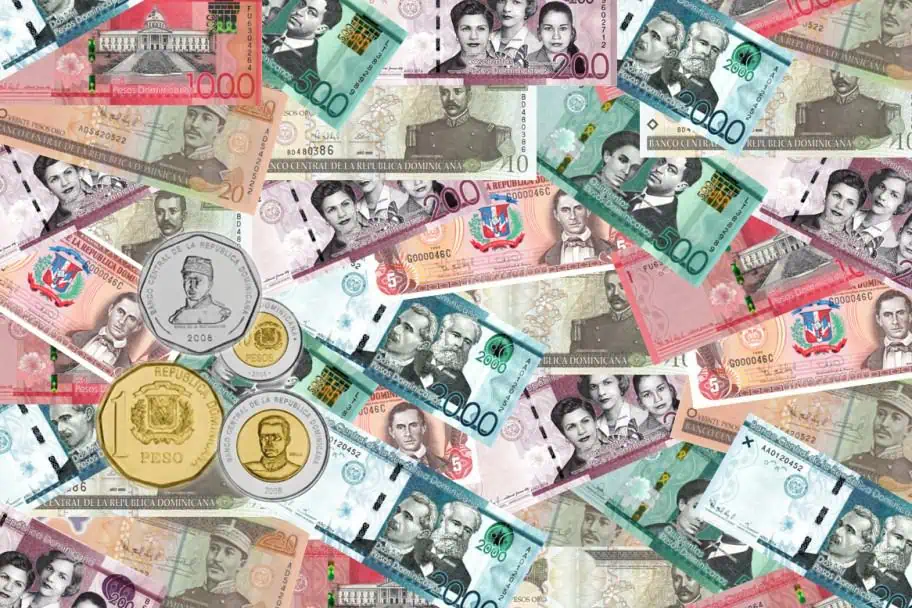
The final aspect of the Dominican Republic entrance requirements that you will want to ensure you comply with is the amount of currency you plan on bringing to the country. Like all countries, there are certain restrictions on currency in the Dominican Republic. According to the US State Department website, the government of the Dominican Republic has the following currency limits and regulations in place:
| Currency Restrictions for Entry | Currency Restrictions for Exit |
|---|---|
| None. | $10,000 and over or its equivalent must be declared. |
| You can’t export Dominican Pesos (DOP). |
Bringing and using money in the DR is simple, but a little preparation goes a long way. Cash is widely accepted, ATMs are common in cities and resorts, and exchanging money is safest at official locations rather than on the street.
- Bring small USD bills — US dollars are widely accepted, especially for tips, taxis, and tours.
- Use ATMs at banks — They offer the best exchange rates; avoid standalone machines in tourist areas.
- Exchange money officially — Use banks or authorized “casa de cambio” offices, not street exchangers.
- Carry cash safely — Keep only what you need on you; use a hotel safe for the rest.
- Expect card fees — Some shops add a 3–5% surcharge for credit cards, so cash can be cheaper.
Don’t Forget to Subscribe to My Adventures!

Let Me Help You Save On Your Next Adventure!
‘Start Exploring Today’ Merchandise Available Now!
 |
 |
 |
 |
 |
 |
 |















Related Articles



We've detected that you are using AdBlock Plus or some other adblocking software which is preventing the page from fully loading. We don't have any banners, Flash, animation, obnoxious sound, or popup ads. I do not implement these annoying types of ads.
Creating the travel guides, itineraries, and other premium travel content for this blog is a lot of work and it costs money to
host this blog. Almost all of my revenue to run this blog comes from our online advertising.
Don't miss out on any of my premium travel guides, itineraries, and travel advice articles by subscribing to follow my adventures. All these guides will be delivered to your mailbox, hassle-free!
Leave a Reply