LAST UPDATED: 9/14/26 – Will Biometrics Revolutionize Air Travel?
International travel has always come with one unavoidable reality: the customs and immigration process. After a long-haul flight, few things feel more draining than inching through long lines while jet-lagged and ready to get home. As airports adopt biometrics to modernize identity verification, that experience is finally beginning to change.
For years, the arrival process has relied on passports, physical documents, and manual checks — systems that struggle to keep up with growing travel volumes. Long waits, staffing challenges, and outdated procedures have made customs one of the most frustrating parts of international travel, prompting CBP and TSA to invest heavily in new technology.

Now those upgrades are becoming visible. Facial recognition systems, automated kiosks, and mobile identity tools are already active in many major airports, and more advanced biometric systems are rolling out nationwide. What once felt like a distant future — faster lines, fewer documents, and seamless identity checks — is quickly becoming reality.
Streamlined Entry Through Biometrics
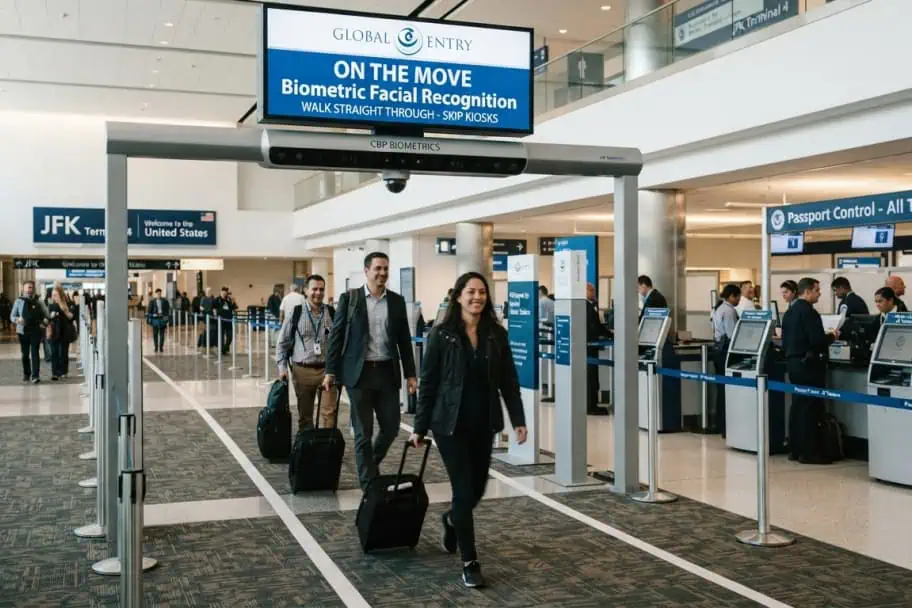
For years, travelers have hoped that U.S. Customs and Border Protection (CBP) and the Transportation Security Administration (TSA) would modernize the customs and immigration experience. That wish is finally becoming reality.
CBP and TSA have spent the last several years developing a biometric-based identity system designed to make international travel faster, more secure, and far more efficient. Many of these upgrades are already live, and even bigger changes are rolling out nationwide.
| READ MORE: |
 |
| Is Global Entry Still Worth It? |
Biometrics in Air Travel: What’s Happening Now
Facial Recognition Has Quietly Been in Use for a Decade
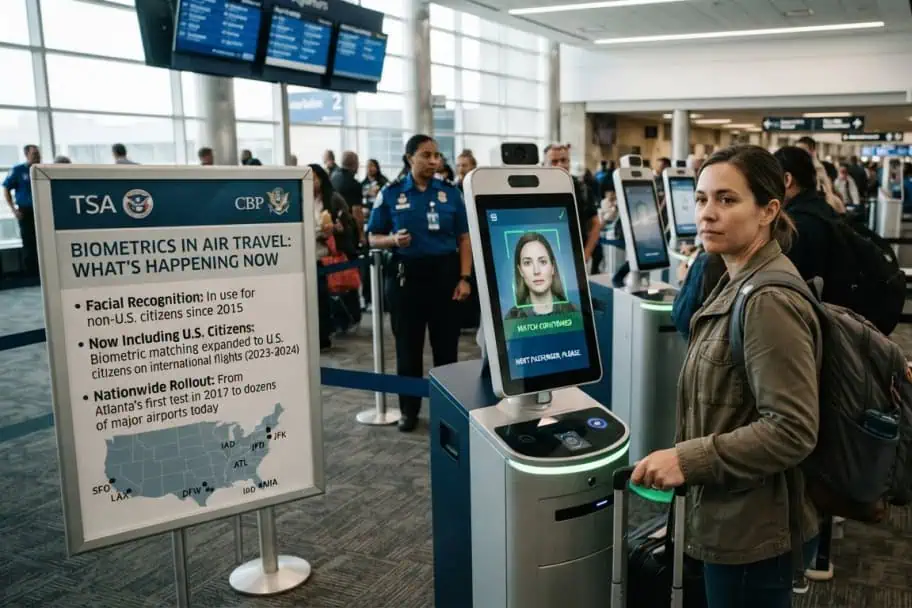
CBP began using facial recognition for non‑U.S. citizens on international arrivals in 2015. For years, it operated quietly and in limited areas, so most travelers didn’t notice.
But the last few years have been a turning point.
U.S. Citizens Are Now Part of the System
Since 2023–2024, CBP has expanded biometric facial matching to U.S. citizens on many international flights. TSA has also begun using facial recognition at security checkpoints in select airports.
Atlanta Was the First — Now It’s Nationwide
Hartsfield–Jackson Atlanta International Airport was the first major U.S. airport to adopt biometric technology, initially testing fingerprint systems in 2017. Today, biometric facial recognition is active in dozens of airports, including:
- ATL
- JFK
- LAX
- SFO
- MIA
- DFW
- IAD
- ORD
And more are being added every quarter.
What’s New: The Biggest Upgrades

1. “On-the-Move” Biometric Lanes
CBP’s newest innovation allows travelers to walk through immigration without stopping. Overhead cameras verify your identity as you move — no kiosk, no officer interaction, no QR code.
These lanes are already active in several major airports and are expanding rapidly.
2. Global Entry Mobile App
Global Entry members can now complete the process on their phone instead of using a kiosk. This reduces bottlenecks and speeds up the entire arrival experience.
3. Mobile Passport Is Still Around — But Less Central
Mobile Passport used to be the best free alternative to Global Entry. Today:
- Some airports have removed dedicated lanes
- CBP is clearly prioritizing biometric systems
- Mobile Passport works, but it’s no longer the fastest option
4. Biometrics Are Expanding Beyond International Travel
Current and planned uses include:
- Check-in
- Bag drop
- Security screening
- Immigration & customs
- Self-boarding gates
- TSA PreCheck identity verification
- Domestic travel identity checks (future phase)
The long-term vision is a fully biometric airport experience from curb to gate.
What Your Future Airport Experience May Look Like
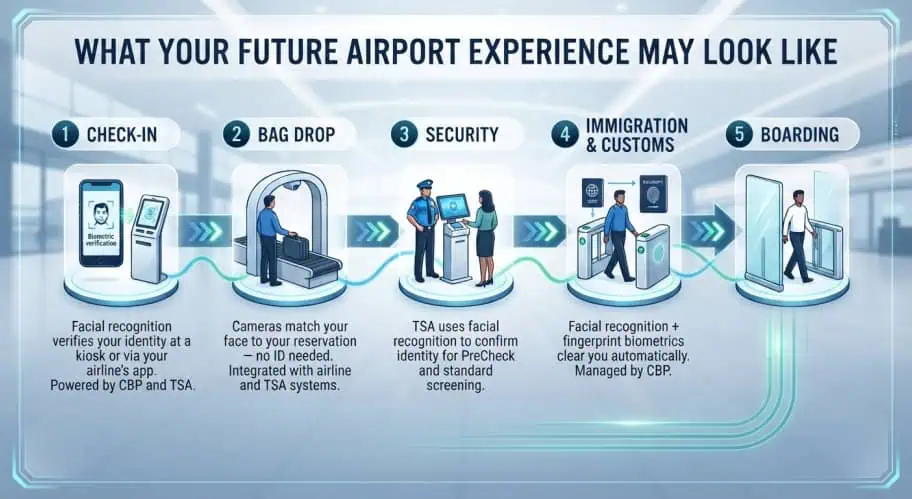
Here’s the streamlined biometric flow CBP and TSA are building toward:
- Check-In: Facial recognition verifies your identity at a kiosk or via your airline’s app.
- Bag Drop: Cameras match your face to your reservation — no ID needed.
- Security: TSA uses facial recognition to confirm identity for PreCheck and standard screening.
- Immigration & Customs: Facial recognition + fingerprint biometrics clear you automatically.
- Boarding: You walk through a biometric gate that verifies your identity without scanning a boarding pass.
This isn’t theoretical — most of these steps already exist in pilot programs.
Privacy, Security & Convenience: The Big Questions
Biometric travel raises a set of complex, fast‑evolving questions about how much convenience travelers are willing to trade for new forms of digital identification. Many people wonder whether the time savings truly outweigh potential privacy concerns, how comfortable they are with facial recognition becoming a standard part of flying, and whether biometrics could eventually replace physical passports and boarding passes altogether.
Others are focused on the bigger picture — whether these systems will fundamentally reshape air travel the same way Global Entry once did. These debates now sit at the center of conversations in aviation policy, technology ethics, and public security as the U.S. and other countries continue expanding biometric infrastructure.
My Take
I’ve always been a fan of programs that make travel easier. I signed up for Global Entry as soon as it launched, and the time savings have been worth every bit of the $100 fee and interview process.
Biometrics feel similar to me: the convenience is enormous, and the technology is already proving to be faster, more secure, and more reliable than traditional ID checks.
But that’s just my perspective — and this is a conversation worth having.
What Do You Think?
Are you excited about biometric travel? Do you have concerns about privacy or data security? Would you use facial recognition if it meant skipping long lines? Do you think this technology will become universal?
I’d love to hear your thoughts — especially if you disagree. The best discussions come from comparing experiences.
Don’t Forget to Subscribe to My Adventures!

Let Me Help You Save On Your Next Adventure!
‘Start Exploring Today’ Merchandise Available Now!
 |
 |
 |
 |
 |
 |
 |




















And then they could add some scales to the process and weigh US as we check in to see if we need to pay for extra baggage or to buy two seats!! 🙂
Absolutely! 👍😀