Cruising should feel relaxing and exciting, not queasy or uncomfortable. Whether you’re a first‑time cruiser or someone who has struggled with motion sickness before, understanding the most effective tips to avoid seasickness can transform your experience on the water. This guide brings together the most reliable strategies to help you stay steady, confident, and ready to enjoy every moment of your trip.

To make your planning even easier, this article includes practical advice you can use before and during your cruise, along with smart packing suggestions that ensure you’re prepared for changing sea conditions. From natural remedies and medications to hydration tools and comfort items, these recommendations help you build a personalized plan that works for your body and your travel style.
You’ll also find trusted medical resources and a printable quick‑reference guide you can save to your phone for instant reassurance at sea. These expert‑backed insights explain how to prevent seasickness in simple, actionable ways, giving you everything you need to stay comfortable from embarkation to final port.
Resources on Avoiding Seasickness
When it comes to managing motion sickness on a cruise, it helps to rely on guidance from trusted medical authorities. The following resources from organizations like the CDC, Mayo Clinic, Cleveland Clinic, and MedScape offer science‑backed advice on how to prevent seasickness and keep you feeling your best at sea.
- The CDC – Preventing Motion Sickness
- The CDC – Motion Sickness Yellow Book
- The Mayo Clinic – Motion sickness: First aid
- Cleveland Clinic – Motion Sickness Prevention
- MedScape – Motion Sickness Treatment
Helpful Tips to Avoid Seasickness

Staying comfortable at sea starts long before the ship begins to move. Whether you’re a first‑time cruiser or someone who’s struggled with motion sickness in the past, understanding the most effective tips to avoid seasickness can make your entire journey smoother and far more enjoyable. These practical strategies help you stay steady, relaxed, and ready to enjoy every moment on the water.
Choose a Mid‑Ship, Lower‑Deck Cabin
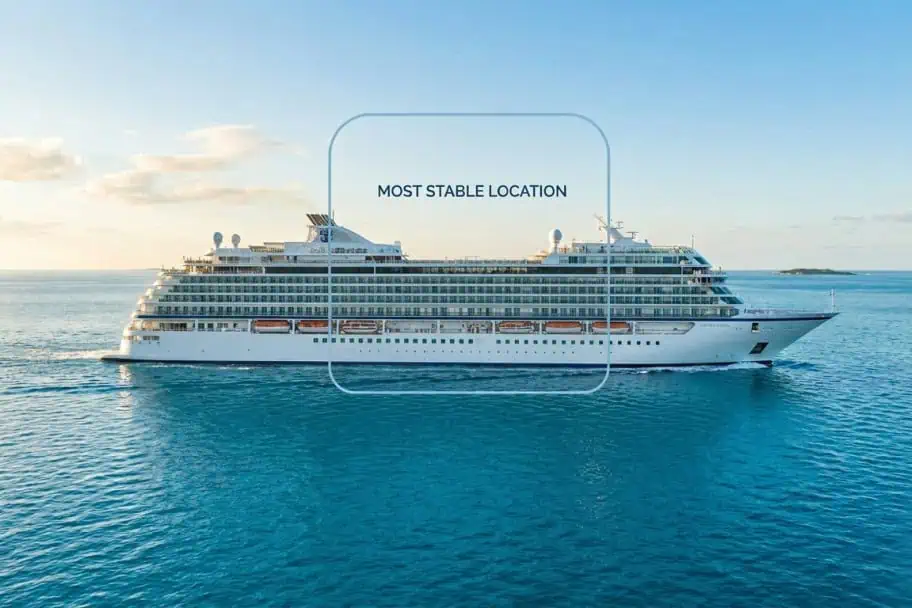
Choosing a mid‑ship, lower‑deck cabin is one of the most effective tips to avoid seasickness because this area experiences the least motion. When the ship moves, the center stays more stable, reducing the rocking sensation that triggers nausea. This simple choice can make your entire cruise noticeably more comfortable from the moment you board.
Staying closer to the ship’s center of gravity helps your body adjust more easily to the natural sway of the ocean. If you’re prone to motion sickness, booking early gives you the best chance of securing a cabin in this ideal location. It’s a small decision that can dramatically improve your overall cruising experience.
Look at the Horizon

Looking at the horizon is a classic technique for anyone learning how to prevent seasickness. Your brain relies on visual cues to interpret motion, and focusing on a stable, distant point helps align what your eyes see with what your inner ear feels. This reduces the sensory mismatch that often leads to nausea on moving ships.
When you feel the first signs of discomfort, step outside and find a clear view of the waterline. The fresh air combined with a steady visual reference can quickly calm your system. This simple habit is especially helpful during rougher seas or when the ship changes direction.
Avoid Reading or Screens

Avoiding reading or screens is one of the most overlooked tips to avoid seasickness. When you focus on close‑up objects, your eyes signal stillness while your body senses movement, creating a conflict that can trigger nausea. This is why reading in a car or on a boat often leads to discomfort.
If you need to pass the time, choose activities that keep your eyes up and engaged with your surroundings. Walking the deck, listening to music, or chatting with fellow travelers are great alternatives. Keeping your gaze outward helps your body stay in sync with the ship’s motion.
Use Motion‑Sickness Medication

Using medication is one of the most reliable methods for anyone researching how to prevent seasickness. Over‑the‑counter options like Dramamine or Bonine can significantly reduce symptoms when taken before you start feeling unwell. These medications work by calming the inner ear and reducing the signals that trigger nausea.
If you’re especially prone to motion sickness, consider a scopolamine patch prescribed by your doctor. It provides long‑lasting relief and is ideal for multi‑day cruises. Always follow dosage instructions and test medications before your trip to ensure they work well for you.
Try Natural Remedies

Trying natural remedies is one of the most popular tips to avoid seasickness for travelers who prefer drug‑free solutions. Ginger candies, ginger tea, and ginger tablets are widely recommended for their calming effect on the stomach. Many cruisers also swear by acupressure wristbands, which apply gentle pressure to a point linked to nausea relief.
These natural options are easy to pack and simple to use throughout your trip. They’re especially helpful if you start feeling mild discomfort and want quick relief without medication. Keeping a few remedies on hand ensures you’re prepared for changing sea conditions.
Stay Hydrated

Staying hydrated is a foundational part of how to prevent seasickness because dehydration can intensify nausea and dizziness. Drinking water regularly helps your body stay balanced and better equipped to handle the ship’s motion. Even mild dehydration can make you more sensitive to movement.
Carry a reusable water bottle and sip throughout the day, especially if you’re spending time in the sun. Avoid sugary drinks, which can upset your stomach, and choose water or electrolyte beverages instead. Proper hydration keeps your system steady and more resilient.

Eat Light Meals

Eating light meals is one of the simplest tips to avoid seasickness, yet it makes a big difference. Heavy, greasy, or spicy foods can overwhelm your stomach and make you more prone to nausea when the ship starts to sway. Choosing lighter options keeps your digestive system calm and stable.
Opt for small portions of bland foods like crackers, fruit, or toast if you’re feeling uneasy. Eating slowly and avoiding large meals before sailing can also help. Keeping your stomach settled gives your body a better chance of adapting to the ship’s movement.
Get Fresh Air

Getting fresh air is a quick and effective part of how to prevent seasickness. Stepping onto an open deck allows you to breathe deeply, cool down, and reset your senses. The combination of airflow and open space helps reduce the claustrophobic feeling that often accompanies nausea.
Fresh air also gives you a clear view of the horizon, which further stabilizes your senses. If you start feeling uncomfortable indoors, head outside for a few minutes. This simple shift can dramatically improve how you feel, especially during rougher seas.
Avoid Alcohol

Avoiding alcohol is one of the smartest tips to avoid seasickness because alcohol dehydrates your body and disrupts your balance. Both effects make you more vulnerable to nausea when the ship moves. Even small amounts can intensify symptoms if you’re already sensitive to motion.
If you choose to drink, do so in moderation and pair each drink with plenty of water. Saving cocktails for calmer days at sea can also help. Keeping your system hydrated and stable reduces the likelihood of discomfort during your cruise.
Rest Well Before Sailing

Resting well before your trip is an underrated part of how to prevent seasickness. Fatigue makes your body more reactive to motion, increasing the chances of dizziness and nausea. A good night’s sleep helps your system stay balanced and better prepared for the movement of the ship.
Try to avoid rushing or starting your cruise already exhausted. Give yourself time to unwind, hydrate, and settle in before departure. When your body is rested, it adapts more easily to new environments and changing sea conditions.

Packing Tips to Avoid Seasickness

Packing the right items can make a huge difference in how you feel once the ship starts moving. A few smart choices can steady your stomach, keep you comfortable, and dramatically reduce your chances of getting queasy at sea. This section highlights the most effective packing tips to help you stay prepared—from remedies and medications to hydration essentials and simple comfort items that make every cruise smoother.
Accessories Items List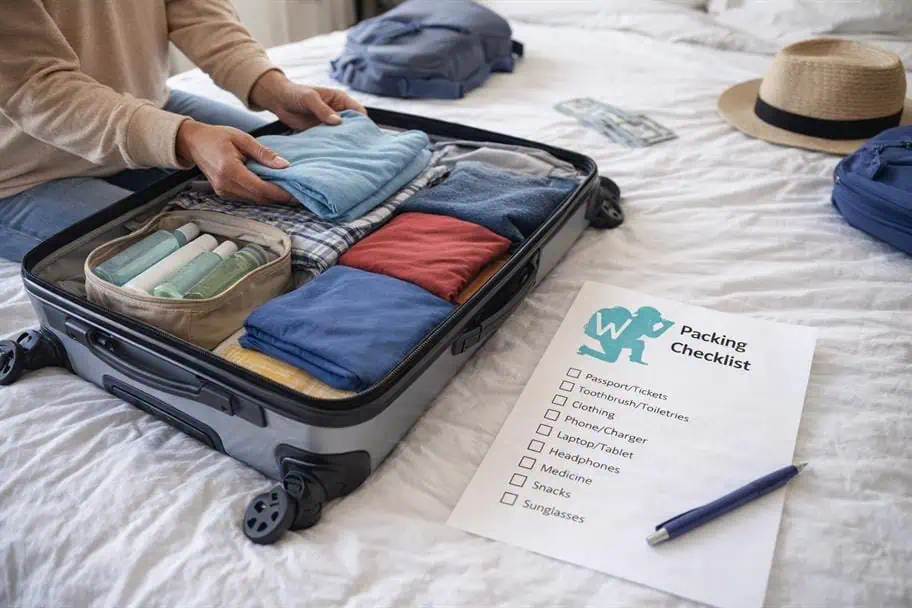
Ginger chews or ginger tablets
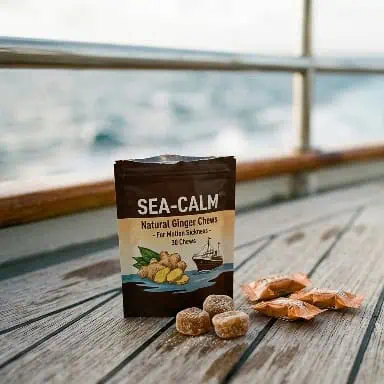 |
Ginger is one of the most reliable natural remedies for calming an unsettled stomach at sea. Whether you prefer chews or tablets, ginger helps reduce nausea by soothing the digestive system and easing motion‑related discomfort. It’s easy to take throughout the day and works well as a first‑line option for mild symptoms. Check the recommended option below to find a traveler‑friendly version to pack. |
| View Recommendations on Amazon.com | |
Motion‑sickness medication
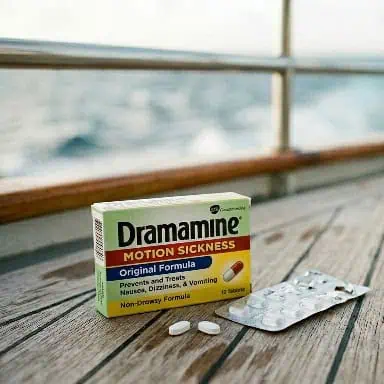 |
Over‑the‑counter motion‑sickness medications like dimenhydrinate or meclizine can be extremely effective for preventing nausea before it starts. These medications work by calming the inner ear and reducing the sensory conflict that triggers seasickness. They’re especially helpful on rougher days at sea or for travelers who know they’re prone to motion sickness. See the recommended option below for a reliable choice to bring on your cruise. |
| View Recommendations on Amazon.com | |
Scopolamine patch
 |
For travelers who want long‑lasting protection, the scopolamine patch is one of the most powerful tools available. Worn behind the ear, it slowly releases medication that helps prevent dizziness and nausea for up to three days. It’s ideal for multi‑day cruises or anyone who has struggled with severe motion sickness in the past. Check the recommended option below if you’re considering adding this to your packing list. |
| View Recommendations on Amazon.com | |
Sea‑Bands or acupressure wristbands
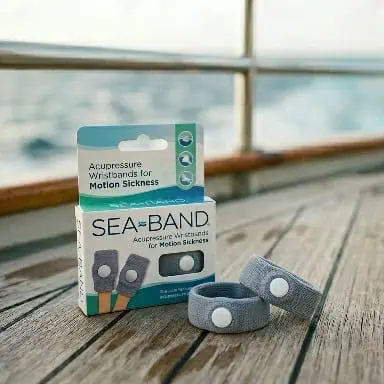 |
Sea‑Bands and other acupressure wristbands offer a drug‑free way to reduce nausea by applying gentle pressure to the Nei‑Kuan point on your wrist. Many travelers find them surprisingly effective, especially when used at the first sign of discomfort. They’re lightweight, reusable, and easy to wear throughout the day. Look at the recommended option below to choose a comfortable pair for your trip. |
| View Recommendations on Amazon.com | |
Electrolyte packets
 |
Electrolyte packets help keep your body balanced and hydrated—two key factors in reducing seasickness. When nausea hits, even mild dehydration can make symptoms worse, so having electrolytes on hand ensures you can replenish quickly. They’re compact, easy to mix with water, and perfect for long days on deck. See the recommended option below for a travel‑friendly electrolyte mix. |
| View Recommendations on Amazon.com | |
Peppermint gum or mints
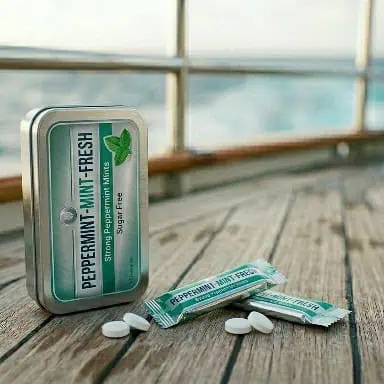 |
Peppermint is known for its calming effect on the stomach, making peppermint gum or mints a simple but effective tool for easing mild nausea. Chewing gum can also help regulate inner‑ear pressure, which may reduce dizziness. These are great to keep in your pocket for quick relief anytime you feel off balance. Check the recommended option below to find a refreshing peppermint choice. |
| View Recommendations on Amazon.com | |
Light Snacks
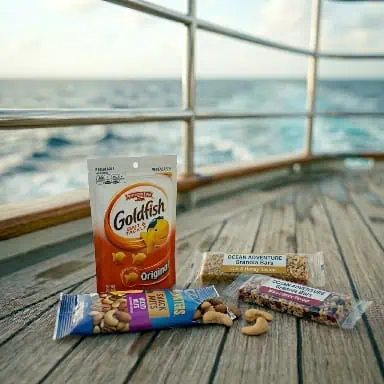 |
Keeping your stomach lightly filled can help prevent nausea from worsening, especially during long stretches at sea. Simple snacks like crackers, pretzels, or plain biscuits are gentle on the stomach and easy to digest. They’re perfect for settling your stomach without overwhelming it. Look at the recommended option below for convenient snack ideas to pack. |
| View Recommendations on Amazon.com | |
Re-Usable Water Bottle
 |
Staying hydrated is essential for preventing seasickness, and a reusable water bottle makes it easy to sip consistently throughout the day. Dehydration can intensify nausea, so having water within reach helps keep your system steady. Choose a leak‑proof, travel‑friendly bottle that you can refill on board. See the recommended option below for a durable bottle to bring along. |
| View Recommendations on Amazon.com | |
Cool compress or cooling towel
 |
A cool compress or cooling towel can provide quick relief when nausea starts to build. Applying coolness to your neck or forehead helps reduce dizziness and can calm your body’s stress response to motion. These towels are lightweight, reusable, and easy to pack. Check the recommended option below to find a compact cooling towel for your cruise. |
| View Recommendations on Amazon.com | |
Comfortable clothing layers
 |
Wearing breathable, comfortable layers helps regulate your body temperature—an important factor in managing seasickness. Overheating can make nausea worse, so having lightweight layers you can easily adjust keeps you feeling steady and comfortable. Choose moisture‑wicking fabrics that help you stay cool on deck. See the recommended option below for travel‑friendly clothing layers. |
| View Recommendations on Amazon.com | |
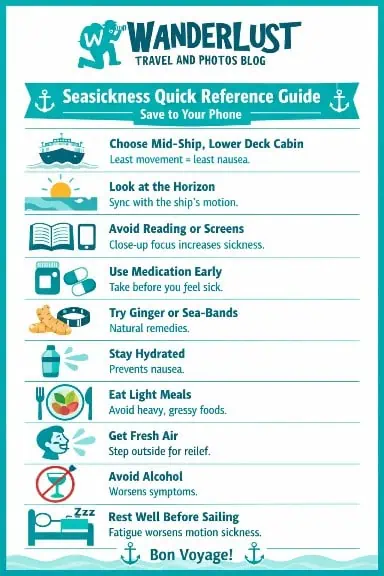
Seasickness Prevention Quick Reference Guide
A handy guide can make all the difference when you’re out on the water and need fast, reliable ways to steady your stomach. This printable quick‑reference sheet pulls together the most effective tips to avoid seasickness into a simple, easy‑to‑save format you can keep on your phone or pack with your cruise documents. It’s designed to give you instant reassurance and practical steps whenever the waves get a little rough.
View Printable Quick Reference Guide
Don’t Forget to Subscribe to My Adventures!

Let Me Help You Save On Your Next Adventure!
‘Start Exploring Today’ Merchandise Available Now!
 |
 |
 |
 |
 |
 |
 |



















Leave a Reply