Canada Travel
LAST UPDATED: 11/6/25 – Canada Travel Resources
Canada is home to some of the most stunning tourist sites in the world, offering travelers a diverse range of experiences. From Banff National Park’s breathtaking natural beauty to Montreal’s vibrant cultural scene, there’s something for everyone. The historic architecture of Quebec City and the stunning scenery of Vancouver Island further add to the allure of this majestic country. In preparing for your Canada travel, thorough planning is essential to ensure a smooth and enjoyable experience.
It is essential to research the various travel destinations within Canada, as the required travel documentation, accommodation options, and transportation logistics are vital. Moreover, gaining insight into local customs, traditions, and activities will enhance the overall travel experience. Canada is an expansive country with diverse landscapes and cultural experiences, so careful planning and consideration of individual preferences is paramount.

Please use this Canada travel page as you plan your next adventure. To help you navigate the information I have included on this page, I have provided a quick navigation menu for you to use below. This will make it fast and easy for you to see which top destinations I recommend, which popular parks and destinations in Canada you should consider visiting, and links to all of the travel guides, itineraries, and packing articles I have written to help you plan your adventure.
I have also included some key information you will need when planning your travel to Canada. Information such as the languages spoken, the currency used, emergency contact numbers to be aware of, VISA and passport considerations, required vaccinations, and important driving information (if you plan on driving while on your visit).


Top Things to See
Before you start planning your Canada travel, check out my gallery of the top things to see in the country below for some inspiration. There is so much to see and do in the country, so you won’t want to miss out on the top sights!

Banff National Park

The Bay of Fundy

Cape Breton Island

Churchill Polar Bears
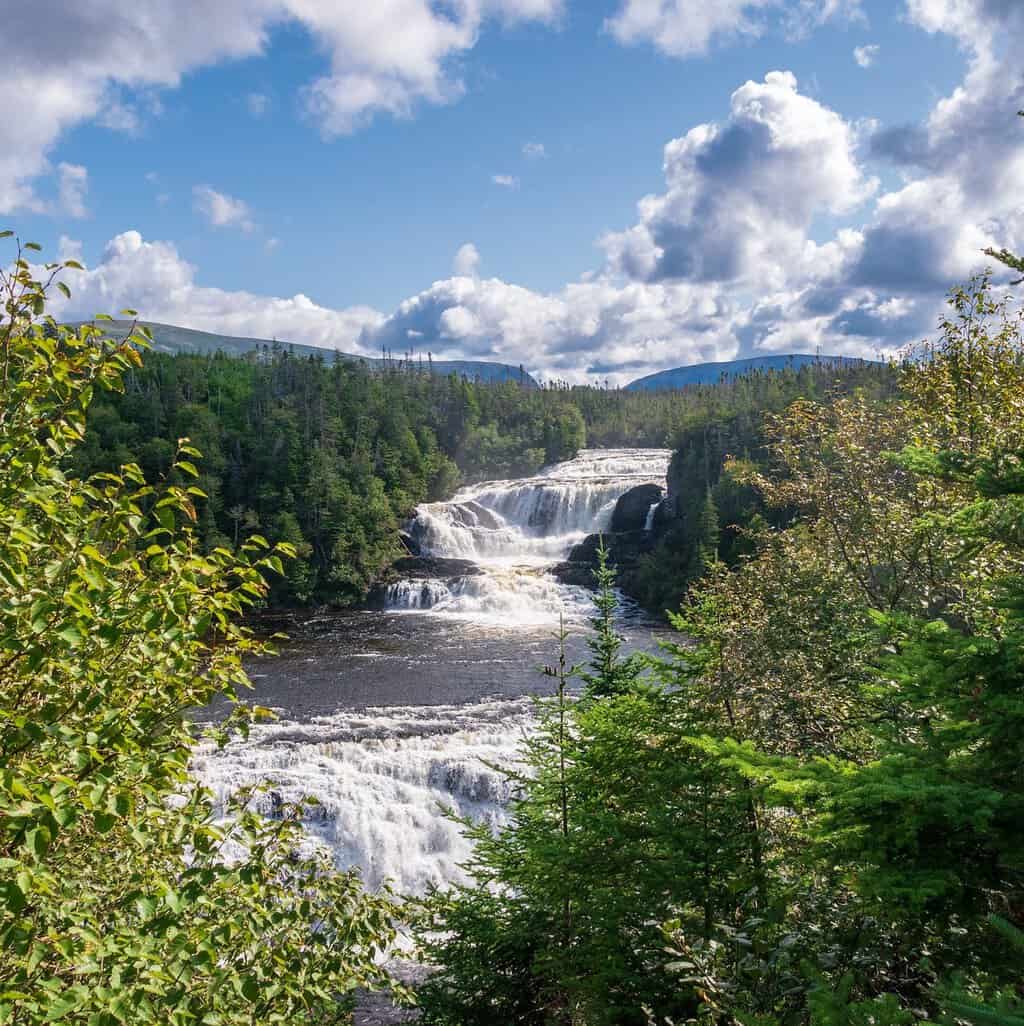
Gros Morne National Park

Niagara Falls

Old Quebec City

Vancouver Island

Whistler, British Columbia
Popular Cities

As you start planning your Canada travel, you will want to familiarize yourself with the country’s largest and most popular cities (which are not always one and the same).
This is not only to see if you would like to visit and tour these cities, but also because they will typically be your ports of entry and transportation hubs as you visit them on your trip. To help you with this, I have included a map of some of the key cities within Canada that you will want to become familiar with below.

If you are looking for some additional destinations to see in your Canada travel, make sure you check out my article on the top 20 must-visit places to see in Canada linked below.

Languages Spoken
According to the Statistics on Official Languages Spoken in Canada, the two primary languages spoken in the country are English and French. Depending on the area of Canada that you are visiting, the primary language may be English, French, or an indigenous language. To help you better understand which languages are spoken in which regions of Canada, I have provided a map of the languages spoken in Canada for you to review below.

Important Note: According to the author of the map, it only shows the mother tongues. While in some big cities, there is a high percentage of other languages spoken, most of those immigrants speak either English or French fluently as a second language.
Currency

The officially recognized currency in Canada is the Canadian Dollar (Symbol: $ and Code: CAD). Canadian bank notes come in $5, $10, $20, $50, and $100 denominations. Most ATM machines (cash machines) will dispense currency in combinations of $10, $20, $50, and $100 bills.
In addition, you may also receive change in the form of coins when making purchases with Canadian Dollars. 100 cents (c) is equal to one Canadian dollar. The common denominations of Canadian coins include 1c ($0.01), 5c ($0.05), 10c ($0.10), 25c ($0.25), 50c ($0.50), $1, and $2 coins.
Power Adapters Required

One of the most overlooked aspects of international travel is ensuring you have the proper power adapters. You may or may not be aware that both the voltage and the type of outlet available differ widely from one region of the world to the next. If you aren’t prepared, you won’t be able to charge your electronic devices as you travel.
Even worse, you may damage or even destroy your electronic devices if you don’t have the right adapter with a voltage converter. Electricity supplies worldwide can vary from anything between 100V and 240V. It can be extremely dangerous to use an electrical appliance that is rated at a voltage different from the supply.
To ensure that this doesn’t happen to you, I have included some critical information on the electrical system in Canada for you to review below. This includes what types of international power adapters you should bring with you on your trip.
Electrical Voltage in Canada
In Canada, the voltage of the electrical supply is 120V. This is the same voltage used in the United States. If you have an appliance that is single-voltage rated, the voltage rating of the device must be 120V for you to use it without a voltage converter. When shopping for a travel power adapter, it is important to confirm that the adapter you choose has a voltage converter included and isn’t just an adapter.
A power adapter will change the type of plug from one type to another so that you can plug into different outlets. However, a simple power adapter will not change the voltage of the supply to the voltage used by the devices you brought from home (220V-230V outside Canada and the United States). To do that, you will need a travel power adapter with a voltage converter.
Electrical Outlets in Canada
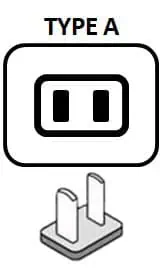
In Canada, the two types of electrical plugs that are used are Type A and Type B. The Type A plug is the type with two parallel flat pins. Meanwhile, the Type B plug has two parallel flat pins and a grounding pin. Please see the illustrations of the Type A and Type B plugs below for a better understanding of what they look like. These are the same plugs that are typically used in the United States.

Emergency Contact
In case of an emergency when traveling in Canada, dial 9-1-1 from any telephone to reach the local emergency services.
Visa, Passport, and Immunization Info

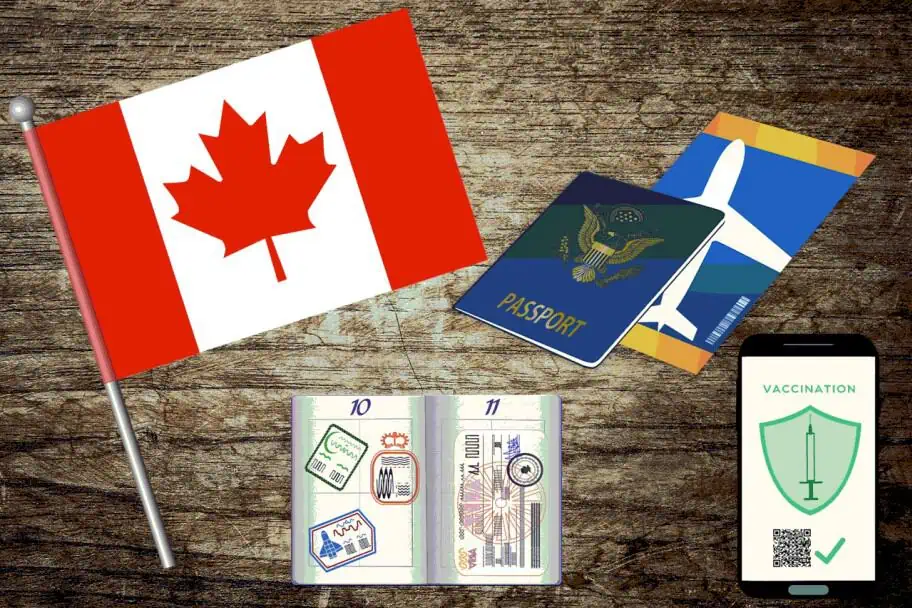
Before booking your Canada travel, you will want to be sure that you meet all of the necessary passport, VISA, and immunization requirements to ensure you will be allowed into the country. To assist you, I have listed the requirements you will need to consider below for you to review.
Passport Validity
To be allowed into Canada, your passport must be valid at the time of entry. Please note that citizens of the United States must have their passports to enter Canada. You can no longer enter the country with just a birth certificate.
VISA Requirements
In addition to your passport, one of the most important entry requirements that you will need to consider before traveling to Canada is the tourist VISA requirement. Depending on which country you are from, you may or may not need to apply for a tourist VISA to visit Canada. The following sections outline the Canadian tourist VISA requirements and how to apply.
Important Note: If you have been convicted of a felony, you may be denied entry into Canada without written consent from the Canadian government. Travelers who have been convicted of driving under the influence are typically barred from entering Canada for 10 years after a DUI conviction.
Travelers from the United States
Citizens of the United States can visit Canada for up to 6 months without a VISA. If you plan to stay in Canada for over 6 months, you must apply for a VISA.
VISA-Exempt (eTA Eligible) Travellers
If you are a passport holder from one of the following countries, you will not need a VISA to stay in Canada for up to 6 months. All you will need to do is register for an Electronic Travel Authorization (eTA) online before flying to Canada. If you are a passport holder from a country listed below and will be visiting Canada by land or sea, no eTA authorization is required.
 |
Andorra |  |
Cyprus |  |
Monaco |
 |
Australia |  |
Czechia |  |
Netherlands |
 |
Austria |  |
Denmark |  |
New Zealand |
 |
Bahamas |  |
Estonia |  |
Norway |
 |
Barbados |  |
Finland |  |
Papua New Guinea |
 |
Belgium |  |
France |  |
Poland |
 |
United Kingdom |  |
Germany |  |
Portugal |
 |
Anguilla |  |
Greece |  |
Romania * |
 |
Bermuda |  |
Hong Kong **** |  |
Samoa |
 |
British Virgin Islands |  |
Hungary |  |
San Marino |
 |
Cayman Islands |  |
Iceland |  |
Singapore |
 |
Falkland Islands |  |
Ireland |  |
Slovakia |
 |
Gibraltar |  |
Israel ***** |  |
Sloveni |
 |
Montserrat |  |
Italy |  |
Solomon Islands |
 |
Pitcairn Island |  |
Japan |  |
Spain |
 |
Saint Helena |  |
South Korea |  |
Sweden |
 |
Turks and Caicos |  |
Latvia |  |
Switzerland |
 |
Brunei |  |
Liechtenstein |  |
Taiwan ** |
 |
Bulgaria |  |
Lithuania |  |
United Arab Emirates |
 |
Chile |  |
Luxembourg |  |
Vatican City State *** |
 |
Croatia |  |
Malta |
| * Electronic Passports Only. |
| ** Passport must be issued by the Ministry of Foreign Affairs in Taiwan and must include a personal ID number. |
| *** Must have a passport or travel document issued by the Vatican. |
| **** Must have a passport issued by Hong Kong SAR. |
| ***** Must have a national Israeli passport. |
All Other Travelers
If you aren’t a citizen of the United States or a citizen of a country that qualifies for eTA VISA-exempt status, you will need to apply for a visitor VISA before booking your travel to Canada.
Immunization Requirements
Important Note: I am not a medical doctor and don’t have medical experience. The information provided in this section is a summary of information that I got from the Centers for Disease Control and Prevention in the United States for travel to Canada. I am providing you with this information to help bring awareness of the necessary vaccinations to you, but consultation with my guide should not replace a discussion about your travels with your doctor or a travel medical clinic.
One of the most important, and yet most often overlooked, aspects of travel is the necessary vaccinations that are required or recommended to keep you safe and healthy when you travel. Before you depart for Canada, you are going to want to make sure that you have all of the proper vaccinations. For your convenience, I have summarized the CDC’s recommendations on vaccines and healthcare for travelers visiting Canada for you to review below.
Routine Vaccinations
The following routine vaccinations are recommended for anyone who will be traveling:
- Measles Mumps Rubella (MMR)
- TDAP (Tetanus, Diphtheria & Pertussis)
- Chickenpox
- Shingles
- Pneumonia
- Influenza
- Meningitis
- Polio
Recommended Travel Vaccinations for Canada
In addition to the routine vaccinations above, the following are additional vaccinations you may want to consider for Canada:
- Hepatitis A
- Hepatitis B
Customs and Currency Restrictions
In addition to the other entry requirements for Canada, you also need to make sure you understand and comply with the country’s customs and currency restrictions. For your convenience, I have highlighted these restrictions for your review below. More in-depth information on the customs restrictions can be found on the VisaHQ website for Canada Travel.
FREE IMPORT
The following items are considered free-import items when entering Canada, but with limits (as described below).
- Personal items, such as clothing, camping and sports equipment, cameras, personal computers, cameras, and other items for personal use.
- You must declare all goods with CBSA upon entry into Canada. If you declare goods upon entry and leave with them on exit, you won’t have to pay a duty or taxes on them. However, to qualify, these goods cannot:
- Be used by any resident of Canada.
- Be used by a business based in Canada.
- Be given as a gift to a Canadian resident.
- Or disposed of or left in Canada.
- You can bring gifts into Canada duty-free as long as they are valued at CAN$60 or less. If they are valued at more, you will need to pay a duty on the gifts upon entry.
- 1.5 liters (53 imperial ounces) of wine, a total of 1.14 liters (40 ounces) of alcoholic beverages, or up to 8.5 liters of beer or ale. Alcoholic beverages are any beverages with more than 0.5% alcohol by volume. Each province will have different amounts of free allowance for alcohol. You will need to pay a duty on quantities beyond the free allowance. In the provinces of
- 200 cigarettes, 50 cigars, 200 grams (7 ounces) of manufactured tobacco, or 200 tobacco sticks.
Important Notes
- You may be asked to pay a security deposit on goods upon entry into Canada. If this happens, you will be provided with a Form E29B that outlines the goods you brought into the country. Keep this form with you as you will need it when you exit to get your security deposit back.
- The minimum age for consuming alcohol differs by province. The minimum age is 18 years for Alberta, Manitoba, and Quebec; and 19 years for the remaining provinces and territories.
- You cannot bring more than the free allowance of alcohol into Nunavut and the Northwest Territories.
PROHIBITED ITEMS
Before you are allowed into Canada, you will also need to clear customs to be sure you aren’t carrying any prohibited items with you. For instance, travelers are strictly prohibited from bringing the following items into Canada:
- Obscene material.
- Hate propaganda.
- Pornography.
- Used or second-hand mattresses.
- Health products (prescription drugs must be in a prescription bottle).
- Cultural property.
CONTROLLED ITEMS
In addition to these prohibited items, the government of Canada has placed limits on the quantity of other items that can be brought into the country. If you plan to travel with any of the following items when visiting Canada, you will want to plan accordingly so that you do not violate the Canadian entrance requirements:
- Firearms and weapons must be declared upon entry.
- Explosives, fireworks, and ammunition require written authorization and a permit.
- US residents are allowed to operate radio-operated devices and personal radio communication devices without written authorization. If you aren’t a US citizen, you will require written authorization.
- Items imported for commercial use.
Key Phrases
As a part of your Canada travel preparation, you will need to prepare yourself for how they talk in Canada so that you can understand the dialogue as you interact with Canadians. This includes understanding key phrases in both the English-speaking and French-speaking parts of the country.
Important English Phrases to Know
Here are some common phrases that you may need to use while visiting the English-speaking regions of Canada:
COMMON PHRASES
- Good Morning – used to greet people early in the day.
- Good Afternoon – used to greet people during the midday.
- Good Evening – used to greet people late in the day.
- Thank You (or Thanks for short) – used to express appreciation.
- Hello (or Hi for short) – used to greet people.
- Please – Used to express appreciation when asking for something. For instance, “Can you please help me?”.
- Excuse Me – Used to get someone’s attention or to apologize for an interruption. For instance, “Excuse me, can you help me?” or “Excuse me, sorry for interrupting”.
- I Need Help – Used to get assistance.
- Where Is… – Used to ask for the location of something. For instance, “Where is the bathroom”?
- I Don’t Understand – Used to communicate confusion with an explanation. For instance, “I don’t understand what you are asking for”.
- I’m Sorry – Used to express remorse. For instance, “I’m sorry, I didn’t see you”.
- You’re Welcome – Used to show gratitude for being given thanks. For instance, when someone tells you “Thank you” for something you have done, the proper reply is “You’re welcome”.
- Yes – To express an affirmative response. For instance, “Yes, I would like that”.
- No – To express a negative response. For instance, “No, I would not like to go there”.
- I Am (your name\nationality) – To inform someone of who you are or what nationality you are.
- Call An Ambulance – To request medical assistance. You can also dial 9-1-1 for medical assistance.
- Call The Police – To request law enforcement assistance. You can also dial 9-1-1 for medical assistance.
WORDS UNIQUE TO CANADA
- Double Double – Oversized coffee with 2 creams and 2 sugars.
- Washroom – Bathroom or toilet.
- Queue – Line.
- Tap – Faucet.
- Canuck – Canadian person.
- Kerfuffle – Argument or disagreement.
- Beauty – Great person.
- Toque – Knitted hat.
- Klicks – Kilometers.
- What you sayin’ tonight – What are your plans tonight (informal).
- Hang a Larry – Left turn while driving.
- Hang a Roger – Right turn while driving.
- Timmies / Tims / Timbits – The popular Tim Horton’s coffee shop.
- The Rock – Nickname for the province of Newfoundland.
- T Dot / The 6ix – Nicknames for Toronto.
- The Peg – Nickname for Winnipeg.
- Cowtown – Nickname for Calgary.
Important French Phrases to Know
Here are some common phrases that you may need to use while visiting the French-speaking regions of Canada:
COMMON PHRASES
- Bonjour – Hello.
- Oui – Yes.
- Non – No.
- Au revoir – Goodbye.
- Excusez-moi, s’il vous plaît – I’m Sorry.
- Merci – Thank You.
- Bienvenue – You’re welcome.
- Parlez vous anglais? – Do you speak English?
- Je ne parle pas français – I don’t speak French.
- Je ne comprends pas – I don’t understand.
- Peux-tu m’aider? – Can you help me?
- Je m’appelle – My name is.
- Enchanté – Pleased to me you.
- Je viens de … – I come from…
- Comment allez-vous? – How are you?
- Où sont les toilettes? – Where is the restroom?
- Où est…? – Where is…
- C’est combine? – How much is it?
- Quoi? – What?
PHRASES UNIQUE TO QUEBEC
- Guichet – ATM Machine.
- Dejeuner – Breakfast.
- Diner – Lunch.
- Souper – Dinner.
- Terrace – Patio.
- Kay-Bec – Quebec.
Driving Info

In Canada, driving can be an exciting way to explore the diverse landscapes of this enormous country. However, it’s important to familiarize yourself with the rules and tips for a safe and enjoyable journey. To help prepare you for driving in this beautiful country, I have included some highlights of Canada’s driving rules for you to review on this Canada travel page below.
Driving License and Permit Required
Although you can drive for a short time in Canada with your foreign driver’s license, it is strongly recommended that you get an International Driver’s Permit (IDP) before you visit. The IDP will translate your foreign driver’s license information into English and French and allow you to be confident that you are driving legally while in Canada. The period of validity for an IDP varies by province and is listed below for you to review.
- Alberta: 90 days.
- British Columbia: 90 days.
- Manitoba: 3 months.
- New Brunswick: No validity period.
- Newfoundland and Labrador: 3 months.
- Northwest Territories: No validity period listed.
- Nova Scotia: 90 days.
- Nunavut: No validity period listed.
- Ontario: 60 days.
- Prince Edward Island: 4 months.
- Quebec: 6 months.
- Saskatchewan: 90 days.
- Yukon: No validity period listed.
Proof of Insurance Coverage
Important Note: To drive in Canada, you must have proof of auto insurance with you at all times when you drive. It doesn’t matter if you own the car, are borrowing from someone else, or are renting. You are not legally allowed to drive without insurance.
Renting a Car in Canada
To rent a car in Canada, you must be 21 years of age or older. Drivers between the ages of 21-24 may need to place a larger security deposit down when renting a car than drivers 25 years of age or older.
There are many major car rental companies active in Canada, including Avis, National, Hertz, Alamo, and Budget Rental. Most large airports include rental car sections, making it convenient to rent a car after flying into Canada.
Canada Driving Rules and Regulations
The last pieces of driving advice I have for you in this Canada travel guide are some highlights of the rules and regulations for driving in the country. Most of their driving rules will sound familiar as they are very similar to those in the United States, but it is a good idea to review these rules and regulations before visiting to be safe.
- In Canada, they drive on the right side of the road, and the driver’s seat is on the left side of the vehicle.
- Speed limits are posted in metric units in Canada. Some common speed limits include:
- 50 kilometers per hour (31 miles per hour) in cities.
- 80 kilometers per hour (50 mph) on two-lane highways.
- 100 kilometers per hour (62 mph) on most highways.
- Depending on the province you are in, road signs may be in English, French, or both. For instance, road signs in the province of Quebec may be in only French.
- Seat belts are required by law for all passengers. Children must ride in a car seat until they are nine years old or 145 cm tall.
- Many provinces have banned smoking in vehicles if persons under the age of 18 are in the vehicle.
- Cell phones must be in hands-free mode to be used while driving a vehicle in Canada.
- Driving under the influence of alcohol or any other substance is a serious offense punishable by significant fines or jail time in Canada. Drivers are considered to be under the influence with a blood alcohol concentration (BAC) of 0.08 percent or higher.
- In the city of Montreal, you are not allowed to make a right turn on a red light. The rest of Canada allows you to make a right turn on red unless specified otherwise by a road sign.
Relative Guides, Itineraries, and Articles
To assist you as you start to put together your travel plans for Canada, I have provided a comprehensive list of all of my travel guides, travel itineraries, and travel inspiration articles for Canada for you to review below.





Packing and Planning Tips
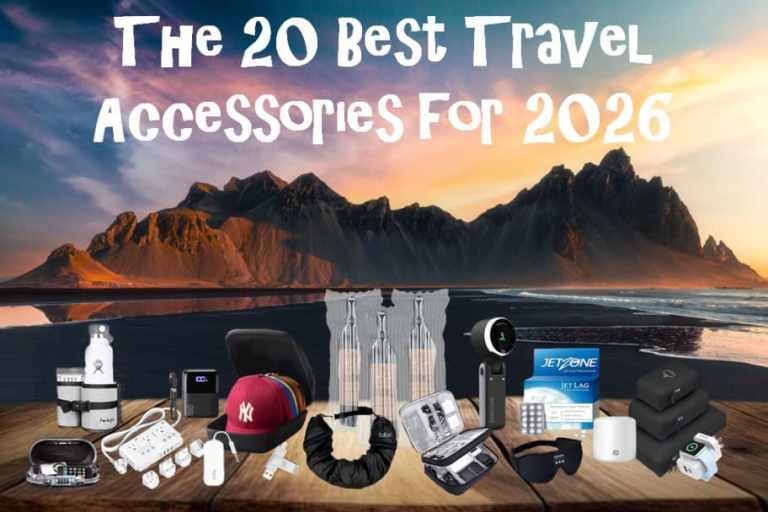
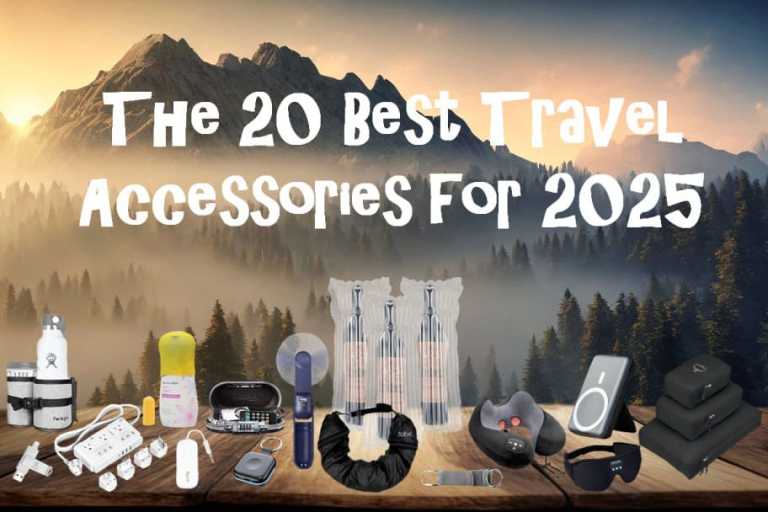
Once you start putting together your Canada travel plans, you may want to reference some of my handy travel packing and planning guides that I have put together. To make it easy to find and access these guides, I have included them for your reference below.






Popular Tours
When it comes to exploring the diverse beauty of Canada, travelers have plenty of amazing tours to choose from! Whether you’re looking to experience the breathtaking landscapes of the Rocky Mountains or the vibrant culture of cities like Toronto and Vancouver, there’s something for everyone. No matter what your interests are, these tours promise unforgettable experiences that will leave you with cherished memories of Canada’s unique charm. So pack your bags and get ready for an adventure of a lifetime!
Don’t Forget to Subscribe to My Adventures!

Let Me Help You Save On Your Next Adventure!
‘Start Exploring Today’ Merchandise Available Now!
 |
 |
 |
 |
 |
 |
 |

You must be logged in to post a comment.