LAST UPDATED: 4/29/26 – Essential Backpacking Safety Steps
This article on my key Backpacking Safety Steps contains references to products on my Amazon Store site. I may receive a commission when you purchase these products from my store, though at no additional cost to you. I hand-pick and recommend only the products that I am either familiar with or comfortable recommending.
When I first got into backcountry hiking and backpacking, my family thought I was crazy—and some still do. Every year, hikers get lost, injured, or worse, often because they head into the backcountry unprepared. While even experienced hikers can have accidents, most tragic stories involve people who weren’t ready for the conditions they faced.

No amount of preparation can eliminate all risk, just as safe driving can’t guarantee a crash-free life. But taking smart precautions dramatically improves your odds. The same is true in the wilderness: thoughtful planning and good habits go a long way toward keeping you safe.
In this backcountry safety guide, I outline ten practical backpacking safety steps that meaningfully increase your chances of staying safe on the trail. Some come from years of experience, others from fellow hikers, and many are simply common sense—but every one of them has the potential to save your life.
Don’t Depend on a Quick Rescue in the Backcountry
If you are banking on being rescued quickly, should something go wrong when hiking in the backcountry, you are really setting yourself up for failure before you hit the trail. While search and rescue teams are absolutely incredible at what they do, there are certain areas in the backcountry of the United States and abroad that are just so remote that they are impossible to get to quickly. When you set out to hike in the backcountry, your preparation should not depend on a quick rescue should something go wrong.
Always Be Prepared for the Worst
When I hike in remote regions, I prepare for the worst and hope for the best. If something happens while I’m backcountry hiking, I assume no one will realize I’m missing for at least 24 hours, and searches often don’t begin until late in the day. If rescuers start sooner, great — but I never count on it.
Depending on how remote the area is, it can take another 8–24 hours for rescuers to even reach the starting point of their search. Some places are accessible; others require a full day of travel just to get there.
That means it could be nearly two days before anyone reaches the area where I’m stranded. If I’m not prepared to shelter for a few nights and don’t have enough food and water, things can deteriorate quickly — especially if I’m injured. This is why it’s essential to follow these backpacking safety steps with realistic expectations in mind.
1. Make Sure You’re in Physical Shape
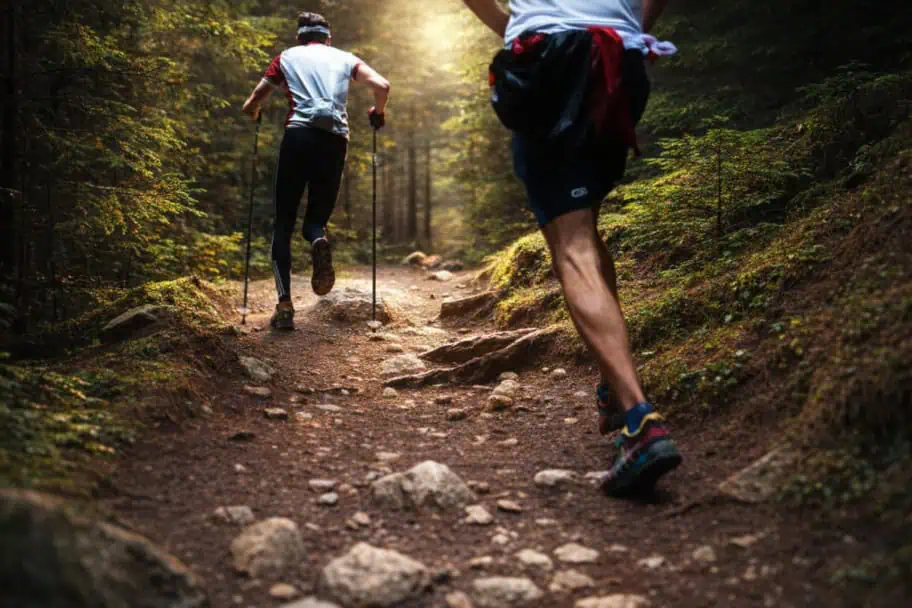
Physical conditioning is the first of my ten backpacking safety steps because I’ve seen too many hikers struggle — sometimes to the point where I worried for their safety. Many people underestimate how demanding the backcountry can be. On some trails you can get away with being out of shape, but on others, poor conditioning can become genuinely dangerous.
If you’re planning a route rated “difficult” or “strenuous,” take that as a clear warning: you’ll need strong endurance. You don’t have to be an elite athlete, but you should at least be capable of running the trail’s distance without stopping. You won’t be running on the hike, of course, but the elevation gain, scrambling, and rough terrain will test your stamina just as much.
Start Running to Build Endurance
One of the most important ways to prepare your body for the physical demands of backcountry hiking is to run regularly. Not only will running strengthen your legs, hips, and core muscles that you will rely on when backcountry backpacking, but it will also help increase your stamina and endurance so that you don’t get as fatigued on the trail. Here is the running regimen that I follow when training for backcountry hiking.
Running Regimen to Prepare for Backcountry Backpacking
| Day of the Week | Distance | Running Pace |
|---|---|---|
| Sunday | 2-3 Miles | Easy |
| Monday | Rest Day | Rest Day |
| Tuesday | 3-5 Miles | Moderate |
| Wednesday | 3-5 Miles | Fast |
| Thursday | 3-5 Miles | Easy |
| Friday | Rest Day | Rest Day |
| Saturday | 10-15 Miles | Easy |
Do Weight Training Designed for Backpacking
Sticking to a workout schedule can be trying. There is a reason why gym memberships skyrocket after the New Year, only to quickly trail off as the year progresses. To keep myself motivated, I tell myself that it is better to go through the pain now than while I am on a remote backcountry trail and am dangerously exhausted because I didn’t prepare myself physically. In addition to running regularly, following one of these great workout regimens for backpackers will help make sure you are ready for the strain of backcountry backpacking.
- REI – How to Train for Backpacking
- Backpacker.com – 11 Bodyweight Exercises to Train for Hiking
- Outsideonline.com – How to Build and Maintain Thru-Hiking Fitness
2. Research the Trail

One of the best ways to be prepared for a backcountry backpacking trip is to know exactly what you are getting yourself into on the trail you plan to hike. There are a few things worse than running into an unexpected obstacle that you aren’t prepared to overcome while hiking in the backcountry.
Whether you are missing gear you didn’t know you would need, find out the trail is longer and harder than you anticipated, or expect to find water in a landscape devoid of it, not understanding the trail you are hiking beforehand can put you in real danger. Here are two backpacking safety steps that you can take to ensure you understand the trail you will be hiking beforehand.
Use the AllTrails App to Review the Trail Map and Stats
One of the easiest ways to get familiar with a trail before you hike it is to look it up on the AllTrails app or website. The maps and key stats give you a quick sense of the trail’s difficulty and what you’re likely to encounter. For example, the Reflection Canyon trail screenshot above came straight from AllTrails.
Focus on the core stats: Trail Type, Distance, and Elevation Gain. These alone tell you a lot. If a trail climbs thousands of feet in a short distance, you can safely assume it’s going to be steep. The topographical map adds another layer of insight by showing the terrain you’ll be moving through — whether you’re climbing a mountain, following a ridge, or weaving through canyons and washes. This helps you plan the gear you’ll need.
Finally, read the user comments. The backcountry community is small but generous with detailed, honest trail reports. Their experiences can alert you to obstacles, conditions, and challenges you might otherwise miss.
Watch YouTube Videos of Hikes to Get Acquainted with the Trail
Another great way to collect invaluable information about the trail that you plan to hike is to do a YouTube search for others who have documented their hike of the trail. Looking at trail information is a great start, but actually seeing what the trail looks like and some of the obstacles that you will have to overcome on the trail can be hugely beneficial.
For instance, when I was prepping for my backcountry hike to Reflection Canyon, I found the video linked below to be very helpful to me. It showed me what type of terrain I would be crossing and what type of gear others were bringing with them on the hike.
3. Learn How to Navigate

It is one thing to hike on a marked trail where you always know where you are going, but sometimes in the backcountry, you cannot rely on all trails being marked. With unmarked trails, you are lucky if there are footprints from previous hikers to follow.
In many cases, there is absolutely nothing for you to go on except for your knowledge of the terrain and your ability to navigate yourself. This is why understanding how to properly navigate is one of the critical backpacking safety steps. Without these skills, you can easily get lost in the backcountry.
Take a Class from REI
For those who are just starting to get into backpacking and have yet to log a lot of miles in the backcountry, one of the easiest ways to begin learning about navigation is through a class. REI offers an incredible Introduction to Map and Compass Navigation Class that I would strongly recommend to anyone interested in learning the basics of navigation.
Practice Navigating on Easy Trails
Once you have learned the basics of navigation, one of the best ways to sharpen these skills is to practice doing some navigation on easy trails where you know you won’t get lost. This could be a nearby trail that you have hiked many times in the past or a new trail that is well-marked so that you know you won’t get lost. As you get better at navigating, you can increase the difficulty of these practice runs until you are certain you are ready for the backcountry.
4. Bring the Right Gear With You
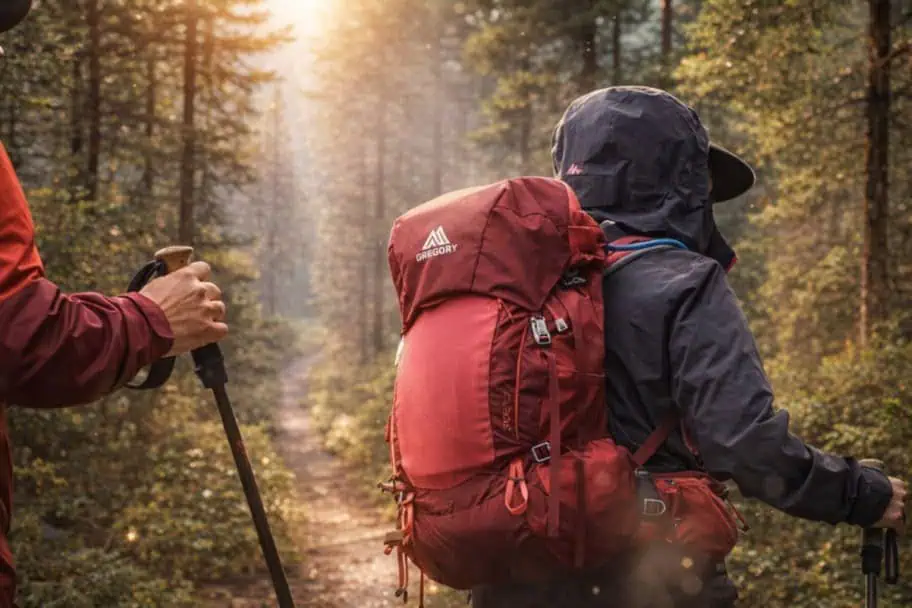
Another critical one of the backpacking safety steps is making sure you have the right gear for the conditions you’ll face. If there’s any chance you’ll spend a night in the backcountry, you need proper camping essentials — a tent, sleeping bag, sleeping pad, and other core items that keep you warm, dry, and safe.
Hiking poles are also worth carrying, especially on steep or uneven terrain. They give you extra points of contact and dramatically reduce slips and balance issues. I’ve lost count of how many times poles have kept me upright on difficult trails.
If you’re unsure what to bring, my Complete Backpacker’s Packing Guide (linked below) walks through everything in detail. As you pack, pay close attention to your total weight. One of the biggest mistakes new backpackers make is carrying a pack that’s far too heavy for the trail ahead.
| READ MORE: |
 |
| Complete Backpacker’s Packing Guide |
Don’t Carry Too Much Weight

When you start packing for a backpacking trip, the natural instinct is to try to bring everything that you think you will possibly need with you. While that might seem like a good idea, it can actually be dangerous to carry a bag that is too heavy. Some backcountry trails are extremely remote. For instance, if you need assistance while hiking in the backcountry of the Maze District in Canyonlands National Park or the Grand Staircase-Escalante National Monument in Utah, it can take up to three days for rescuers to reach you.
There is Such a Thing as Too Much Gear
Carrying too much weight is one of the easiest ways to put yourself in danger on a backcountry trip. A heavy pack throws off your balance, which becomes risky on steep trails, rocky scrambles, or climbs. It also drains your energy faster, making it harder to think clearly or even continue — a serious problem when help may be days away.
That’s why one of the key backpacking safety steps is keeping your pack weight under control. As you choose gear, keep weight in mind from the start. A good rule of thumb is that your pack should be no more than 20% of your body weight — so if you weigh 200 pounds, aim for a pack under 40 pounds. If you want to cut weight further, I’ve included some of my favorite tips below.
Tips for Reducing Your Backpack Weight
- Avoid organizing things in bags within your backpack. These bags have a weight, and every ounce matters.
- When you are shopping for gear, make sure you shop for gear that is as light as possible while still being functional.
- Divide the common gear amongst your group. If you are sharing a tent and one hiker is carrying the tent, the other hiker(s) can carry other gear for that hiker, such as water.
- Bring a water purification system with you and purify water along the trail instead of carrying all of your water with you. Make sure you will be able to find water along the trail before deciding to do this.
5. Take Enough Food and Water

Arguably, the most important of the backpacking safety steps that I can review with you is to ensure that you have an adequate supply of food and water for your hike. One of the easiest ways to run into trouble on a backcountry trail is to run out of water.
This is especially true if you are planning on hiking in extreme heat or a landscape that doesn’t provide much shelter from the sun. To help you prepare for your backcountry hike, here are some general rules to follow when it comes to managing the food and water for your hike.
Make Sure You Have Enough Water

Many new backpackers underestimate how much water they’ll need, but it’s one of the most critical backpacking safety steps. Some items are luxuries and others are conveniences — but water is a necessity. Forgetting a snack or cookware is annoying; failing to bring enough water can put you in real danger.
A good rule of thumb is 1 liter of water for every two hours of hiking per person. So if two people plan a ten‑hour hike, you’ll need about ten liters total. And remember: 1 liter weighs roughly 2.21 pounds, so factor that weight into your pack planning.
For longer routes, you can carry a water treatment device to safely use natural water sources. Just make sure you research water availability ahead of time — never assume you’ll find water on the trail.
Plan Your Food Properly

Food is nearly as important as water on a backcountry hike, and managing it well is one of the most overlooked backpacking safety steps. Long, strenuous days burn a huge number of calories. Without enough fuel, you’ll tire quickly at best — and at worst, you may become too weak or unfocused to make safe decisions. Poor judgment in the backcountry can snowball fast.
Plan on packing 1.5–2.5 pounds of food per person per day, which works out to roughly 2,500–4,500 calories. Choose foods that are calorie‑dense, nutritious, lightweight, and shelf‑stable.
Dehydrated backpacking meals are a great option. They’re light, last a long time, and are designed to give you the nutrients you need on the trail. Just boil water at camp, pour it in, and you’ve got an easy, filling meal.
6. Wear the Right Clothes
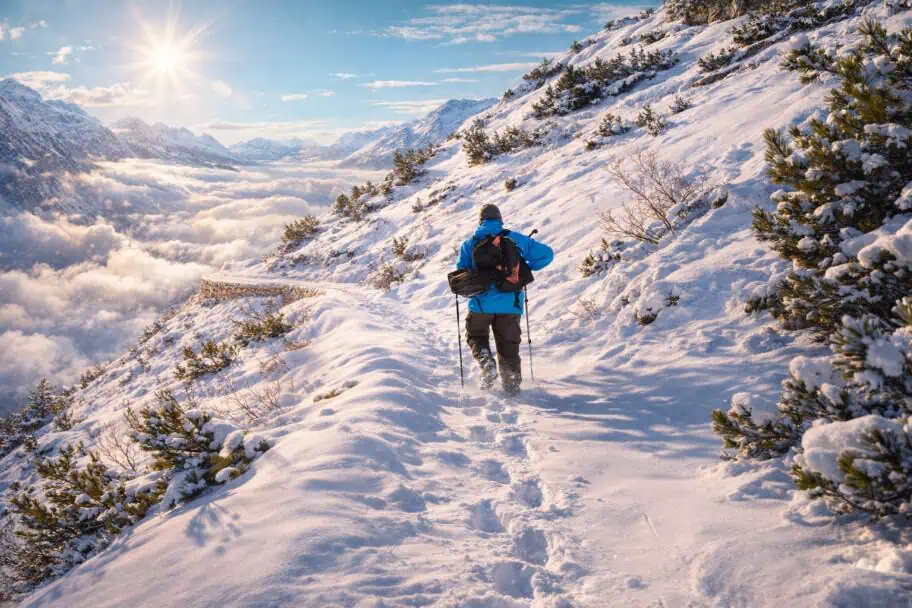
In addition to having enough water, one of the most important backpacking safety steps that you will need to pay attention to when preparing for any backcountry hike is having the proper clothing with you. Without the proper clothing, you can leave yourself dangerously exposed to the elements, which can be deadly. Seems like every year, hikers die on trails because they get caught in bad weather and don’t have the proper clothing with them to survive.
For instance, if you are going to be hiking on a trail with a lot of elevation gain, the temperatures during your hike are likely to fluctuate greatly. While you might be just fine in a T-shirt and shorts at the start of your hike, the temperatures at higher elevations might be much colder. To help you be sure that you always have the proper clothing with you for your backcountry hikes, here are some tips that I would keep in mind.
Understand the Weather and Trail Conditions Before Your Hike
Understanding the conditions you’ll face is essential before choosing what clothing to pack, and it’s one of the most important backpacking safety steps. Start by learning the basics of the environment you’ll be hiking through — typical temperatures, precipitation, shade, and any other factors that affect comfort and safety.
If the trail is hot and exposed, you’ll need breathable layers and sun protection like a hat. If you’ll be at an elevation or in a region known for cold weather, warm layers become critical. Matching your clothing to the environment is what keeps you safe when conditions shift.
When planning a trip, I look at the average highs, lows, and precipitation for the area during the month I’ll be hiking, then check long‑range forecasts for any signs of bad weather. As the hike approaches, I keep monitoring the forecast so I can adjust my gear. If rain, cold, or other harsh conditions are possible, I make sure I’m fully prepared with the right clothing and equipment.
Wear a Moisture-Wicking Base Layer
No matter where I am hiking, I always make sure to wear a moisture-wicking base layer when I am in the backcountry. If the weather is hot, these base layers are breathable and will help keep me cool. If the weather is cold, the moisture-wicking properties of these base layers will prevent me from getting cold by keeping the moisture away from my skin.
When possible, I would avoid wearing cotton as your base layer as it is one of the worst insulating fabrics when wet. I would also suggest that you never wear jeans while on any hike, let alone in the backcountry. Not only do wet jeans provide horrible insulation, but they are also extremely uncomfortable to hike in.
Dress in Layers
One of the best ways to address changing weather conditions and ensure that you are prepared with the proper clothing while hiking in the backcountry is to wear layers during your hike. If you keep a lightweight winter jacket and a lightweight rain jacket in your bag, you can put these layers on should the temperature drop or should it start to rain.
I also like to keep a pair of lightweight down pants in my backpack when I am in the backcountry as well. Down is very light, and these pants keep me warm around camp when I stop for the night. It’s also a good idea to have a lightweight winter hat and some lightweight gloves in your bag as well if you are expecting really cold weather during your hike.
Ensure You Have Dry Clothes to Sleep In
One of the most often overlooked backpacking safety steps that you can take as it relates to the clothing that you wear, is to make sure that you always have dry clothes to sleep in at night. Chances are good that you are going to perspire during your backcountry hike. When you perspire, your base layer will get wet.
If you have a proper moisture-wicking base layer on, it may dry out by the time you go to sleep at night. However, just in case, I like to have a second base layer with me on longer hikes so that I can ensure that I am not going to bed wet and freezing while I sleep.
7. Have the Right Footwear for the Hike
I have spoken a lot about equipment so far in my list of the important backpacking safety steps that you can take when venturing into the backcountry. However, I think one piece of equipment is important enough to warrant its own bullet point on that list.
This piece of equipment is the footwear that you decide to bring into the backcountry. When you are hiking in the backcountry, you depend a great deal on your feet to move you along the trail safely. Sometimes, this includes sections of trail that are very steep, rocky, and even slippery.
Without the right footwear, even a modestly difficult trail can be dangerous. When planning your backcountry hike, please keep the following advice in mind when choosing the footwear to bring on your hike.
Choose the Right Hiking Shoes
When you go on a backcountry hike, an injury that leaves you unable to walk can be a major inconvenience or even dangerous. You will want to make sure that you have the proper footwear with you before setting off on any hike, let alone a multi-day hike in the backcountry. When looking for the right hiking shoes or boots, please keep the following factors in mind:
Factors to Consider When Choosing the Right Hiking Boots
- Keep boots light: Choose lightweight boots (2.2–3.3 lbs / 1–1.5 kg). Heavier boots feel exponentially heavier on long hikes and can slow you down.
- Prioritize traction: Pick boots with a rubber sole and deep lugs to maximize grip and reduce slipping on uneven terrain.
- Support your ankles: Use mid‑to‑high boots for stability on uneven ground. Speed hooks or D‑rings add extra ankle support.
- Ensure proper toe room: When trying them on, make sure your toes don’t touch the front. This prevents toe jamming on descents or scrambles.
- Stay dry and avoid injury: Choose waterproof boots to protect your feet in rain or wet terrain. Wet feet lead to blisters, discomfort, and potential injuries.
Wear Hiking Socks
Taking care of your feet is essential for backcountry hiking, just as it is in the military. When you’re covering long miles, any foot issue can derail your entire trip and put your safety at risk. One of the simplest ways to protect your feet is by wearing the right socks. Avoid cotton — it traps moisture, provides poor insulation, and will leave your feet cold and uncomfortable once they get wet from sweat or stream crossings.
A good pair of wool‑blend hiking socks is a far better choice. They stay warm even when damp, manage moisture well, and are comfortable over long distances. My personal favorite brand is Darn Tough, which has held up incredibly well on tough trails.
Bring Micro Spikes or Crampons if Necessary
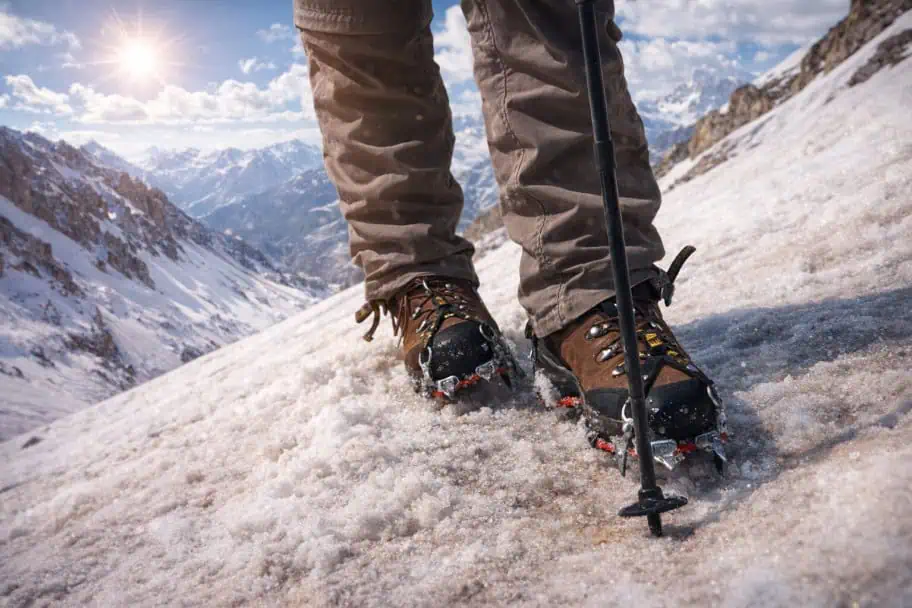
While good hiking shoes and boots provide a great deal of added traction when hiking on trails and scrambling over rocks, they aren’t enough to remain safe in every type of landscape you will find in the backcountry. For hikers who expect to encounter steep, snowy, or icy slopes on their backcountry trail, you will want to bring added traction with you on your hike.
The best gear that you can use to assist with hiking on icy or snowy trails is microspikes or crampons. Both microspikes and crampons fit over your hiking boots and help you with traction while traversing snowy or icy conditions so that you don’t slip.
Microspikes are typically much cheaper and adequate for hiking on snowy or icy trails that aren’t as steep. However, if you plan on climbing in very steep, icy conditions, you may want to consider investing in crampons.
8. Do a Trial Hike to Test Your Gear
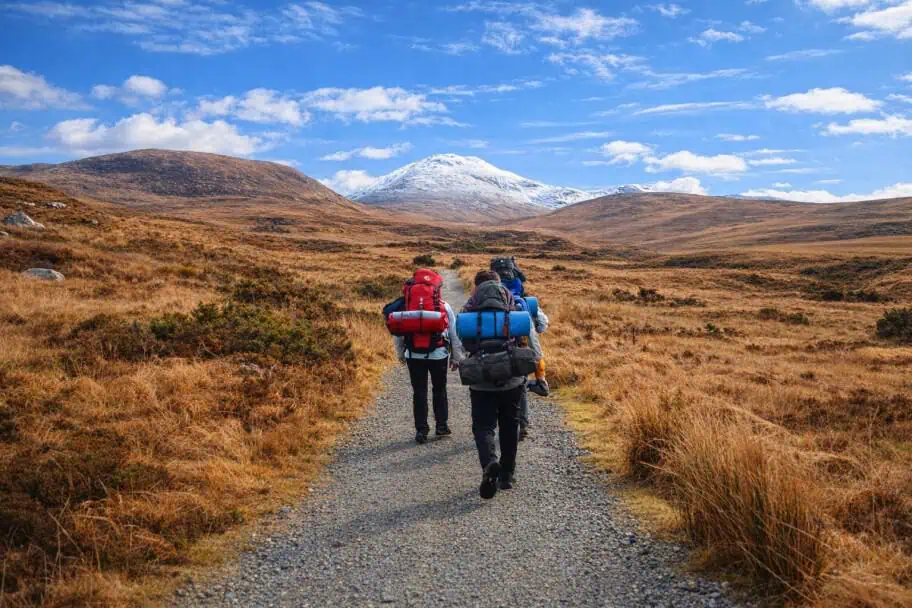
Starting your packing early is one of the simplest and most valuable backpacking safety steps. It gives you time to pack thoughtfully, avoid forgetting essentials, and — just as important — test your gear before you head into the backcountry. For new backpackers, this trial run can be surprisingly eye‑opening.
When I first started, I constantly overpacked. The result was a brutally heavy load and exhausting hikes — dangerous, miserable, and completely avoidable. A short practice hike on an easy local trail helps you gauge whether your pack is too heavy and reveals issues with other gear you plan to bring.
It’s also the perfect chance to break in new boots, test your clothing layers, and practice using items like microspikes or crampons before you’re relying on them miles from help.
9. Tell Someone Where and When You’re Hiking

Letting someone know your plans is the single most important of all the backpacking safety steps. If no one knows where you’re going, when you’re leaving, or when you’re supposed to return, then no one will realize something is wrong — and no one will alert authorities when you don’t come back. If trouble strikes in the backcountry, you need someone at home who can call for help. Sharing your plans can literally be the difference between life and death.
Before you head out, give a trusted person a clear itinerary: where you’re hiking, the route you plan to take, when you’re starting, how often you’ll check in, and when they should expect to hear from you afterward. Also provide the phone numbers they should call if you miss a check‑in. For example, when I hiked to Reflection Canyon in Grand Staircase–Escalante, I gave my family both the ranger station number and the local emergency contact just in case.
10. Bring an Emergency Device
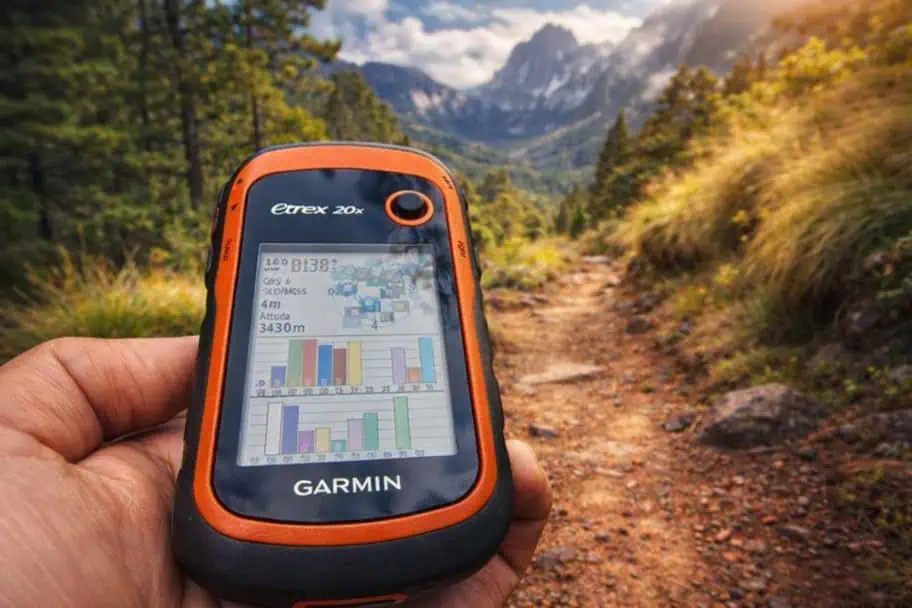
The last of the backpacking safety steps that I want to cover with you today might just save your life someday. If something should happen to you while in the backcountry, chances are that there will be few, if any, people around to assist you. Not only that, but there is likely to be limited to no cell phone service for you to use to call for help. In the event of an unfortunate accident, an emergency GPS device such as a Garmin InReach handheld GPS unit can be a lifesaver.
These devices have a built-in emergency button, which allows you to alert the Garmin International Emergency Response Coordination Center that you are in trouble. This will allow them to coordinate a rescue effort for you. All you need is to be able to view the sky to send out this signal.
Not only that, but the Garmin InReach devices allow your family to track your hiking progress and for you to send pre-formatted and custom messages to contacts from the backcountry. These are just some of the features that make a GPS unit like a Garmin InReach the ultimate backcountry safety device.
Don’t Forget to Subscribe to My Adventures!

Let Me Help You Save On Your Next Adventure!
‘Start Exploring Today’ Merchandise Available Now!
 |
 |
 |
 |
 |
 |
 |

















Great tips!
Thank you so much for reading! Glad you found them helpful!
Great tips, Josh, especially the one about looking at YouTube videos of the hike. Never thought of that but I might do it before I head to Sedona in the spring, even though those are just day hikes. That Garmin device has piqued my interest. It makes me nervous when the husband goes bike packing in the desert West all by himself. I’m going to look into getting this for him before his next trip. Thanks for the useful post!
Thank you!! I appreciate your perspective!! If you look at Garmins, I would suggest the Garmin mini. That’s what I have. You get all the navigation and messaging features the larger device had, you just use them thru an app on your phone that connects to the device via Bluetooth. It still has the same SOS feature for emergencies the larger devices have. Best part is that it is tiny, so it is really easy to carry. Their plans are also great. You can get the emergency plan that is only $15/month, or more expensive plans based on how much messaging you want to do. And you can sign up for month-to-month, so you only have to pay during the months your in the backcountry. Mine has given me so much peace of mind 😄
This is great info. Thanks.
Great tips, always good to have a reminder on hiking safety. Thanks!
Thank you so much for reading Diana! I agree, safety is important!