Chile is one of South America’s most spectacular destinations, and understanding the Chile entry requirements is the first step toward experiencing its dramatic landscapes, vibrant cities, and world‑class wine regions. From the Atacama Desert’s otherworldly terrain to Patagonia’s glacier‑carved wilderness, the country rewards travelers with unforgettable adventures—so starting your trip with the right documentation ensures nothing gets in the way of exploring it all.
Being fully prepared before arrival is essential. Chile enforces clear rules for who may enter, how long they may stay, and what documents must be presented at the border. Travelers who overlook these requirements can face denied boarding, airport delays, or even refusal of entry upon arrival. A smooth trip begins long before your flight, and knowing what Chile expects from visitors helps you avoid unnecessary stress and keeps your journey on track.
This article breaks down every major requirement you need to know before traveling to Chile. You’ll find detailed guidance on passport rules, visa policies, immunization recommendations, customs regulations, currency limits, and other essential entry considerations. With these details in hand, you’ll be ready to plan confidently and enjoy everything Chile has to offer.
Download the Chile Entrance Requirements Checklist
Chile Passport Requirements
One of the most important Chile entry requirements to consider when planning your trip is the country’s passport standards. To enter Chile, your passport must be valid for the entire duration of your stay.
Unlike countries that impose three‑ or six‑month validity rules, Chile only requires that your passport remain valid through your planned departure. However, if your passport expires before you leave, border officials may deny entry even if it was technically valid on arrival.
Travelers should also be aware of several additional passport‑care considerations:
- Damaged or heavily worn passports may be rejected at border control. Tears, water damage, detached pages, or a compromised cover can all lead to refusal.
- Chile does not require a specific number of blank pages, but you may need them if you’re transiting through other countries that do.
- Airline policies may be stricter than Chilean border rules — some carriers enforce a six‑month validity requirement regardless of destination.
- Before traveling, inspect your passport carefully. If it’s close to expiring or shows signs of damage, renewing it early is the safest option.
| Passport Validity | Blank Passport Pages |
|---|---|
| Your passport must be valid for the duration of your stay in Chile. | One Page Required for Entry Stamp. |
Chile VISA Requirements

Depending on your nationality, you may not need to obtain a visa before visiting Chile. Many travelers are visa‑exempt and can enter Chile without a visa as long as they do not exceed the permitted length of stay. Passport holders from countries that are not visa‑exempt must apply for a tourist visa before traveling to Chile.
| VISA‑Exempt Passport Holders | Non‑VISA‑Exempt Passport Holders |
|---|---|
| Not required to obtain a visa before travel. | Must obtain a Tourist Visa before arrival. |
Visa‑Exempt Countries for Chile (Up to 90 Days)
If you are a passport holder from one of the following countries, you are currently not required to obtain a visa before visiting Chile, provided your stay does not exceed the allowed number of days (typically up to 90 days):
 |
Andorra |  |
Guyana |  |
Peru |
 |
Armenia |  |
Honduras |  |
Poland |
 |
Australia |  |
Hong Kong |  |
Portugal |
 |
Austria |  |
Hungary |  |
Romania |
 |
Barbados |  |
Iceland |  |
Russia |
 |
Belarus |  |
Ireland |  |
Saint Lucia |
 |
Belgium |  |
Israel |  |
San Marino |
 |
Bolivia |  |
Italy |  |
Serbia |
 |
Brazil |  |
Jamaica |  |
Singapore |
 |
Bulgaria |  |
Japan |  |
Slovakia |
 |
Canada |  |
Kazakhstan |  |
Slovenia |
 |
Colombia |  |
Latvia |  |
South Africa |
 |
Costa Rica |  |
Liechtenstein |  |
South Korea |
 |
Croatia |  |
Lithuania |  |
Spain |
 |
Cyprus |  |
Luxembourg |  |
St Vincent & Grenadines |
 |
Czechia |  |
Macedonia |  |
St. Kitts & Nevis |
 |
Denmark |  |
Malaysia |  |
Sweden |
 |
Dominica |  |
Malta |  |
Switzerland |
 |
Ecuador |  |
Mexico |  |
Thailand |
 |
El Salvador |  |
Monaco |  |
Trinidad & Tobago |
 |
Estonia |  |
Mongolia |  |
Turkey |
 |
Finland |  |
Montenegro |  |
U.A.E. |
 |
France |  |
Netherlands |  |
U.K. |
 |
Georgia |  |
New Zealand |  |
U.S.A. |
 |
Germany |  |
Nicaragua |  |
Ukraine |
 |
Greece |  |
Norway |  |
Uruguay |
 |
Grenada |  |
Panama |  |
Venezuela |
 |
Guatemala |  |
Paraguay |
All Other Travelers
Travelers who are not eligible for visa‑exemption must apply for a Chilean tourist visa before arrival. Chile’s Ministry of Foreign Affairs processes all visa applications online through its official visa portal, where applicants submit documents, pay fees, and schedule consular interviews when required. The process is straightforward but must be completed before traveling, as airlines will not allow boarding without approved documentation.
Steps to Apply for a Chile Tourist Visa
- Access the official portal — Visit the official visa website and select the visa application option.
- Create an account — Register with your email and passport details to begin the application.
- Complete the visa form — Enter personal information, travel dates, accommodation details, and purpose of visit.
- Upload required documents — Provide a valid passport, passport‑style photo, proof of funds, travel itinerary, and any additional consular requirements.
- Submit and pay fees — Some nationalities must pay a processing fee; the portal will indicate if payment is required.
- Attend consular appointment — If requested, schedule an interview or biometric appointment at the nearest Chilean consulate.
- Wait for approval — Monitor your application status through the portal; once approved, download your visa authorization.
Chile Immunization Requirements
Important Note: I am not a medical doctor and do not have any medical training. The information in this section is a summary of recommendations from the Centers for Disease Control and Prevention (CDC) in the United States for travelers visiting Chile. This guidance is meant to raise awareness of important health considerations, but it should never replace a consultation with your personal physician or a dedicated travel‑medicine clinic.
| Vaccinations Requirements |
|---|
| No vaccinations are required, but there are vaccination recommendations below. |
One of the most important—yet often overlooked—aspects of preparing for international travel is understanding the vaccinations that may be required or recommended to keep you healthy during your trip. Before you depart for Chile, it’s essential to review the current health guidance and ensure you have all appropriate immunizations.
Some vaccinations—such as Yellow Fever, when applicable based on your travel history—may be relevant to Chile’s entry or transit requirements. Others, including routine immunizations, seasonal flu shots, and vaccines like Rabies, are recommended for general travel safety but not required for entry. For your convenience, I’ve summarized the CDC’s recommendations for travelers heading to Chile below.
Recommended Vaccinations for Chile
There are several vaccinations that the CDC recommends that you get before traveling to Chile, which I have outlined for you below. Please pay special attention to the details in this guide section and ensure you discuss all vaccinations with your doctor or travel health clinic.
| Vaccine | How Disease Spreads | Details |
|---|---|---|
| Hepatitis A | Food and Water. | Recommended for most travelers. |
| Hepatitis B | Blood and Body Fluids. | Recommended for unvaccinated travelers younger than 60 years old. Unvaccinated travelers 60 years and older may get vaccinated before traveling. An accelerated schedule is available. |

Routine Vaccinations for Travel
In addition to the vaccinations recommended for travel to Chile specifically, there are other routine vaccinations you should be current on before traveling anywhere in the world. For an overview of the routine vaccinations recommended by the CDC, please review the chart that I have included below.
| Vaccine | How Disease Spreads | Advice |
|---|---|---|
| Measles, Mumps, Rubella (MMR) | Various Vectors. | Given to anyone unvaccinated and/or born after 1957. One-time adult booster recommended. |
| TDAP (Tetanus, Diphtheria & Pertussis) | Through open wounds & airborne transmission. | Only one adult booster of pertussis required. |
| Chickenpox | Direct contact with infected individuals & airborne transmission. | Given to those unvaccinated who did not have chickenpox. |
| Shingles | Direct contact with infected individuals. | Vaccine can still be given if you have had shingles. |
| Pneumonia | Airborne transmission. | Two vaccines given separately. All 65+ or immunocompromised should receive both. |
| Influenza | Airborne transmission. | Vaccine components change annually. |
| Polio | Spread by contact with infected persons. | In addition to the childhood vaccine, there is a one-time booster shot that is available for adults who are traveling to high-risk areas. |
Non-Vaccine Preventable Diseases
In addition to the recommended vaccinations, other health precautions should be taken when visiting Chile to avoid getting sick. While these health precautions aren’t on the list of the Chile entrance requirements, they are important measures that you can take to make sure you don’t get ill while traveling.
AVOID CONTAMINATED WATER
When traveling, one of the easiest ways to get sick is to come into contact with contaminated water. There are illnesses found in Chile that can be spread by either drinking or swimming in contaminated water. Before you depart for your trip, you will want to be aware of the illnesses below. To avoid getting sick, make sure you stick to drinking bottled water and avoid swimming in stagnant pools.
| Vaccine | How Disease Spreads | Advice |
|---|---|---|
| Leptospirosis | Touching fluids of an infected animal or drinking or swimming in contaminated water. | Avoid contaminated water and soil. |
BE AWARE OF AIRBORNE AND DROPLET ILLNESSES
Out of all the ways that illnesses can be spread, airborne diseases are the hardest to protect yourself against. After all, you don’t have to physically touch or be touched by an infected person or animal, and there isn’t a repellent that you can spray on to avoid catching these illnesses.
This is why it is always important to be observant of those with whom you interact while traveling and make sure you don’t expose yourself to potentially harmful airborne illnesses. According to the CDC, the particular airborne illnesses that you should be aware of while traveling to Chile are as follows:
| Vaccine | How Disease Spreads | Advice |
|---|---|---|
| Hantavirus |
|
|
| Tuberculosis (TB) | Breathe in TB bacteria that is in the air from an infected and contagious person coughing, speaking, or singing. | Avoid sick people. |
Chile Customs Restrictions
One important aspect of travel to Chile that you should understand before you go is the country’s customs regulations. Like other nations, Chile restricts or prohibits certain goods from entering the country, and exceeding duty‑free limits or carrying banned items can result to confiscation, fines, or border delays. To help you avoid costly mistakes, I’ve summarized the key Chilean customs rules for you below.
Free import
According to the VISAHQ.com website, the following items are generally allowed as duty‑free, within these limits:
- For travelers aged 18 or older: 400 cigarettes, 500 g of pipe tobacco and 50 cigars.
- For travelers aged 18 or older: Up to 2.5 L of alcoholic beverages.
- For travelers aged 14 or older: Gifts worth up to USD 300.
- Personal items: New or used personal belongings for your own use during the trip.
- Duty‑free purchases on arrival: Goods bought at arrival duty‑free shops in Chilean international airports worth up to USD 675, for personal and non‑commercial use.
Prohibited items
Before you are allowed to enter Chile, you must clear customs and may be inspected for prohibited goods. Travelers are strictly forbidden from bringing in, for example:
- Illegal drugs.
- Fresh or raw meat and raw meat products (such as hamburgers, sausages and chorizo), fresh offal, fresh milk and fresh cheese.
- Cultural heritage items (archaeological, historical or artistic objects) from other countries brought in without the required permits.
Restricted and Controlled Items
In addition to prohibited goods, Chile places strict controls and declaration requirements on many other items. If you plan to travel with any of the following, you’ll need to follow Chile’s rules carefully:
- SAG–Customs declaration: Declare all plant and animal products on arrival; undeclared items can be confiscated and fined.
- Plant and animal products: Fresh produce and seeds require SAG approval; sealed, processed foods are usually allowed after inspection.
- Goods above duty‑free limits: Declare items over the allowance and pay any required duties (up to USD 4,050 for non‑commercial goods).
- Firearms and related equipment: Firearms, ammunition, and similar items need DGMN authorization; temporary import for hunters requires advance approval.
- Medicines and medical products: Some medicines and medical items need health‑authority approval; narcotics require special authorization.
- Special items: Items such as radio transmitters, aquatic species, human remains, and CITES‑protected species require agency authorization.
- Pets: Dogs, cats, and ferrets need a recent health certificate, microchip or tattoo ID, rabies vaccination, vet exam, and parasite treatment; other animals require SAG authorization.
Chile Currency Restrictions
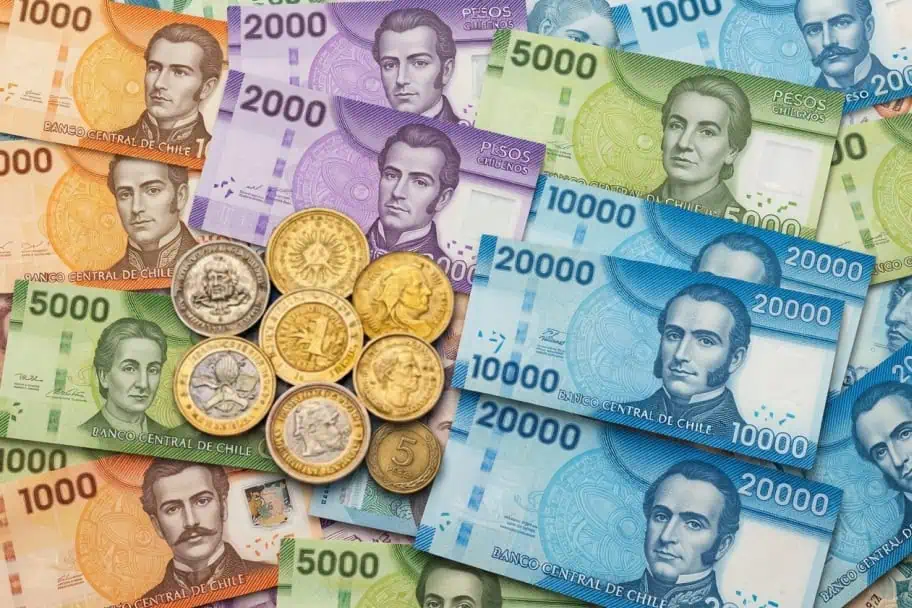
The final aspect of Chile’s entrance requirements you’ll want to understand before traveling is the country’s currency regulations and practical money‑handling considerations. While Chile does not have the same inflation or dual‑market currency challenges seen in some neighboring countries, travelers still need to know the rules for bringing money into the country, how to exchange currency, and the best ways to pay for purchases once inside Chile.
Currency Restrictions
Chile’s currency regulations are straightforward compared to many countries. According to Chilean customs guidance:
- There is no limit on the amount of Chilean pesos or foreign currency you may bring into Chile.
- Cash or bearer negotiable instruments worth more than USD 10,000 (or the equivalent in any currency, including Chilean pesos) must be declared to customs upon arrival.
- The same USD 10,000 declaration threshold applies when leaving Chile.
These rules apply to travelers of all ages and are designed to prevent money‑laundering while keeping the process simple for visitors.
Currency Use in Chile
Chile’s economy is stable compared to many South American nations, and travelers will find that the Chilean peso (CLP) behaves predictably. Prices do not fluctuate rapidly, and cash is easy to manage. ATMs are widely available, and notes retain consistent value.
Credit cards are accepted throughout the country, especially in cities, tourist areas, hotels, restaurants, and major retailers. Smaller shops, rural areas, and markets may prefer cash, so carrying some pesos is helpful.
Cash vs. Credit Cards
Most travelers will find that credit and debit cards are the easiest way to pay for purchases in Chile:
- Visa and Mastercard are widely accepted.
- American Express is accepted in many places but less consistently.
- Some small businesses may impose minimum purchase amounts for card payments.
- ATMs are reliable, though fees vary by bank.
Even if you plan to rely on cards, it’s smart to keep a modest amount of cash for taxis, small vendors, and rural travel.
Converting Currency
Travelers have several safe and reliable options for exchanging money in Chile:
- Banks and Currency Exchange Houses (Casas de Cambio): These offer fair rates and are the most common way to convert foreign currency.
- Airport exchange counters: Convenient but may offer slightly less favorable rates.
- ATMs: Often the easiest way to obtain pesos at competitive rates, depending on your bank’s fees.
Tips for Handling Cash in Chile
Handling cash in Chile is simple, but a few practical habits can make everyday transactions smoother—especially in small shops, markets, or rural areas where card acceptance varies. Keeping a small amount of pesos on hand and knowing where to withdraw or exchange money will help you avoid hassles during your trip.
- Use ATMs at major banks for safer withdrawals
- Carry small bills for taxis, markets, and rural purchases
- Keep a backup debit or credit card in case one network isn’t accepted
- Use official banks or casas de cambio—avoid street exchanges
- Withdraw cash during daytime hours in secure locations
- Store cash in more than one place to reduce risk
- Check your bank’s ATM fees and plan withdrawals accordingly
Don’t Forget to Subscribe to My Adventures!

Let Me Help You Save On Your Next Adventure!
‘Start Exploring Today’ Merchandise Available Now!
 |
 |
 |
 |
 |
 |
 |

















Leave a Reply